
Oil Temp Too Cold? What to do. UPDATE: Problem Solved
Sun Dec 15, 2013 6:28 pm
Re: Oil Temp Too Cold? What to do.
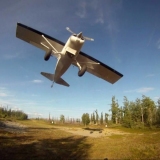
Here's an example I saw a couple years ago on a cub LOL
Sun Dec 15, 2013 7:52 pm
Re: Oil Temp Too Cold? What to do.
A1Skinner wrote:MTV, question for you. In my citabria, how does one get the oil temps higher without blocking off the cowl inlets? No oil cooler to tape off, so does one just tape off as much if the cowling inlets as is needed to insure temps over 170? Its a tough one for me as I dont currently have a CHT, but that is on my short list of things to install...
Without an CHT gauge I'd be really reluctant to tape off the cowl inlets at all. I take it yore talking about a little Continental. If so, in my experience, blocking off the cowl inlets some doesn't warm the oil very much, though it can help.
Those engines have a rather bulbous oil tank, which is a very effective oil cooler itself. Someone used to make a snap on insulated blanket that completely covered that oil tank, and was the only thing I've seen that does much to raise oil temps. Where you'd find one I don't know.
I probably should find out, though, since I now own one of those engines my own self....

MTV

Sun Dec 15, 2013 8:26 pm
Re: Oil Temp Too Cold? What to do.
MTV
Had the Champ (o-235) up the other day, 10-12 degrees. Could not get it to get much above 100.......taped the cowl hole 1/2 shut both sides went to 165-170.
Problem as you stated , later that day it got to 20 degrees and when I went up again it almost got too warm 205....went back and landed . Hard to control.....a challenge on these smaller engines.
looking for ideas......
Had the Champ (o-235) up the other day, 10-12 degrees. Could not get it to get much above 100.......taped the cowl hole 1/2 shut both sides went to 165-170.
Problem as you stated , later that day it got to 20 degrees and when I went up again it almost got too warm 205....went back and landed . Hard to control.....a challenge on these smaller engines.
looking for ideas......

Sun Dec 15, 2013 8:51 pm
Re: Oil Temp Too Cold? What to do.
Wag-Aero has oil tank covers for small Contentals. Also induction runner covers.
They snap on/off.
The cloth tank cover is a bit large for my bulb shaped oil tank, so I snap a cotton hand towel as evenly as possible inside. More insulation/warmth for the oil.
They snap on/off.
The cloth tank cover is a bit large for my bulb shaped oil tank, so I snap a cotton hand towel as evenly as possible inside. More insulation/warmth for the oil.
Humor may not make the world go around, but it certainly cheers up the process...
With clothing, the opposite of NOMEX is polypro (polypropylene cloth and fleece).
Success has many fathers...... Failure is an orphan.
With clothing, the opposite of NOMEX is polypro (polypropylene cloth and fleece).
Success has many fathers...... Failure is an orphan.
Sun Dec 15, 2013 9:01 pm
Re: Oil Temp Too Cold? What to do.
Littlecub wrote:Wag-Aero has oil tank covers for small Contentals. Also induction runner covers.
They snap on/off.
The cloth tank cover is a bit large for my bulb shaped oil tank, so I snap a cotton hand towel as evenly as possible inside. More insulation/warmth for the oil.
Thanks, I'll check that out.
Bighorn...that's been my experience, and the problem with Lycomings is the cam is on top, and subject to corrosion from that moisture....oh well.
I change oil often and use ASL CamGuard at every change.
MTV
Sun Dec 15, 2013 9:45 pm
Re: Oil Temp Too Cold? What to do.
Hey guys,
So I had some time and was able to go back through my engine data for the flights I've flown this last year, specifically looking at the oil temps from the engine analyzer. The temperature I've listed before was from my analog gauge which has the probe on the sump. The EDM 700 takes it from just after the oil cooler. As Mike mentions in the article, this should be the coolest part of the system. My data shows that my temps typically are in the 140-150 range on flights longer than 30 minutes to an hour. On flights less than 30 minutes, the oil temps stay around 120-135 if the engine was cold. If the engine is warm (I had just flown it with a short stop on the go ground) the temps after startup would be 160-180 until takeoff, then would stabilize in the 150-160 range. It would occasionally get in the mid 160s. After landing, the temps will climb again into the 170-195 range...usually between 165 and 180 (obviously due to the lack of cooling air).
I don't know if this gives you all any more insight as to what is going on or is useful, but I thought I'd add this to the discussion.
MTV - it's on a C205, IO-470. Yes the cowls close tight. All CHTs stayed nicely in the mid 300s. If I remember right from last winter, without them the CHTs were in the high 200s/low 300s. I'd need to go out and fly it on a cold day without them to be sure though. My data didn't download right so I don't have exact numbers from the last flight. I'll get them when I get home later this week.
I could check the probe...but what's the odds of both probes being bad (the one to the EDM 700 and the Westech analog gauge). But I agree that that would be the best place to start.
Thanks,
Cory
So I had some time and was able to go back through my engine data for the flights I've flown this last year, specifically looking at the oil temps from the engine analyzer. The temperature I've listed before was from my analog gauge which has the probe on the sump. The EDM 700 takes it from just after the oil cooler. As Mike mentions in the article, this should be the coolest part of the system. My data shows that my temps typically are in the 140-150 range on flights longer than 30 minutes to an hour. On flights less than 30 minutes, the oil temps stay around 120-135 if the engine was cold. If the engine is warm (I had just flown it with a short stop on the go ground) the temps after startup would be 160-180 until takeoff, then would stabilize in the 150-160 range. It would occasionally get in the mid 160s. After landing, the temps will climb again into the 170-195 range...usually between 165 and 180 (obviously due to the lack of cooling air).
I don't know if this gives you all any more insight as to what is going on or is useful, but I thought I'd add this to the discussion.
MTV - it's on a C205, IO-470. Yes the cowls close tight. All CHTs stayed nicely in the mid 300s. If I remember right from last winter, without them the CHTs were in the high 200s/low 300s. I'd need to go out and fly it on a cold day without them to be sure though. My data didn't download right so I don't have exact numbers from the last flight. I'll get them when I get home later this week.
I could check the probe...but what's the odds of both probes being bad (the one to the EDM 700 and the Westech analog gauge). But I agree that that would be the best place to start.
Thanks,
Cory
- Grassstrippilot offline


- Posts: 3536
- Joined: Wed May 31, 2006 6:17 am
- Location: Syracuse, UT
- FindMeSpot URL: https://share.garmin.com/WolfAdventures
- Aircraft: Cessna 205
Sun Dec 15, 2013 10:23 pm
Re: Oil Temp Too Cold? What to do.
mtv wrote:A1Skinner wrote:MTV, question for you. In my citabria, how does one get the oil temps higher without blocking off the cowl inlets? No oil cooler to tape off, so does one just tape off as much if the cowling inlets as is needed to insure temps over 170? Its a tough one for me as I dont currently have a CHT, but that is on my short list of things to install...
Without an CHT gauge I'd be really reluctant to tape off the cowl inlets at all. I take it yore talking about a little Continental. If so, in my experience, blocking off the cowl inlets some doesn't warm the oil very much, though it can help.
Those engines have a rather bulbous oil tank, which is a very effective oil cooler itself. Someone used to make a snap on insulated blanket that completely covered that oil tank, and was the only thing I've seen that does much to raise oil temps. Where you'd find one I don't know.
I probably should find out, though, since I now own one of those engines my own self....
MTV
It actually a 0-320 lycoming.


Sun Dec 15, 2013 11:10 pm
Re: Oil Temp Too Cold? What to do.
Grassstrippilot wrote:Hey guys,
So I had some time and was able to go back through my engine data for the flights I've flown this last year, specifically looking at the oil temps from the engine analyzer. The temperature I've listed before was from my analog gauge which has the probe on the sump. The EDM 700 takes it from just after the oil cooler. As Mike mentions in the article, this should be the coolest part of the system. My data shows that my temps typically are in the 140-150 range on flights longer than 30 minutes to an hour. On flights less than 30 minutes, the oil temps stay around 120-135 if the engine was cold. If the engine is warm (I had just flown it with a short stop on the go ground) the temps after startup would be 160-180 until takeoff, then would stabilize in the 150-160 range. It would occasionally get in the mid 160s. After landing, the temps will climb again into the 170-195 range...usually between 165 and 180 (obviously due to the lack of cooling air).
I don't know if this gives you all any more insight as to what is going on or is useful, but I thought I'd add this to the discussion.
MTV - it's on a C205, IO-470. Yes the cowls close tight. All CHTs stayed nicely in the mid 300s. If I remember right from last winter, without them the CHTs were in the high 200s/low 300s. I'd need to go out and fly it on a cold day without them to be sure though. My data didn't download right so I don't have exact numbers from the last flight. I'll get them when I get home later this week.
I could check the probe...but what's the odds of both probes being bad (the one to the EDM 700 and the Westech analog gauge). But I agree that that would be the best place to start.
Thanks,
Cory
Those temps are not as bad as the ones you were listing initially.
My understanding so far is that you have the engine cooling air inlets partially blocked, but have no cover over the oil cooler air. Is that correct? If so...I'd start by covering the oil cooler. In my opinion, that is a more important cover than the ones you have. Certainly for the oil temperature it is.
- Troy Hamon offline
- Posts: 913
- Joined: Tue Apr 06, 2010 8:27 am
- Location: King Salmon
- FindMeSpot URL: http://share.findmespot.com/shared/face ... 04iX0FXjV2
- Aircraft: Piper PA-22
Mon Dec 16, 2013 7:03 am
Re: Oil Temp Too Cold? What to do.
I agree with Troy...those numbers sound pretty normal, but are those numbers with or without the winter fronts installed? If you're getting those CHTs with the winter fronts installed, I have no idea what's going on.....again, in my experience, those things really cause CHT s to rise.
Also, where is the oil cooler located on your plane? Is it up front right out in the open in the right cowl inlet? Been a while since I was around a 205 and can't recall if the cooler is located in the same place as a 206.
If the cooler is located up front, try taping over half of it and go fly.
Finally, you haven't mentioned at all what OAT s you are operating in. CHT and oil temps are pretty meaningless unless you note the ambient temp as well.
MTV
Also, where is the oil cooler located on your plane? Is it up front right out in the open in the right cowl inlet? Been a while since I was around a 205 and can't recall if the cooler is located in the same place as a 206.
If the cooler is located up front, try taping over half of it and go fly.
Finally, you haven't mentioned at all what OAT s you are operating in. CHT and oil temps are pretty meaningless unless you note the ambient temp as well.
MTV
Mon Dec 16, 2013 7:08 am
Re: Oil Temp Too Cold? What to do.
A1Skinner wrote:mtv wrote:A1Skinner wrote:MTV, question for you. In my citabria, how does one get the oil temps higher without blocking off the cowl inlets? No oil cooler to tape off, so does one just tape off as much if the cowling inlets as is needed to insure temps over 170? Its a tough one for me as I dont currently have a CHT, but that is on my short list of things to install...
Without an CHT gauge I'd be really reluctant to tape off the cowl inlets at all. I take it yore talking about a little Continental. If so, in my experience, blocking off the cowl inlets some doesn't warm the oil very much, though it can help.
Those engines have a rather bulbous oil tank, which is a very effective oil cooler itself. Someone used to make a snap on insulated blanket that completely covered that oil tank, and was the only thing I've seen that does much to raise oil temps. Where you'd find one I don't know.
I probably should find out, though, since I now own one of those engines my own self....
MTV
It actually a 0-320 lycoming.
I don't know of any way to warm up that engine. I've seen a cowl flap kit installed on those planes, but I think those were field approved.
You can try blocking off part of the cowl inlets, but you REALLY need to monitor CHT. Start by running a strip of tape of tape over the inboard edge of the inlet, see how that goes, then add more tape toward the middle of the openings as you learn results. Go slow.
MTV
Mon Dec 16, 2013 7:59 am
Re: Oil Temp Too Cold? What to do.
Troy Hamon wrote:Grassstrippilot wrote:Hey guys,
So I had some time and was able to go back through my engine data for the flights I've flown this last year, specifically looking at the oil temps from the engine analyzer. The temperature I've listed before was from my analog gauge which has the probe on the sump. The EDM 700 takes it from just after the oil cooler. As Mike mentions in the article, this should be the coolest part of the system. My data shows that my temps typically are in the 140-150 range on flights longer than 30 minutes to an hour. On flights less than 30 minutes, the oil temps stay around 120-135 if the engine was cold. If the engine is warm (I had just flown it with a short stop on the go ground) the temps after startup would be 160-180 until takeoff, then would stabilize in the 150-160 range. It would occasionally get in the mid 160s. After landing, the temps will climb again into the 170-195 range...usually between 165 and 180 (obviously due to the lack of cooling air).
I don't know if this gives you all any more insight as to what is going on or is useful, but I thought I'd add this to the discussion.
MTV - it's on a C205, IO-470. Yes the cowls close tight. All CHTs stayed nicely in the mid 300s. If I remember right from last winter, without them the CHTs were in the high 200s/low 300s. I'd need to go out and fly it on a cold day without them to be sure though. My data didn't download right so I don't have exact numbers from the last flight. I'll get them when I get home later this week.
I could check the probe...but what's the odds of both probes being bad (the one to the EDM 700 and the Westech analog gauge). But I agree that that would be the best place to start.
Thanks,
Cory
Those temps are not as bad as the ones you were listing initially.
My understanding so far is that you have the engine cooling air inlets partially blocked, but have no cover over the oil cooler air. Is that correct? If so...I'd start by covering the oil cooler. In my opinion, that is a more important cover than the ones you have. Certainly for the oil temperature it is.
Yes that is correct Troy. I'll cover part of the oil cooler and go fly it to see what happens. Thanks!
- Grassstrippilot offline
- Posts: 3536
- Joined: Wed May 31, 2006 6:17 am
- Location: Syracuse, UT
- FindMeSpot URL: https://share.garmin.com/WolfAdventures
- Aircraft: Cessna 205
Mon Dec 16, 2013 8:15 am
Re: Oil Temp Too Cold? What to do.
mtv wrote:I agree with Troy...those numbers sound pretty normal, but are those numbers with or without the winter fronts installed? If you're getting those CHTs with the winter fronts installed, I have no idea what's going on.....again, in my experience, those things really cause CHT s to rise.
Also, where is the oil cooler located on your plane? Is it up front right out in the open in the right cowl inlet? Been a while since I was around a 205 and can't recall if the cooler is located in the same place as a 206.
If the cooler is located up front, try taping over half of it and go fly.
Finally, you haven't mentioned at all what OAT s you are operating in. CHT and oil temps are pretty meaningless unless you note the ambient temp as well.
MTV
Those numbers in large part are without the fronts installed (I don't remember exactly when I took them off last winter/spring. They were on when I picked the plane up from Grandby, CO). But my last flight was with them on and the I think the temps were in that same range. They didn't download to my jump drive, so I will check them out when I get home on Friday and let you know.
The oil cooler is forward of the number 5 cylinder, right at the forward right air intake. I'll try taping part of it and see what happens. Good reason to go fly this weekend.

As for ambient temperature, my last flight was 22 degrees in the inversion, 35 above it. When looking at the last year worth if oil temps, it pretty much covered the four seasons and the gambit of ranges. I am going to double check the OAT on the EDM and make sure it is accurate so that I've got good data and a good reference point.
Thanks for the insight guys. It is appreciated. I'll update when after I get another flight or two in.
- Grassstrippilot offline
- Posts: 3536
- Joined: Wed May 31, 2006 6:17 am
- Location: Syracuse, UT
- FindMeSpot URL: https://share.garmin.com/WolfAdventures
- Aircraft: Cessna 205
Mon Dec 16, 2013 8:29 am
Re: Oil Temp Too Cold? What to do.
If the oil cooler is the type I'm visualizing, it has a sort of bar running diagonally across it. I just taped over one side of the diagonal brace for cold weather ops.
Sounds like you have a pretty wide open cowl outlet if you're even able to run those winter fronts in that warm a temps.
As I noted earlier, the other thing I didn't like about the fronts was that they block much of the flow into the cabin heat system too, which means much less cabin heat.
Again, if you go to interior and northern Alaska in the dead of winter, and look at the Cessnas on the ramps, you won't see many if any wearing those winter fronts, but you'll see a lot of duct tape on the oil coolers......
MTV
Sounds like you have a pretty wide open cowl outlet if you're even able to run those winter fronts in that warm a temps.
As I noted earlier, the other thing I didn't like about the fronts was that they block much of the flow into the cabin heat system too, which means much less cabin heat.
Again, if you go to interior and northern Alaska in the dead of winter, and look at the Cessnas on the ramps, you won't see many if any wearing those winter fronts, but you'll see a lot of duct tape on the oil coolers......
MTV
Mon Dec 16, 2013 8:33 am
Re: Oil Temp Too Cold? What to do.
The WAG AERO product is the quickest way to keep the heat in the oil. Like he said, if it does not fit... get a towel. Or make one.
Not rocket science. We often spend more ingenuity and brain cell wear and tear designing a way to chill beer than heat our oil to dissipate H2O from the crankcase. Get with it.... not rocket science.
Not rocket science. We often spend more ingenuity and brain cell wear and tear designing a way to chill beer than heat our oil to dissipate H2O from the crankcase. Get with it.... not rocket science.
- flightlogic offline

- Posts: 616
- Joined: Wed Dec 24, 2008 2:51 pm
- Location: Prescott
Flying is dangerous. If you think otherwise, you are new at this sport. Mind the gravity not the gap.
Wed Dec 18, 2013 5:28 am
Re: Oil Temp Too Cold? What to do.
Hey GP how's the testing going? Have you made any headway and what did you come up with?
Wed Dec 18, 2013 8:26 am
Re: Oil Temp Too Cold? What to do.
Well, work called and I'm still on the road bouncing around the east coast. I won't get back until Thursday afternoon. I hope to get up Friday, but I don't know if that will happen. Then family Christmas parties over the weekend out of town. So it might not be until Monday! I'll let you know! I'm anxious to see myself!
- Grassstrippilot offline
- Posts: 3536
- Joined: Wed May 31, 2006 6:17 am
- Location: Syracuse, UT
- FindMeSpot URL: https://share.garmin.com/WolfAdventures
- Aircraft: Cessna 205
Wed Dec 18, 2013 8:46 am
Re: Oil Temp Too Cold? What to do.
mtv wrote:Again, if you go to interior and northern Alaska in the dead of winter, and look at the Cessnas on the ramps, you won't see many if any wearing those winter fronts, but you'll see a lot of duct tape on the oil coolers......
MTV
Yup... No one I worked for had A&P's who allowed the winter fronts. We taped the oil coolers, climbed just a few feet into warmer air, and held power in the green until the wheels touched the ground. We were taught the colder it is, the slower you do everything.
Technique plays a huge part in keeping cylinders, and oil, warm. My rule was always be at pattern altitude at least ten miles out, and never pull back more than an inch every three minutes, stopping at the bottom of the green on the MP. All the gauges stay in the middle, right where they belong.
Some outfits did really shitty pilot training for winter ops, and I'd watch their guys come in on -40 days and be 3,000 AGL at three miles out. You could hear 'em cut power and stuff the nose down to come in and land. They replaced a jug a week. Us Chickenshits who kept our engines warm and at cruise power, ran engines from new in the crate to TBO without a squawk.
Using the winter fronts, and even more so taping off cowlings, is scary. You disrupt airflow over the cylinders, and even though the heads might show CHT's where you want them, you run the risk of hot spots on the cylinder walls.
Gump
Wed Dec 18, 2013 11:56 am
Re: Oil Temp Too Cold? What to do.
Ahh...Gump that post was very helpful to me as well. I don't usually fly high in the winter anyway...but making a conscious plan to minimize the low-power segment of a descent...not sure I've been as attentive to that as I should be. Thank you.
- Troy Hamon offline
- Posts: 913
- Joined: Tue Apr 06, 2010 8:27 am
- Location: King Salmon
- FindMeSpot URL: http://share.findmespot.com/shared/face ... 04iX0FXjV2
- Aircraft: Piper PA-22
Wed Dec 18, 2013 12:39 pm
Re: Oil Temp Too Cold? What to do.
Gump
Another thanks! I have been giving what I have thought to be "plenty" of consideration.
I obviously need more/will use more patience, care, and planning with my winter descents/landings.
Likely a $$$ saver!
PS I got my training & license in the PHX area. Cold WX training was not high on their priorities....
Another thanks! I have been giving what I have thought to be "plenty" of consideration.
I obviously need more/will use more patience, care, and planning with my winter descents/landings.
Likely a $$$ saver!
PS I got my training & license in the PHX area. Cold WX training was not high on their priorities....
Last edited by Littlecub on Wed Dec 18, 2013 4:53 pm, edited 1 time in total.
Humor may not make the world go around, but it certainly cheers up the process...
With clothing, the opposite of NOMEX is polypro (polypropylene cloth and fleece).
Success has many fathers...... Failure is an orphan.
With clothing, the opposite of NOMEX is polypro (polypropylene cloth and fleece).
Success has many fathers...... Failure is an orphan.
Wed Dec 18, 2013 1:13 pm
Re: Oil Temp Too Cold? What to do.
I never got training on this type of thing so yes, thanks for sharing Gump. I think I'll adopt your procedure as I don't need to be buying cylinders for fun.
DISPLAY OPTIONS
Who is online
Users browsing this forum: No registered users and 2 guests
Latest Features
-
Live to Tell
A Minnesota pilot is surprised to learn that the sudden asymmetric drag of an out-of-rig ski can…Read More -
Creators
Working in some of the Yukon's most beautiful and remote environments, photographer Simon Blakesley captures aircraft in…Read More -
Aircraft Ownership and Maintenance
Upgrading to big tires can make a huge difference in backcountry performance, but with those gains come…Read More -
Tales from Yesteryear
In this tale from bush flying yesteryear, Don Cogger signs up to help Atlee Dodge Jr recovery…Read More


Latest Knowledge Base
-
Destinations
A regional guide with ideas for winter camping destinations in California, Nevada, New Mexico, and Arizona.Read More -
Aircraft
Finding an affordable aircraft that can handle the backcountry for $80K or less? A challenge for sure, but with the…Read More -
Aircraft
01.29.2018 - Zane - Updated tire diameter graphic to add 8.50x10 Guide to tires for use in the backcountry and off-airport landing…Read More -
Pilots
12.22.2013 - Initial article format Operating aircraft on skis and negotiating a snow-covered landscape is an entirely unique skillset and environment.…Read More


