That was a bit of a distraction from elk spotting. My bad. back to the topic at hand.
Brett
scouting big game by air... any tips?
Tue Nov 25, 2014 9:50 am
Tue Nov 25, 2014 10:56 am
Re: scouting big game by air... any tips?
Watch Greg's video, Energy Management Turns with soyAnarchisto in this category forem. Some computer jock, could you put it up?
- contactflying offline
- Posts: 4972
- Joined: Wed Apr 03, 2013 7:36 pm
- Location: Aurora, Missouri 2H2
Download my free "https://tinyurl.com/Safe-Maneuvering" e-book.
Tue Nov 25, 2014 2:11 pm
Re: scouting big game by air... any tips?
First, legalities: While the description you offered would seem to be a legal activity, you'd be well advised to read this: https://www.animallaw.info/statute/us-h ... unting-act
The federal Airborne Hunting Act prohibits "hazing or harassing" game animals. This does NOT necessarily have to be for the purpose of hunting, by the way. So, just be aware that this statute is out there. You'll likely never be cited for just frightening a herd of elk, BUT if that were to happen in view of a certain "flavor" of citizen, you might nonetheless be subjected to some unwanted legal attention. And it doesn't have to be "intentional" necessarily.
Second, I spent a full career doing specifically this kind of flying, and could name a significant number of people I've known who died doing this kind of flying.....including a few with a LOT of flying experience (at least one with over 20,000 hours).
The Internet is not a good place to learn aircraft coordination, the effects of wake turbulence, low level turbulence, the effects of distraction, wind, etc, etc. I have read a lot of BS on this topic on several forums...so be careful.
Working an airplane close to the ground, in ground reference maneuvering is not rocket science, but there a number of variables that complicate the process. One of the big ones is distraction.
I hear lots of people argue that you MUST have an observer.....and another set of eyes MAY help. But, MUST??? Not in my opinion.
Why? The argument seems to be that if the pilot is looking at the critter or the ground, searching for a critter (or other subject) he's seriously endangering his life and craft. But, Explain to me how the pilot can maneuver the aircraft with reference to the ground or to a critter on the ground without looking at same.
I can tell you that the wrong observer can be more of a distraction than you can imagine.
But, my point is that the pilot MUST focus on the ground, and that critter if he's going to succeed in this endeavor. So, how to accomplish this?
I maneuver so as to separate the maneuvering from the "observing".
You can do this by flying figure eight patterns, racetrack patterns, or 270 degree turns. In each of those situations, ideally, the plane will be in wings level, u accelerated flight as you pass over the subject of your attention.....at which point the plane will pretty much fly itself, if properly trimmed.
Once you're past the subject, you can once again devote most of your attention to flying the plane. I say most of your attention, because you still have to maneuver the plane back around to the point for the next pass, but that's just basic navigation.
I have spent many hours circling "things" and it can be done safely, but again a lot of folks have died doing so. The aerodynamics of circling at low level are a lot more complex than most pilots think. And, many of us who've spent many hours circling have no doubt at times been VERY close to the edge and never realized it.
Stall speed while accelerated, combined with gross weight, a bit of momentary uncoordination and an encounter with ones own wake all can align to introduce you to your maker.
As I noted earlier, don't crash...it'll screw up your whole hunt.
Funerals have a tendency to do that.
MTV
The federal Airborne Hunting Act prohibits "hazing or harassing" game animals. This does NOT necessarily have to be for the purpose of hunting, by the way. So, just be aware that this statute is out there. You'll likely never be cited for just frightening a herd of elk, BUT if that were to happen in view of a certain "flavor" of citizen, you might nonetheless be subjected to some unwanted legal attention. And it doesn't have to be "intentional" necessarily.
Second, I spent a full career doing specifically this kind of flying, and could name a significant number of people I've known who died doing this kind of flying.....including a few with a LOT of flying experience (at least one with over 20,000 hours).
The Internet is not a good place to learn aircraft coordination, the effects of wake turbulence, low level turbulence, the effects of distraction, wind, etc, etc. I have read a lot of BS on this topic on several forums...so be careful.
Working an airplane close to the ground, in ground reference maneuvering is not rocket science, but there a number of variables that complicate the process. One of the big ones is distraction.
I hear lots of people argue that you MUST have an observer.....and another set of eyes MAY help. But, MUST??? Not in my opinion.
Why? The argument seems to be that if the pilot is looking at the critter or the ground, searching for a critter (or other subject) he's seriously endangering his life and craft. But, Explain to me how the pilot can maneuver the aircraft with reference to the ground or to a critter on the ground without looking at same.
I can tell you that the wrong observer can be more of a distraction than you can imagine.
But, my point is that the pilot MUST focus on the ground, and that critter if he's going to succeed in this endeavor. So, how to accomplish this?
I maneuver so as to separate the maneuvering from the "observing".
You can do this by flying figure eight patterns, racetrack patterns, or 270 degree turns. In each of those situations, ideally, the plane will be in wings level, u accelerated flight as you pass over the subject of your attention.....at which point the plane will pretty much fly itself, if properly trimmed.
Once you're past the subject, you can once again devote most of your attention to flying the plane. I say most of your attention, because you still have to maneuver the plane back around to the point for the next pass, but that's just basic navigation.
I have spent many hours circling "things" and it can be done safely, but again a lot of folks have died doing so. The aerodynamics of circling at low level are a lot more complex than most pilots think. And, many of us who've spent many hours circling have no doubt at times been VERY close to the edge and never realized it.
Stall speed while accelerated, combined with gross weight, a bit of momentary uncoordination and an encounter with ones own wake all can align to introduce you to your maker.
As I noted earlier, don't crash...it'll screw up your whole hunt.
Funerals have a tendency to do that.
MTV


Tue Nov 25, 2014 2:53 pm
Re: scouting big game by air... any tips?
MTV just added another bit of good information to my mental bin. Thanks!
- CamTom12 offline

- Posts: 3705
- Joined: Sun Jul 08, 2012 1:08 pm
- Location: Huntsville
- FindMeSpot URL: https://share.delorme.com/camtom12
- Aircraft: Ruppe Racer
Experimental Pacer
home hand jam "wizard"
Tue Nov 25, 2014 3:29 pm
Re: scouting big game by air... any tips?
I agree with MTV. Training really helps. If you don't get the training remember that only you can stall the airplane. If things get funky, releasing back pressure on the stick will usually help.
- contactflying offline
- Posts: 4972
- Joined: Wed Apr 03, 2013 7:36 pm
- Location: Aurora, Missouri 2H2
Download my free "https://tinyurl.com/Safe-Maneuvering" e-book.
Tue Nov 25, 2014 8:18 pm
Re: scouting big game by air... any tips?
Hello Backcountry Pilots,
I find myself scouting for elk, bear, deer, ducks, geese, coyotes, wolves, and even turkeys all the time whether I'm flying or driving. Idaho Code states that you can't hunt big game the same calendar day that you fly in an aircraft. Elk in particular can change three zip codes overnight. I like to pattern the herds over several days, or weeks. Don't get too low and harass or scare the animals either. If you can count the points on a given bull, you are way to low.
Don't concentrate on any specific animal. Maintain situational awareness. Don't get too low, don't let your passenger talk you into anything dangerous, like "turn up there". Always leave yourself an out. Canyon turns and a lot of those other techniques are BS. Know your airplane and your limitations.
Elk are not always located where you necessarily want to hunt, so be flexible. That was my problem this year in Idaho near my place. Now that the modern rifle season is over I had 6 elk on my property just last weekend. I might even get into the late season muzzle loader hunting next year. Aerial scouting should put you in a general area. I wouldn't count on just one flight paying off. Elk hunting requires hard work, and good luck too. Elk taste a hell of a lot better than any deer out there!
James
Clear Creek
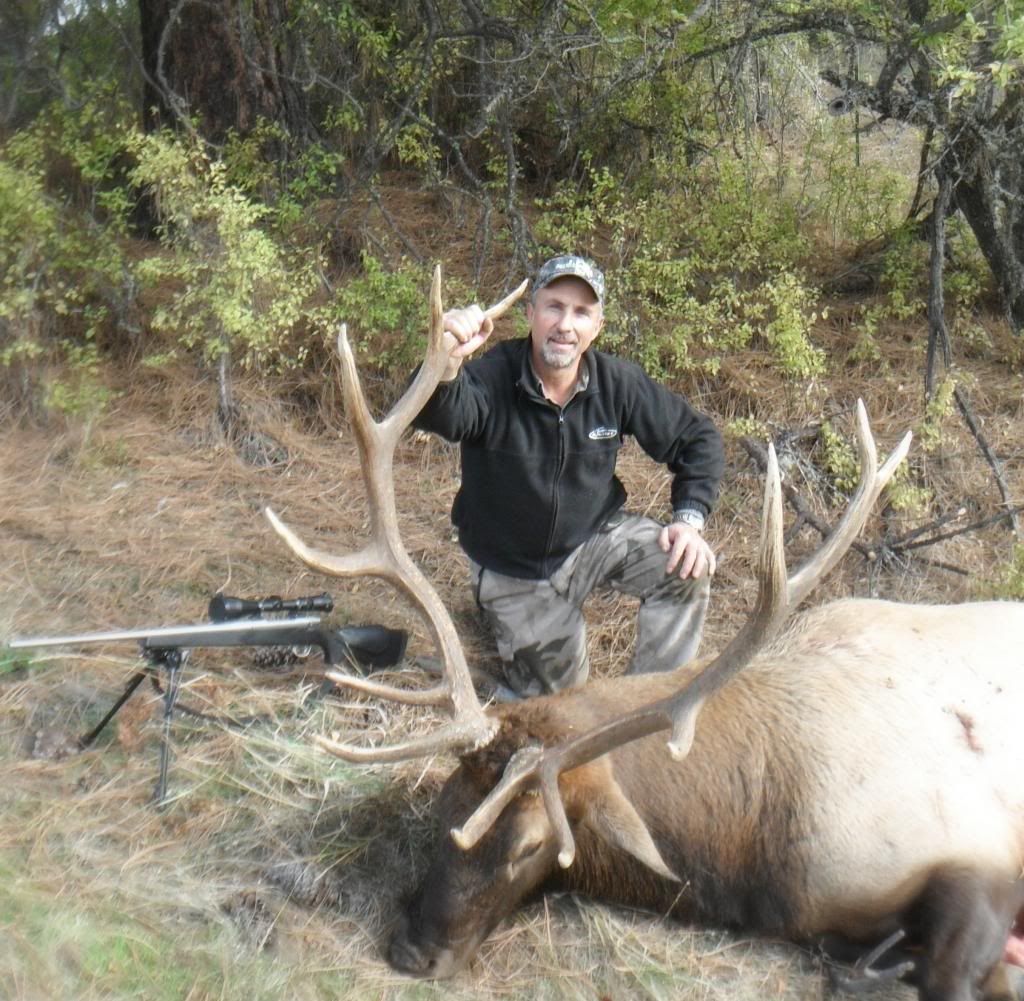
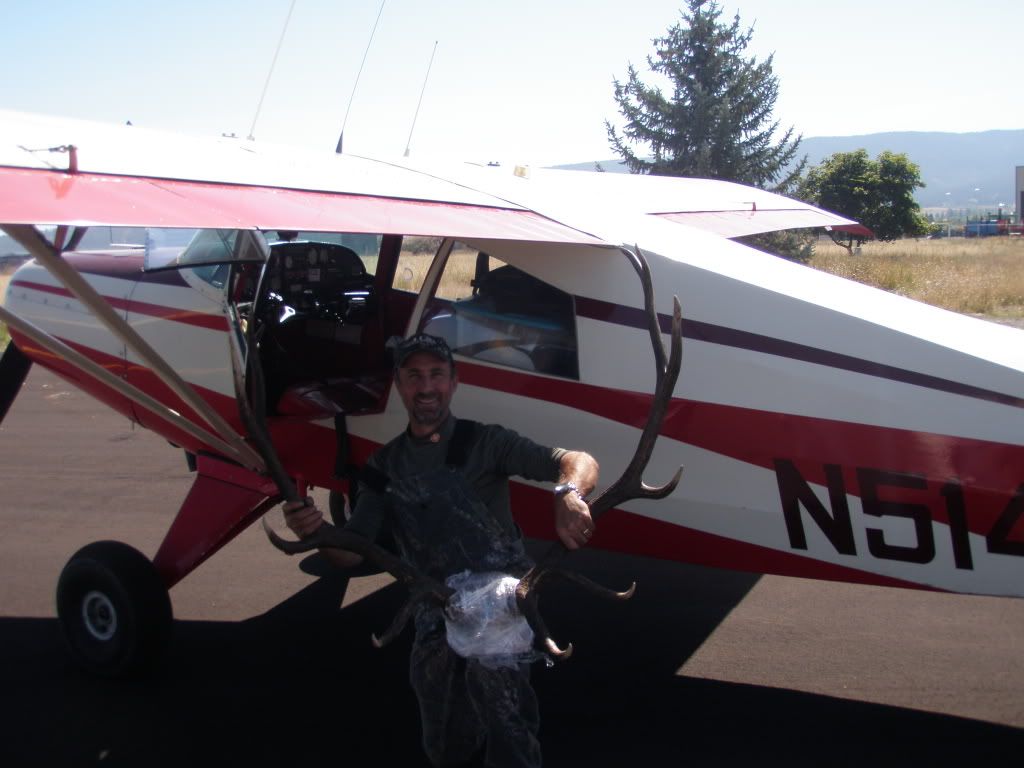
I find myself scouting for elk, bear, deer, ducks, geese, coyotes, wolves, and even turkeys all the time whether I'm flying or driving. Idaho Code states that you can't hunt big game the same calendar day that you fly in an aircraft. Elk in particular can change three zip codes overnight. I like to pattern the herds over several days, or weeks. Don't get too low and harass or scare the animals either. If you can count the points on a given bull, you are way to low.
Don't concentrate on any specific animal. Maintain situational awareness. Don't get too low, don't let your passenger talk you into anything dangerous, like "turn up there". Always leave yourself an out. Canyon turns and a lot of those other techniques are BS. Know your airplane and your limitations.
Elk are not always located where you necessarily want to hunt, so be flexible. That was my problem this year in Idaho near my place. Now that the modern rifle season is over I had 6 elk on my property just last weekend. I might even get into the late season muzzle loader hunting next year. Aerial scouting should put you in a general area. I wouldn't count on just one flight paying off. Elk hunting requires hard work, and good luck too. Elk taste a hell of a lot better than any deer out there!
James
Clear Creek
- Super-Maule offline
- Posts: 511
- Joined: Mon Nov 17, 2008 9:28 pm
- Location: Clear Creek, Idaho
Tue Nov 25, 2014 8:37 pm
Re: scouting big game by air... any tips?
Thanks James. We are doing the muzzle loading in December. I think it is area 32a if I remember right... Kind kd north of emmett on up to the Indian valley area.
- scottf offline
- Posts: 650
- Joined: Fri Mar 23, 2012 9:56 am
- Location: Meridian, ID
- FindMeSpot URL: http://share.findmespot.com/shared/face ... cbQCpIqefS
Tue Nov 25, 2014 8:48 pm
Re: scouting big game by air... any tips?
scottf wrote:Thanks James. We are doing the muzzle loading in December. I think it is area 32a if I remember right... Kind kd north of emmett on up to the Indian valley area.
Good luck!
- Super-Maule offline
- Posts: 511
- Joined: Mon Nov 17, 2008 9:28 pm
- Location: Clear Creek, Idaho
Tue Nov 25, 2014 8:53 pm
Re: scouting big game by air... any tips?
Nice Bull man!! That one scored well, congrats!
- Terry offline
- Posts: 1365
- Joined: Sat Nov 10, 2007 9:11 pm
- Location: Willamette Valley
- FindMeSpot URL: http://share.findmespot.com/shared/face ... 4GzPHI6t1d
Wed Nov 26, 2014 4:52 am
Re: scouting big game by air... any tips?
Excellent bull!
- CamTom12 offline
- Posts: 3705
- Joined: Sun Jul 08, 2012 1:08 pm
- Location: Huntsville
- FindMeSpot URL: https://share.delorme.com/camtom12
- Aircraft: Ruppe Racer
Experimental Pacer
home hand jam "wizard"
Wed Nov 26, 2014 10:22 am
Re: scouting big game by air... any tips?
Speaking of bull, or rather NO bull, for you folks contemplating flying the bush, please order a copy of Hal Terry's book, "Fly the Wild and Stay Alive". See this link on this forum: https://www.backcountrypilot.org/commun ... live-16334
Hal was a career Naval Aviator, but after he retired, he worked for 15 years in Alaska, including time working for the Alaska Department of Fish and Game, flying their missions.
It's a great book for the purposes of learning how to stay alive flying the back country.....currently available on Amazon.
MTV
Hal was a career Naval Aviator, but after he retired, he worked for 15 years in Alaska, including time working for the Alaska Department of Fish and Game, flying their missions.
It's a great book for the purposes of learning how to stay alive flying the back country.....currently available on Amazon.
MTV
Wed Nov 26, 2014 11:59 am
Re: scouting big game by air... any tips?
Ordered a copy. Thanks Mike.
- contactflying offline
- Posts: 4972
- Joined: Wed Apr 03, 2013 7:36 pm
- Location: Aurora, Missouri 2H2
Download my free "https://tinyurl.com/Safe-Maneuvering" e-book.
Wed Nov 26, 2014 1:06 pm
Re: scouting big game by air... any tips?
No airplane involved, but I was very entertained yesterday by my brother who has this season adopted a new strategy for deer hunting here in Wisconsin. He sits in the family room playing video games and looking out the window, then dashes out to the garage with his gun if any deer come by. Took his first one to the processor a few hours later.
- rw2 offline
- Posts: 1799
- Joined: Sat Dec 22, 2012 1:10 pm
- Location: San Miguel de Allende
- FindMeSpot URL: https://share.delorme.com/LaNaranjaDanzante
- Aircraft: Experimental Maule
Follow my Flying, Cooking and Camping adventures at RichWellner.com
Thu Nov 27, 2014 8:40 am
Re: scouting big game by air... any tips?
Two things are very critical with maneuvering flight in the mountains. We always need to know where the wind is from and we always need to know which way in down hill. Ridge lift and gravity thrust are both more powerful than small engines. Management of these two items, ridge lift and gravity, increases safety regardless of the size of our engine.
If there is wind, we will be working a flat valley or the windward side of a ridge. On a ridge we will always want to make a descending turn toward the valley when reversing course. If were on the windward ridge (the downwind ridge of the two ridges that bracket a valley), this will also be an upwind turn rather than a downwind turn. A downwind turn would push us away from the target and toward higher terrain. If we wish to return to the same target, we can turn toward the valley and continue in a figure eight back. Also the wind is helping keep us close to the target.
A level turn, even over level ground, is dangerous in the mountains. And a level downwind turn while trying to engage a target is especially dangerous. The extra ground speed causes us to bank more steeply to maintain the desired ground track. When at or near full power, just to maintain altitude, the dynamic nature of the altitude control (throttle) goes away. Now we are tempted to compensate with extra pitch up using the speed control (elevator.) Rather than let the nose go down naturally in a turn, we are tempted to hold it up, increasing angel of attack, to maintain altitude. This becomes double dangerous when we are also increasing bank to decrease the radius of our turn in a downwind turn to target.
If there is wind, we will be working a flat valley or the windward side of a ridge. On a ridge we will always want to make a descending turn toward the valley when reversing course. If were on the windward ridge (the downwind ridge of the two ridges that bracket a valley), this will also be an upwind turn rather than a downwind turn. A downwind turn would push us away from the target and toward higher terrain. If we wish to return to the same target, we can turn toward the valley and continue in a figure eight back. Also the wind is helping keep us close to the target.
A level turn, even over level ground, is dangerous in the mountains. And a level downwind turn while trying to engage a target is especially dangerous. The extra ground speed causes us to bank more steeply to maintain the desired ground track. When at or near full power, just to maintain altitude, the dynamic nature of the altitude control (throttle) goes away. Now we are tempted to compensate with extra pitch up using the speed control (elevator.) Rather than let the nose go down naturally in a turn, we are tempted to hold it up, increasing angel of attack, to maintain altitude. This becomes double dangerous when we are also increasing bank to decrease the radius of our turn in a downwind turn to target.
- contactflying offline
- Posts: 4972
- Joined: Wed Apr 03, 2013 7:36 pm
- Location: Aurora, Missouri 2H2
Download my free "https://tinyurl.com/Safe-Maneuvering" e-book.
Thu Nov 27, 2014 9:08 am
Re: scouting big game by air... any tips?
In the Cascades, the wind will "follow" the Sun (on certain days). In the morning, touching down on Green Peter Lake for example (floats) cold air could be descending down the mountains. Wind is blowing from the East, downstream. But, later...
... In the afternoon, the vast Oregon Desert, East of the Cascades, heats up... drawing the cold Pacific air up over the mountains. In the sailing world we refer to such local weather patterns as "Land" breezes (offshore, morning) & sea breezes (on shore, afternoon). Note: in Oregon the "sea breeze" Is usually much stronger than the "land breeze".
Where I fly floats, in the Cascade Mountains, the wind is extremely dynamic and can change rapidity. If there is any convection the weather could be anything from thunderstorms/tornados to calm.
In the mountains, as "Mr. ContactFlying" said, an airplane can not over power Mother Nature. I take my time enjoy the scenery and keep reading the environment.
... In the afternoon, the vast Oregon Desert, East of the Cascades, heats up... drawing the cold Pacific air up over the mountains. In the sailing world we refer to such local weather patterns as "Land" breezes (offshore, morning) & sea breezes (on shore, afternoon). Note: in Oregon the "sea breeze" Is usually much stronger than the "land breeze".
Where I fly floats, in the Cascade Mountains, the wind is extremely dynamic and can change rapidity. If there is any convection the weather could be anything from thunderstorms/tornados to calm.
In the mountains, as "Mr. ContactFlying" said, an airplane can not over power Mother Nature. I take my time enjoy the scenery and keep reading the environment.

CFII, MEI, CFISES, ATPME, IA/AP, RPPL, Ski&Amphib ops, RHC mechanic cert, RHC SC— 3000TT
Thu Nov 27, 2014 9:42 am
Re: scouting big game by air... any tips?
SuperMaule, Nice Bull!!! I am happy and envious at the same time.
My main reason for wanting to fly and own an airplane, all those years ago, was/is to scout for game. I used to be a hunting nut. My every waking minute was spent hunting or practicing. The ability to find and spot game and game trails was the only reason I needed to fly.
Got badly injured in an accident that really slowed down my hunting, especially my archery hunting. I still hunt, and unfortunately my hunting buddy quit due to old age and arthritis. Haven't been Elk hunting in nearly 10 years.
My main reason for wanting to fly and own an airplane, all those years ago, was/is to scout for game. I used to be a hunting nut. My every waking minute was spent hunting or practicing. The ability to find and spot game and game trails was the only reason I needed to fly.
Got badly injured in an accident that really slowed down my hunting, especially my archery hunting. I still hunt, and unfortunately my hunting buddy quit due to old age and arthritis. Haven't been Elk hunting in nearly 10 years.

Fri Nov 28, 2014 6:35 am
Re: scouting big game by air... any tips?
WW Hunter,
Idaho has a program to road hunt if you have a physical disability of some kind. A few people abuse it, however it is a real good program for the most part. All it takes is a note from a licensed physician taken to a Fish & Game Office.
A friend of mine got hit by a drunk driver as he was walking across a parking lot in Spokane years ago. He lost both his legs from the knees down. Prior to the accident he was a private pilot so after a generous settlement $$$$ he purchased a Cessna 206 and a motor-home. He is able to fly the 206 with an FAA (SODA) Statement of Demonstrated Ability.
With his road hunting permit, he and his buddies drive around in this motor-home looking for game. When they spot something there is at least 5 rifle barrels extending from the Winnebago.
As far as airborne game scouting techniques go, a pilot certainly isn't going to learn them from a web-site. My advice would be to not get too low, don't let people talk you into uncomfortable situations, and pick your days and times.
Happy Black Friday,
James
Clear Creek, Idaho
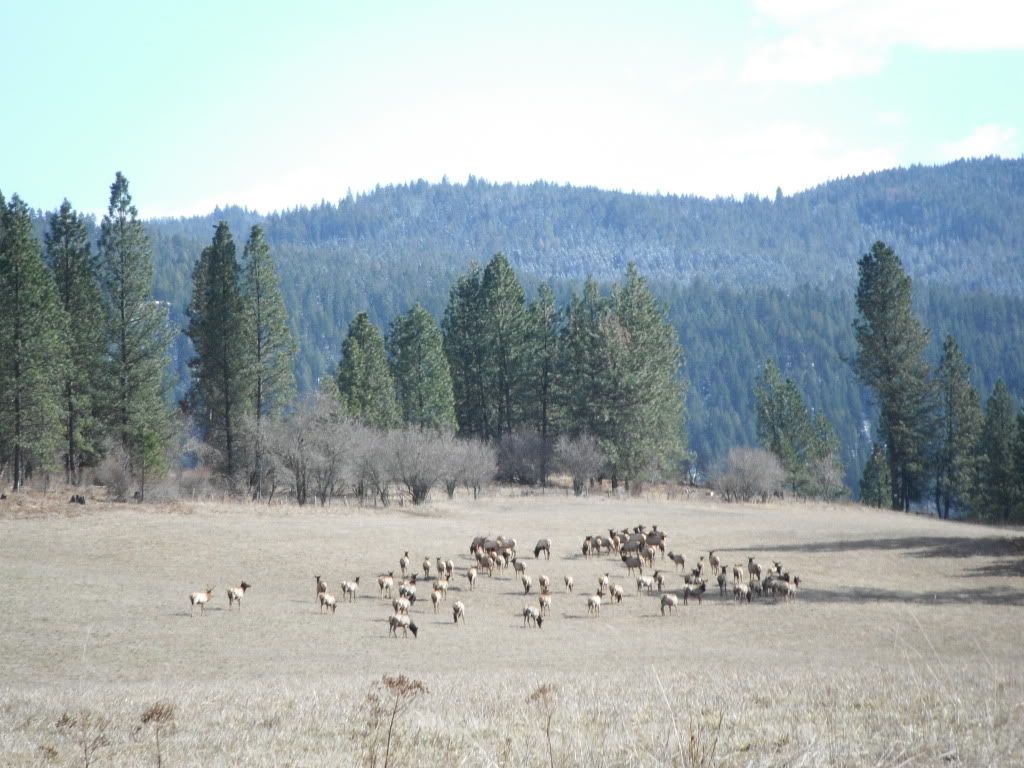
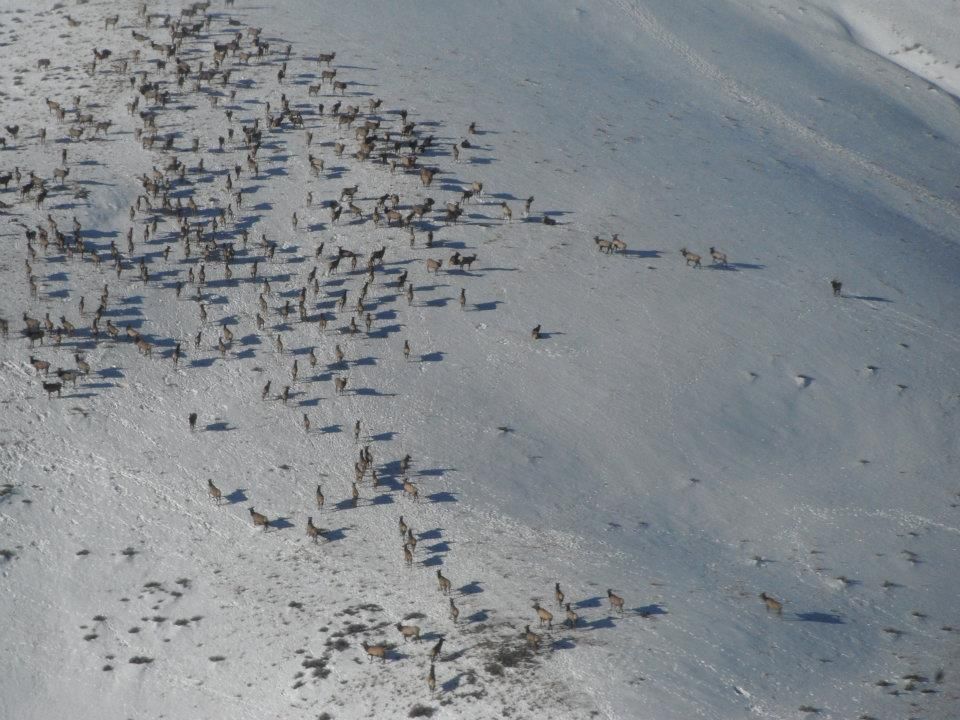
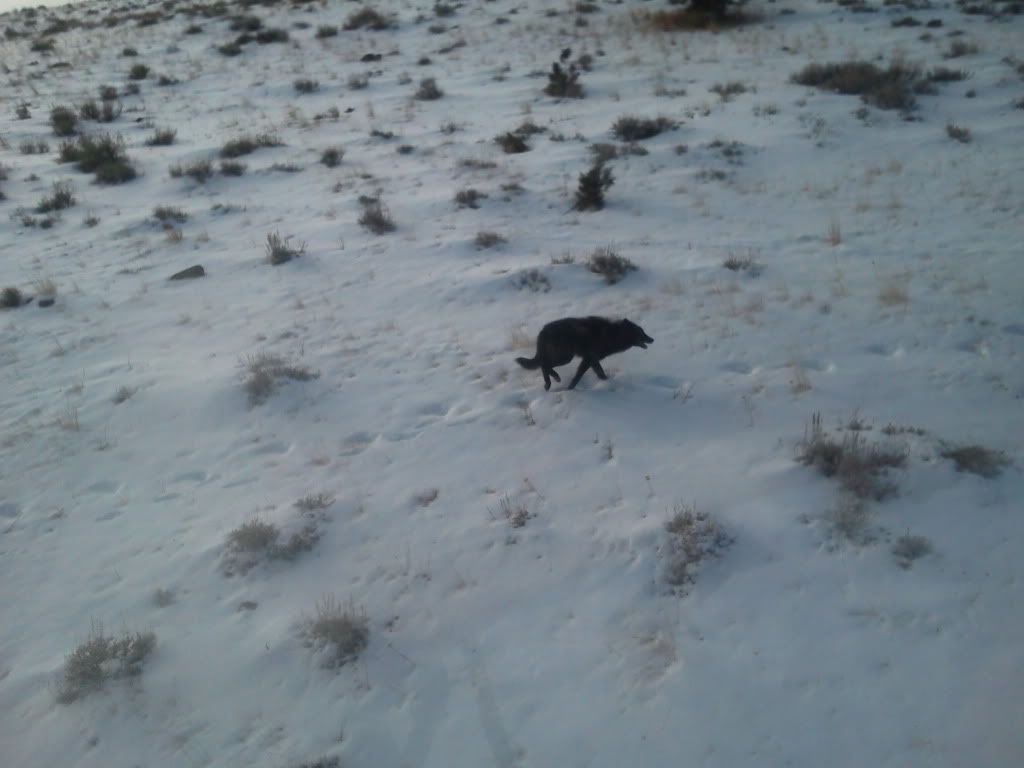
PS, this wolf picture was taken from a Montana F & G helicopter I was flying a couple years ago, way too low for an airplane
Idaho has a program to road hunt if you have a physical disability of some kind. A few people abuse it, however it is a real good program for the most part. All it takes is a note from a licensed physician taken to a Fish & Game Office.
A friend of mine got hit by a drunk driver as he was walking across a parking lot in Spokane years ago. He lost both his legs from the knees down. Prior to the accident he was a private pilot so after a generous settlement $$$$ he purchased a Cessna 206 and a motor-home. He is able to fly the 206 with an FAA (SODA) Statement of Demonstrated Ability.
With his road hunting permit, he and his buddies drive around in this motor-home looking for game. When they spot something there is at least 5 rifle barrels extending from the Winnebago.
As far as airborne game scouting techniques go, a pilot certainly isn't going to learn them from a web-site. My advice would be to not get too low, don't let people talk you into uncomfortable situations, and pick your days and times.
Happy Black Friday,
James
Clear Creek, Idaho
PS, this wolf picture was taken from a Montana F & G helicopter I was flying a couple years ago, way too low for an airplane
- Super-Maule offline
- Posts: 511
- Joined: Mon Nov 17, 2008 9:28 pm
- Location: Clear Creek, Idaho
Fri Nov 28, 2014 7:38 am
Re: scouting big game by air... any tips?
I taught "way too low" to students who's work would put them there continuously. For those who don't need to be there, avoidance is the school solution. Should they choose to be there anyway or find themselves there inadvertently, training is better than knowledge. Finally, knowledge is better than just trial and error. A lot of what I teach I learned by trail and error. Some of that was hurtful. It goes against the grain in many aviation cultures, but I am willing to teach what I have learned by hard knocks in any way available to me.
- contactflying offline
- Posts: 4972
- Joined: Wed Apr 03, 2013 7:36 pm
- Location: Aurora, Missouri 2H2
Download my free "https://tinyurl.com/Safe-Maneuvering" e-book.
Fri Nov 28, 2014 8:31 pm
Re: scouting big game by air... any tips?
Unfortunately no longer available on Amazon. I requested it on Kindle--we'll see if it becomes available on that format.mtv wrote:Speaking of bull, or rather NO bull, for you folks contemplating flying the bush, please order a copy of Hal Terry's book, "Fly the Wild and Stay Alive". See this link on this forum: https://www.backcountrypilot.org/commun ... live-16334
Hal was a career Naval Aviator, but after he retired, he worked for 15 years in Alaska, including time working for the Alaska Department of Fish and Game, flying their missions.
It's a great book for the purposes of learning how to stay alive flying the back country.....currently available on Amazon.
MTV
Cary
"I have slipped the surly bonds of earth..., put out my hand and touched the face of God." J.G. Magee
Fri Nov 28, 2014 9:10 pm
Re: scouting big game by air... any tips?
Way too low.... I heard from a friend  that coyotes will roll over on their backs and snap at your tires as you go over them.
I used to fly over the pack ice looking for polar bears. When they walk on snow it compresses it, and when the wind blows the loose snow away, you're left with tracks in raised relief. Some days I could go out 50+ miles following one set of tracks. I found 200 feet to be a good altitude, with the caveat that I kept a real healthy dose of nose-up trim in. With the poor depth perception, settling towards the ice unawares could ruin your day, and if I was lax on paying attention I went up, not down.
Gump
that coyotes will roll over on their backs and snap at your tires as you go over them.I used to fly over the pack ice looking for polar bears. When they walk on snow it compresses it, and when the wind blows the loose snow away, you're left with tracks in raised relief. Some days I could go out 50+ miles following one set of tracks. I found 200 feet to be a good altitude, with the caveat that I kept a real healthy dose of nose-up trim in. With the poor depth perception, settling towards the ice unawares could ruin your day, and if I was lax on paying attention I went up, not down.
Gump
DISPLAY OPTIONS
Who is online
Users browsing this forum: No registered users and 5 guests
Latest Features
-
-
Featured Bush Planes
As one of the undisputed legends of bush flying, the Cessna 180 hauls a…Read More -
Aircraft Ownership and Maintenance
9 modification mistakes aircraft owners make when trying to "bush out" their birds—why some…Read More -
Live to Tell
A Minnesota pilot is surprised to learn that the sudden asymmetric drag of an…Read More




Latest Knowledge Base
-
Destinations
Canada offers some of the most spectacular backcountry flying on the continent. Here's what you need to know before you go.Read More -
Safety and Survival
Hope that you never have to use your survival vest but knowing you have it and knowing how to use…Read More -
Destinations
A regional guide with ideas for winter camping destinations in California, Nevada, New Mexico, and Arizona.Read More -
Aircraft
Finding an affordable aircraft that can handle the backcountry for $80K or less? A challenge for sure, but with the…Read More



