Top Me Up
Lycoming, Continental, Hartzell, McCauley, or any broad spectrum drive system component used on multiple type.
mtv wrote:In cold country ops, I always wanted the end of the breather about flush with the bottom of the fuselage to help prevent freezing.
Certainly changes the airflow around the end of the breather.
MTV
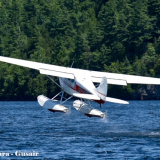
What do you think the impact of an extended seaplane lip on the cowling might be, would you then extend the tube below the lip ? Isn't the intention of the lip to generate "outflow" to enhance cooling which I take as forming a vacuum. I can see how that might lead to "sucking" oil out through the breather tube.
The knowledge on this site is fantastic, thank you to all
-
Mapleflt offline

-
Posts:
2324
- Joined: Sun Feb 12, 2017 2:35 pm
- Location: Bradford
- Aircraft: Cessna S170B NexGen (NM) Variant
-
Perhaps my thoughts do not apply to your situation, but... Years ago, I flew a Grumman Traveler (O-320) whose breather tube had a "notch" in it (colloquially referred to as the "dog whistle"). The Grumman gurus all said that you did NOT want to have the tip of that breather sticking out below the bottom of the cowling, as it would create low pressure, and you'd wind up with oil spray all over the bottom of your airplane. The "dog whistle" notch was supposed to face forward, but well inside the cowling in pretty much "dead air" that was somewhat warmed by proximity to the engine and exhaust. The idea was that if moisture in the tip of the breather tube froze in cold weather, the "notch" would still allow the crankcase to vent through that hole, which was well above the bottom of the tube.
I learned this the hard way because my "non-Grumman-guru" local mechanic had extended the tip into the airflow during my first annual inspection "for better evacuation of the crankcase." I spent an entire year having to clean oil film from the belly of my plane before taking the plane to the "guru" for my next annual and learning that A) the position of the breather tube was dead wrong, and B) I should not be filling the crankcase to the 8 quart mark. Six and a half quarts was my engine's "happy place." After those two adjustments, I could go months between belly cleanings, and only needed to add a 1/2 quart of oil every 25-30 hours of flight time.
-
JP256 offline

-
Posts:
629
- Joined: Mon Aug 31, 2015 1:52 pm
- Location: Cedar Park
- Aircraft: Rans S-6ES
-
DISPLAY OPTIONS
Who is online
Users browsing this forum: No registered users and 0 guests


