After receiving a rather unflattering quote to repair my strut and door, I’ve learned that one needs to pay special attention to their airplane if it is to be tied down overnight in the elements. That being said, I’d love to avoid learning some of these things the expensive way.
With a little over three hundred hours of flying time, mostly all being in rental aircraft while in the pursuit of an added certificate. What are some general operating tips and tricks that new aircraft owners should be aware of? For instance taking the wheel pants off during the winter so slush doesn’t accumulate was a very awesome tip.
I’ve learned some cool stuff on here and in starting this thread, maybe others can learn a thing or two too. Lay it on me!
What Else Should I Know
Tue Dec 08, 2020 4:03 pm
What Else Should I Know
Last edited by pilotryan on Fri Feb 05, 2021 7:59 am, edited 1 time in total.
Tue Dec 08, 2020 5:26 pm
Re: What Else
Preheat your engine
Be in the mindset and be prepared to alter your plans or say “no”.
NEVER tie your airplane down with chains, use the ropes you have in your airplane. You do have ropes in your airplane, don't you?
Dont use a circular motion when cleaning your windshield, if you do when you fly into the sun you will wish you hadn’t. Use vertical motions.
Lean your engine on the ground.
Enter the pattern on the 45, I know, controversial but just do it.
Get LED landing lights and TURN EM ON so others can see you. Dont worry, you wont Burt them out.
When flying an amphib always make sure your hull plugs are in. Applies for boats too.
Do not climb unnecessarily steep right after lift off, this leaves you in a very vulnerable position in the event of an engine failure.
Fly high enough so in the event of an engine failure you can pick the best suitable spot to land AND get turned into the wind.
Always know the surface wind direction.
Always lift the inside wing before a turn and actually look before you turn.
Actually listen on CTAF not just talk.
Always wear your shoulder harness and consider making a personal rule to yourself to never fly in the front seat of an airplane without them.
Always brief your passengers on how to get out of the airplane and other pertinent safety information.
Always stay within gliding distance to land in a single engine airplane over water. (I have lost friends in the water)
Be considerate of your prop wash, don't blast things behind you that you shouldn’t. YOU own your own prop wash, or rotor wash in a helicopter.
Fly with warm cloths, survival gear.
Don't scare the crap of someone you are taking up for their first airplane ride.
Fly as if someone is always watching because they are! Start at the hearing and work your way backwards. Ask yourself before you do something “Is what I am about to do smart”?
Do NOT be led by peer pressure, observe and abide by YOUR own limitations not anyone else’s.
Always be looking for a place to land, you may need it on a moments notice.
In the event of an engine failure after flying the airplane, the first thing to do is pull carb heat, use the residual heat before its gone then do the other pertinent stuff.
Practice power off landings cuz you may need to make one sometime.
Speak clearly and slowly enough on the radio so others can understand you, don't try to sound like the mumbling cool dude pro, or the super fast unreadable skydive pilot announcing impending jump, you will just sound stupid.
Change your engine oil at the prescribed intervals, tach time AND calendar time, usually every 4 months or less.
Push your airplane out of parking spot if you are going to blast people or things if you don't push it out, be considerate. Remember, you own your own prop wash!
Fly with a conservative mindset, use good judgement.
Never utter the words “flyby” on the radio, you never do “flybys” you can do go around and runway inspections but never “flyby’s”. This was overheard by me from an FAA inspector at a fly-in. “Yes sir, message received, loud and clear” was the response by the pilot who was on the receiving end. Nothing more needed to be said.
Take your own maple syrup to pancake fly-in’s.
Tie your airplane down with knots that will actually hold and not the fancy quickly easy to untie loop over hitch whatever knots most use.
Do not leave oily rags in the trash in your hangar. A buddy lost his hangar due to fire because of this, yes it happens.
Be ever so careful with static electricity and refueling from cans. Do some research on this subject.
In bear country, don't leave food in your airplane.
Make sure your pee bottle is large enough.
Never pee into the wind. (Shouldn’t even have to say this but you would be surprised)
When doing a run up look at your EGT’s and CHT’s as well as mag drop.
If you plan on staying in Aviation, marry rich.
Don't be late for dinner.
Eat your veggies.
Be polite.
Dont run with scissors.
Don’t tease the dog/cat.
And most of all, always have on clean underwear, ya never know when you may be in an accident.
There, that is a few off the top of my head, that should give something to chew on.
Kurt
Be in the mindset and be prepared to alter your plans or say “no”.
NEVER tie your airplane down with chains, use the ropes you have in your airplane. You do have ropes in your airplane, don't you?
Dont use a circular motion when cleaning your windshield, if you do when you fly into the sun you will wish you hadn’t. Use vertical motions.
Lean your engine on the ground.
Enter the pattern on the 45, I know, controversial but just do it.
Get LED landing lights and TURN EM ON so others can see you. Dont worry, you wont Burt them out.
When flying an amphib always make sure your hull plugs are in. Applies for boats too.
Do not climb unnecessarily steep right after lift off, this leaves you in a very vulnerable position in the event of an engine failure.
Fly high enough so in the event of an engine failure you can pick the best suitable spot to land AND get turned into the wind.
Always know the surface wind direction.
Always lift the inside wing before a turn and actually look before you turn.
Actually listen on CTAF not just talk.
Always wear your shoulder harness and consider making a personal rule to yourself to never fly in the front seat of an airplane without them.
Always brief your passengers on how to get out of the airplane and other pertinent safety information.
Always stay within gliding distance to land in a single engine airplane over water. (I have lost friends in the water)
Be considerate of your prop wash, don't blast things behind you that you shouldn’t. YOU own your own prop wash, or rotor wash in a helicopter.
Fly with warm cloths, survival gear.
Don't scare the crap of someone you are taking up for their first airplane ride.
Fly as if someone is always watching because they are! Start at the hearing and work your way backwards. Ask yourself before you do something “Is what I am about to do smart”?
Do NOT be led by peer pressure, observe and abide by YOUR own limitations not anyone else’s.
Always be looking for a place to land, you may need it on a moments notice.
In the event of an engine failure after flying the airplane, the first thing to do is pull carb heat, use the residual heat before its gone then do the other pertinent stuff.
Practice power off landings cuz you may need to make one sometime.
Speak clearly and slowly enough on the radio so others can understand you, don't try to sound like the mumbling cool dude pro, or the super fast unreadable skydive pilot announcing impending jump, you will just sound stupid.
Change your engine oil at the prescribed intervals, tach time AND calendar time, usually every 4 months or less.
Push your airplane out of parking spot if you are going to blast people or things if you don't push it out, be considerate. Remember, you own your own prop wash!
Fly with a conservative mindset, use good judgement.
Never utter the words “flyby” on the radio, you never do “flybys” you can do go around and runway inspections but never “flyby’s”. This was overheard by me from an FAA inspector at a fly-in. “Yes sir, message received, loud and clear” was the response by the pilot who was on the receiving end. Nothing more needed to be said.
Take your own maple syrup to pancake fly-in’s.
Tie your airplane down with knots that will actually hold and not the fancy quickly easy to untie loop over hitch whatever knots most use.
Do not leave oily rags in the trash in your hangar. A buddy lost his hangar due to fire because of this, yes it happens.
Be ever so careful with static electricity and refueling from cans. Do some research on this subject.
In bear country, don't leave food in your airplane.
Make sure your pee bottle is large enough.
Never pee into the wind. (Shouldn’t even have to say this but you would be surprised)
When doing a run up look at your EGT’s and CHT’s as well as mag drop.
If you plan on staying in Aviation, marry rich.
Don't be late for dinner.
Eat your veggies.
Be polite.
Dont run with scissors.
Don’t tease the dog/cat.
And most of all, always have on clean underwear, ya never know when you may be in an accident.
There, that is a few off the top of my head, that should give something to chew on.
Kurt
Tue Dec 08, 2020 5:36 pm
Re: What Else Should I Know
Good answers by Kurt!
I'd add "Don't let your ego write a check your skill can't cash..." Goes along with "don't let others talk you into stupid decisions."
One other thing that may seem obvious to most of us: My hangar partner was totally unaware that he had to have the altitude encoding transponder certified every two years, along with the static system (for IFR), so that's one for your list if you were not already aware of it.
I'd add "Don't let your ego write a check your skill can't cash..." Goes along with "don't let others talk you into stupid decisions."
One other thing that may seem obvious to most of us: My hangar partner was totally unaware that he had to have the altitude encoding transponder certified every two years, along with the static system (for IFR), so that's one for your list if you were not already aware of it.

Tue Dec 08, 2020 5:58 pm
Re: What Else Should I Know
Learn your tough airplane ownership lessons in a cheap underpowered beater instead of high dollar high performance Cessnas. 
$99 a year toward BCP support can help...or not.
$99 a year toward BCP support can help...or not.

Tue Dec 08, 2020 6:49 pm
Re: What Else Should I Know
Great lists. I suggest...
Do owner assisted annuals. If you're an A&P have someone else look things over every now and then. It's amazing how many accidents have a maintenance root cause. Without a doubt, lots more maintenance issues and errors get caught before the NTSB 830 reporting threshold is met...
Be very mindful of who does your maintenance. Going 'cheap' can be very expensive, and hazardous too.
Know who is PIC. If there's another pilot who can reach any control, radio, or avionics settle who is PIC and what roles (if any) each pilot will have from pre-flight brief through engine shut down. Remember to discuss emergencies...
Always land with the wheels aligned with the aircraft's direction of travel. I.e., avoid side loads.
File flight plans (or tell people where you are going). Then stick to it. Anything that speeds up launching a missing aircraft search is good for your survival and that of your passengers.
Install a 406 mhz ELT. See previous suggestion for the rationale.
Wear a survival vest when away from your departure airport pattern. Know how to use its contents. Wear the vest! If it ain't on your person you may live to wish it was. Stuff in the back isn't survival equipment, it's camping gear.
Carry survival supplies (water, rations) for a couple days consistent with the terrain and Wx of potential unintended off airport landing sites.
Carry & know how to use a 1st responder (that's YOU) medical kit.
Always dress for the unintended off airport (REALLY backcountry) landing. Wear clothes from natural or fire resistant materials.
Never fly wearing sandles or open toe shoes. Wear sturdy, fire resistant foot gear appropriate for the surface weather of your route. I.e. if you fly over mountains or deserts, it's winter or 120dF deserts what would you need?
If you take meds, carry a couple days supply in your survival vest.
Carry a cell phone or sat phone on your person.
Always know where you are, and where your gadgets are leading you.
Honor the word "Airworthy". If your battery is dead, your auto-pilot tends to do an uncommanded full aileron deflection from time-to-time, you have gouges in your prop... Don't fly til the discrepancies are fixed. "Airworthy" means the aircraft complies with its type design+ADs+STCs etc. AND is' safe to fly'.
Pre-flight yourself and passengers before each flight. Use IMSAFE and be honest with yourself and other person assessments.
Do owner assisted annuals. If you're an A&P have someone else look things over every now and then. It's amazing how many accidents have a maintenance root cause. Without a doubt, lots more maintenance issues and errors get caught before the NTSB 830 reporting threshold is met...
Be very mindful of who does your maintenance. Going 'cheap' can be very expensive, and hazardous too.
Know who is PIC. If there's another pilot who can reach any control, radio, or avionics settle who is PIC and what roles (if any) each pilot will have from pre-flight brief through engine shut down. Remember to discuss emergencies...
Always land with the wheels aligned with the aircraft's direction of travel. I.e., avoid side loads.
File flight plans (or tell people where you are going). Then stick to it. Anything that speeds up launching a missing aircraft search is good for your survival and that of your passengers.
Install a 406 mhz ELT. See previous suggestion for the rationale.
Wear a survival vest when away from your departure airport pattern. Know how to use its contents. Wear the vest! If it ain't on your person you may live to wish it was. Stuff in the back isn't survival equipment, it's camping gear.
Carry survival supplies (water, rations) for a couple days consistent with the terrain and Wx of potential unintended off airport landing sites.
Carry & know how to use a 1st responder (that's YOU) medical kit.
Always dress for the unintended off airport (REALLY backcountry) landing. Wear clothes from natural or fire resistant materials.
Never fly wearing sandles or open toe shoes. Wear sturdy, fire resistant foot gear appropriate for the surface weather of your route. I.e. if you fly over mountains or deserts, it's winter or 120dF deserts what would you need?
If you take meds, carry a couple days supply in your survival vest.
Carry a cell phone or sat phone on your person.
Always know where you are, and where your gadgets are leading you.
Honor the word "Airworthy". If your battery is dead, your auto-pilot tends to do an uncommanded full aileron deflection from time-to-time, you have gouges in your prop... Don't fly til the discrepancies are fixed. "Airworthy" means the aircraft complies with its type design+ADs+STCs etc. AND is' safe to fly'.
Pre-flight yourself and passengers before each flight. Use IMSAFE and be honest with yourself and other person assessments.
- PapernScissors offline
- Posts: 419
- Joined: Sun Mar 06, 2016 8:49 pm
- Location: Spokane
- Aircraft: Cessna 172
Tue Dec 08, 2020 7:12 pm
Re: What Else Should I Know
Excellent items from Papernscissors!
Kurt
Kurt
Tue Dec 08, 2020 7:44 pm
Re: What Else
G44 wrote:
Always wear your shoulder harness and consider making a personal rule to yourself to never fly in the front seat of an airplane without them.
Great lists, Kurt, PapernScissors, JP256.
I'd like to add to the shoulder harness comment. Some float instructors tell you not to buckle up until you're ready for takeoff, in case you need to exit in a hurry. Nonsense. A good 4 point harness (with a proper quick release buckle) takes no time to release. I bought into this thinking initially, until I landed after a two hour flight and found that I'd never buckled up. I guess that also says something for the comfort of BAS shoulder harnesses in that I didn't even realize I wasn't wearing it.
Also, if you're flying floats, take an underwater egress course. It is amazing how everything goes backasswards when you get rolled into the pool, upside down, strapped into a cockpit simulator.
Ross
Tue Dec 08, 2020 8:23 pm
Re: What Else Should I Know
Excellent comments Ross!
Kurt
Kurt
Tue Dec 08, 2020 9:37 pm
Re: What Else Should I Know
This is one of the best topics / threads I've read to date in any GA forum.
- merrymunks offline


- Posts: 68
- Joined: Sat Nov 25, 2017 1:47 pm
- Location: Portland
- Aircraft: Maule M5-180C
Tue Dec 08, 2020 10:17 pm
Re: What Else Should I Know
Flights with GoPros running tend to make make videos of lousy decisions at lower altitudes over worse terrain with fewer options when compared to those without.
Tue Dec 08, 2020 11:17 pm
Re: What Else Should I Know
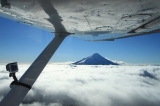
Before getting in the aircraft, stand about 20' back and look at the big picture. Got wings and a tail? Tie downs/chocks/tow bar gone? Obstacles in the vicinity for taxi? Etc.
It's easy to get fixated on your usual walk around checks, and not stand back and see the big picture, especially if you've become distracted for any reason during the preflight.
It's easy to get fixated on your usual walk around checks, and not stand back and see the big picture, especially if you've become distracted for any reason during the preflight.
Tue Dec 08, 2020 11:47 pm
Re: What Else Should I Know
Watch the line boy put the fuel caps on, or, better yet, put them on yourself. If you need a ladder, carry it or hunt one up.
Sump, rock, roll, repeat if the airplane was parked outside at night, if there's been precip, or if you added fuel.
The tow bar is either in your hands or inside the plane.
Leave the beacon switch always on. Look to see it's not flashing when you're finished flying.
Keep cars (especially your own) plenty far away from your airplane. A couple extra steps when loading isn't a big deal.
Always walk behind the airplane to check for obstructions before pushing it back. Elevators are expensive.
Never wear a ball cap when working around the outside of a Cessna single unless you're really short.
CAVU
Sump, rock, roll, repeat if the airplane was parked outside at night, if there's been precip, or if you added fuel.
The tow bar is either in your hands or inside the plane.
Leave the beacon switch always on. Look to see it's not flashing when you're finished flying.
Keep cars (especially your own) plenty far away from your airplane. A couple extra steps when loading isn't a big deal.
Always walk behind the airplane to check for obstructions before pushing it back. Elevators are expensive.
Never wear a ball cap when working around the outside of a Cessna single unless you're really short.
CAVU
Wed Dec 09, 2020 12:54 am
Re: What Else Should I Know
A good mentor.
Big balls.
$$.
You have 2 out of 3.
Big balls.
$$.
You have 2 out of 3.
- Terry offline
- Posts: 1365
- Joined: Sat Nov 10, 2007 9:11 pm
- Location: Willamette Valley
- FindMeSpot URL: http://share.findmespot.com/shared/face ... 4GzPHI6t1d
Wed Dec 09, 2020 1:22 am
Re: What Else Should I Know
InReach fully charged & a spare USB portable battery.

CFII, MEI, CFISES, ATPME, IA/AP, RPPL, Ski&Amphib ops, RHC mechanic cert, RHC SC— 3000TT
Wed Dec 09, 2020 6:58 am
Re: What Else Should I Know
Cannon wrote:Flights with GoPros running tend to make make videos of lousy decisions at lower altitudes over worse terrain with fewer options when compared to those without.
True that!
Wed Dec 09, 2020 8:12 am
Re: What Else Should I Know
Kurt what happened to "install BAS shoulder harnesses" 
Wed Dec 09, 2020 8:29 am
Re: What Else Should I Know
Really?? After all these years of asking advice, not listening to it, and tossing hundreds of thousands of dollars away you are asking this now?pilotryan wrote:Lay it on me!
more popcorn please.
- Bigrenna offline

- Posts: 2359
- Joined: Sun Sep 25, 2011 4:02 pm
- Location: New England
- Aircraft: C180H / C170B
www.bushwagoneast.com
Wed Dec 09, 2020 8:55 am
Re: What Else Should I Know
Mapleflt wrote:Kurt what happened to "install BAS shoulder harnesses"
Yikes! You are right! Well, in my defense, I already pounded that into Ryan.

Kurt
Wed Dec 09, 2020 10:17 am
Re: What Else Should I Know
Great advice, shoulda known I would need to make some popcorn with this kinda thread.Bigrenna wrote:Really?? After all these years of asking advice, not listening to it, and tossing hundreds of thousands of dollars away you are asking this now?pilotryan wrote:Lay it on me!
more popcorn please.
Come on buddy, we all know I only got to fly the 185 1 time after it got home. If a one hour flight is supposed to make you an expert of all things ownership, then I obviously didn’t learn what I was supposed to while my attention was all tied up with an electrical fire.
Like I said in my opening statement, almost all of my flying time has been in rental airplanes with almost half of it being with an instructor while pursuing an added class/cat or endorsement. Maybe your CFI taught you everything you need to know plus all the nice to know first hand experience stuff, mine sure didn’t. It also doesn’t help that I took a nice long two year break from all flying after my 185 almost killed me. I literally just got back on the horse again with the new airplane. So by all means, enjoy the popcorn.
That was the goal. I've gone through all of the forums and I haven't been able to find a thread with a ton of helpful information in one place. Long story short, I have gotten a bunch of messages over the past couple of years telling me that reading about my 185 has helped save them time, money and frustration with their own airplane. I got to thinking last night that I can't be the only pilot who is transitioning from renting to owing an airplane for the first time and that maybe this information could help someone else who is in a similar situation. This information is already helping me plan for future flights.merrymunks wrote:This is one of the best topics / threads I've read to date in any GA forum.
I really do appreciate the helpful advice, especially the marry rich and don’t be late for dinner part. Don’t tell my girlfriend I said this, but just imagine the airplanes I could play with if I could pull that off

In all seriousness, I can do better with the stuff that I put in the airplane. I have been carrying around a small little Walmart survival kit in the baggage compartment. Only god knows what’s in there, I definitely don’t. Could I use its contents to save my passengers or my own life? Probably not.
Last edited by pilotryan on Wed Dec 09, 2020 12:00 pm, edited 1 time in total.
Wed Dec 09, 2020 11:47 am
Re: What Else Should I Know
I'll throw in a few things to the growing list:
Many passengers do not appreciate that airplanes fly better being constructed with lightweight materials. As a result, our beautiful airplanes are not as durable as many people think. I always tell passengers that I will operate the doors unless there is an urgent/emergent situation. I tell a passenger to never hold on to the door for support during ingress or egress. For a nosewheel 172/182, this isn't much of an issue. But for a tailwheel Cessna on 31" bushwheels, it is a ways up to enter the cabin, and passengers are always looking for something to grab for support. The door is secured with two small pins, but people tend to treat airplane doors like they are made for trucks. Unless the passenger is someone who has flown with me before (many times), I will have them draw the door toward me until I can reach it and then close and latch the door myself. Again, like car doors, too many passengers get in and slam the door shut....and occasionally with the locking pin extended where it smashes and dents the door frame. Awesome. *Note* - this only seems to apply to Part 91. Part 135 operators are exempt.
Windows are not made of scratch-proof glass. See Kurt's comment about circular versus linear cleaning motions. I do not like throwing gear, debris, gloves, materials, or anything onto my glareshield because the plastic will scratch with these things rubbing against them. Passengers love to take photos, and I have seen instances when someone brings a nice SLR camera aboard and drags the lens across the window while taking pictures. It doesn't take many window scratches before you learn to brief your passengers on keeping their cameras and lenses off the windows. I had two passengers in the backseat of my 185 having a grand time, but seeing the unsightly zig zag patterns of scratches across the windows after we landed taught me a lesson that day.
If you have a Cessna with the smaller diameter V-brace, you may want to instruct your passengers to grab on to the brace nearer to the attach points than right in the middle. They will bend when a 300# person grabs it right in the middle and pulls.
If I EVER turn my fuel selector to OFF, I take my key out of the ignition and secure it to the fuel selector valve. This is probably less of an issue at airports, but here's the backcountry scenario...since this is BCP. You land at a cambered beach with fullish tanks and cannot get wings level for whatever reason when parking. If you have a fuel system that prevents crossfeeding when the selector is in the off position, you switch to off. Because this is the backcountry on a remote beach, there is minimal to no taxiing from startup to takeoff again. If you forget to turn your selector back to on, there may be just enough fuel in your system to start and roll into position, takeoff, and then experience engine failure. (I know that using a checklist will prevent this problem. But I still hang my key off the selector valve).
I always have a sic sac handy and available. My first lesson was in 1991 when I took a friend's 11 year old son for a flight. It was a beautiful but convective sunny day and we had just had lunch at Burger King. Somewhere at 3000', he starts looking really green, and I know he going to puke. I look around and quickly grab the only bag available which is the bag our burgers came in because there were some leftover fries the kid wanted to save. He throws up into this paper bag and immediately blows the bottom out of it. Paper bags, no bueno. Lesson learned.
I move my planes with towbars as much as possible. Said another way, I avoid pushing on the plane's surfaces as much as possible.
I appreciate the comments on prop wash.
Many passengers do not appreciate that airplanes fly better being constructed with lightweight materials. As a result, our beautiful airplanes are not as durable as many people think. I always tell passengers that I will operate the doors unless there is an urgent/emergent situation. I tell a passenger to never hold on to the door for support during ingress or egress. For a nosewheel 172/182, this isn't much of an issue. But for a tailwheel Cessna on 31" bushwheels, it is a ways up to enter the cabin, and passengers are always looking for something to grab for support. The door is secured with two small pins, but people tend to treat airplane doors like they are made for trucks. Unless the passenger is someone who has flown with me before (many times), I will have them draw the door toward me until I can reach it and then close and latch the door myself. Again, like car doors, too many passengers get in and slam the door shut....and occasionally with the locking pin extended where it smashes and dents the door frame. Awesome. *Note* - this only seems to apply to Part 91. Part 135 operators are exempt.
Windows are not made of scratch-proof glass. See Kurt's comment about circular versus linear cleaning motions. I do not like throwing gear, debris, gloves, materials, or anything onto my glareshield because the plastic will scratch with these things rubbing against them. Passengers love to take photos, and I have seen instances when someone brings a nice SLR camera aboard and drags the lens across the window while taking pictures. It doesn't take many window scratches before you learn to brief your passengers on keeping their cameras and lenses off the windows. I had two passengers in the backseat of my 185 having a grand time, but seeing the unsightly zig zag patterns of scratches across the windows after we landed taught me a lesson that day.
If you have a Cessna with the smaller diameter V-brace, you may want to instruct your passengers to grab on to the brace nearer to the attach points than right in the middle. They will bend when a 300# person grabs it right in the middle and pulls.
If I EVER turn my fuel selector to OFF, I take my key out of the ignition and secure it to the fuel selector valve. This is probably less of an issue at airports, but here's the backcountry scenario...since this is BCP. You land at a cambered beach with fullish tanks and cannot get wings level for whatever reason when parking. If you have a fuel system that prevents crossfeeding when the selector is in the off position, you switch to off. Because this is the backcountry on a remote beach, there is minimal to no taxiing from startup to takeoff again. If you forget to turn your selector back to on, there may be just enough fuel in your system to start and roll into position, takeoff, and then experience engine failure. (I know that using a checklist will prevent this problem. But I still hang my key off the selector valve).
I always have a sic sac handy and available. My first lesson was in 1991 when I took a friend's 11 year old son for a flight. It was a beautiful but convective sunny day and we had just had lunch at Burger King. Somewhere at 3000', he starts looking really green, and I know he going to puke. I look around and quickly grab the only bag available which is the bag our burgers came in because there were some leftover fries the kid wanted to save. He throws up into this paper bag and immediately blows the bottom out of it. Paper bags, no bueno. Lesson learned.
I move my planes with towbars as much as possible. Said another way, I avoid pushing on the plane's surfaces as much as possible.
I appreciate the comments on prop wash.
DISPLAY OPTIONS
Who is online
Users browsing this forum: No registered users and 4 guests
Latest Features
-
-
Featured Bush Planes
As one of the undisputed legends of bush flying, the Cessna 180 hauls a…Read More -
Aircraft Ownership and Maintenance
9 modification mistakes aircraft owners make when trying to "bush out" their birds—why some…Read More -
Live to Tell
A Minnesota pilot is surprised to learn that the sudden asymmetric drag of an…Read More




Latest Knowledge Base
-
Destinations
Canada offers some of the most spectacular backcountry flying on the continent. Here's what you need to know before you go.Read More -
Safety and Survival
Hope that you never have to use your survival vest but knowing you have it and knowing how to use…Read More -
Destinations
A regional guide with ideas for winter camping destinations in California, Nevada, New Mexico, and Arizona.Read More -
Aircraft
Finding an affordable aircraft that can handle the backcountry for $80K or less? A challenge for sure, but with the…Read More



