What Else Should I Know
Wed Dec 09, 2020 12:22 pm
Re: What Else Should I Know
This thread needs to go into the "knowledge" database, great stuff
Wed Dec 09, 2020 1:20 pm
Re: What Else Should I Know
pilotryan wrote:Come on buddy, we all know...
The only thing "we" know is that you had a year plus of advice on this forum, plus a lot of time in phone calls with folks trying to keep you out of trouble (including myself) of which you listened to pretty much zero. I just find it amusing you are asking. If past is prologue and all...
- Bigrenna offline


- Posts: 2339
- Joined: Sun Sep 25, 2011 4:02 pm
- Location: New England
- Aircraft: C180H / C170B
www.bushwagoneast.com
www.avthreads.com
Wed Dec 09, 2020 3:50 pm
Re: What Else You Should Know
That’s not exactly where I was going with my reply. Besides, how does me getting into bed with some shady people and loosing a substantial amount of money have anything to do with operating tips for my new airplane? Correct me if I’m wrong, but I can’t seem to find a correlation between people telling me all the different kinds of mods I should do to an airplane and people telling me how they have learned to fly their own airplanes more effectively.Bigrenna wrote:pilotryan wrote:Come on buddy, we all know...
The only thing "we" know is that you had a year plus of advice on this forum, plus a lot of time in phone calls with folks trying to keep you out of trouble (including myself) of which you listened to pretty much zero. I just find it amusing you are asking. If past is prologue and all...
And before you tell me I don’t listen to anyone’s advice and just ignore all of it, I’m pretty sure I listened to your advice about deleting my thread and taking a break from BCP when I had my accident a few years back. Big fucking deal I didn’t buy the shit you tried to sell me off of Alex’s plane. Besides, none of that counts as advice. No disclosures.
To defend myself, actually almost everything that was done to the airplane was done because of suggestions that I received from some of you guys. The Sportsman, VGs, LEDs, BAS Harness, Extended Baggage, Alternator, Double puck brakes, new engine controls. You yourself told me I had to get an MVP-50, which I did. Even the MT for that matter. When the airplane was airworthy, it flew like a dream and I’m very happy with the mods that were done to the airplane. I appreciate the many suggestions.
However, I can see where you are trying to make a point as there were also some conflicting suggestions on my thread. I will admit, some of the suggestions were just not feasible with the condition the airplane was in when we got our hands on it. The majority of those suggestions and opinions dealt with leaving the airplane relatively un modified. There were a lot of problems with the airplane and fortunately/unfortunately most of them were able to be resolved with replacement.
For those that told me to take the airplane somewhere else or to do this project myself, those were words of gold that I truly wish I had listened to. The experience alone I would have gained by doing that would have helped me ten fold. What I can say is that I got what I paid for with lessons learned. What's past is prologue BUT experience is the best teacher. I've already altered my modding plans for my Skylane because of the advice that was given in my thread about it. Not to mention that I have also begun to explore changes to how I operate the airplane because of the advice and opinions given in this thread. Bravo again Kurt, that’s a fantastic list.
In conclusion, I’m honest to god not interested in continuously having to defend myself from all the bullshit that is involved with the 185. I will happily write up a debrief on it when the time comes. Until then, why keep bringing it up? What’s there to gain?
Last edited by pilotryan on Mon Dec 28, 2020 1:07 am, edited 3 times in total.
Wed Dec 09, 2020 3:57 pm
Re: What Else Should I Know
pilotryan wrote:Great advice, shoulda known I would need to make some popcorn with this kinda thread.Bigrenna wrote:Really?? After all these years of asking advice, not listening to it, and tossing hundreds of thousands of dollars away you are asking this now?pilotryan wrote:Lay it on me!
more popcorn please.
Come on buddy, we all know I only got to fly the 185 1 time after it got home. If a one hour flight is supposed to make you an expert of all things ownership, then I obviously didn’t learn what I was supposed to while my attention was all tied up with an electrical fire.
Like I said in my opening statement, almost all of my flying time has been in rental airplanes with almost half of it being with an instructor while pursuing an added class/cat or endorsement. Maybe your CFI taught you everything you need to know plus all the nice to know first hand experience stuff, mine sure didn’t. It also doesn’t help that I took a nice long two year break from all flying after my 185 almost killed me. I literally just got back on the horse again with the new airplane. So by all means, enjoy the popcorn.
Bigrenna wrote:pilotryan wrote:Come on buddy, we all know...
The only thing "we" know is that you had a year plus of advice on this forum, plus a lot of time in phone calls with folks trying to keep you out of trouble (including myself) of which you listened to pretty much zero. I just find it amusing you are asking. If past is prologue and all...
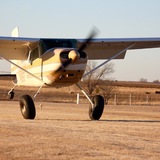
Man Greg that is kinda mean. Just because a guy asks for advice that doesn't mean he has to follow any of it. Learning about everything aviation is a is a long long road and I know all of us have made mistakes along the way but that's all just part of the process. Ive just started trying to learn about doing sheet metal work on airplanes and I know Ive got a long long way to go. (Pic below) In the mean time lets be nice to our less experienced friends and try and be mentors not critics.

Wed Dec 09, 2020 4:07 pm
Re: What Else Should I Know
I remember my first few rivets, they weren't pretty! We all have to start somewhere though and at least you are starting down that path. If you're at all interested, I'm planning on flying down to the ranch in a couple weeks. Would you want to meet up and exchange some Skywagon flying techniques for some riveting tips & tricks?RKTX wrote:Learning about everything aviation is a is a long long road and I know all of us have made mistakes along the way but that's all just part of the process. Ive just started trying to learn about doing sheet metal work on airplanes and I know Ive got a long long way to go. (Pic below) In the mean time lets be nice to our less experienced friends and try and be mentors not critics.
Wed Dec 09, 2020 5:17 pm
Re: What Else Should I Know
Zzz wrote:$99 a year toward BCP support can help...or not.

This ^^^^
I've learned a lot from this site and a couple others. For lessons learned and entertainment value they are worth keeping around, we need to do our part, it's peanuts compared to other costs in this pursuit.
- marcusofcotton offline


- Posts: 257
- Joined: Sun Jan 02, 2011 6:44 am
- Location: Northern MN
Wed Dec 09, 2020 5:26 pm
Re: What Else Should I Know
If I could start in aviation all over again, I'd go back and choose a wealthy family, or marry into one. It would have made the last 20 years WAY easier.
- Zzz offline


- Posts: 2854
- Joined: Fri Oct 08, 2004 11:09 pm
- Location: northern
- Aircraft: Swiveling desk chair
Half a century spent proving “it is better to be thought a fool than to open your mouth and remove all doubt.”
Wed Dec 09, 2020 6:09 pm
Re: What Else Should I Know
RKTX wrote:Man Greg that is kinda mean.
Perhaps... then again, context is everything. If one missed the first six or seven chapters, then one might read it that way. I don't think anyone can accuse me of not wanting to help anyone out.
- Bigrenna offline
- Posts: 2339
- Joined: Sun Sep 25, 2011 4:02 pm
- Location: New England
- Aircraft: C180H / C170B
www.bushwagoneast.com
www.avthreads.com
Wed Dec 09, 2020 9:24 pm
Re: What Else Should I Know
I really like that tip about GoPro.
When I first flew to Alaska, I bought a new GoPro, whatever the best one was.
It hooked up to my phone, which I had on the cockpit, and I intended to turn it on and off with the phone. Of course, the GoPro used Bluetooth, which was very unreliable - and as the Gopro did not work 100% of the time, pilot cycles were spent troubleshooting it.
Instead of trying to fix it on the next landing, I just took it, put it in my bag, and put the bag in the float. When flying in an unfamiliar area, super important to not be experimenting and testing gear out... While I wish I had a few more videos, overall I don't regret it at all because I spent more time focusing on learning the terrain and area than trying to debug a buggy gopro app from the cockpit.
I've learned to be very selective about what items, go in the forward cabin area [Pilot and CoPilot seats]. I scrutinize everything in the cockpit and determine:
1. Does it work? - is it updated?
2. Do I know how to use it? Have I proven that it's reliable using ground tests.
3. Is it absolutely necessary to be up there? - Do you need a Microusb charging cable in your glovebox if you keep your microusb stuff in your backpack? Do I need to keep the fuel receipts up there or can they go somewhere else.
I keep my Inreach within arms reach [behind the copilot seat] but it does not go in the forward area.
This process has helped me a ton, keep junk out of the forward cockpit to minimize distractions and pilot cycles... You don't want to be updating foreflight maps on a backup iPad or deleting things for space while you are flying, make sure to do it all ahead of time.
When I first flew to Alaska, I bought a new GoPro, whatever the best one was.
It hooked up to my phone, which I had on the cockpit, and I intended to turn it on and off with the phone. Of course, the GoPro used Bluetooth, which was very unreliable - and as the Gopro did not work 100% of the time, pilot cycles were spent troubleshooting it.
Instead of trying to fix it on the next landing, I just took it, put it in my bag, and put the bag in the float. When flying in an unfamiliar area, super important to not be experimenting and testing gear out... While I wish I had a few more videos, overall I don't regret it at all because I spent more time focusing on learning the terrain and area than trying to debug a buggy gopro app from the cockpit.
I've learned to be very selective about what items, go in the forward cabin area [Pilot and CoPilot seats]. I scrutinize everything in the cockpit and determine:
1. Does it work? - is it updated?
2. Do I know how to use it? Have I proven that it's reliable using ground tests.
3. Is it absolutely necessary to be up there? - Do you need a Microusb charging cable in your glovebox if you keep your microusb stuff in your backpack? Do I need to keep the fuel receipts up there or can they go somewhere else.
I keep my Inreach within arms reach [behind the copilot seat] but it does not go in the forward area.
This process has helped me a ton, keep junk out of the forward cockpit to minimize distractions and pilot cycles... You don't want to be updating foreflight maps on a backup iPad or deleting things for space while you are flying, make sure to do it all ahead of time.
Wed Dec 09, 2020 10:00 pm
Re: What Else Should I Know
First off  Bravo Kurt - that was a great list. Did you already have that written out some where?
Second I don’t know how I missed Ryan’s original 185 thread (was a period of time where I wasn’t visiting very often) but it sounds like I missed a doozy!!
Ryan - best of luck with the new plane, bummer about the door. My pilot side popped open during an over night in Chandler, AZ. Wind was from front pilots side so was not swinging around in the wind and had no damage. That is when I learned about the difference between latching it from the inside vs. outside on those older doors. Up till that point no instructor or anything in the POH called that out. Sometimes people forget they got some of their knowledge from experience..
Bravo Kurt - that was a great list. Did you already have that written out some where?Second I don’t know how I missed Ryan’s original 185 thread (was a period of time where I wasn’t visiting very often) but it sounds like I missed a doozy!!
Ryan - best of luck with the new plane, bummer about the door. My pilot side popped open during an over night in Chandler, AZ. Wind was from front pilots side so was not swinging around in the wind and had no damage. That is when I learned about the difference between latching it from the inside vs. outside on those older doors. Up till that point no instructor or anything in the POH called that out. Sometimes people forget they got some of their knowledge from experience..
Thu Dec 10, 2020 6:36 am
Re: What Else Should I Know
No, I didn't have that written out already. I just sat down and started typing, hope it helps others. Some lessons that I have learned over the years.
Kurt
Kurt
Fri Dec 11, 2020 10:31 am
Re: What Else Should I Know
Bigrenna wrote:RKTX wrote:Man Greg that is kinda mean.
Perhaps... then again, context is everything. If one missed the first six or seven chapters, then one might read it that way. I don't think anyone can accuse me of not wanting to help anyone out.
My apologies for questioning you. I never should have done such a thing. I think I'm just going to head back to the shop and get to work on my riveting skills, I think I'm finally getting a little better!

Fri Dec 11, 2020 12:01 pm
Re: What Else Should I Know
RK, I'll be the first to admit I don't have a ton of solid rivet experience but I have done some shop experiments while chipping away at my Bearhawk, which has a lot of riveting tasks. One thing i tried was putting a little blue painter's tape around the area to protect the paint, but also a little right on the rivet head or the set to protect the alodined layer. It seemed to work ok and kept the rivet head looking a little nicer.
Experiment off the plane with scraps
Experiment off the plane with scraps
- Zzz offline
- Posts: 2854
- Joined: Fri Oct 08, 2004 11:09 pm
- Location: northern
- Aircraft: Swiveling desk chair
Half a century spent proving “it is better to be thought a fool than to open your mouth and remove all doubt.”
Fri Dec 11, 2020 3:23 pm
Re: What Else Should I Know
Might not be the 'best' or 'accepted' way of driving rivets, but my mechanic has always put a piece of blue painters tape over the end of the set. I haven't driven them but I sure have bucked a lot of them and every time there was blue tape over the end of the set to keep things clean and pretty. I don't remember exactly but it seemed like the tape only needs to be replaced every 20 rivets or so.
Fri Dec 11, 2020 8:15 pm
Re: What Else Should I Know
Kurt,
Likely the best "stream of conciseness" posts I've ever read. Well done!
Pilotrynan. Don't run out of gas.
3 axioms in aviation that still ring true to me:
You never want to think about- the altitude below you, the gas you left on the ramp, and the runway behind you.
Makes life easier when the shit hits the fan.
MW
Likely the best "stream of conciseness" posts I've ever read. Well done!
Pilotrynan. Don't run out of gas.
3 axioms in aviation that still ring true to me:
You never want to think about- the altitude below you, the gas you left on the ramp, and the runway behind you.
Makes life easier when the shit hits the fan.
MW
- 185Midwest offline
- Posts: 437
- Joined: Sun Sep 30, 2018 11:58 am
- Location: Fort Wayne
- Aircraft: C-185
Fri Dec 11, 2020 8:36 pm
Re: What Else Should I Know
Zzz wrote:RK, I'll be the first to admit I don't have a ton of solid rivet experience but I have done some shop experiments while chipping away at my Bearhawk, which has a lot of riveting tasks. One thing i tried was putting a little blue painter's tape around the area to protect the paint, but also a little right on the rivet head or the set to protect the alodined layer. It seemed to work ok and kept the rivet head looking a little nicer.
Experiment off the plane with scraps
Thanks Zane! I'll have to try that! I guess I should have practiced before hand but I just got excited. I feel like someone might need to start a "What else should I know about shooting rivets" thread. Here is my last try for the night. Still got a ways to go but its getting there.
Also @Ryan I'll definitely take you up on your offer if you ever make it down to Texas. Pretty cool to have a Delta Mechanic offer to help me out. Thanks man!

Fri Dec 11, 2020 9:24 pm
Re: What Else Should I Know
Thank you 185MW!
Kurt
Kurt
Sat Dec 12, 2020 10:21 am
Re: What Else Should I Know
I think a good intro to how to keep good paperwork would be really useful. It certainly is a really necessary part of airplane ownership and affects value and saleability of the plane.
Journey log, prop motor and airframe logs, ADs, STCs, annuals, pitotstatic inspections, ELTs. It’s a lot for a new pilot to grasp.
And how to address dodgy older paperwork.
Journey log, prop motor and airframe logs, ADs, STCs, annuals, pitotstatic inspections, ELTs. It’s a lot for a new pilot to grasp.
And how to address dodgy older paperwork.
- daedaluscan offline

- Posts: 1269
- Joined: Sat Jan 12, 2013 1:06 pm
- Location: Texada BC
Sat Dec 12, 2020 11:26 am
Re: What Else Should I Know
daedaluscan wrote:I think a good intro to how to keep good paperwork would be really useful. It certainly is a really necessary part of airplane ownership and affects value and saleability of the plane.
Journey log, prop motor and airframe logs, ADs, STCs, annuals, pitotstatic inspections, ELTs. It’s a lot for a new pilot to grasp.
And how to address dodgy older paperwork.
Great suggestion and spot on. That is great for the maintenance and airplane ownership section. However, it can also bleed into the subject matter here in this thread on the operational aspect. When operating the airplane make sure you have all the required documentation onboard. I have it neatly in a plastic 3 ring folder/binder or envelope. I was ramp checked in Anchorage and I showed them that binder with all the info in it and the 2 FAA guys said “we are wasting our time with you” lasted just a few minutes and never had a check from those guys again.
The AROW items AND any other operating supplements need to be in the in the airplane. Work a W&B problem with the info you have onboard your airplane, pretend an FAA inspector is asking you to do this, can you do it with the info you have on board? No? Then how did you do it before flight? Get the info you need, print it off and carry it in your W&B paperwork. I know, splitting hairs here but remember, you will never have a problem until you have a problem! Another example, compass deviation card? Is it onboard and can you read the writing on it? Years ago an inspector grounded both glider tow planes at a busy glider port on a Saturday for this very reason, I was there waiting for a tow. This stuff isn't common but if it happens to you it sure sucks. There are other examples that can hang you up on a ramp check with a picky inspector but I wont list everything, just put yourself in the shoes of an inspector who is out to get someone, think how you could pick your own airplane apart and address it, most stuff is easy stuff to fix before it becomes an issue. Check the paperwork on your STC’s and mods, there may be some operations supplements that you have overlooked, if so, print em off and put them in your onboard paperwork packet or 3 ring binder. A lot of the other items such as annual inspection sign offs and other maintenance stuff does not need to be carried in the airplane and I would strongly suggest NOT carrying these in the airplane, leave em at home in a safe place.
Kurt
Last edited by G44 on Sat Dec 12, 2020 12:29 pm, edited 1 time in total.
Sat Dec 12, 2020 11:35 am
Re: What Else Should I Know
G44 wrote:daedaluscan wrote:I think a good intro to how to keep good paperwork would be really useful. It certainly is a really necessary part of airplane ownership and affects value and saleability of the plane.
Journey log, prop motor and airframe logs, ADs, STCs, annuals, pitotstatic inspections, ELTs. It’s a lot for a new pilot to grasp.
And how to address dodgy older paperwork.
Great suggestion and spot on. That is great for the maintenance and airplane ownership section. However, it can also bleed into the subject matter here in this thread on the operational aspect. When operating the airplane make sure you have all the required documentation onboard. I have it neatly in a plastic 3 ring folder/binder or envelope. I was ramp checked in Anchorage and I showed them that binder with all the info in it and the 2 FAA guys said “we are wasting our time with you” lasted just a few minutes and never had a check from those guys again.
The AROW items AND any other operating supplements need to be in the in the airplane. Work a W&B problem with the info you have onboard your airplane, pretend an FAA inspector is asking you to do this, can you do it with the info you have on board? No? Then how did you do it before flight? Get the info you need, print it off and carry it in your W&B paperwork. I know, splitting hairs here but remember, you will never have a problem until you have a problem! Another example, compass deviation card? Is it onboard and can you read the writing on it? Years ago an inspector grounded both glider two planes at a busy glider port on a Saturday for this very reason, I was there waiting for a tow. This stuff isn't common but if it happens to you it sure sucks. There are other examples that can hang you up on a ramp check with a picky inspector but I wont list everything, just put yourself in the shoes of an inspector who is out to get someone, think how you could pick your own airplane apart and address it, most stuff is easy stuff to fix before it becomes an issue. Check the paperwork on your STC’s and mods, there may be some operations supplements that you have overlooked, if so, print em off and put them in your onboard paperwork packet or 3 ring binder. A lot of the other items such as annual inspection sign offs and other maintenance stuff does not need to be carried in the airplane and I would strongly suggest NOT carrying these in the airplane, leave em at home in a safe place.
Kurt
This advice is pure gold Kurt. I had a similar experience with a commercially operated airplane at a remote location far from the home base. In support of the "off-site" operations the maintenance department put together a very comprehensive document package. It worked like a charm for two ramp inspections and protected the contractual performance guarantees associated with the overall operation.
DISPLAY OPTIONS
Who is online
Users browsing this forum: No registered users and 0 guests
Latest Features
-
Live to Tell
A Minnesota pilot is surprised to learn that the sudden asymmetric drag of an out-of-rig ski can…Read More -
Creators
Working in some of the Yukon's most beautiful and remote environments, photographer Simon Blakesley captures aircraft in…Read More -
Aircraft Ownership and Maintenance
Upgrading to big tires can make a huge difference in backcountry performance, but with those gains come…Read More -
Tales from Yesteryear
In this tale from bush flying yesteryear, Don Cogger signs up to help Atlee Dodge Jr recovery…Read More


Latest Knowledge Base
-
Destinations
A regional guide with ideas for winter camping destinations in California, Nevada, New Mexico, and Arizona.Read More -
Aircraft
Finding an affordable aircraft that can handle the backcountry for $80K or less? A challenge for sure, but with the…Read More -
Aircraft
01.29.2018 - Zane - Updated tire diameter graphic to add 8.50x10 Guide to tires for use in the backcountry and off-airport landing…Read More -
Pilots
12.22.2013 - Initial article format Operating aircraft on skis and negotiating a snow-covered landscape is an entirely unique skillset and environment.…Read More


