Tue Nov 21, 2006 11:04 am
The other day, with a little blue in the sky, an oxygen bottle, and some time on my hands, I went flying to see how high my plane would go. There was a 5 mile diameter hole in the clouds over the airport when I lifted off, so I stayed with it as it drifted north.
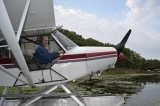
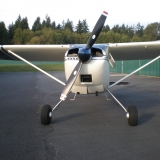
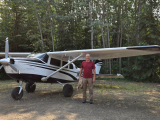
My plane is a homebuilt Savannah. It's gross weight is 1230 pounds, but on the day I flew it was closer to 950. The Rotax 912ULS engine is rate 100hp. With leading edge slats and a very boxy shape, it is great at short landings and takeoffs, but slow at 90 mph max cruise.
At 10,000 it was still climbing at better than 500 ft/min. At 12,000 I put on the oxygen. At 16,000 the rate of climb was 300 ft/min. At 17,000 the rate was about 200. I pushed the nose over, and max level speed was only about 60 mph indicated. This is about 79 mph true. I was bored, so I did not continue the climb, but I think it would have gotten up to about 18,000. The descent seemed to take almost as long as the climb. I stayed over my "hole" and was well north of the airport when I came out below the clouds. Got to see a Citation on long final. Glad the hole was big enough for two.
For the geeks, there is a neat spreadsheet called the Bootstrap Method of Aircraft Performance written by a guy named John Lowry. His article explaining how to use the spreadsheet as well as the xls file can be found on the AVWEB site. Anyway, using this spreadsheet the prediction of service ceiling is very close to what I actually got. The spreadsheet can predict performance at various altitudes and weights. There is also one for constant speed props.
tom

















](/phpbb3/images/smilies/eusa_wall.gif "Brick wall")


