The trade
After much hemming and hawing on my part, I decided to take a cosmetically flawed but supposedly mechanically exceptional PA18A-150 on trade for my 2013 Carbon Cub. So very early on the morning of the summer solstice we took my Carbon Cub over to Grand Junction, dropped it off and reluctantly picked up the 1957 Super Cub.
I was primarily reluctant just due to my inexperience in Cubs. I have probably 300 hours in them, but most of that was in my late teens teaching out of the back seat. Occasionally a client shows up with a Cub, but not too often, strangely. Compared to what I know about other manufacturers, my experience with proper Piper Cubs was fairly limited.
 Ugly Betty, a 1957 PA-18A-150, fresh from the trade.
Upon picking up the Cub, a few things were immediately evident. It was perfectly represented by my friend/buyer: cosmetically ugly, but otherwise it flew perfect and the logbooks were meticulously kept. It had quite a number of desirable mods over the years including VGs, a long wing with droop tips, and an extended baggage with external door.
I should be clear here. I took this plane in purely as a business decision. The goal was not to own a third aircraft, however, after flying what we had started calling "Ugly Betty" for a bit, that decision became more and more difficult. I was flying her almost every evening trying to get as comfortable with heel brakes as I am with toe brakes, and while she flew great at our altitude (approx 5,300 MSL), the performance was definitely lacking. My girlfriend and I are used to flying a highly modified, long-wing Maule M7 and a Carbon Cub, so Ugly Betty with her small prop, lower horsepower, small gear, and little tires really had trouble matching what we are used to. After two incidents (more on that later) where this aircraft's performance spooked me a little, I started thinking about cheap (it's all a matter of perspective I suppose) ways to enhance Betty's capability.
 She was a great flyer, a good candidate for some new upgrades.
Strategic upgrades
 There's only one solution for flotation on gooey ground.As a dealer for CubCrafters, I have good access to the wizards of Yakima and their decades of modifying Cubs. I placed a call to Stan the Cub man and discussed some options. I didn't want to go crazy on the expense, as my Maule's engine is approaching TBO, so the bank account is already slated to take a hit soon. With that in mind, we decided that a strategic list of upgrades would be made, as cost effectively as possible.
After having a spooky episode coming out of a routine landing spot in the Colorado foothills, a new Borer Prop 82 “ 41” for max pull and climb was an easy decision. After getting stuck in the mud at a friend’s place, new 31” Alaskan Bushwheels were also an easy decision. Having put extended gear on my Maule and seeing its difference, we opted for a 3” extended gear from CubCrafters. I also like the slow speed authority that gap seals provide and also wanted the security of safety cables on the gear. I thought that was all it would take, but with most projects there were a few unexpected things along the way. It turns out my gear was old and original, so it wasn’t turnkey compatible with the CubCrafters gear, so I had to go buy some hydrosorbs from Univair (which luckily is local). Also, someone had rigged the gear with axle sleeves making the wheel set incompatible….Soooo another trip down to Univair was necessary for a Cleveland wheel/brake set. Here is the cost breakdown:
| List of improvements | |
|---|---|
| McCauley 1A175/GM8241 Borer Propeller | $5,150.00 |
| 31" Alaska Bushwheels | $3,580.00 |
| CubCrafters 3" Extended Gear | $1,500.00 |
| Univair Hydrosorbs | $2,200.00 |
| Cleveland Brakes/wheels | $1,850.00 |
| CubCrafters PA18 Gap Seals | $250.00 |
| F. Atlee Dodge Saftey Cables | $150.00 |
| Labor | $500.00 |
| Total | $15,180.00 |
There were some other ancillary costs, but I didn’t really keep track of those and I was only 50% or $5,000.00 over budget.
Results
 Betty with new shoes and prop.I have had so many people over the years ask about this mod or that mod on my planes and all I really have is anecdotal answers. I decided to pay closer attention this time. While we didn’t test it per mod, we did measure overall change with all of them in place.
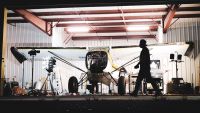
Candidly, it was far from scientific. For instance, we didn't weigh it before so all we had was a calculated weight and balance which I have found over the years become notoriously inaccurate as items are added and removed. Betty only gained 30 pounds, which seems a little low frankly, but I have no way to know for sure. We were lucky with the weather and we had 78°F and no wind both days. Altimeter settings were 30.00" and 30.01" so we had extremely similar conditions. I was flying the airplane with 25 gallons on board both days. I used what I would consider the same technique. I didn't use any brakes other than to line up, and I rotated as soon as I thought I wouldn't tap the tailwheel (I did both times. Like I said: not much Cub time.) We used spotters and recorded everything on video with five different angles: three on the plane, one standing on the ground, and one hovering overhead.
On my first takeoff after the mods, I admittedly was disappointed. I don't know what I was expecting, but it didn't feel like $15K well spent. The video we made is of that takeoff. After getting the measurement data and watching the video footage side-by-side, and spending a little more time flying her, it turns out I am actually very pleased.
Here are our findings from that first day. I think I could do better now however using the brakes and different techniques. Keep in mind: density altitude was roughly 8,000' MSL both days.
| Takeoff comparison before and after | |
|---|---|
| Ground Roll Before | 763 ft |
| Ground Roll After | 327 ft |
| Total Difference | -436' (67% shorter) |
| Climb Before @ 65 mph | 370 fpm |
| Climb After @ 65 mph | 600 fpm |
| Difference | +230 fpm (38% increase) |
| Before Cruise @ 2300 RPM | 93 mph IAS |
| After Cruise @ 2300 RPM | 87 mpg IAS |
| Difference | -6 mph (6% slower) |
Conclusions
Our prop clearance at 10 PSI on the bushwheels was 5.5" higher despite a much bigger prop. That's very favorable biproduct of the bushwheels.
There are a few other things I noticed with a little more time in the aircraft, some good some bad:
- The airplane is no longer a true hands-off flyer. It's not bad by any standard, but not nearly as solid as it was.
- It's now much harder to get into the back seat.
- I lost a little payload, and all the weight is up front so I run out of elevator on landing if I'm super slow.
- The big flat prop out front really helps get more consistent spot landings.
- Fueling is easier with the fuel step integrated into the gear.
- My oil temp is lower now for some reason allowing me to climb a little slower/steeper.
I haven’t really started to strip the weight out yet, but after seeing what I got out of my Maules over the years, I am guessing I could easily pull 35-50 lbs off the front of the plane, which would be nice for weight and balance.
The real question is: was it worth $15,000? I think so, but maybe not for me. First off, if I hadn't run into a $4,000 hiccup with the hydrosorbs and the wheels/brakes, it would have been much cheaper. More importantly, we already have two seriously capable planes that out-perform this one in every aspect. Of course, one is a brand-new-yet-to-be-picked-up Carbon Cub, and the other is a total Jack Diesel modified 1,500 lb empty weight long-wing Maule M7. That being said, this Cub is REALLY fun to fly. The Carbon Cub is too, but I am scared to beat on it since I use it for demos. The Maule-- while super capable in every regard (and I am not scared to beat on it)-- burns too much fuel and is too heavy for just a fun evening flight with no agenda.
Video
We put together a video to show some of the takeoff performance increases, with side-by-side shots of Betty before and after the upgrades. Enjoy!