Hey guys,
Been messing around with tire pressures recently, and I'm curious to know what you guys think - I searched the forum but thought it was odd that I couldn't find what I was looking for.
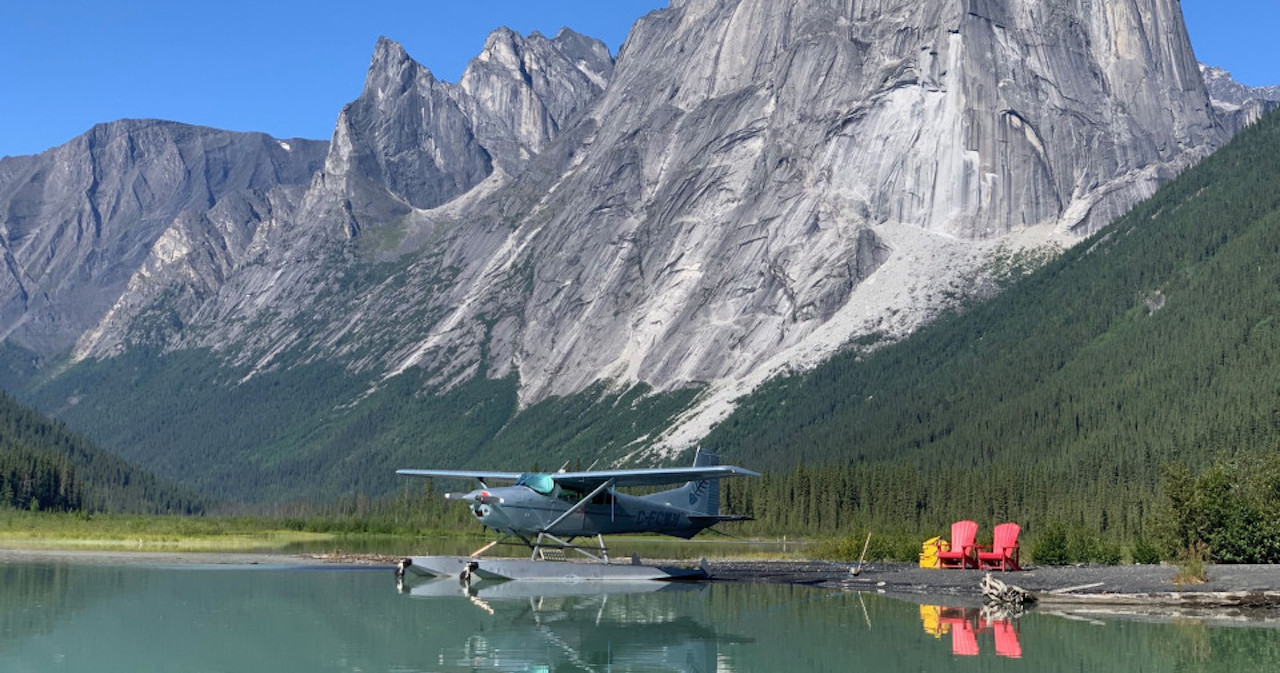
I'm running 8.50-6 mains and a 700-6 on the nose (field approved). But, soon I'll be swapping in an Airglas fork and an 800-6 on the nose. I fly a lot of asphalt and when I hit the back country I don't fly off-airport, just your typical Idaho back country strips which can be rough but nothing like the gravel bars up North.
That said, what would y'all recommend for normal asphalt pressure and then back country pressure?
850-6 and 800-6 tire pressures
Tue May 13, 2025 7:27 pm

Tue May 13, 2025 9:20 pm
Re: 850-6 and 800-6 tire pressures
Not sure what the best pressures would be but whatever they are I would recommend carrying a small 12 vt compressor. I keep one in the cub so I can air down to 3-4 psi for unknown or real rough strips. Then I can air up for better take off if the strip allows also now I have a way to inflate incase of a leak.
DENNY
DENNY
DENNY
Wed May 14, 2025 2:30 am
Re: 850-6 and 800-6 tire pressures
The STC for 8.50s on a 185 states 18psi, according to a label someone stuck on my gear legs. I had a tire slip on the rim running that low.
My flight instructor thinks they should be at 30+, presumably because, well, they’re tires. At that pressure, they’re hard and bouncy as a handball.
I run them in the low-mid 20’s.
My flight instructor thinks they should be at 30+, presumably because, well, they’re tires. At that pressure, they’re hard and bouncy as a handball.
I run them in the low-mid 20’s.
Wed May 14, 2025 6:18 am
Re: 850-6 and 800-6 tire pressures
I fly a mix of asphalt and back country. Low 20’s has always been a good pressure for me and my 185. I do fly it heavy at times so I go with a bit more pressure.
JC
JC
- 185Midwest offline

- Posts: 440
- Joined: Sun Sep 30, 2018 11:58 am
- Location: Fort Wayne
- Aircraft: C-185
Wed May 14, 2025 6:27 am
Re: 850-6 and 800-6 tire pressures
In my 170 I run my 850s at 18-20psi on pavement/grass. This is at 1800-2200lbs. No rim slip yet. But I'm only running single puck brakes.
- SmokeyTheBear offline
- Posts: 146
- Joined: Fri Jul 10, 2020 6:55 am
- Location: Charlestown
- Aircraft: GlaStar
Wed May 14, 2025 12:02 pm
Re: 850-6 and 800-6 tire pressures
I’ve had that setup on my 182 for 10 years now, still running the same set of Goodyears the whole time at 25psi.
Operating about 75% of the time off asphalt.
Operating about 75% of the time off asphalt.
Wed May 14, 2025 1:44 pm
Re: 850-6 and 800-6 tire pressures
The official Stinson guidance is to use your approximate gross weight divided by 100. So flying at 2000 pounds gross weight ends up at 20psi. I stick somewhat close to this with my 8.50s.

Wed May 14, 2025 7:50 pm
Re: 850-6 and 800-6 tire pressures
Trevair wrote:The official Stinson guidance is to use your approximate gross weight divided by 100. So flying at 2000 pounds gross weight ends up at 20psi. I stick somewhat close to this with my 8.50s.
But, using that logic, a heavier airplane would run less pressure....
 I think not.
I believe 35 psi is recommended for Goodyear 8.50s on 185. You won't have to worry about slippage, at that pressure.
But, if you are going to run lower than "recommended" pressures, you need to take some precautions.
First, when you mount the tires (you do mount your own shoes, right?) clean the rims carefully with some solvent, and the inside beads on the tires. Some folks use a bit of adhesive on the tire bead as well. I've never found that necessary, but can't hurt.
Now, insert the tubes with lots of talcum powder into the tires, and assemble the wheel halves into the tires. Start inflating, aligning the valve stem with the hole in the rim. When the tire fills the rim, keep inflating till the tire bead pops onto the rims. Check that everything is where it should be, then continue pressure till it's well up there....60 psi or more. Now, leave the wheel and tire alone for 24 hours, or more if it's convenient.
Now, decrease pressure to your intended operating pressure, and mount the wheel/tire on the plane. Use some white paint (pastels if you're that type) and put a "witness mark" across the tire and wheel in one stripe. Pre flight action hence is to inspect the witness marks, and verify that the tires haven't slipped. If they have, increase pressure.
Always carry a pressure gauge in the plane....always. And, frequently test pressures.
I'd run at least 20 on mains on a 206. Pump em up to 25, then watch them. When they hit 20, rinse and repeat.


Wed May 14, 2025 10:23 pm
Re: 850-6 and 800-6 tire pressures
mtv wrote:I'd run at least 20 on mains on a 206. Pump em up to 25, then watch them. When they hit 20, rinse and repeat.
Is that also what you’d recommend for 8.50 x 10s on a 206?
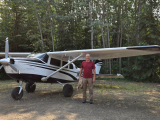
About adhesive, I just bought a 10 year old set of bush wheels with 8.50 x 10s on them. The tires are like new, but I want to replace the tubes with new ones. I think the guy who put them together before must have used adhesive on the outer rim bead. So far, I can’t break it loose by jumping up and down on the tire (and I’m 220). I don’t have a big enough vise, so I’m going to try cabinet clamps next to see if I can free the tire from the outer rim that way. On reassembly, I’m undecided about using adhesive. Adhesive could make field repairing a flat that much more difficult if the flat is due to something other than tire slipping and shearing the valve stem. But how likely is that? I gotta say, I’m impressed by the strength of the adhesive.
Apologies for the thread drift, and thanks for any help.
Wed May 14, 2025 11:08 pm
Re: 850-6 and 800-6 tire pressures
18 to 20 pounds is fine of strip. The smaller the tire the more pressure it needs.
As stated before pump them up hard and let them sit, when you go of pavement drop the pressure.
Spinning the tire on the rim usually happens on pavement. Most of strip surfaces do not have enough traction tom spin a tire.
Depending on AC weight I have gone as low as 15 pounds on pacers and cubs of strip without problems.
cheers...
As stated before pump them up hard and let them sit, when you go of pavement drop the pressure.
Spinning the tire on the rim usually happens on pavement. Most of strip surfaces do not have enough traction tom spin a tire.
Depending on AC weight I have gone as low as 15 pounds on pacers and cubs of strip without problems.
cheers...
- Bush Buggy offline
- Posts: 61
- Joined: Wed Oct 25, 2017 5:30 pm
- Location: whitehorse
- Aircraft: Maule and Cessna 206
Thu May 15, 2025 10:28 am
Re: 850-6 and 800-6 tire pressures
mtv wrote:Trevair wrote:The official Stinson guidance is to use your approximate gross weight divided by 100. So flying at 2000 pounds gross weight ends up at 20psi. I stick somewhat close to this with my 8.50s.
But, using that logic, a heavier airplane would run less pressure....
Just want to clarify the math - a heavier plane would not require a lower pressure according to Trevair's comment. Take the gross and knock two zeros off and that's the pressure. So, 2500 gross - 25psi, 3800 gross - 38 psi, etc.
I have 25 psi in the mains now, seems to be OK - not sure I'd go lower. I'm used to the nose wheel requiring significantly higher pressure because of the size, I supposed I can run 25psi on the nose wheel as well per Halestorm. I'll give it a shot
Fri May 16, 2025 9:23 am
Re: 850-6 and 800-6 tire pressures
mtv wrote:..... Start inflating, aligning the valve stem with the hole in the rim. When the tire fills the rim, keep inflating till the tire bead pops onto the rims. Check that everything is where it should be, then continue pressure till it's well up there....60 psi or more. Now, leave the wheel and tire alone for 24 hours, or more if it's convenient.....
This is what I do, seems to work OK, Never had slippage.
I used to run the 850's on my last airplane (C150/150TD) at 15 psi,
my current plane (C180) is heavier so I run em at 20.
When it starts getting kinda hard to pull back into the hangar, it's time to top em off.
Cessna Skywagon -- accept no substitute!
Fri May 16, 2025 9:28 am
Re: 850-6 and 800-6 tire pressures
CAVU wrote:.... I think the guy who put them together before must have used adhesive on the outer rim bead. So far, I can’t break it loose by jumping up and down on the tire (and I’m 220). I don’t have a big enough vise, so I’m going to try cabinet clamps next to see if I can free the tire from the outer rim that way.......
Jumping on them, vices, clamps, etc have never worked very well for me.
See if someone has a bead-breaker.
My mechanic has an awesome one, it's probably (at least) fifty years old & mostly cast iron, works great.

I only need it about once a year, but I decided to buy one just so I would have it.
Found this one online-- not as good as his old school one, but it works.

Cessna Skywagon -- accept no substitute!
Fri May 16, 2025 10:05 am
Re: 850-6 and 800-6 tire pressures
You could also bring your wheels down to most tire shops for them to break the beads. Definitely not a tool I would spend money on unless I was seriously into motorsports.

Fri May 16, 2025 10:49 am
Re: 850-6 and 800-6 tire pressures
CParker wrote:mtv wrote:Trevair wrote:The official Stinson guidance is to use your approximate gross weight divided by 100. So flying at 2000 pounds gross weight ends up at 20psi. I stick somewhat close to this with my 8.50s.
But, using that logic, a heavier airplane would run less pressure....
Just want to clarify the math - a heavier plane would not require a lower pressure according to Trevair's comment. Take the gross and knock two zeros off and that's the pressure. So, 2500 gross - 25psi, 3800 gross - 38 psi, etc.
I have 25 psi in the mains now, seems to be OK - not sure I'd go lower. I'm used to the nose wheel requiring significantly higher pressure because of the size, I supposed I can run 25psi on the nose wheel as well per Halestorm. I'll give it a shot
Quite right, sorry if that wasn't clear. As an extra data point, I tend to fly at around 1800# most days, and so keep my tires at 18psi. It's a good middle ground for operating on both pavement and grass/gravel for me.
Fri May 16, 2025 8:08 pm
Re: 850-6 and 800-6 tire pressures
CAVU wrote:mtv wrote:I'd run at least 20 on mains on a 206. Pump em up to 25, then watch them. When they hit 20, rinse and repeat.
Is that also what you’d recommend for 8.50 x 10s on a 206?
About adhesive, I just bought a 10 year old set of bush wheels with 8.50 x 10s on them. The tires are like new, but I want to replace the tubes with new ones. I think the guy who put them together before must have used adhesive on the outer rim bead. So far, I can’t break it loose by jumping up and down on the tire (and I’m 220). I don’t have a big enough vise, so I’m going to try cabinet clamps next to see if I can free the tire from the outer rim that way. On reassembly, I’m undecided about using adhesive. Adhesive could make field repairing a flat that much more difficult if the flat is due to something other than tire slipping and shearing the valve stem. But how likely is that? I gotta say, I’m impressed by the strength of the adhesive.
Apologies for the thread drift, and thanks for any help.
As others have suggested, I'd run em down to a tire shop, and ask them to use their bead breaker. Personally, I've never felt the need to use adhesive. It's amazing how much better "stuck" those tire beads get when you inflate them to relatively high pressure initially, and leave them there for a few days......
In my limited experience with the 8.50 x 10s, they can be a real bitch to break the beads.....
MTV
Mon May 19, 2025 1:57 pm
Re: 850-6 and 800-6 tire pressures
Thanks. I'd like to find one of those bead breakers on the field, but failing that, I'm off to the tire shop. Those things are really stuck. I like seating them without adhesive just using pressure. I really appreciate the feedback and suggestions.
Edit: we were able to break the bead using a scissor jack--pad on the ground, wheel on the pad, scissor jack between the bead and the trailer hitch on the pickup. Now for the fun stuff!
Terry
Edit: we were able to break the bead using a scissor jack--pad on the ground, wheel on the pad, scissor jack between the bead and the trailer hitch on the pickup. Now for the fun stuff!
Terry
Sun Jun 08, 2025 5:25 pm
Re: 850-6 and 800-6 tire pressures
I was out of town when this thread kicked off, but finally remembered to dig up my Kenmore Air 8.5 x 6 Tire STC SA-361NW. Attached is the install instructions, which specify 15 psi for C180 and 18 psi for C185. I’ve used 16 psi for 8 years and several hundred hours without difficulty.
 Kenmore 8.50 x 6 Tires STC Install.pdf
- (114.81 KiB) Downloaded 568 times
Mon Jun 09, 2025 8:21 am
Re: 850-6 and 800-6 tire pressures
I just looked through the paperwork for the 850 STC used on my airplane,
#SA1601NM by North Sound Aviation.
No mention of inflation pressure.
#SA1601NM by North Sound Aviation.
No mention of inflation pressure.
Cessna Skywagon -- accept no substitute!
DISPLAY OPTIONS
Who is online
Users browsing this forum: No registered users and 1 guest
Latest Features
-
-
Featured Bush Planes
As one of the undisputed legends of bush flying, the Cessna 180 hauls a…Read More -
Aircraft Ownership and Maintenance
9 modification mistakes aircraft owners make when trying to "bush out" their birds—why some…Read More -
Live to Tell
A Minnesota pilot is surprised to learn that the sudden asymmetric drag of an…Read More


Latest Knowledge Base
-
Destinations
Canada offers some of the most spectacular backcountry flying on the continent. Here's what you need to know before you go.Read More -
Safety and Survival
Hope that you never have to use your survival vest but knowing you have it and knowing how to use…Read More -
Destinations
A regional guide with ideas for winter camping destinations in California, Nevada, New Mexico, and Arizona.Read More -
Aircraft
Finding an affordable aircraft that can handle the backcountry for $80K or less? A challenge for sure, but with the…Read More