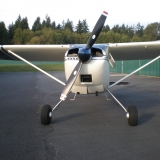
Seems like Cessna has monkeyed around with different heating/ventilating, without hitting on anything that is really successful, without some cobbling by owners and/or mechanics. When I first bought my airplane, I flew it home in about +20F weather in February, and I about froze. My IA did some cobbling (officially owner-built modifications, I think) and the heat improved significantly.
Then I switched out the fruit cans for the Soros Ventube package, which includes the exhaust vents in the back under the window and the vent out the side of the tail. That causes a flow that brings the heat back so that the entire airplane can be comfortable. The Ventubes seal much better than the Cessna fruit cans, so that very little air gets past them when they're closed. The other benefit is that in warm weather, the ventilation is much better.
But none of that works if there's cold air leaking in. Good door seals, window seals, and baggage door seals make a huge difference. The door seals on my airplane had been replaced not long before I bought it, and they're still good a dozen years later. There was no seal at all for the pilot window, so I took care of that a couple of years ago (don't know why I waited so long), and just last month I replaced the seal around the baggage door, because it was coming apart.
As a result, the cabin is really pretty comfortable. Flying back from Durango last week, with outside temps at around -8F, both Molly dog and I were comfortable in our down vests, with no other jackets on (of course, she has fur, too

). I don't like to fly with gloves on, and although I had to do that at first before the cabin warmed, I could take them off soon after departing. A couple of days ago, I flew the airplane down to KBJC for avionics work to make it ADS-B Out compliant, plus some other work, and as cold as it has been around here, it was shirt-sleeve warm in the airplane.
Cary