Denali wrote:This has developed into a very interesting thread.
I have never been comfortable with the “You have nothing to fear if you have nothing to hide” argument.
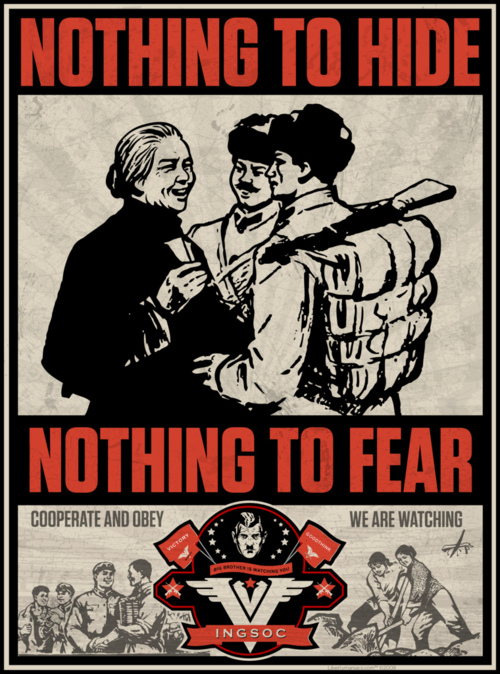
Here is an interesting article by Alex Abdo, Senior Staff Attorney, ACLU Speech, Privacy, and Technology Project titled
“ You May Have 'Nothing to Hide' But You Still Have Something to Fear ” Link : https://www.aclu.org/blog/you-may-have-nothing-hide-you-still-have-something-fearInteresting read. YMMV
I guess I spent too much time in the legal system to ascribe to the “You have nothing to fear if you have nothing to hide” argument, either. Not sure I agree with the ACLU, either. I tend towards being more moderate. Law enforcement can and does get too heavy handed at times; it's also pretty necessary in a civilized society.
But my point was that, regardless of one's feelings about the ability of the gummit to track flights, turning off the transponder (if equipped) and ADS-B Out (if equipped) is an intentional violation of the regs which could get a pilot into a whole lot of trouble.
So let's imagine Pilot Scofflaw, doing nothing else that violates the regs, is regularly flying with his transponder and ADS-B Out turned off. His primary target is picked up by ATC. The controller reports to his supervisor that once again, he's painting a primary target going from Airport A to Airport B, and this is the umpty umpth time it's happened this month. Supervisor reports it up the line, and Inspector at FSDO decides that it's time to look into it. So he drives to Airport B, waits for a phone call from controller that he's painting the target as it flies from Airport A. Scofflaw lands at Airport B in his well equipped Bugsmasher, but with his portable electronic surveillance doodads, Inspector doesn't pick up any transponder or ADS-B Out transmissions during Scofflaw's approach.
Inspector does a ramp inspection of the Bugsmasher, as he's allowed to do by regulation. He notices that although it's equipped with an avionics master, the off/standby/on/alt switch on the transponder is off, confirming his electronic surveillance. He advises Scofflaw that he'll be getting a notice of violation letter. Cutting to the chase, the end result is that Scofflaw's certificate is suspended for 90 days, for intentional violation of FAR 91.215 for transponder operation and 91.225 for ADS-B Out operation.
Obviously, I don't know if it would be a 90 day suspension, a year suspension, a civil penalty, or what the FAA would do. But I do know that intentional violations of regs, especially ones which may impact safety of flight, are treated pretty severely, even under the new "kinder and gentler" FAA enforcement policies. So I'm guessing at least 90 days.
Bottom line: whether you like it or not, if you have a transponder installed, it has to be operating in flight. If you install ADS-B Out, it has to be operating in flight. You can't exempt yourself from doing so just because you want to, without potentially severe consequences.
Cary