Greetings fellas and ladies,
This may be my first post...so, ever since obtaining my pilot certificate I've had an extreme interest in back country flying. I haven't actually done any yet. I started off in Cessnas and now have a Cherokee 140. I've never heard anyone mention flying a Cherokee for back country trips and was wondering if anyone here had any experience with it or any opinions on how the Cherokee 140 would perform. Seems to me that the only real difference would be the tricycle gear and standard tires,and, the low wing. Otherwise I would think it would perform comparably to some of the high wings that are being flown into the back country regularly. Any opinions or advice would be welcomed and greatly appreciated!!! Happy flying!!!
Sent from my iPhone using Tapatalk
Any back country experience in a Cherokee?
Thu Jun 23, 2016 1:35 pm
Thu Jun 23, 2016 2:17 pm
Re: Any back country experience in a Cherokee?
Like the 65 hp Cubs, Champs, T-Crafts, and heavier Cessnas up to your C-150, the Cherokee 140 has very little excess engine thrust for climb. They all accelerate and fly pretty well level in low (six inches) ground effect but none climb very well, especially at high density altitude. While you have a larger engine, your power to weight ratio is similar.
I have flown all of these airplanes in backcountry conditions but the techniques in my e-book (click below) were necessary. Read and consider if that is the kind of flying you want to do. If yes, come to Aurora, Missouri, 2H2, and fly with me or with some of the other instructors on this forum who teach similar techniques.
In a Cherokee 140, it is critical to always know which way is down hill and to never believe that it will necessarily climb. It is a fine airplane so long as you don't try to jump tall buildings in a single bound and you are willing to use natural energy in the mountains.
I have flown all of these airplanes in backcountry conditions but the techniques in my e-book (click below) were necessary. Read and consider if that is the kind of flying you want to do. If yes, come to Aurora, Missouri, 2H2, and fly with me or with some of the other instructors on this forum who teach similar techniques.
In a Cherokee 140, it is critical to always know which way is down hill and to never believe that it will necessarily climb. It is a fine airplane so long as you don't try to jump tall buildings in a single bound and you are willing to use natural energy in the mountains.
- contactflying offline
- Posts: 4972
- Joined: Wed Apr 03, 2013 7:36 pm
- Location: Aurora, Missouri 2H2
Download my free "https://tinyurl.com/Safe-Maneuvering" e-book.
Thu Jun 23, 2016 2:29 pm
Re: Any back country experience in a Cherokee?
Thanks for the info. I was kinda thinking that might be the case. If you'll pm me how to get a hold of you, I would be very interested in coming to 2H2 to learn! I didn't see a link....thanks!
Sent from my iPhone using Tapatalk
Sent from my iPhone using Tapatalk
Thu Jun 23, 2016 2:48 pm
Re: Any back country experience in a Cherokee?
There's a fella here in Phoenix that takes his Cherokee all over the place in the backcountry. His name is Adam Rosenberg
Www.the-adam.com
Www.the-adam.com
Experience is what you get when you didn't get what you wanted.
Thu Jun 23, 2016 3:22 pm
Re: Any back country experience in a Cherokee?
No link, no cost, but you have to be a legal PIC. I am legal as a passenger only. But I talk a lot, which is how I taught as a legal CFII anyway.
Jim
[email protected]
417-830-06380
Jim
[email protected]
417-830-06380
- contactflying offline
- Posts: 4972
- Joined: Wed Apr 03, 2013 7:36 pm
- Location: Aurora, Missouri 2H2
Download my free "https://tinyurl.com/Safe-Maneuvering" e-book.
Thu Jun 23, 2016 3:30 pm
Re: Any back country experience in a Cherokee?
K SPAJC,
Bring your instructor if you wish. I can work from the back seat.
Jim
Bring your instructor if you wish. I can work from the back seat.
Jim
- contactflying offline
- Posts: 4972
- Joined: Wed Apr 03, 2013 7:36 pm
- Location: Aurora, Missouri 2H2
Download my free "https://tinyurl.com/Safe-Maneuvering" e-book.
Thu Jun 23, 2016 3:52 pm
Re: Any back country experience in a Cherokee?
Penn Air Alaska has flown low wing Pipers for years from King Salmon, AK in some of the worst flying conditions in the world. Think they thought low wing was better in bush conditions. They are still here lots are gone 

Keep the shiney side up and the dirty side down...
Thu Jun 23, 2016 4:32 pm
Re: Any back country experience in a Cherokee?
I haven't flown a Cherokee into any back country areas, but every time I fly to Marble, CO, there are a couple. I think the smallest I've seen was a 180 hp version, though. Like the old silly discussion about high wing vs. low wing, the only real difference is that on one, the wing is on top and on the other, the wing is on the bottom. They fly the same, for all practical purposes.
If you spend any time on this site, you'll see contributions by Piper Painter, who flies a red Mooney into places some folks won't fly anything into. So low wing isn't by any means a restriction--as long as the strip is wide enough that any scrub brush to the sides doesn't clip a wingtip.
Airfield elevation and density altitude are the biggest issues when flying lower powered airplanes, regardless of the wing location. A 150 hp Cherokee won't perform as well as a 180 hp (or more) version--same rule applies to a 145/150/160 hp 172 vs. a 180 hp 172. If you're going into any higher elevation strip, or into the mountains (even those bumps that pass for mountains in the East), you have to be pretty careful. You can't rely on power to get you out of trouble, because you just don't have much excess power to play with. You must rely on piloting technique, things like using low ground effect to obtain necessary climb speed, and the orographic effects of wind, etc., and good judgment, such as taking off earlier or later in the day when it's cooler.
The only other thing that I'd mention is that many Cherokee pilots tend to land flat. While the Cherokee nose gear is pretty sturdy, it won't take too many nose-heavy landings to break it. So practice so that all of your landings are definitely on the mains. Here's a video of what happens if you don't:
Cary
If you spend any time on this site, you'll see contributions by Piper Painter, who flies a red Mooney into places some folks won't fly anything into. So low wing isn't by any means a restriction--as long as the strip is wide enough that any scrub brush to the sides doesn't clip a wingtip.
Airfield elevation and density altitude are the biggest issues when flying lower powered airplanes, regardless of the wing location. A 150 hp Cherokee won't perform as well as a 180 hp (or more) version--same rule applies to a 145/150/160 hp 172 vs. a 180 hp 172. If you're going into any higher elevation strip, or into the mountains (even those bumps that pass for mountains in the East), you have to be pretty careful. You can't rely on power to get you out of trouble, because you just don't have much excess power to play with. You must rely on piloting technique, things like using low ground effect to obtain necessary climb speed, and the orographic effects of wind, etc., and good judgment, such as taking off earlier or later in the day when it's cooler.
The only other thing that I'd mention is that many Cherokee pilots tend to land flat. While the Cherokee nose gear is pretty sturdy, it won't take too many nose-heavy landings to break it. So practice so that all of your landings are definitely on the mains. Here's a video of what happens if you don't:
Cary
"I have slipped the surly bonds of earth..., put out my hand and touched the face of God." J.G. Magee
Thu Jun 23, 2016 5:42 pm
Re: Any back country experience in a Cherokee?
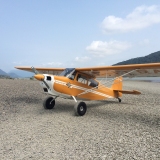
Not optimal but use some judgement. Prop is close to the ground and always treat the nose gear with tender loving care. I used to fly one on gravel strips always trading weight with performance, and always had the yoke back.
Here's one on a local strip from a week ago.

Here's one on a local strip from a week ago.
'74 7GCBC, 26" ABW, Aera 660 feeding G5 and FC-10 FF.
Thu Jun 23, 2016 6:21 pm
Re: Any back country experience in a Cherokee?
They work fine as mentioned above. Piper build quality and general ruggedness are quite a bit better than lighter Cessnas, and the bit above about some Alaska operators preferring them is very true. The nose strut is actually more sturdily attached than a Cessna as well, and certainly is not a comparative weakness.
These things matter far less than technique on takeoff, however. With planning and judgment, most strips can be accessed safely and uneventfully, no matter how many finger-wagging higher performance plane drivers make you needlessly nervous around the camp fire. You can learn and become comfortable with your plane's real capabilities before venturing into the back country, and have a lot of fun when you get there learning your way in to accessing more interesting places.
Have fun...
These things matter far less than technique on takeoff, however. With planning and judgment, most strips can be accessed safely and uneventfully, no matter how many finger-wagging higher performance plane drivers make you needlessly nervous around the camp fire. You can learn and become comfortable with your plane's real capabilities before venturing into the back country, and have a lot of fun when you get there learning your way in to accessing more interesting places.
Have fun...
Fri Jun 24, 2016 10:26 am
Re: Any back country experience in a Cherokee?
I have ZERO personal experience with the Cherokee in that environment.
From an aerodynamic perspective, the nearly symmetrical wing airfoil of the Cherokee puts it at a disadvantage against the flat-bottom airfoil of the typical bush type aircraft. It will be hard to overcome this, you will need relatively more power, or some modifications (some legal and some that that may not be legal), to even the playing field.
There's a guy named Art Mattson, AMRD Development
(recently bought out by another company http://www.aviationpros.com/press_relea ... f-faa-stcs ). Some of his modifications notably improved the STOL capabilities of the Cherokee. His propeller modification gives you another 100 RPM without re-pitching the prop (reported to me by my hangar neighbor who has this mod on his airplane).
Looking at the picture posted of the bent prop, seems to me that you'd want to make sure your nosegear oleo strut is always topped off with oil and holding the full maximum allowable air pressure.
From an aerodynamic perspective, the nearly symmetrical wing airfoil of the Cherokee puts it at a disadvantage against the flat-bottom airfoil of the typical bush type aircraft. It will be hard to overcome this, you will need relatively more power, or some modifications (some legal and some that that may not be legal), to even the playing field.
There's a guy named Art Mattson, AMRD Development
(recently bought out by another company http://www.aviationpros.com/press_relea ... f-faa-stcs ). Some of his modifications notably improved the STOL capabilities of the Cherokee. His propeller modification gives you another 100 RPM without re-pitching the prop (reported to me by my hangar neighbor who has this mod on his airplane).
Looking at the picture posted of the bent prop, seems to me that you'd want to make sure your nosegear oleo strut is always topped off with oil and holding the full maximum allowable air pressure.

.
Fri Jun 24, 2016 11:52 am
Re: Any back country experience in a Cherokee?
EZFlap wrote:
Looking at the picture posted of the bent prop, seems to me that you'd want to make sure your nosegear oleo strut is always topped off with oil and holding the full maximum allowable air pressure.
I don't think that matters much when the nose wheel is laying under the wing...

Fri Jun 24, 2016 12:12 pm
Re: Any back country experience in a Cherokee?
One of the local flying clubs uses a Cherokee for backcountry work, though to be fair it is a 180HP. If you fly smart and are realistic with weight and density altitude there are plenty of strips you can operate safely out of. Save the really rough and short ones for the high performance guys with big tires, but most of the strips we have today were historically accessed with "under-powered" airplanes, they just had more limitations and they knew it.
- scottf offline
- Posts: 650
- Joined: Fri Mar 23, 2012 9:56 am
- Location: Meridian, ID
- FindMeSpot URL: http://share.findmespot.com/shared/face ... cbQCpIqefS
Fri Jun 24, 2016 12:16 pm
Re: Any back country experience in a Cherokee?
Karmutzen wrote:Not optimal but use some judgement. Prop is close to the ground and always treat the nose gear with tender loving care. I used to fly one on gravel strips always trading weight with performance, and always had the yoke back.
Here's one on a local strip from a week ago.
Interesting asymmetrical prop modification.

Cary
"I have slipped the surly bonds of earth..., put out my hand and touched the face of God." J.G. Magee
Fri Jun 24, 2016 1:18 pm
Re: Any back country experience in a Cherokee?
I used to think that the Cessna 150/172 were the most underrated aircraft on the planet. Now, with a fair amount of time in Warriors and Cherokees, I think that more accurately applies to the Piper low wing airplanes.
As to nose gear toughness, one of our students, on his first solo, got one of our Warriors off the runway and pure D sideways at 30 mph.....in the grass. He'd have got away with it had he not managed to hit a culvert with the left main gear, which promptly departed the airplane.
I watched the episode from a distance, and was amazed at the grass flying off that nose gear and fully expected the nose gear to come right off. Not so.....nose gear was intact and was untouched in the repairs.
Try THAT with a Cessna nose gear......
And, Don's comment is spot on.....PenAir has used those Cherokee Sixes hard and put them up wet for decades. I was told by the owner that they were cheaper to maintain than Cessnas and he liked the engines better.
MTV
As to nose gear toughness, one of our students, on his first solo, got one of our Warriors off the runway and pure D sideways at 30 mph.....in the grass. He'd have got away with it had he not managed to hit a culvert with the left main gear, which promptly departed the airplane.
I watched the episode from a distance, and was amazed at the grass flying off that nose gear and fully expected the nose gear to come right off. Not so.....nose gear was intact and was untouched in the repairs.
Try THAT with a Cessna nose gear......
And, Don's comment is spot on.....PenAir has used those Cherokee Sixes hard and put them up wet for decades. I was told by the owner that they were cheaper to maintain than Cessnas and he liked the engines better.
MTV


Fri Jun 24, 2016 5:31 pm
Re: Any back country experience in a Cherokee?
I only know of two Cherokees in Idaho incidents. A first hand for one and second hand for the second.
First one was a retired CHP officer friend of mine. He told me that he used to fly his Cherokee into Warrens for hunting season with no problems until the last one.
On his last trip he did not start out early enough and got a near critical lesson in density altitude. He said it was the most scared he had ever been, and this from a man that had driven a Calif. Highway Patrol care through a S.F. bay bridge toll gate at a speed of 120 indicated. McCall and Warrens were the only two airports he ever flew into in those days. Sold the plane after he got home.
The second hand story came from the waitress or cook at Big Creek while we were there waiting for breakfast.
On the way in we had noticed a plane almost buried in the trees on the approach end to Big Creek. Seems that a couple had decided to have there honeymoon at the Big Creek Lodge. They had checked out, loaded the plane, and went back in for lunch. The pilot-husband, and others, tried to convince the new bride that it was not safe to take off at that time but she was insistent. The plane did get off the ground just before the " soggy bottom dip" - bumped off the last of the grass, and decided set down in the trees and wait for Ray Arnold to come pick it up.
Wannabe safe
Chris C
First one was a retired CHP officer friend of mine. He told me that he used to fly his Cherokee into Warrens for hunting season with no problems until the last one.
On his last trip he did not start out early enough and got a near critical lesson in density altitude. He said it was the most scared he had ever been, and this from a man that had driven a Calif. Highway Patrol care through a S.F. bay bridge toll gate at a speed of 120 indicated. McCall and Warrens were the only two airports he ever flew into in those days. Sold the plane after he got home.
The second hand story came from the waitress or cook at Big Creek while we were there waiting for breakfast.
On the way in we had noticed a plane almost buried in the trees on the approach end to Big Creek. Seems that a couple had decided to have there honeymoon at the Big Creek Lodge. They had checked out, loaded the plane, and went back in for lunch. The pilot-husband, and others, tried to convince the new bride that it was not safe to take off at that time but she was insistent. The plane did get off the ground just before the " soggy bottom dip" - bumped off the last of the grass, and decided set down in the trees and wait for Ray Arnold to come pick it up.
Wannabe safe
Chris C
53 C-170-B+
It is better to be late in this world, than early in the next.
It is better to be late in this world, than early in the next.
Fri Jun 24, 2016 5:36 pm
Re: Any back country experience in a Cherokee?
Take a length of radiator hose, cut it lengthwise and clamp it around the nose wheel strut with hose clamps so the strut doesn't collapse when the nitrogen leaks out. Use a piece long enough that the plane looks like a tail dragger with a nose high attitude on the ground. It'll keep the prop up out of the grass.
tcj
Fri Jun 24, 2016 5:54 pm
Re: Any back country experience in a Cherokee?
All awesome! Exactly the kinds of info and opinions I was looking for!!! Thanks for all the input! I'm going to try some things out here at the home field and eventually move up to some mountain things....DA etc. in mind of course. I really enjoy flying the Cherokee. Maybe some performance mods coming....thanks again all!!!!
Sent from my iPhone using Tapatalk
Sent from my iPhone using Tapatalk
Fri Jun 24, 2016 7:27 pm
Re: Any back country experience in a Cherokee?
EZFlap wrote:I have ZERO personal experience with the Cherokee in that environment.
From an aerodynamic perspective, the nearly symmetrical wing airfoil of the Cherokee puts it at a disadvantage against the flat-bottom airfoil of the typical bush type aircraft.e.
I may be mistaken, but I've always been led to believe that the airfoil on the Cherokee airplane's (the early planes before the semi tapered wing) is identical to the Cub airfoil. Which works fairly well in the woods.
But, I've Ben wrong before.

MTV
Fri Jun 24, 2016 8:58 pm
Re: Any back country experience in a Cherokee?
Yes. Flat on the bottom and lots of camber. Cub series , Pacer series, early Cherokee series , Apache, Pawnee, and Aztec. Simple square large camber wings. The Comanche had the bigger flatter tapered wing like Cessnas.
Nice thing about a loaded Piper wing is that it doesn't like to stall. It will shake and fuss and try to mush. It has to be forced to stall. Crop duster pilots don't really like to stall anyway.
Nice thing about a loaded Piper wing is that it doesn't like to stall. It will shake and fuss and try to mush. It has to be forced to stall. Crop duster pilots don't really like to stall anyway.
- contactflying offline
- Posts: 4972
- Joined: Wed Apr 03, 2013 7:36 pm
- Location: Aurora, Missouri 2H2
Download my free "https://tinyurl.com/Safe-Maneuvering" e-book.
DISPLAY OPTIONS
Who is online
Users browsing this forum: No registered users and 0 guests
Latest Features
-
Live to Tell
A Minnesota pilot is surprised to learn that the sudden asymmetric drag of an out-of-rig ski can…Read More -
Creators
Working in some of the Yukon's most beautiful and remote environments, photographer Simon Blakesley captures aircraft in…Read More -
Aircraft Ownership and Maintenance
Upgrading to big tires can make a huge difference in backcountry performance, but with those gains come…Read More -
Tales from Yesteryear
In this tale from bush flying yesteryear, Don Cogger signs up to help Atlee Dodge Jr recovery…Read More


Latest Knowledge Base
-
Destinations
A regional guide with ideas for winter camping destinations in California, Nevada, New Mexico, and Arizona.Read More -
Aircraft
Finding an affordable aircraft that can handle the backcountry for $80K or less? A challenge for sure, but with the…Read More -
Aircraft
01.29.2018 - Zane - Updated tire diameter graphic to add 8.50x10 Guide to tires for use in the backcountry and off-airport landing…Read More -
Pilots
12.22.2013 - Initial article format Operating aircraft on skis and negotiating a snow-covered landscape is an entirely unique skillset and environment.…Read More


