Squash wrote:StillLearning wrote:mtv wrote:The 180 and Husky are very different airplanes, and comparing takeoff distances without comparing loads is a fool's errand. Load that 180 up to GW, and the Husky to it's GW, and compare performance.
I've worked Huskys, straight A-1, A-1A and A-1B, and flown a late B with the C wing. They are great airplanes, but they are not a Cessna 180
A "toy" 180, ie: one that you operate at Husky loads, one passenger and little load, is kind of a waste, frankly. That said, it has a lot more verstatility, load wise. But, a loaded 180 is not near as much fun to fly as a loaded Husky....again, very different aircraft.
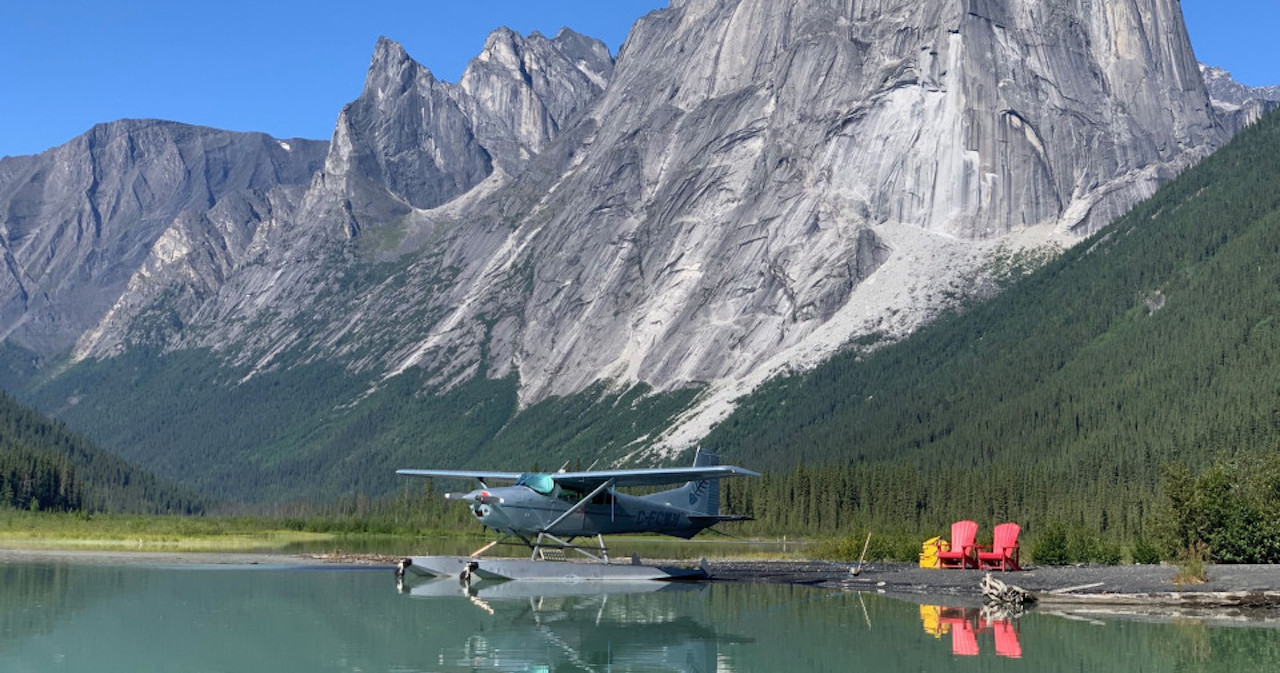
I fly my 180 at or near gross often. I flew a husky many times at or near gross, more often lighter. I may not have the number of hours you do, but in my opinion the 180 at gross is still a better performer than a Husky at gross. Gross weight on the husky is 2250, right? Gross weight on an early 180 is 2500. Husky appears to have a couple sqft more wing area, 183 from what I can find, 180 with a sportsman is 178. But, I question whether the wing design in a Husky works as well as the Sportsman 180 wing. Power to weight ratio? Far better on a 180 with a PPonk, still better even with the 470. This Husky with 26" good years, basic VFR panel, Trailblazer prop weighs right about 1450.
I have about 800 hours on my 180 now, best purchase I ever made. I don't have anywhere near that amount of time in a Husky, I have enough to know that the 180 beats it everywhere I have flown it, just my opinion. From sea level to 12,000'
The owner of the Husky and I were out one day, late December in Colorado. We were flying up the Frying Pan river, he wanted to head up over Red Table mountain (11,000'), and go back to the ranch, 160 degree turn. He was in front of me, intermittently in sight. I just turned and pitched up and went over the top, I could not regain sight of him so I called on the radio to get his location. He had had to circle to gain altitude to make it over the top, I never increased power from 18", 2300rpm. We were both full fuel, no passengers, I had about 60 pounds of ballast in the back for CG.
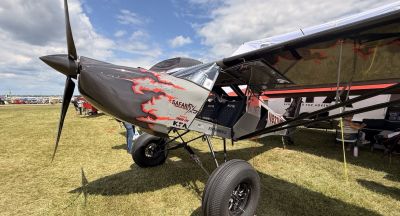
A Super Cub probably doesn’t climb very well at 11,000 feet. But that isn’t the typical criteria for evaluating the performance of the airplane and especially when comparing it against a 180. The Husky will likely do a little better than the cub in a climb at that altitude…..but my 2006 A-1B has never been that high so I wouldn't know. However, I am fairly certain that my Husky will go in and out of strips at lower altitudes where 180s won’t. Isn’t that the performance comparison most of us are thinking about when talking backcountry planes and their performance? Donoho, for example. 185 feet of bumpy Tundra down below the wall of the Kennicott Glacier. Two people and a dog. 80# of gear and 2 hours of fuel. If a 180 goes in there with that mission, I’m sure someone will want a video of that. The Cessna wing modified with a Sportsman cuff is amazing and better than a Husky wing on the leading edge. The high-lift long-span flaps and deep-chord ailerons of the new-wing Husky are better than the Cessna.
Well said. And, for perspective, I worked in a job where for several years, I had the choice of either a Cessna 185 or a B model Husky, or for that matter, a Cub to do whatever job I was assigned that day. The 185 was the load hauler (later replaced by a 206, an even better load hauler) and the Husky or Cub was the maneuvering specialist and STOL champ. Mind you, I've taken that 185 into places that made me take a really careful second look before committing, even after several thousand hours in it. But, if it was at all tight, I'd take the Husky in there twice instead of the 185 once.
Now the reason I petitioned for a Husky to replace the Super Cubs for the telemetry and survey work: My work place started about 60 miles north of my base. From there, it covered an area about 150 miles N/S and about 250 miles E/W, which is a large area. A typical flight in the two seat planes was go 100 to 150 north, work for three to four hours at low power settings (survey/telemetry), then fly home. The only gas up there was at Fort Yukon, and only on wheels. Two of our Super Cubs had Atlee Dodge 60 gallon tanks, which made those airplanes total pigs (all our 18s were 160 hp), and probably not legal with two up, survival gear and full gas. And, SLOW!!!! On floats, I simply could not do the stated mission in a day in fall through spring.
The Husky, on the other hand, would easily do the job.....it was an honest 20 mph faster than any of our Cubs, when mounted on the same model tires/floats or skis.
I've told people for years my criteria if I had a choice between a Cub or Husky:
1. If I needed to fly thirty or forty miles out, and land in a pretty tight spot, I'd likely take the Cub every day.
2. If on the other hand, I needed to fly 150 or more out, and land in the exact same spot, I'd take the Husky EVERY day.
Why the difference? Because when I was proficient in both planes, I could land anywhere I'd land the Cub with a Husky, but the Husky made me work a bit harder at it. Everything had to be just a bit "tighter" when operating the Husky in marginal spots.
Now, would I have taken a 185 or a 180 (and I owned a really nice H model 180 for a while)? Not no, but hell no. And, I dont know anyone who would, at least not and use the airplane again the next day.
But, again, it's all about mission. The Husky is a great airplane, but it won't do everything a 180 will. By the same token, a nice 180 is a fantastic airplane, but it won't do everything a Husky will.
Which would I pick, given the choice for what I do today? Neither one......

But, that's just me.
You are absolutely right, pick the plane that YOU WANT. Not the one I want. And, your reasoning is none of my business, unless you ask.