Best normal/short/soft takeoff
Sat Oct 03, 2015 4:43 pm
Re: Best normal/short/soft takeoff
I'm going to stick one of those CYA-100's in the plane. I have no stall indicating system currently. It'll probably be a Christmas gift for the plane. Just a nice reference instrument to help me dial in my "feelers" better and quicker.
- CamTom12 offline

- Posts: 3705
- Joined: Sun Jul 08, 2012 1:08 pm
- Location: Huntsville
- FindMeSpot URL: https://share.delorme.com/camtom12
- Aircraft: Ruppe Racer
Experimental Pacer
home hand jam "wizard"
Sat Oct 03, 2015 5:01 pm
Re: Best normal/short/soft takeoff
Bigrenna...sorry to offend...but yes, i do feel it offers nothing useful that is not better obtained by flying more, especially flying more slow flight and airwork.
- Troy Hamon offline
- Posts: 913
- Joined: Tue Apr 06, 2010 8:27 am
- Location: King Salmon
- FindMeSpot URL: http://share.findmespot.com/shared/face ... 04iX0FXjV2
- Aircraft: Piper PA-22
Sat Oct 03, 2015 6:42 pm
Re: Best normal/short/soft takeoff
I have almost 6 years and close to 400 hours of flying with my AOA indicator, and I've found it very useful. It's in my line of sight, so I don't have to stare at it--I see it with peripheral vision. But I seldom look at it while taking off, mostly while landing slowly. With a light load, it confirms my seat-of-the-pants feeling that the airplane is still safely flying within its AOA envelope. With a full load, it confirms what Cessna printed in the flight manual for recommended approach speeds.
As for staying in ground effect, I've found that it's easier for me if I apply some nose down trim--it's much easier for me to pull to stay above the ground than to push to stay near it--stronger muscles for pulling than pushing. I'm not saying excessive nose down trim, but a little makes it much easier for me. As the speed increases in low ground effect, the airplane tends to climb prematurely, and the nose down trim helps to prevent that.
I have no personal experience doing the flat, rudder turns Jim describes. But I had a client once who would have saved his airplane if he'd used that technique instead of a coordinated turn. He took off from an airport at one end of a small Wyoming town, and because of the low ceiling, flew down the main street at about 2nd story level, below the tops of buildings. At the other end of town, the terrain started to rise, but the ceiling didn't. So he decided to turn around and return to the airport the same way, back through town. But in his turn, his wing tip clipped some sage brush (that's only about 2 1/2' high!) and the airplane cartwheeled into the prairie. He should have received the Darwin award for his idiocy, but both he and his wife survived his ridiculous flying. He wanted me to represent him to save his certificate, which the FAA had already pulled in an emergency suspension, but I had to be frank with him, that no matter what money he spent on me, there was no way on God's green earth that he was going to keep his certificate.
Cary
As for staying in ground effect, I've found that it's easier for me if I apply some nose down trim--it's much easier for me to pull to stay above the ground than to push to stay near it--stronger muscles for pulling than pushing. I'm not saying excessive nose down trim, but a little makes it much easier for me. As the speed increases in low ground effect, the airplane tends to climb prematurely, and the nose down trim helps to prevent that.
I have no personal experience doing the flat, rudder turns Jim describes. But I had a client once who would have saved his airplane if he'd used that technique instead of a coordinated turn. He took off from an airport at one end of a small Wyoming town, and because of the low ceiling, flew down the main street at about 2nd story level, below the tops of buildings. At the other end of town, the terrain started to rise, but the ceiling didn't. So he decided to turn around and return to the airport the same way, back through town. But in his turn, his wing tip clipped some sage brush (that's only about 2 1/2' high!) and the airplane cartwheeled into the prairie. He should have received the Darwin award for his idiocy, but both he and his wife survived his ridiculous flying. He wanted me to represent him to save his certificate, which the FAA had already pulled in an emergency suspension, but I had to be frank with him, that no matter what money he spent on me, there was no way on God's green earth that he was going to keep his certificate.
Cary
"I have slipped the surly bonds of earth..., put out my hand and touched the face of God." J.G. Magee
Mon Mar 07, 2016 11:57 am
Re: Best normal/short/soft takeoff
Here's a STOL shot from this Sunday's newspaper. Dunno if he forgot to stay in low ground effect, forgot his dynamic proactive elevator control, or needed an AOA meter, but I'm glad his bud was there to offer advice.



Cessna Skywagon -- accept no substitute!
Mon Mar 07, 2016 12:16 pm
Re: Best normal/short/soft takeoff
Wings level cross controlled rudder turn around the obstacle.
- contactflying offline
- Posts: 4972
- Joined: Wed Apr 03, 2013 7:36 pm
- Location: Aurora, Missouri 2H2
Download my free "https://tinyurl.com/Safe-Maneuvering" e-book.
Mon Mar 07, 2016 2:30 pm
Re: Best normal/short/soft takeoff
One or two of us old-school glider pilots know the best possible answer to one of the interesting issues that has been raised in this thread. The AoA information needs to be transmitted to the pilot in an audio tone rather than by visual reference.
In the competition sailplanes we had an audio tone that gave us sensitive rate of climb (variometer) information. We needed this information to reference every few seconds, but we also definitely had to keep our eyes out of the cockpit (flying tight circles at 1.1Vs within a wingspan of five or ten other gliders... in turbulence).
The requirement is all different for STOL operations than it was for glider competitions of course, but the method of information delivery,a nd the benefit to the pilot, is every bit as valid for this new application.
Having a rising/falling audio tone that corresponds to AoA (wired into the headset speakers) would allow the pilot to keep their eyes and focus out of the cockpit, without any visual distractions, and without interfering with "seat of the pants" feel. Yet the pilot would still have a very usable AoA indication.
The traditional "stall warning horn" uses this same principle of course, but it only tells the pilot that the wing is just about to stall. Expanding that functionality to provide more information would provide greatly increased capabilities, including better control or awareness related to short/soft field liftoff, best angle, obstacle clearance capability, best rate, "lift reserve", etc. Although not as important to STOL operations, this same technology could allow the pilot to trim the aircraft for the best or most fuel efficient cruise.
This type of audio AoA was at one time going to be a development project for a new STC-PMA product I wanted to offer. If there is enough support and interest from the STOL community, I would consider developing this product after the Cessna 100 electric trim is completed.
In the competition sailplanes we had an audio tone that gave us sensitive rate of climb (variometer) information. We needed this information to reference every few seconds, but we also definitely had to keep our eyes out of the cockpit (flying tight circles at 1.1Vs within a wingspan of five or ten other gliders... in turbulence).
The requirement is all different for STOL operations than it was for glider competitions of course, but the method of information delivery,a nd the benefit to the pilot, is every bit as valid for this new application.
Having a rising/falling audio tone that corresponds to AoA (wired into the headset speakers) would allow the pilot to keep their eyes and focus out of the cockpit, without any visual distractions, and without interfering with "seat of the pants" feel. Yet the pilot would still have a very usable AoA indication.
The traditional "stall warning horn" uses this same principle of course, but it only tells the pilot that the wing is just about to stall. Expanding that functionality to provide more information would provide greatly increased capabilities, including better control or awareness related to short/soft field liftoff, best angle, obstacle clearance capability, best rate, "lift reserve", etc. Although not as important to STOL operations, this same technology could allow the pilot to trim the aircraft for the best or most fuel efficient cruise.
This type of audio AoA was at one time going to be a development project for a new STC-PMA product I wanted to offer. If there is enough support and interest from the STOL community, I would consider developing this product after the Cessna 100 electric trim is completed.

.
Mon Mar 07, 2016 4:02 pm
Re: Best normal/short/soft takeoff
EZ Flap,
I have no experience in gliders, but lots in 65 hp airplanes using natural energy more than engine thrust for climb. Acquiring the g feel of updraft or downdraft, in on course thermalling, was not so hard. Getting a feel for when the downdraft, or especially updraft, ended, however, was much harder. I watched for the wiggling needle of the VSI. Even pegged, the VSI would wiggle indicating the end of either updraft or downdraft.
My question is could you develop an audio indication of g load? That would help train ones kinetic feel in thermalling and also loading the wing too much in a level, load factor turn. I agree with those who are against looking at any instrument on takeoff and landing.
Contact
I have no experience in gliders, but lots in 65 hp airplanes using natural energy more than engine thrust for climb. Acquiring the g feel of updraft or downdraft, in on course thermalling, was not so hard. Getting a feel for when the downdraft, or especially updraft, ended, however, was much harder. I watched for the wiggling needle of the VSI. Even pegged, the VSI would wiggle indicating the end of either updraft or downdraft.
My question is could you develop an audio indication of g load? That would help train ones kinetic feel in thermalling and also loading the wing too much in a level, load factor turn. I agree with those who are against looking at any instrument on takeoff and landing.
Contact
- contactflying offline
- Posts: 4972
- Joined: Wed Apr 03, 2013 7:36 pm
- Location: Aurora, Missouri 2H2
Download my free "https://tinyurl.com/Safe-Maneuvering" e-book.
Tue Mar 08, 2016 8:30 pm
Re: Best normal/short/soft takeoff
Bagarre
How the hell do you use an AOA indicator information to calculate the time to next check-point?
Have not needed and AOA distraction since late 50s - early 60s,
That thing strapped to the seat on the bottom of your spine, your ears and eyes should be all ya need -besides the brain that is constantly calculating all of the relevant rates of closure from only your sensory inputs.
The only item I have ever added was a paralleled LOW speed airspeed indicator and mounted it 90 degrees CCW so the 40 was on the top. Don't need to LOOK at it - peripheral vision will "see" that white needle standing straight up even while looking at your aiming point and taking a quick glance or two for big furry movements in the brush.
Rantover
How the hell do you use an AOA indicator information to calculate the time to next check-point?
Have not needed and AOA distraction since late 50s - early 60s,
That thing strapped to the seat on the bottom of your spine, your ears and eyes should be all ya need -besides the brain that is constantly calculating all of the relevant rates of closure from only your sensory inputs.
The only item I have ever added was a paralleled LOW speed airspeed indicator and mounted it 90 degrees CCW so the 40 was on the top. Don't need to LOOK at it - peripheral vision will "see" that white needle standing straight up even while looking at your aiming point and taking a quick glance or two for big furry movements in the brush.
Rantover
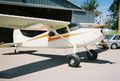
53 C-170-B+
It is better to be late in this world, than early in the next.
It is better to be late in this world, than early in the next.
Tue Mar 08, 2016 11:34 pm
Re: Best normal/short/soft takeoff
contactflying wrote:EZ Flap,
I have no experience in gliders, but lots in 65 hp airplanes using natural energy more than engine thrust for climb. Acquiring the g feel of updraft or downdraft, in on course thermalling, was not so hard. Getting a feel for when the downdraft, or especially updraft, ended, however, was much harder. I watched for the wiggling needle of the VSI. Even pegged, the VSI would wiggle indicating the end of either updraft or downdraft.
My question is could you develop an audio indication of g load? That would help train ones kinetic feel in thermalling and also loading the wing too much in a level, load factor turn. I agree with those who are against looking at any instrument on takeoff and landing.
Contact
Crap, now you tell me you had a VSI the whole time.

Wed Mar 09, 2016 8:43 am
Re: Best normal/short/soft takeoff
EZ Flap,
I had the slow VSI. Way too late of an indication that the up or down draft had started. However, it did wiggle like mad, even when on the peg, when the up or down draft had ended.
It was fairly easy to feel the g load change in the beginning of up air and pitch up quickly to take advantage of even light up drafts and pitch down quickly to limit the negative effect of even light down drafts by flying through them fast.
Missing the end of the event, either up or down, would cause one to stay with the wrong pitch attitude in stable air. Yes, I used the VSI, if there was one in the airplane, here.
Strong up and down drafts are fairly long events, even when on course thermalling. I have often only lost a thousand feet in a down draft followed by gaining three thousand in the, usually, following up draft in 65 hp engine airplanes without VSI. The end of the down draft is usually evident by the desert coming very close. The wing hits the bottom of a strong down draft with a hard thump where the down flow begins to compress against terrain. The end of the up draft is more irritating as there is not usually a hard thump. Hanging on the prop in stable air at high density altitude is bleeding energy like mad. The altimeter works here as well, but doesn't give the early indication that even the slow VSI does. Why it wiggles so quickly when it indicates so slowly; I never figured that one out.
If you were going cross country in a motor-glider, would you circle in good air and then on course thermal? Or would you just head out on course and fly slow in up drafts and fast in down drafts like ol Contact?
Contact
I had the slow VSI. Way too late of an indication that the up or down draft had started. However, it did wiggle like mad, even when on the peg, when the up or down draft had ended.
It was fairly easy to feel the g load change in the beginning of up air and pitch up quickly to take advantage of even light up drafts and pitch down quickly to limit the negative effect of even light down drafts by flying through them fast.
Missing the end of the event, either up or down, would cause one to stay with the wrong pitch attitude in stable air. Yes, I used the VSI, if there was one in the airplane, here.
Strong up and down drafts are fairly long events, even when on course thermalling. I have often only lost a thousand feet in a down draft followed by gaining three thousand in the, usually, following up draft in 65 hp engine airplanes without VSI. The end of the down draft is usually evident by the desert coming very close. The wing hits the bottom of a strong down draft with a hard thump where the down flow begins to compress against terrain. The end of the up draft is more irritating as there is not usually a hard thump. Hanging on the prop in stable air at high density altitude is bleeding energy like mad. The altimeter works here as well, but doesn't give the early indication that even the slow VSI does. Why it wiggles so quickly when it indicates so slowly; I never figured that one out.
If you were going cross country in a motor-glider, would you circle in good air and then on course thermal? Or would you just head out on course and fly slow in up drafts and fast in down drafts like ol Contact?
Contact
- contactflying offline
- Posts: 4972
- Joined: Wed Apr 03, 2013 7:36 pm
- Location: Aurora, Missouri 2H2
Download my free "https://tinyurl.com/Safe-Maneuvering" e-book.
Wed Mar 09, 2016 8:44 am
Re: Best normal/short/soft takeoff
A little senile and blind here. Just saw that last comment was by CFOT.
- contactflying offline
- Posts: 4972
- Joined: Wed Apr 03, 2013 7:36 pm
- Location: Aurora, Missouri 2H2
Download my free "https://tinyurl.com/Safe-Maneuvering" e-book.
Wed Mar 09, 2016 12:27 pm
Re: Best normal/short/soft takeoff
contactflying wrote:A little senile and blind here. Just saw that last comment was by CFOT.
No problem, I answer to worse than that most of the time. I don't have a VSI in the Champ, but I am thinking I would like to try out a variometer like the hang glider guys use. Would be fun to go over to the coast range with one on a windy summer day and fine tune my use of terrain strategies.
DISPLAY OPTIONS
Who is online
Users browsing this forum: No registered users and 2 guests
Latest Features
-
Live to Tell
A Minnesota pilot is surprised to learn that the sudden asymmetric drag of an out-of-rig ski can…Read More -
Creators
Working in some of the Yukon's most beautiful and remote environments, photographer Simon Blakesley captures aircraft in…Read More -
Aircraft Ownership and Maintenance
Upgrading to big tires can make a huge difference in backcountry performance, but with those gains come…Read More -
Tales from Yesteryear
In this tale from bush flying yesteryear, Don Cogger signs up to help Atlee Dodge Jr recovery…Read More


Latest Knowledge Base
-
Destinations
A regional guide with ideas for winter camping destinations in California, Nevada, New Mexico, and Arizona.Read More -
Aircraft
Finding an affordable aircraft that can handle the backcountry for $80K or less? A challenge for sure, but with the…Read More -
Aircraft
01.29.2018 - Zane - Updated tire diameter graphic to add 8.50x10 Guide to tires for use in the backcountry and off-airport landing…Read More -
Pilots
12.22.2013 - Initial article format Operating aircraft on skis and negotiating a snow-covered landscape is an entirely unique skillset and environment.…Read More


