mtv wrote:Good job, CFOT in using all the tools, and developing a good plan well in advance, then executing the plan, including the escape option. Having a good plan ahead of time makes your decision making a lot easier when things get dicey.
MTV
x2
mtv wrote:Good job, CFOT in using all the tools, and developing a good plan well in advance, then executing the plan, including the escape option. Having a good plan ahead of time makes your decision making a lot easier when things get dicey.
MTV


Pierre_R wrote:I've been meaning to write up my recent smoke experience for this and another site that had a very good discussion. It was truly a "I learned from that" or "Never again" type of experience.
I realize that the forum readership is constantly changing and I've not been as active lately, so by way of background, I'm an instrument-rated commercial pilot with over four thousand hours, maybe 10-20% of that in actual or simulated IMC. Almost all my IFR time is in my ten year old Cirrus with an Avidyne PFD.
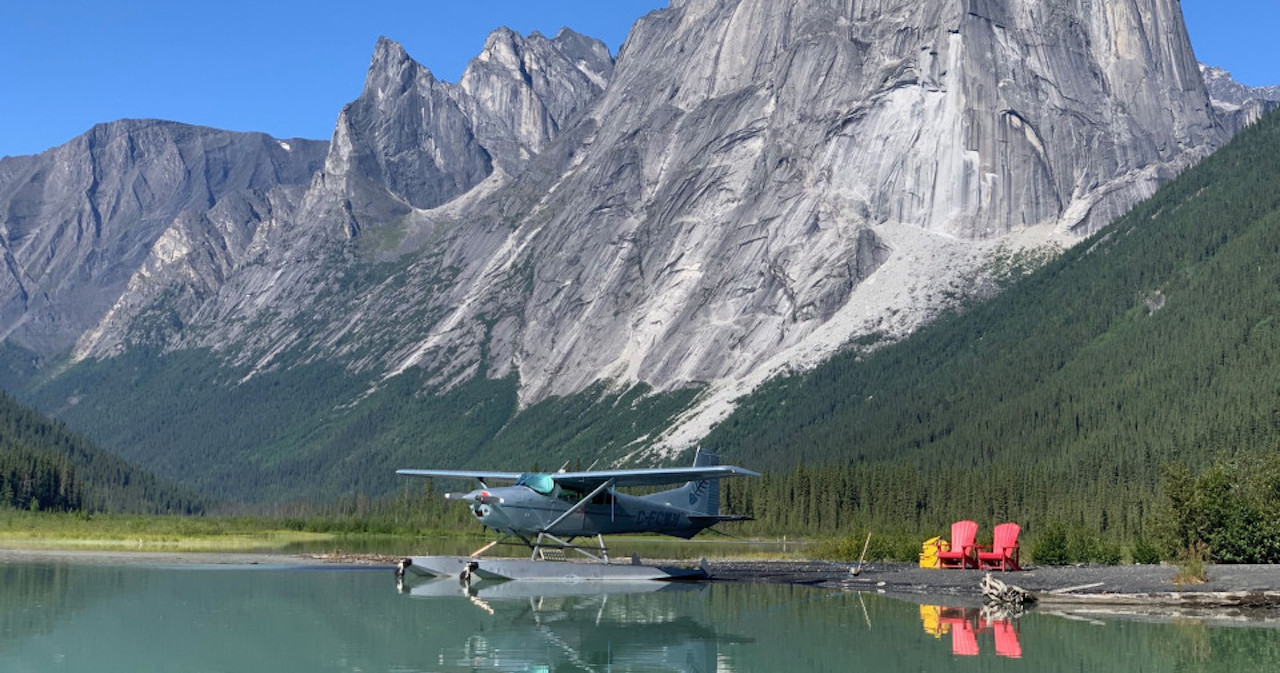
I've been gone from home most of this summer, hand flying my VFR-only 1964 Cessna 182 amphibious float plane across 18 states, spread out over 5 weeks, attending Oshkosh, exploring, and visiting friends old and new. The culmination was observing the solar eclipse from a quiet spot on a lake with a friend.
On the way to Prineville, Oregon, from Yreka, CA the morning of the eclipse, the smoke was bad. On my way down from Prineville to Yreka the day before, I had climbed to 13,000' MSL to get on top of it. Now, with my passenger, slowly climbing up through it, one day later, it seemed even worse. Although it was legal VFR, it kinda doesn't matter if the viz is 3 SM or 8 SM. You have no visual reference to a horizon, the air stinks, your eyes are burning, and you have to fly by reference to instruments.
This plane has a traditional small attitude indicator, based on an old vacuum pump driven gyro. I rarely reference it or the old DG very much as most of the time I'm either flying somewhere familiar and I use pilotage, that is, I look out the window and fly where I want to go; or I reference the Garmin 696 I installed a couple of years ago.
Also, the instruments are not arranged into a nice, tight "T" scan. The DG is a ways from the AI, as are the ASI and altimeter, and at all different levels, kinda random. The 696 is off to the right, and the suction gauge and oil pressure gauge are all the way over near the right door. The JPI engine monitor is down low, and needs to have a small button pressed repeatedly to scan one cylinder at a time.
Of course, I had read about, and listened closely to hangar stories about, vertigo, spatial disorientation, or "a bad case of the leans" as one white-haired retired Air Force pilot described it. It had never happened to me. In discussions on this forum, I've always remained in the camp of "it could happen to me", although, to be honest, I think I figured since it hadn't yet, with this much experience, it probably never would. I was wrong.
At some point, in a slow, wallowy climb (with the big 3400 lb displacement floats and no autopilot, this plane requires constant attention and control input), I found myself glancing repeatedly "around the horn" from the JPI engine gauge down low, to keep an eye on CHT's in the climb, to the heading and desired track on the 696, to checking on oil pressure and suction (I had to trust that AI), back to the AI, to the DG, to airspeed, to altimeter, and again.
It must have been all that rapid eye movement, coupled with head movement; oh and the whole time, I am nonchalantly carrying on a conversation with my friend about various topics. Suddenly I had trouble making visual sense of anything. It was not a visual acuity issue, more like spinning, but not really spinning, but I had lost it. I had to pull it together quickly and I didn't want to alarm my passenger as she had zero aviation training and I didn't want to have to manage a scared passenger!
I think I remember hearing that old F4 Phantom Jet driver's voice telling me his story about losing it, getting that "bad case of the leans", at night, over Europe. He was certain they were in a slow roll to the right and was trying to correct. His RIO was fine and yelled at him to stare at the AI and trust it. (Dan, if you still read this forum, I think you were with me!)
I did a long, slow blink, and when I opened my eyes, I stared at the AI only for about a two count, then went to DG, back to AI, to ASI, to AI, Altimeter, repeat, with no head movement, ignored the 696, ignored engine instruments, oil pressure, suction, etc. for a while. While the primary instruments were not well arranged for a tight, efficient scan, by eliminating all the other far-flung ones, things steadied back down, and I was fine.
While I went through a few moments of internal fear, I must have had a good poker face because my guest never stopped chatting and never sensed I had any sort of problem. I don't need all the fingers on one hand to count how many times I've scared myself in an airplane. This was one of them.
Lesson learned. Not coincidentally, I spent a lot of time at Oshkosh going between the various avionics booths. I am going to invest in a new panel. Right now, I am eagerly awaiting an announcement from Dynon that the panel they had on display in a 172, will soon be certified for the 182. If that starts to drag, then Aspen is my second favorite. The new, low cost autopilot from Trio looked pretty nice too. While this is still primarily a VFR aircraft, if I plan to do more long cross country flights with it, then some modern avionics with IFR capability, and an autopilot, will make it more enjoyable and safer.
I was reminded of an old interview with Alan Klapmeier. He was asked what the greatest safety feature of his new CIrrus airplane was. Everyone expected him to reply "the chute". But instead, he said it was that big, bright, blue over brown attitude indicator on the PFD. I have "known" this for years, but I gained a new depth of "knowing" what he meant! I felt I was a pretty competent instrument pilot, but almost all my IFR time is sitting behind that PFD, with the nice tight "T" arrangement of primary instruments.
I believe that if I didn't have as much experience as I had, in all sorts of conditions, that I might not have handled this and would have succumbed to a "JFK Junior" scenario.
Pierre
Users browsing this forum: No registered users and 3 guests