This thread has really got me thinking. Everything I say is obviously conjecture and just my opinion, and no doubt the thoughts will be random and disconnected.
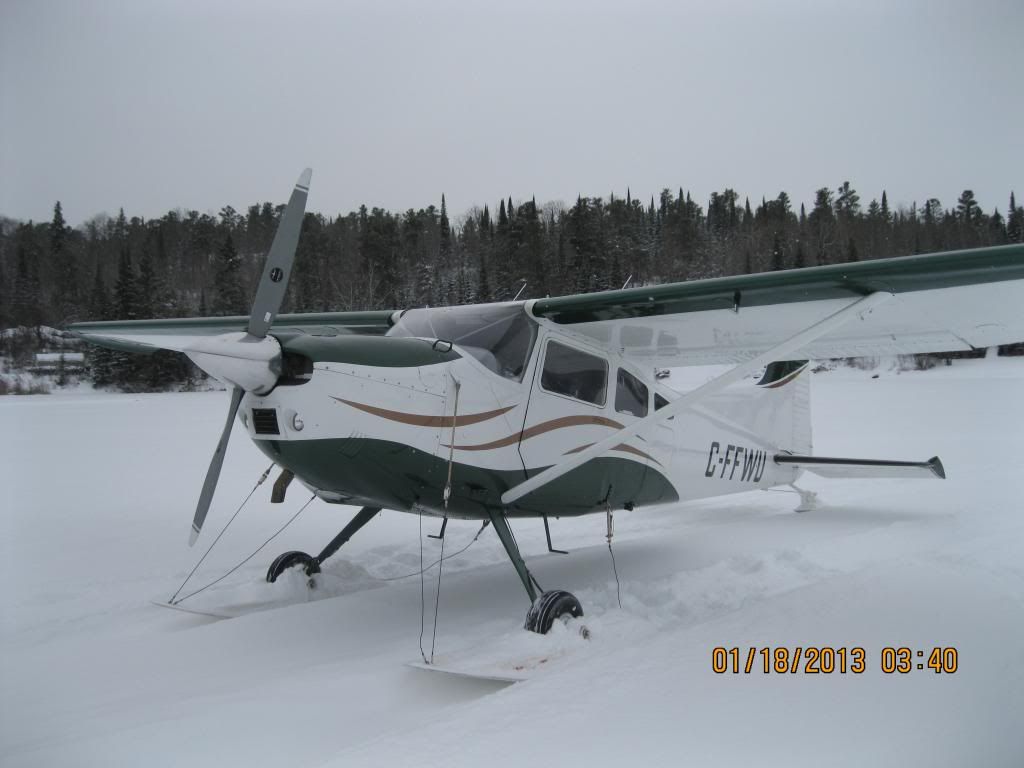
Will Cessna ever bring back the 180/185, or any taildragger model?
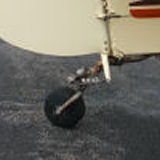
Why would they? Make absolutely no sense financially. Think about it. What person in their right mind would want to own a taildragger? They cost more to insure. They are harder to learn to fly. They ground loop at the blink of an eye, go up on their nose, or over on their back. In three-point configuration forward visibility is poor at best. Case in point. Tuesday, over at Llano, a 195 was put on its back in the grass next to the runway during the takeoff run with a 1,000 feet of runway remaining.
Taildraggers made sense when strips were unimproved and round in shape so pilots could always takeoff/land into the wind. Neither is the case today. The only persons who "need" a taildragger are those pilots that take clients to off airport locations where a nosedragger absolutely can't go. How many of those locations really exist, and how many pilots are there that fly into them? A very tiny number I'd imagine. Others, with apparently a few loose screws, just "want" a taildragger, they don't "need" one.
And, there are plenty of 180/185's still in existence, and they cost one-fifth or less then a new one would. We will know the inventory of existing 180/185's is getting low when they stop bringing them to the lower 48 from Canada, and instead take them to Alaska, and they are off the market in a day or two. What backcountry charter business would spring for the cost of a new 180/185 when for the same amount of money they could buy five used ones? Especially when Murphy's Law tells us that the plane will break down in the peak of the business season. Better to have extra used ones around then one brand new one.
And, thanks to the FAA's onerous, draconian, prehistoric regulations - new certificated aircraft have become so expensive that only the very rich can afford them. $500,000 for a 152? Really?
Cessna dropped their piston line once. I believe they will do it again. The only certificated piston engine market that's worth pursuing from a business standpoint is flight training. And that could be very well served with refurbished legacy aircraft, or with a single certificated piston aircraft manufacturer, or both.
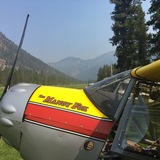
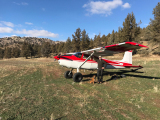
Piper SuperCub. What about this model? Why would Piper drop it when clearly the SuperCub market is on the rise? Probably for the same reasons outlined above. Again it's a taildragger. But one with an even narrower mission scope then the 180/185. And there are still enough of them for commercial operator needs.
So what about the growing market for SuperCubs. Who or what is responsible for the growth and doesn't Piper see it?
The who or what that triggered this growth is first the Internet, and secondly Loni Habersetzer and Greg Miller (and to a lesser extent other guys like them). I'm not joking. Without the Internet, and YouTube specifically, nobody would have seen what these experimental SuperCubs and their pilots were doing. Okay I know Greg flies a Maule, not a SuperCub, but you know what I'm talking about. I'm an excellent example of their impact.
My first airplane was a Stearman. I initially planned on buying a 337, a practical airplane (don't go there

), so I could take my wife to Denver to dinner. Not sure why Denver but that was really my thinking. My wife informed me she wasn't interested in that. I was sad for five minutes then I realized I could get anything I wanted. A Stearman it was, jumping into the taildragger abyss with both feet with one of the most difficult taildraggers to fly. Landings terrified me and were very frustrating. But after a 150 or so I started to get the hang of them, and enjoying the satisfaction of surviving them, and sometimes looking good in the process, although never when someone was watching.
At some point I stumbled onto the Valdez Flyin and Loni Habersetzer's videos on YouTube and thought "Wow these guys are amazing. That is so cool. Wish I could do that."
Anyway, eventually I rode in a little tire 180 to go flyfishing in Colorado. That trip showed me the need for a practical, trip airplane, so I could go flyfishing. Of course practical would have been a 182, or a 210, or even a 337. Anything but a taildragger. So I bought a 185, put big tires on it and took it to the Idaho backcountry. And I continued to watch Valdez, Habersetzer, and Miller videos.
Those videos got me more and more interested in their type of flying, especially when they stopped to do some fishing. So I bought the SQ-2. Okay the story is really much longer then that but I figure you getting tired of reading my dribble. Flying was even more fun then ever before. I understood the Experimental SuperCub craze.
Apparently a bunch of other pilots saw those video's too. So many that lots Experimental Backcountry Plane manufacturers sprung up, including the big one, CubCrafters.
I'm sure Piper saw this, but again, the FAA's onerous, draconian, prehistoric regulations kept them from being competitive in bringing their certificated SuperCub back to market.
All this brings the piston engine aircraft industry to a very interesting place. Limbo.
Again, thanks to the FAA's onerous, draconian, prehistoric regulations, new certificated aircraft are too expensive to produce, too expensive to purchase, and too expensive to maintain. Legacy certificated aircraft are getting very long in the tooth. Although reasonably priced to purchase, they are becoming too expensive to maintain with each passing day as parts become harder and harder to find. And they can not legally benefit from new technologies.
The Experimental market enjoys the benefits of a reasonable purchase price, modern technology throughout, and low cost to maintain. But you either build it yourself, hire someone to build, or buy one already built. The first requires a large time and talent investment. The later requires faith and trust in the builder. This keeps the Experimental market from growing like it could.
A huge shot in the arm for Part 91 would be to allow a certificated aircraft owner to put the aircraft into the Experimental category, allowing him/her to install, maintain, and repair using modern parts and technologies, dramatically reducing the cost of maintaining and repairing the aircraft, while taking advantage of this century's advancements in technology and safety. I don't understand the downside.
Full circle and back to the idea of a new 180/185. Think I'd prefer a design from the 2000's, not the 1940's, and I too love my 185 - obviously. Perhaps something like a scaled down version of the Sherpa, sized near the 185, but wider of course. Or maybe the plane soon to come out of the Mackey/Goza Skunkworks.


 [/c]
[/c]