Backcountry Pilot • CO poisoning

CO poisoning

Near misses, close calls, and lessons learned the hard way. Share with others so that they might avoid the same mistakes.
46 postsPage 1 of 31, 2, 3

CO poisoning

Be aware because most people will not be as lucky as this guy.

http://www.kaaltv.com/news/ellendale-pl ... n/4390785/

http://www.kttc.com/story/34416465/upda ... -Ellendale

The pilot in this incident posts on page two of this thread.
https://mooneyspace.com/topic/21247-moo ... alks-away/

Posted February 10
Hey everyone,
I'm the pilot involved in this crash. I started writing up a summary of the events leading to my accident but I'm having problems with my old laptop. My frostbite hands make using my phone and iPad difficult but I'll try to throw up some facts and field questions when I get a chance.
The FAA is still investigating, but I'm 99℅ sure this was caused from CO Poisoning. This was the 3rd flight of the day and in hindsight I had CO poison symptoms most of the day.  The heater/defrost was run full-on the whole time.  5 hrs after the accident CO Poisoning occurred as a possibility to me, my levels were then tested 15-18X higher than normal. I didn't have CO detection in the plane.  I was dumb and naive to think that I would "know" when I was effected.  I was way wrong! The problem was that the CO degrades ones cognitive ability to the point where you can't connect the symptoms with the cause.
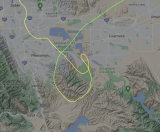
I passed out in the climb and woke up in a field.  I am the luckiest man alive. Allot of things helped to have the great outcome I have been blessed with.  
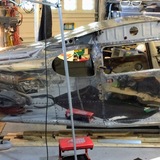
1- I was in a Mooney. The airplane gave it's life to save mine. I'm a huge believer in the "steel cage" and the full spar.  
2- I was wearing a shoulder harness.  I still busted up my face, I'm not sure how, but I don't think I would be here without it.
3- STec 30 auto pilot.  I was flying with the heading bug when I passed out.  The electric autopilot kept the wings level all the way down. The original PC system may have worked just as well, but the engine was windmilling from 12k to the ground. I don't know if there would have been enough vacuum.
4- it happened in the climb.  I only have alt hold so it was tracking heading bug and trimmed for climb. As I was in the initial climb I still had in full power with full rich mixture. This resulted in a fuel burn in the 17-18.5 gal/hr. And only allowed the airplane to climb to around 12.5k.  if it were leaned at all I would have went much higher, for allot longer.  Being that I was oxygen starved and unconscious it probably would have been fatal.  
5- ATC was awesome.  Because of them search and rescue was underway before I crashed.  After I woke up I had to get myself to help, once I did emergency responders were to me in a few min.  My 121.5 ELT was working, but if I had a 406 I bet I would have been pulled from the airplane before I woke up.
6- luck, luck, luck, divine intervention, miracle, what ever you want to call it.  
I'm banged up, but should recover 100℅. I came home from the hospital on my daughter's 3rd birthday.  It doesn't get any better than that.
Cheers,
Dan
42 people like this
nefj40 offline
User avatar
Posts: 101
Joined: Fri Aug 20, 2010 12:42 pm
Location: Oral
Aircraft: 2016 cessna cub

Re: CO poisoning

That is an incredable story.....one for the books, he does have a guardian angle.
a3holerman offline
User avatar
Posts: 278
Joined: Mon Oct 05, 2015 7:29 am
Location: Cape Cod
Aircraft: Cessna 185

Re: CO poisoning

Problem solved. Under 20 bucks.
Image
OregonMaule offline
User avatar
Posts: 6977
Joined: Fri Sep 01, 2006 9:44 pm
Location: Orygun
My SPOT page

"They who can give up essential liberty to obtain a little temporary safety, deserve neither liberty nor safety". Ben Franklin
http://en.wikiquote.org/wiki/Benjamin_Franklin

Re: CO poisoning

I think the 'SPOT' type of emergency beacon are not well suited for this type of mishap. The device type are flawed for two major reasons: (1) to be functional they require direct human interaction - either by the rescuee or by someone in the SAR chain; and (2) the device is likely to be unavailable or unuseable in an emergency. If in your survival vest are we wearing it? If on the glare shield will it depart through the windshield upon impact? If in the seat pocket, can you reach it to activate it with (likely) limb or other injuries? And can you activate it in the air while your hands and mental capacity are 100% engaged with dealing with your emergency...

On the other hand, maybe this is a reason for upgrading early to ADS-B OUT. At least SAR would know where to look assuming someone raised the alarm when you failed to arrive.
PapernScissors offline
Posts: 419
Joined: Sun Mar 06, 2016 8:49 pm
Location: Spokane
Aircraft: Cessna 172

Re: CO poisoning

Dan,

Thank you for the writeup. You are most definitely correct "It doesn't get any better than that."

It was an eyeopener for me. With your permission I would like to post your ordeal on the bulitin board at our local grass strip.

Enjoy every moment....

Tom
a3holerman offline
User avatar
Posts: 278
Joined: Mon Oct 05, 2015 7:29 am
Location: Cape Cod
Aircraft: Cessna 185

Re: CO poisoning

PapernScissors wrote:I think the 'SPOT' type of emergency beacon are not well suited for this type of mishap. The device type are flawed for two major reasons: (1) to be functional they require direct human interaction - either by the rescuee or by someone in the SAR chain; and (2) the device is likely to be unavailable or unuseable in an emergency. If in your survival vest are we wearing it? If on the glare shield will it depart through the windshield upon impact? If in the seat pocket, can you reach it to activate it with (likely) limb or other injuries? And can you activate it in the air while your hands and mental capacity are 100% engaged with dealing with your emergency...


Not entirely true. If you have the tracking pings turned on as you fly, and have linked the beacon to your profile with Lockheed, they can pull your track in an emergency and see where you last reported in, even if the beacon can't transmit any longer. I don't see this kind of mishap much different than any other where you're unconscious and can't hit the button. If you can definitively say you're hurt then great, if not at least your tracking can greatly narrow the search area. 406 ELT is more icing on the "find me" cake, and can actually send the crash signal itself assuming it survives.

On the other hand, maybe this is a reason for upgrading early to ADS-B OUT. At least SAR would know where to look assuming someone raised the alarm when you failed to arrive.


It definitely helps give an accurate radar history. I can tell you CAP has started putting ADS-B receivers at strategic locations including mountaintop radio sites, specifically so that they can play back flight history and find downed aircraft more quickly. Even if they don't have a N number they'd have a VFR flight track and it's better than starting at zero.

I've been looking hard at CO detectors. I kind of like the ones with the digital readouts, just so I can get an idea of exposure over time. Plus I want to compare in-flight vs on the ground, at startup, etc so it's a bit of a science experiment. But I think even the Home Depot wall box is highly better than nothing at all.
colopilot offline
User avatar
Posts: 491
Joined: Mon Feb 01, 2016 3:01 pm
Location: Denver
Aircraft: 57 182A

Re: CO poisoning

That is the kind of "Live to tell" story that really hits home. I appreciate the share and think I can find $20 in the aviation budget for the sensor.

Funny story though... a few years ago by sister was frustrated by a malfunctioning CO2 alarm in her basement. After listening to it beep on and off for a week with no obvious reason she finally went down and took out the batteries.

Next day the hamster that lived in a cage in the basement was dead. Leaky pipes were creating a subtle but deadly situation.

Having an alarm is one thing. Not ignoring it is another.
albravo offline
Posts: 713
Joined: Sun Mar 15, 2015 12:11 pm
Location: Squamish

Re: CO poisoning

OregonMaule wrote:Problem solved. Under 20 bucks.
Image


I read an article a few years back about CO detection and it warned against detectors like this as they alarm at way too high of a level to be useful in an airplane unless your only flight for the day will be 15 minutes.

They need to have a part per million readout with several levels to the alarm.
I can't remember the one I had in 81D but it was a home battery type and first alarm level was toxic if exposed for 8 hours.

The whole unit needs to be replaced every few years as well.
Bagarre offline
User avatar
Posts: 794
Joined: Wed Apr 16, 2014 7:18 pm
Location: Herndon
Aircraft: 1952 Cessna 170B project

Re: CO poisoning

Bagarre wrote:
OregonMaule wrote:The whole unit needs to be replaced every few years as well.


Some do. There are multi-step models which last 2-3 years and are throwaway. There are also some multi-step units which can be recalibrated and refreshed as needed, and have user-replaceable batteries. You can calibrate yourself, or the shop service runs $79 and includes sensor replacement, so probably good to do that every few years anyway.

Here is a model which you can calibrate and change batteries in, sensor can be replaced by the manufacturer periodically: http://www.aircraftspruce.com/catalog/pspages/co300.php

Here's one requiring no calibration, but you trash it at the end of two years whether the battery is dead or not, it will just stop working:
http://www.aircraftspruce.com/catalog/p ... gaclip.php

If you're going for something better than the Home Depot version, personally I'd go with #1.
colopilot offline
User avatar
Posts: 491
Joined: Mon Feb 01, 2016 3:01 pm
Location: Denver
Aircraft: 57 182A

Re: CO poisoning

colopilot wrote:
Bagarre wrote:
OregonMaule wrote:The whole unit needs to be replaced every few years as well.


Some do. There are multi-step models which last 2-3 years and are throwaway. There are also some multi-step units which can be recalibrated and refreshed as needed, and have user-replaceable batteries. You can calibrate yourself, or the shop service runs $79 and includes sensor replacement, so probably good to do that every few years anyway.

Here is a model which you can calibrate and change batteries in, sensor can be replaced by the manufacturer periodically: http://www.aircraftspruce.com/catalog/pspages/co300.php

Here's one requiring no calibration, but you trash it at the end of two years whether the battery is dead or not, it will just stop working:
http://www.aircraftspruce.com/catalog/p ... gaclip.php

If you're going for something better than the Home Depot version, personally I'd go with #1.


I've had the Pocket CO for several years, Velcroed to my panel. One thing that isn't in its favor is that it stops working if the battery is even slightly low--so if it won't self-test, it needs a new battery. Sometimes it shows "BATT" on the display if the battery is low, but more often in my experience, it's just a series of dashes (---). The manufacturer, KWJ Engineering, has a new one coming out, called a Sparrow--I've pre-ordered mine, and I expect it to be sent sometime this month. It will have Bluetooth, so it can tell you on your iPad or iPhone or other tablet or phone not only what the current CO level is, but also its app will have a tracking function so that you can see what the CO level has been over some time period.

CO is dangerous, period. A friend's daughter died due to high levels of CO in her apartment, caused by a faulty installation of a hot water tank flue cap. I didn't know her, but from what was said at her funeral, the young woman had a lot of promise. Her legacy, however, is that now Colorado and many other states have mandated CO detectors in all new homes, apartments, etc.

One of the things I've discovered, using it in my airplane, is that not only can we get CO in the cabin through the heater, if there's any kind of leak in the heat exchanger, but we can also get it from idling on the ground. I haven't had any indications of CO in the cabin from the heater, but if I have to idle on the ground with the window open for any period of time, the CO level will start to rise. It hasn't alarmed yet (it will alarm at 50 ppm), but it has showed a reading of 6 ppm more than once--that's still well below any danger level, but it's interesting to me that it shows any at all, just caused by having the window open during a relatively short idling period.
Cary offline
User avatar
Posts: 3801
Joined: Sun Jan 10, 2010 6:49 pm
Location: Fort Collins, CO
"I have slipped the surly bonds of earth..., put out my hand and touched the face of God." J.G. Magee

Re: CO poisoning

Here's the one I elected to purchase - the COExperts 2016. It's a bit more expensive, at $200, but it has an expected life of 5 years, so it will actually cost less over the long term. The other day, I was following another airplane on the taxiway, and the CO detector alerted me that I was getting 10ppm just by being downstream of his exhaust. (Guess he doesn't lean his engines on the ground - or not enough anyway!) A friend borrowed mine, and it went off (over 20ppm) as soon as he turned on his cabin heat, even at idle. When his mechanic pulled the heater muff, they found a tiny crack in the exhaust pipe under the muff. He wonders how long it's been leaking and how many times he's flown with "mild" CO poisoning.

Aviation Consumer and Mike Busch both recommended this model. It has a digital readout that shows the current or peak level (both in ppm) so you can react or plan accordingly. It also has five alarm levels, with increasing urgency in the alarm (more frequent and more often) as the concentration levels go up.

Of the ones available through ACS, the Model 300 Pocket CO from ACS scares me, because it doesn't alert until you get to 50ppm, which is a pretty high level - you would be experiencing symptoms long before it went off. The GasAlert Clip Extreme offers 3 models, but the lowest level they will alert is 30ppm. Again, this is a somewhat high level, but at least you'd have some time to respond before symptoms were significant. (Although if you choose the wrong version of the GasAlert Extreme during checkout, you could get the one that first alerts at 50ppm, instead of the 30 or 35 ppm versions, and that would not be good.) But the huge point (cost perspective) is that although these two detectors are less expensive to purchase, one is good for only two years, and the other for three years. Over the 5-year life of the $200 CO Experts detector, you'd have to purchase two of the $160 GasAlert Clip Extremes, or three of the $140 Pocket CO detectors... It costs more up front, but is less expensive over the longer term. It also uses a 9volt alkaline battery and has a "low battery" alert to warn you to replace it.
JP256 offline
Supporter
User avatar
Posts: 629
Joined: Mon Aug 31, 2015 1:52 pm
Location: Cedar Park
Aircraft: Rans S-6ES

Re: CO poisoning

Good post, buying a COExperts model tonight.

Great thread, I hadn't thought much about CO monitoring other than maybe getting a sticker like you see in some airplanes.
CamTom12 offline
User avatar
Posts: 3705
Joined: Sun Jul 08, 2012 1:08 pm
Location: Huntsville
FindMeSpot URL: https://share.delorme.com/camtom12
Aircraft: Ruppe Racer
Experimental Pacer
home hand jam "wizard"

CO poisoning

The cheap o, Home Depot alarms at 30ppm. These are in millions of homes with sleeping babies. They are plenty good for you old farts. Spend more if you want.

The U.S. Standards for CO levels are as followed: Maximum of 35 ppm of CO for 1-hour exposure (not be exceeded more than once per year). Maximum of 9 ppm of CO for 8-hour exposure (not to be exceeded more than once per year). Carbon monoxide (CO) is a colorless, odorless deadly gas.

Cheers Rob 30 years in the fire department


Sent from my iPad using Tapatalk
OregonMaule offline
User avatar
Posts: 6977
Joined: Fri Sep 01, 2006 9:44 pm
Location: Orygun
My SPOT page

"They who can give up essential liberty to obtain a little temporary safety, deserve neither liberty nor safety". Ben Franklin
http://en.wikiquote.org/wiki/Benjamin_Franklin

Re: CO poisoning

OregonMaule wrote:The cheap o, Home Depot alarms at 30ppm. These are in millions of homes with sleeping babies. They are plenty good for you old farts. Spend more if you want.

The U.S. Standards for CO levels are as followed: Maximum of 35 ppm of CO for 1-hour exposure (not be exceeded more than once per year). Maximum of 9 ppm of CO for 8-hour exposure (not to be exceeded more than once per year). Carbon monoxide (CO) is a colorless, odorless deadly gas.

Cheers Rob 30 years in the fire department


Sent from my iPad using Tapatalk


How's that $30 HomeDepot job going to work out when you have a leak that puts you at 20ppm on your 3 hour flight?
Or 10ppm on your multi leg all day push to Oshkosh?
Plus the added stress and required concentration of flying an airplane?
Let's add in a twist of 9,000 feet where there is less oxygen as well?
Bagarre offline
User avatar
Posts: 794
Joined: Wed Apr 16, 2014 7:18 pm
Location: Herndon
Aircraft: 1952 Cessna 170B project

Re: CO poisoning

Is anyone good enough with computer stuff to tie this guy into one of those Stratux boxes?

https://www.amazon.com/Keyestudio-Alcoh ... r+portable
CamTom12 offline
User avatar
Posts: 3705
Joined: Sun Jul 08, 2012 1:08 pm
Location: Huntsville
FindMeSpot URL: https://share.delorme.com/camtom12
Aircraft: Ruppe Racer
Experimental Pacer
home hand jam "wizard"

Re: CO poisoning

CamTom12 wrote:Is anyone good enough with computer stuff to tie this guy into one of those Stratux boxes?


I quick review makes it look like it would be possible to attach such a component and the software is open source. But. And it's a big But. In order to make use of the sensor you'd have to either convince Foreflight to integrate the new data source (zero chance) or have another app (which would mean Foreflight would be in the background.
rw2 offline
User avatar
Posts: 1799
Joined: Sat Dec 22, 2012 1:10 pm
Location: San Miguel de Allende
FindMeSpot URL: https://share.delorme.com/LaNaranjaDanzante
Aircraft: Experimental Maule
Follow my Flying, Cooking and Camping adventures at RichWellner.com

Re: CO poisoning

rw2 wrote:
CamTom12 wrote:Is anyone good enough with computer stuff to tie this guy into one of those Stratux boxes?


I quick review makes it look like it would be possible to attach such a component and the software is open source. But. And it's a big But. In order to make use of the sensor you'd have to either convince Foreflight to integrate the new data source (zero chance) or have another app (which would mean Foreflight would be in the background.


I fly with my phone and ipad on me... I'd be willing to turn my phone into a CO alarm and run FF in the foreground on the ipad if it'd be possible to link the two through the same stratux. Usually my phone just sits on the dash waiting for a good photo op.
CamTom12 offline
User avatar
Posts: 3705
Joined: Sun Jul 08, 2012 1:08 pm
Location: Huntsville
FindMeSpot URL: https://share.delorme.com/camtom12
Aircraft: Ruppe Racer
Experimental Pacer
home hand jam "wizard"

Re: CO poisoning

CamTom12 wrote:
rw2 wrote:
CamTom12 wrote:Is anyone good enough with computer stuff to tie this guy into one of those Stratux boxes?


I quick review makes it look like it would be possible to attach such a component and the software is open source. But. And it's a big But. In order to make use of the sensor you'd have to either convince Foreflight to integrate the new data source (zero chance) or have another app (which would mean Foreflight would be in the background.


I fly with my phone and ipad on me... I'd be willing to turn my phone into a CO alarm and run FF in the foreground on the ipad if it'd be possible to link the two through the same stratux. Usually my phone just sits on the dash waiting for a good photo op.


Detectable concentration: 300-10000ppm CO

No where near sensitive enough and I don't think I'd trust my life to it it even if it was.
Bagarre offline
User avatar
Posts: 794
Joined: Wed Apr 16, 2014 7:18 pm
Location: Herndon
Aircraft: 1952 Cessna 170B project

Re: CO poisoning

CamTom12 wrote:Is anyone good enough with computer stuff to tie this guy into one of those Stratux boxes?

https://www.amazon.com/Keyestudio-Alcoh ... r+portable


I don't know if I'm reading the specs correctly but it says:

Detectable concentration: 300-10000ppm CO

If that means it does not detect bellow 300 ppm... isn't this thing pretty much worthless?
corefile offline
Supporter
User avatar
Posts: 637
Joined: Tue Jul 03, 2012 1:59 pm
Location: San Jose, Ca
Aircraft: Cessna 180 - sold

Re: CO poisoning

Carbon Monoxide is a product of incomplete combustion. Have you ever wondered why you can use a natural gas or propane cook top in your kitchen and not die? Because when the cook top is working correctly you are achieving complete combustion.

In the old technology of our airplane engines I would bet CO is always present.

At low levels we are talking about here, be aware of the symptoms.

Symptoms of CO poisoning may include headache, fatigue, dizziness, drowsiness, or
nausea.


When I was working at the fire department and CO detectors became law in rentals, we started getting lots of calls for detectors going off. We would bring in our VERY accurate handheld detector. Sure enough we would be over the threshold for the alarm to sound. We would ask the people how they felt. At the low levels most of the time they would say ok. When pushed and ask about headache, fatigue, or dizzy, about half the time someone would say yes, I do have a little headache.

Over the years it seems most of the deaths come from people sleeping with a portable propane, or kerosene, heaters. One winter we had a poor immigrant family loose 4 members sleeping next to a charcoal hibachi in the winter to keep warm.

In the fire department back in the early part of my career 1980s, we didn't always wear SCBA (self contained breathing apparatus)even during initial attack. It was a macho thing, who could eat the most smoke. We never used SCBA during overhaul/cleanup. With all the crap we would breath you always had a headache afterwards. (sarcasm) I wonder why?

Starting in the 1990s SCBA became mandatory. The commander would tell us when we could take them off.

Normally your body will tell you something is wrong. listen to your body. In the airplane, turn off the heat and open fresh air vent. If your symptoms subside you are probably getting CO.

Will you die from CO using a $20 Home D special? I bet my life and everyone who rides in my Maule we will not die. So far so good. Are the little ones for 8 times the price better? You decide.

Cheers...Rob
OregonMaule offline
User avatar
Posts: 6977
Joined: Fri Sep 01, 2006 9:44 pm
Location: Orygun
My SPOT page

"They who can give up essential liberty to obtain a little temporary safety, deserve neither liberty nor safety". Ben Franklin
http://en.wikiquote.org/wiki/Benjamin_Franklin

DISPLAY OPTIONS

Next
46 postsPage 1 of 31, 2, 3

Who is online

Users browsing this forum: No registered users and 8 guests

Latest Features

Latest Knowledge Base