Somebody asked me to keep to a single thread, like all your trip threads, rather than mind wander. I don't make my weekly pipeline loop anymore so I'll just cover who comes by and what comes to mind here.
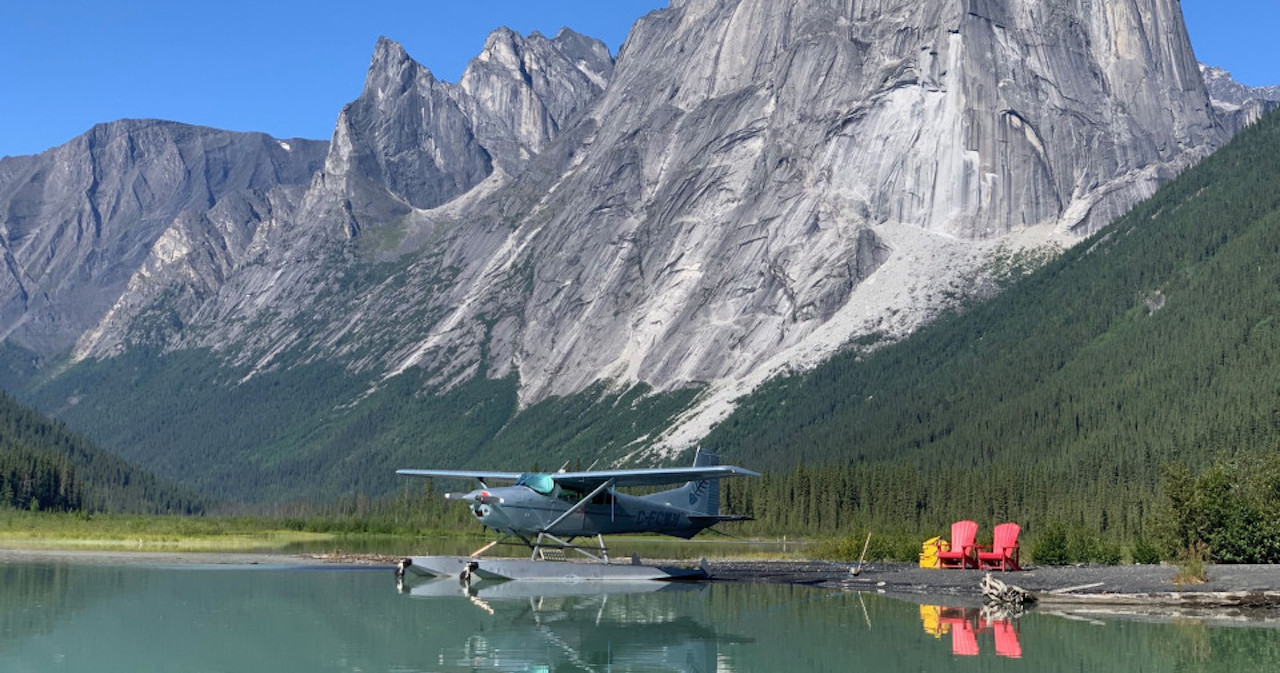
A pipeline employee and pilot is coming by tomorrow with his C-170. Later.
Contact Flying w/contact flying.
Sat Aug 27, 2016 9:02 pm
- contactflying offline
- Posts: 4972
- Joined: Wed Apr 03, 2013 7:36 pm
- Location: Aurora, Missouri 2H2
Download my free "https://tinyurl.com/Safe-Maneuvering" e-book.
Sun Aug 28, 2016 2:11 pm
Re: Contact Flying w/contact flying.
Wes and I had a good lesson in his PA-22/20 with 31" tires. I was wrong about the 170. We covered the basic low ground effect takeoff, Dutch rolls, energy management turns, and the apparent brisk walk rate of closure approach.
We had a fairly strong crosswind with gusts that gave Wes a little trouble. I tried to help and made it worse. I backed off and just talked and we got it worked out.
Pulling all that parasite air around the tires gave us only 100 mph zoom energy for the energy management turns. This made them less dynamic but they worked out OK. I suggest first learning and practicing energy management turns with issue tires.
Wes did a good job with rough conditions. He is a BCP member but he doesn't post and I forgot his call sign.
Contact
We had a fairly strong crosswind with gusts that gave Wes a little trouble. I tried to help and made it worse. I backed off and just talked and we got it worked out.
Pulling all that parasite air around the tires gave us only 100 mph zoom energy for the energy management turns. This made them less dynamic but they worked out OK. I suggest first learning and practicing energy management turns with issue tires.
Wes did a good job with rough conditions. He is a BCP member but he doesn't post and I forgot his call sign.
Contact
- contactflying offline
- Posts: 4972
- Joined: Wed Apr 03, 2013 7:36 pm
- Location: Aurora, Missouri 2H2
Download my free "https://tinyurl.com/Safe-Maneuvering" e-book.
Sun Aug 28, 2016 5:54 pm
Re: Contact Flying w/contact flying.
Thanks for taking time to fly with me today Contact, had a great time. I wish I could be at the clinic after the Reno Air Races but I can't get off work long enough for that, maybe next time. It got a bit bumpy getting back to Iowa, had to dodge the storms but made it okay.
Flying with you professionals, like posting on this site, can be intimidating to a low time pilot so I just sit back and lurk most of the time. I look forward to meeting some more BCPers in the future, thanks again Jim.
Wes
Flying with you professionals, like posting on this site, can be intimidating to a low time pilot so I just sit back and lurk most of the time. I look forward to meeting some more BCPers in the future, thanks again Jim.
Wes
Thu Sep 01, 2016 6:09 pm
Re: Contact Flying w/contact flying.
Maneuverability Issues:
Every airplane is designed with the understanding that there are tradeoffs in features. All, however, require a minimum of control and maneuverability.
Slickness, cleaness, or the lack of parasite drag aids the dynamic nature of energy management allowing the climb, dive, and turn maneuverability and rapid transitions so necessary in low altitude work.
When near ceiling, we are using full power to maintain altitude in stable air. We have no zoom for the wings level climb portion of the energy management turn. We are left with only the dive portion as we allow the nose to go down in the turn. Thus, the pull up from the dive will not return us to near the beginning altitude.
This same lack of dynamic maneuverability will occur with heavy loads, full flaps, reduced power, high density altitude, or a lot of parasite drag.
My first energy management training lesson with 31 inch tires has made me realize we were already in a lack of energy available environment similar to heavy loads, full flaps, reduced power, or high density altitude.
Every airplane is designed with the understanding that there are tradeoffs in features. All, however, require a minimum of control and maneuverability.
Slickness, cleaness, or the lack of parasite drag aids the dynamic nature of energy management allowing the climb, dive, and turn maneuverability and rapid transitions so necessary in low altitude work.
When near ceiling, we are using full power to maintain altitude in stable air. We have no zoom for the wings level climb portion of the energy management turn. We are left with only the dive portion as we allow the nose to go down in the turn. Thus, the pull up from the dive will not return us to near the beginning altitude.
This same lack of dynamic maneuverability will occur with heavy loads, full flaps, reduced power, high density altitude, or a lot of parasite drag.
My first energy management training lesson with 31 inch tires has made me realize we were already in a lack of energy available environment similar to heavy loads, full flaps, reduced power, or high density altitude.
- contactflying offline
- Posts: 4972
- Joined: Wed Apr 03, 2013 7:36 pm
- Location: Aurora, Missouri 2H2
Download my free "https://tinyurl.com/Safe-Maneuvering" e-book.
Thu Sep 01, 2016 6:40 pm
Re: Contact Flying w/contact flying.
Contact as long as everything checks good with this t crate count on me coming down and doing some flying with you!
- cstolaircraft offline
- Posts: 523
- Joined: Wed Sep 29, 2010 12:50 pm
- Location: Blackwell, Mo
Mission Pilot in training. C-170B N8098A.
But they that wait upon the Lord shall renew their strength; they shall mount up on wings as eagles... Isaiah 40:31
But they that wait upon the Lord shall renew their strength; they shall mount up on wings as eagles... Isaiah 40:31
Thu Sep 01, 2016 6:57 pm
Re: Contact Flying w/contact flying.
Very good.
- contactflying offline
- Posts: 4972
- Joined: Wed Apr 03, 2013 7:36 pm
- Location: Aurora, Missouri 2H2
Download my free "https://tinyurl.com/Safe-Maneuvering" e-book.
Thu Sep 01, 2016 10:25 pm
Re: Contact Flying w/contact flying.
I actually prefer the mind wander posts!! Some have expanded into wonderful discussions with many pearls of wisdom. They also tend to stick to a specific topic which helps me keep on topic. I have had several good instructors, but reading your post makes me realize that I did not fully understand what they where trying to teach me. I could demonstrate what they taught, but that does not alway equate to understanding why/how. Reading your posts (several times to let it sink in) has helped a lot. Whether it is in several separate posts or one I will continue to follow and learn.
Thanks
DENNY
Thanks
DENNY
DENNY
Fri Sep 02, 2016 8:38 am
Re: Contact Flying w/contact flying.
Denny,
Mind wandering, from a teaching point of view, is just fishing for terms and experiences that connect with the student. It has to do with picture in mind B, through voice or written or hand and arm signal communication, coming out the same as the picture in mind A. Mystery and claims of difficulty are not communicative. We need leave the "right stuff " to the astronauts and use simple and common examples of good techniques like riding bicycles and operating equipment and such.
Thanks for the endorsement. It is encouraging.
Jim
Mind wandering, from a teaching point of view, is just fishing for terms and experiences that connect with the student. It has to do with picture in mind B, through voice or written or hand and arm signal communication, coming out the same as the picture in mind A. Mystery and claims of difficulty are not communicative. We need leave the "right stuff " to the astronauts and use simple and common examples of good techniques like riding bicycles and operating equipment and such.
Thanks for the endorsement. It is encouraging.
Jim
- contactflying offline
- Posts: 4972
- Joined: Wed Apr 03, 2013 7:36 pm
- Location: Aurora, Missouri 2H2
Download my free "https://tinyurl.com/Safe-Maneuvering" e-book.
Fri Sep 02, 2016 5:55 pm
Re: Contact Flying w/contact flying.
Jim's love of flight and flight technique is one of my favourite parts of this site.
As a new pilot, the first time I read his book I understood about 15%. The second time maybe 35%. I would love the opportunity to train with him because I know the lessons would stick so much better. I think Yogi said it best: "In theory there is no difference between practise and theory. In practise, there is."
As a new pilot, the first time I read his book I understood about 15%. The second time maybe 35%. I would love the opportunity to train with him because I know the lessons would stick so much better. I think Yogi said it best: "In theory there is no difference between practise and theory. In practise, there is."
Fri Sep 02, 2016 6:27 pm
Re: Contact Flying w/contact flying.
albravo,
We'll get that done sometime. There are more of me out there. Those with paper (plastic now I think ) tend not to be so loud.
Contact
We'll get that done sometime. There are more of me out there. Those with paper (plastic now I think ) tend not to be so loud.
Contact
- contactflying offline
- Posts: 4972
- Joined: Wed Apr 03, 2013 7:36 pm
- Location: Aurora, Missouri 2H2
Download my free "https://tinyurl.com/Safe-Maneuvering" e-book.
Sun Sep 04, 2016 4:45 pm
Re: Contact Flying w/contact flying.
A SHORT REVIEW OF “STICK AND RUDDER” BY WOLFGANG LANGEWIESCHE
A good feature of a good book is that it doesn’t get lost is cyberspace. I have no idea what all I have somewhere on floppy disks, or the stiff plastic floppies, or CDs. I do have some books I treasure.
In the introduction to Part I, “Wings,” Wolfgang explains theory: “You can’t help having a theory; whatever you do, from peeling potatoes to flying airplanes, you go on the basis of some mental image of what’s what-and that’s all ‘theory’ amounts to. And if your ideas of what’s what are correct, you will do it well.
Borrowing from both John Boyd and Wolfgang, I use the term, “orientation,” and “belief” as an integral part of orientation. The way we see things has a lot to do with our beliefs or mental image of what’s what.
Chapter 1 How a wing is Flown
It is here that we get the much quoted reference to “the airplane exceeding the critical angle of attack.” He did not say this exactly. What did he say?
“The Angle of Attack is the angle at which the wing meets the air.”
“The wing keeps the airplane up by pushing the air down.”
“The Angle of Attack can also be defined as the difference between where the airplane points and (in the up-and-down sense) it goes.
In an aside, he highly recommends slow flight practice.
He explains that the “no lift line” of the “inclined plane” inside the unsymmetrical shape of the wing gives us a better image of angle of attack and relative wind.
“That’s what a stall is: the failure of the air to take the downward curve. And that is how a stall is caused: the excessive demands made on the air by a wing which meets it at too large an Angle of Attack.” “Thus, simply by pulling the stick back far enough, the pilot can stall his airplane at any speed.” Too many flight schools have left the pilot pulling the stick back part out of the equation. “The important thing to realize clearly is that the stall is the direct and invariable result of trying to fly the airplane at too large an Angle of Attack.” (again, the pilot)
“Hence the Angle of Attack cannot be seen simply by looking out the window; in fact, it cannot be seen at all! For remember, Angle of Attack is the angle at which the wing meets the air-and we can’t see air. (pilots again)
Chapter 3 Lift and Buoyancy
My energy management theory and orientation borrows heavily from this entire chapter.
He explains zoom reserve here.
Chapter 4 What the Airplane Wants to Do
My energy management theory and orientation borrows heavily from this entire chapter.
He explains how airspeed is altitude and altitude is airspeed here.
A good feature of a good book is that it doesn’t get lost is cyberspace. I have no idea what all I have somewhere on floppy disks, or the stiff plastic floppies, or CDs. I do have some books I treasure.
In the introduction to Part I, “Wings,” Wolfgang explains theory: “You can’t help having a theory; whatever you do, from peeling potatoes to flying airplanes, you go on the basis of some mental image of what’s what-and that’s all ‘theory’ amounts to. And if your ideas of what’s what are correct, you will do it well.
Borrowing from both John Boyd and Wolfgang, I use the term, “orientation,” and “belief” as an integral part of orientation. The way we see things has a lot to do with our beliefs or mental image of what’s what.
Chapter 1 How a wing is Flown
It is here that we get the much quoted reference to “the airplane exceeding the critical angle of attack.” He did not say this exactly. What did he say?
“The Angle of Attack is the angle at which the wing meets the air.”
“The wing keeps the airplane up by pushing the air down.”
“The Angle of Attack can also be defined as the difference between where the airplane points and (in the up-and-down sense) it goes.
In an aside, he highly recommends slow flight practice.
He explains that the “no lift line” of the “inclined plane” inside the unsymmetrical shape of the wing gives us a better image of angle of attack and relative wind.
“That’s what a stall is: the failure of the air to take the downward curve. And that is how a stall is caused: the excessive demands made on the air by a wing which meets it at too large an Angle of Attack.” “Thus, simply by pulling the stick back far enough, the pilot can stall his airplane at any speed.” Too many flight schools have left the pilot pulling the stick back part out of the equation. “The important thing to realize clearly is that the stall is the direct and invariable result of trying to fly the airplane at too large an Angle of Attack.” (again, the pilot)
“Hence the Angle of Attack cannot be seen simply by looking out the window; in fact, it cannot be seen at all! For remember, Angle of Attack is the angle at which the wing meets the air-and we can’t see air. (pilots again)
Chapter 3 Lift and Buoyancy
My energy management theory and orientation borrows heavily from this entire chapter.
He explains zoom reserve here.
Chapter 4 What the Airplane Wants to Do
My energy management theory and orientation borrows heavily from this entire chapter.
He explains how airspeed is altitude and altitude is airspeed here.
- contactflying offline
- Posts: 4972
- Joined: Wed Apr 03, 2013 7:36 pm
- Location: Aurora, Missouri 2H2
Download my free "https://tinyurl.com/Safe-Maneuvering" e-book.
Tue Sep 27, 2016 7:59 am
Re: Contact Flying w/contact flying.
Each time we instructors fly with someone new we have an aha moment. This is when we realize image in mind B has not downloaded completely. This is when we realize, or are told, we have failed to communicate clearly.
Flying with Doug and Shannon at Truckee, I had two aha moments. Using Robert Reser's "Directed Course " terminology, which he explains as both lateral and vertical , I failed to explain the vertical aspect. Sticking with target or aiming point would have been clearer. Sometimes less is clearer. From my Dad and dirt digging equipment, I learned to add a gallon of oil when only a quart was needed. I was able to keep him away from airplanes but picked up the habit my wife calls "too much information. "
On the apparent brisk walk rate of closure approach, the aim point or target is the numbers until they go under the cowl. When the numbers go under the cowl, we look on down the runway as we flair. If we have stabilized the APPARENT brisk walk rate of closure, no round out will be necessary.
The energy management turn is a continuous coordinated aileron and rudder movement until either acquiring the target between our toes or nearing ninety degree bank angle. After pitch up when zoom reserve is available, we aggressively get more than half the turn completed in the first half of the turn. We over bank, allowing the nose to go down (release back pressure ) so as to be sure we can level the wings prior to pull up wings level and nose on target. As with all energy management maneuvering at low altitude, we give up altitude to stay near 1 g regardless of bank angle. We have to overcome the concept of banking only to an arbitrary and limited bank angle and then neutralize controls. Level turns are done with an arbitrarily limited bank angle and back pressure on the stick. Power, more appropriate than back pressure, is not always available.
Both Doug and Shannon did really well on the first one and excellent on later ones. These communication errors came up mostly in the briefing the night prior to the flying.
Flying with Doug and Shannon at Truckee, I had two aha moments. Using Robert Reser's "Directed Course " terminology, which he explains as both lateral and vertical , I failed to explain the vertical aspect. Sticking with target or aiming point would have been clearer. Sometimes less is clearer. From my Dad and dirt digging equipment, I learned to add a gallon of oil when only a quart was needed. I was able to keep him away from airplanes but picked up the habit my wife calls "too much information. "
On the apparent brisk walk rate of closure approach, the aim point or target is the numbers until they go under the cowl. When the numbers go under the cowl, we look on down the runway as we flair. If we have stabilized the APPARENT brisk walk rate of closure, no round out will be necessary.
The energy management turn is a continuous coordinated aileron and rudder movement until either acquiring the target between our toes or nearing ninety degree bank angle. After pitch up when zoom reserve is available, we aggressively get more than half the turn completed in the first half of the turn. We over bank, allowing the nose to go down (release back pressure ) so as to be sure we can level the wings prior to pull up wings level and nose on target. As with all energy management maneuvering at low altitude, we give up altitude to stay near 1 g regardless of bank angle. We have to overcome the concept of banking only to an arbitrary and limited bank angle and then neutralize controls. Level turns are done with an arbitrarily limited bank angle and back pressure on the stick. Power, more appropriate than back pressure, is not always available.
Both Doug and Shannon did really well on the first one and excellent on later ones. These communication errors came up mostly in the briefing the night prior to the flying.
- contactflying offline
- Posts: 4972
- Joined: Wed Apr 03, 2013 7:36 pm
- Location: Aurora, Missouri 2H2
Download my free "https://tinyurl.com/Safe-Maneuvering" e-book.
Wed Oct 05, 2016 2:25 pm
Re: Contact Flying w/contact flying.
The next Safe Maneuvering Flight Techniques training here coming up in November. How is it going out there?
- contactflying offline
- Posts: 4972
- Joined: Wed Apr 03, 2013 7:36 pm
- Location: Aurora, Missouri 2H2
Download my free "https://tinyurl.com/Safe-Maneuvering" e-book.
Wed Oct 05, 2016 2:31 pm
Re: Contact Flying w/contact flying.
I emailed you an invite to a shared Drop Box folder where we are uploading video clips for you to review and comment on. Let me know if you don't see the link and I will re-send.
Wed Oct 05, 2016 3:40 pm
Re: Contact Flying w/contact flying.
So there's going to be a big announcement, and launch, and big-time Hollywood premier of this video... right? We'll be able to see this stuff in the BCP knowledge base I'm assuming? How long until it is edited or post-production'ed and ready for consumption by the aviation public?
Zane, if you're reading this, I would like to humbly suggest that the launch of this video should be the subject of a fairly significant release or news item for the mainstream aviation press. It represents an opportunity to position BCP as a go-to resource and "thought leader", safety and proficiency advocate, etc. Good branding opportunity and all that corporate marketing stuff. If I were in your shoes I'd be looking to make sure it is essentially a BCP branded asset, of course addressing whatever relationship and partnership with Contact Flying and the producers of the video, intellectual property, etc.
Oh shit... did I just use the word intellectual and thought leader on this discussion forum?
Zane, if you're reading this, I would like to humbly suggest that the launch of this video should be the subject of a fairly significant release or news item for the mainstream aviation press. It represents an opportunity to position BCP as a go-to resource and "thought leader", safety and proficiency advocate, etc. Good branding opportunity and all that corporate marketing stuff. If I were in your shoes I'd be looking to make sure it is essentially a BCP branded asset, of course addressing whatever relationship and partnership with Contact Flying and the producers of the video, intellectual property, etc.
Oh shit... did I just use the word intellectual and thought leader on this discussion forum?
.
Wed Oct 05, 2016 9:30 pm
Re: Contact Flying w/contact flying.
EZ there Hollywood! Unfortunately we are only pilots and not film producers. Contact has pretty exacting standards, so I am sure we will be leaving a lot of film on the cutting room floor before it's over. That being said, we are having a lot of fun in the process and will be able to give some perspective to Safe Manuevering Flight Techniques. Of course Zane will be welcome to use what we put together if he deems it worthy. If Harrison Ford is reading this, please help us out with some voice overs and flying! 
Thu Oct 06, 2016 10:08 am
Re: Contact Flying w/contact flying.
CFOT wrote:EZ there Hollywood! Unfortunately we are only pilots and not film producers.
Trust me, you're better off as a pilot than a producer. There are still a few pilots that people want to speak to

I was totally kidding about the big movie premier, just bein' my smart ass self. It should be a big deal, but only in this small pond.
.
Thu Oct 06, 2016 1:35 pm
Re: Contact Flying w/contact flying.
Denali asked me to make some book recommendations for tailwheel techniques. Sadly, in sixty years I have discovered little on actual techniques. That is probably because it is difficult to describe dynamic proactive, burst on target, between your toes, shooting for wrong (just a bit ) on both sides and such. You could easily sound like a disorganized hillbilly. Manipulation of controls on various mechanical devices and machines is more similar than different whether cable, hydraulic, or wire. After all these years, little is push button because that would not allow the dynamic proactive movement needed.
Denali asked me to post my recommendations rather than just email him back.
"Stick and Rudder" by Wolfgang Langewiesche
"Brian's Flying Book" by Brian Lansburgh
"Safe Maneuvering Flight Techniques " by Jim Dulin
"How to Fly Airplanes " by Robert Reser
Denali asked me to post my recommendations rather than just email him back.
"Stick and Rudder" by Wolfgang Langewiesche
"Brian's Flying Book" by Brian Lansburgh
"Safe Maneuvering Flight Techniques " by Jim Dulin
"How to Fly Airplanes " by Robert Reser
- contactflying offline
- Posts: 4972
- Joined: Wed Apr 03, 2013 7:36 pm
- Location: Aurora, Missouri 2H2
Download my free "https://tinyurl.com/Safe-Maneuvering" e-book.
Thu Oct 06, 2016 2:23 pm
Re: Contact Flying w/contact flying.
Jack Norris, a genuine "rocket scientist" from the Apollo space program, Technical Director for the Rutan Voyager flight, and author of the book Propellers Explained (and owner of the same Luscombe for 50 years), made a presentation to our local EAA chapter about tailwheel aircraft physics and flying techniques.
The key portion of this was an explanation that because of the human reaction delay and time lag between yaw axis acceleration, aircraft mass and its inertia, human reaction time, the delay between control input and result, control deadband near neutral, and probably 10 other things.... by the time the pilot is able to counteract a swerve or side gust, the timing is all f***ed up and it's far too late to be delicate.
If your Luscombe is starting to swerve left, and you gently put in small and increasing amounts of right rudder, hoping to not over-control it, so you keep increasing the right rudder control input until the airplane starts coming back toward the center. But by that time the airplane is actually already starting to come back through the center and into a right swerve, and then by the time you realize that and so you start gently putting in more and more left rudder. But by the time you see THAT correction take hold, the airplane is already swerving back to the left, and so on.
Essentially, a "gentle" pilot is always a half-cycle behind the airplane.
According to Jack, the only way to avoid this trap is to understand how much the time lag screws it all up, and apply a more significant corrective force much earlier. It's easy for us to think that to avoid a groundloop you should be gentle and only use enough rudder to keep the airplane straight. However, this gentleness is what leads to the swerving back and forth, with the pilot's timing a second behind where it ought to be.
So Jack coined a term for the correct technique to not have this problem: "Punch it and let off". When the airplane starts to swerve left, an immediate application of right rudder, and plenty of it, but then immediately go back to neutral. Because of all the time lag and inertia, you're already "behind" the airplane, so put in everything it needs as soon as you can, and then let off the correction before it can try to contribute any energy toward a swerve in the other direction.
This is NOT intended to encourage pilots to over-control or take liberties with the airplane, or be "ham-fisted" on the controls. My point is that a highly educated and experienced guy figured out a useful technique to address a common problem people have in ground-unstable airplanes.
I would be interested to hear if any of the high-time experienced instructors ont his forum have come to similar conclusions as my friend Jack Norris did.
The key portion of this was an explanation that because of the human reaction delay and time lag between yaw axis acceleration, aircraft mass and its inertia, human reaction time, the delay between control input and result, control deadband near neutral, and probably 10 other things.... by the time the pilot is able to counteract a swerve or side gust, the timing is all f***ed up and it's far too late to be delicate.
If your Luscombe is starting to swerve left, and you gently put in small and increasing amounts of right rudder, hoping to not over-control it, so you keep increasing the right rudder control input until the airplane starts coming back toward the center. But by that time the airplane is actually already starting to come back through the center and into a right swerve, and then by the time you realize that and so you start gently putting in more and more left rudder. But by the time you see THAT correction take hold, the airplane is already swerving back to the left, and so on.
Essentially, a "gentle" pilot is always a half-cycle behind the airplane.
According to Jack, the only way to avoid this trap is to understand how much the time lag screws it all up, and apply a more significant corrective force much earlier. It's easy for us to think that to avoid a groundloop you should be gentle and only use enough rudder to keep the airplane straight. However, this gentleness is what leads to the swerving back and forth, with the pilot's timing a second behind where it ought to be.
So Jack coined a term for the correct technique to not have this problem: "Punch it and let off". When the airplane starts to swerve left, an immediate application of right rudder, and plenty of it, but then immediately go back to neutral. Because of all the time lag and inertia, you're already "behind" the airplane, so put in everything it needs as soon as you can, and then let off the correction before it can try to contribute any energy toward a swerve in the other direction.
This is NOT intended to encourage pilots to over-control or take liberties with the airplane, or be "ham-fisted" on the controls. My point is that a highly educated and experienced guy figured out a useful technique to address a common problem people have in ground-unstable airplanes.
I would be interested to hear if any of the high-time experienced instructors ont his forum have come to similar conclusions as my friend Jack Norris did.
.
Thu Oct 06, 2016 4:07 pm
Re: Contact Flying w/contact flying.
Norris is talking about dynamic reactive rudder pressure which just increases the swerve. We have push the nose left before it goes on its own. Then we have to push the nose right before it goes right on its own. This is the one place the designers admit they messed up. Here we didn't want to do what the airplane wants to do. We aggressively capture control and maintain control of the design problem by setting it off ourselves so as to have the timing to be ahead of the aircraft. Every athlete does this. Coaches call it staying on our toes, which we literally do. Athletes shift their weight dynamically and proactively.
- contactflying offline
- Posts: 4972
- Joined: Wed Apr 03, 2013 7:36 pm
- Location: Aurora, Missouri 2H2
Download my free "https://tinyurl.com/Safe-Maneuvering" e-book.
DISPLAY OPTIONS
Who is online
Users browsing this forum: No registered users and 4 guests
Latest Features
-
-
Featured Bush Planes
As one of the undisputed legends of bush flying, the Cessna 180 hauls a…Read More -
Aircraft Ownership and Maintenance
9 modification mistakes aircraft owners make when trying to "bush out" their birds—why some…Read More -
Live to Tell
A Minnesota pilot is surprised to learn that the sudden asymmetric drag of an…Read More


Latest Knowledge Base
-
Destinations
Canada offers some of the most spectacular backcountry flying on the continent. Here's what you need to know before you go.Read More -
Safety and Survival
Hope that you never have to use your survival vest but knowing you have it and knowing how to use…Read More -
Destinations
A regional guide with ideas for winter camping destinations in California, Nevada, New Mexico, and Arizona.Read More -
Aircraft
Finding an affordable aircraft that can handle the backcountry for $80K or less? A challenge for sure, but with the…Read More