Seeing well is really important in any maneuvering flight work, including takeoff and landing. The thing that makes Cessnas so handy is that full flap deck angle during approach and landing.
Also get the seat up and use cushions if you're short like me. What is out front over the left side of the cowl is really, really important. We need to see all around, but it is more difficult to land on a spot you can't see very well. When the spot goes under the cowl, on the apparent rate of closure approach, we should be below Vso in ground effect and about to touch down softly.
Contact flying is about turns and directed course to targets. IFR computer flown machines need no windscreen.
Contact Flying w/contact flying.
Fri Oct 28, 2016 9:10 pm
- contactflying offline
- Posts: 4972
- Joined: Wed Apr 03, 2013 7:36 pm
- Location: Aurora, Missouri 2H2
Download my free "https://tinyurl.com/Safe-Maneuvering" e-book.
Fri Nov 04, 2016 8:05 pm
Re: Contact Flying w/contact flying.
Sonny (Tangogawd) came by today with a Mooney he picked up in Houston to work on safe maneuvering flight techniques including Ag. He is a young CFI and bush pilot from Anchorage area Alaska. He had obviously read SMFT and had worked on the basic low ground effect takeoff, Dutch rolls, energy management turns, and the apparent brisk walk rate of closure approach. We reviewed those very quickly and moved on to some back and forth, race track, and spreader work. He picked everything up very quickly and did very well. I wish him good luck with his instruction and Air Taxi work up there and I expect he will have little trouble getting into Ag should he choose that work.
- contactflying offline
- Posts: 4972
- Joined: Wed Apr 03, 2013 7:36 pm
- Location: Aurora, Missouri 2H2
Download my free "https://tinyurl.com/Safe-Maneuvering" e-book.
Sat Nov 05, 2016 9:34 pm
Re: Contact Flying w/contact flying.
Chuck came over from the St. Louis area today in his Rans RV-12. He didn't remember his call sign but will update us later. He had read "Contact Flying " and did well with the basic low ground effect takeoff, Dutch Rolls, energy management turns, and the apparent brisk walk rate of closure approach. He was interested in reducing approach speed and that was our main concern.
Chuck and his little airplane did energy management turns very well, but we had to control the tuck with slight back pressure to prevent overspeading the engine. This slickness also gave us trouble with speed control with the apparent rate of closure approach. When the apparent rate began increasing, more back pressure didn't get the increase in sink rate we needed to be able to add power to be able to fly slower. We were not making the numbers without shooting for a spot short of the numbers.
We tried hover taxi and found a fairly high slow flight speed in low ground effect as well. Neither of us had much time in RV-12 or other really slick short wing airplanes. Who out there has used the apparent brisk walk rate of closure approach with these slick, light airplanes? Chuck is having to drag it into his short farm strip over water. A steeper apparent rate would be better but neither of us had the confidence or good legs to get the sink we needed.
Chuck and his little airplane did energy management turns very well, but we had to control the tuck with slight back pressure to prevent overspeading the engine. This slickness also gave us trouble with speed control with the apparent rate of closure approach. When the apparent rate began increasing, more back pressure didn't get the increase in sink rate we needed to be able to add power to be able to fly slower. We were not making the numbers without shooting for a spot short of the numbers.
We tried hover taxi and found a fairly high slow flight speed in low ground effect as well. Neither of us had much time in RV-12 or other really slick short wing airplanes. Who out there has used the apparent brisk walk rate of closure approach with these slick, light airplanes? Chuck is having to drag it into his short farm strip over water. A steeper apparent rate would be better but neither of us had the confidence or good legs to get the sink we needed.
- contactflying offline
- Posts: 4972
- Joined: Wed Apr 03, 2013 7:36 pm
- Location: Aurora, Missouri 2H2
Download my free "https://tinyurl.com/Safe-Maneuvering" e-book.
Mon Nov 07, 2016 12:51 pm
Re: Contact Flying w/contact flying.
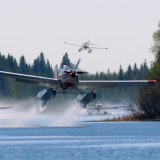
Jim's safe-flying techniques are invaluable. I highly recommend anyone wanting to be a safer pilot, to seek out this kind of training.
My girlfriend sat in the back, she commented at how such a smooth pilot Jim is.....
Thanks again Jim!
My girlfriend sat in the back, she commented at how such a smooth pilot Jim is.....
Thanks again Jim!
Fri Nov 11, 2016 9:59 pm
Re: Contact Flying w/contact flying.
Tangogawd,
It was a pleasure.
Chuck, who came with the Rans, has the call sign cyamaha. He is not a big talker. Does anyone have experience with those fast little airplanes and with the apparent brisk walk rate of closure approach? We could use some help there.
Did any get a chance to fly with CFOT or Doug Lumgair? Don't miss a great opportunity.
Contact
It was a pleasure.
Chuck, who came with the Rans, has the call sign cyamaha. He is not a big talker. Does anyone have experience with those fast little airplanes and with the apparent brisk walk rate of closure approach? We could use some help there.
Did any get a chance to fly with CFOT or Doug Lumgair? Don't miss a great opportunity.
Contact
- contactflying offline
- Posts: 4972
- Joined: Wed Apr 03, 2013 7:36 pm
- Location: Aurora, Missouri 2H2
Download my free "https://tinyurl.com/Safe-Maneuvering" e-book.
Fri Nov 18, 2016 8:11 pm
Re: Contact Flying w/contact flying.
Tangogawd,
It came to me in the middle of the night. The GPS units the Kingsleys use put zero at the middle of the field for race track. So the line we laid on the south, downwind border would be minus half the swaths necessary to cover the field (say -50). Zero, midfield would be the next swath, -49 next, 1, -48, 2 and so on.
Rob could explain these things better than I.
Contact
It came to me in the middle of the night. The GPS units the Kingsleys use put zero at the middle of the field for race track. So the line we laid on the south, downwind border would be minus half the swaths necessary to cover the field (say -50). Zero, midfield would be the next swath, -49 next, 1, -48, 2 and so on.
Rob could explain these things better than I.
Contact
- contactflying offline
- Posts: 4972
- Joined: Wed Apr 03, 2013 7:36 pm
- Location: Aurora, Missouri 2H2
Download my free "https://tinyurl.com/Safe-Maneuvering" e-book.
Wed Dec 14, 2016 9:21 am
Re: Contact Flying w/contact flying.
I will be at my A Troop reunion 03 Aug through 06 Aug 2017 in Alexandria Sheraton Old Town. Get in touch if you would like to fly 02 Aug or 07 Aug and I will schedule my airline dates accordingly.
- contactflying offline
- Posts: 4972
- Joined: Wed Apr 03, 2013 7:36 pm
- Location: Aurora, Missouri 2H2
Download my free "https://tinyurl.com/Safe-Maneuvering" e-book.
Wed Dec 14, 2016 9:49 am
Re: Contact Flying w/contact flying.
Jim,
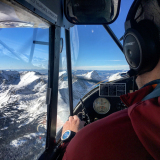
I'm a new pilot (150 hours, 1 year) and have always been intrigued by your posts on BCP. I was just starting my IFR training when I joined BCP, so I decided to not look into your methods too deep because as you have mentioned, they often don't mesh with instrument rating PTS/ACS standards.
When I finished my IFR training in October I decided to switch over to learning more of the contact/tailwheel/s&r type of flying that I am truly interested in, rather than the IFR type of flying which for me was simply the next step on the path to commercial. Anyways, I read Stick and Rudder, followed immediately by your book, and learned immense amounts.
I just wanted to thank you for publishing it, and I also enjoyed the stories contained within it, other than the teaching. I haven't been able to put much to use yet, but simply knowing that this type of flying exists and the type of thinking that goes with it has been very helpful.
-Asa
I'm a new pilot (150 hours, 1 year) and have always been intrigued by your posts on BCP. I was just starting my IFR training when I joined BCP, so I decided to not look into your methods too deep because as you have mentioned, they often don't mesh with instrument rating PTS/ACS standards.
When I finished my IFR training in October I decided to switch over to learning more of the contact/tailwheel/s&r type of flying that I am truly interested in, rather than the IFR type of flying which for me was simply the next step on the path to commercial. Anyways, I read Stick and Rudder, followed immediately by your book, and learned immense amounts.
I just wanted to thank you for publishing it, and I also enjoyed the stories contained within it, other than the teaching. I haven't been able to put much to use yet, but simply knowing that this type of flying exists and the type of thinking that goes with it has been very helpful.
-Asa

Wed Dec 14, 2016 1:55 pm
Re: Contact Flying w/contact flying.
ASA,
Safe Maneuvering Flight Techniques is more text oriented than Contact Flying. The various posts on this site have been worked over by very professional instructors. And I usually make it to Denver once a year. I hope to get to fly with you next trip there.
Jim
Safe Maneuvering Flight Techniques is more text oriented than Contact Flying. The various posts on this site have been worked over by very professional instructors. And I usually make it to Denver once a year. I hope to get to fly with you next trip there.
Jim
- contactflying offline
- Posts: 4972
- Joined: Wed Apr 03, 2013 7:36 pm
- Location: Aurora, Missouri 2H2
Download my free "https://tinyurl.com/Safe-Maneuvering" e-book.
Fri Dec 16, 2016 3:01 pm
Re: Contact Flying w/contact flying.
Hi Jim,
I continue to experiment with your techniques and thank you and all the other contributors for your efforts.
Went out last Friday and ran through most everything except Dutch Rolls (simply forgot).
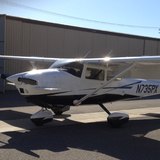
With my Peterson 260hp 182 with nose canard.... Did slow flight with both 20 and 40 deg flaps. Airspeed indicator was at 30 knots in both cases and the feeling was really slow flight -- but very stable, almost serene. Only difference was more power with 40 flaps.
Was over a long valley with a lengthwise road but no crossways road so I started by doing 180 energy management turns. These worked out very well as I am not afraid of steep banks from my glider training. I started at 80 knots and pulled up and slowed to 70 knots before entering the turn. As the nose is falling through, the airspeed is building. How far should I let it build before applying some back pressure to the yoke? Is this what you mean when you mention 'tuck under'?
For the record, I pulled out Google Earth and it seems that the videos in this thread at KBDU and O46 are both patterns with 1/2 mi. finals.
I only had one chance for an Apparent rate of closure landing and did my normal 1/2 mi. pattern at KCMA, TPA 800 ft.. 60 knots on downwind; 20 flaps; 300 fpm descent; turned final 1/2 mi. out; now 500 AGL and started slowing to 45 and when 1/4 mi. out dropped flaps 40. After I did this the feeling was that I seemed very low 1/8 mi. out and I did land on the numbers but with more of a drop/bounce than I would have liked. Plane did not roll very much so the speed was low. In retrospect, I think that I should have gone flaps 40 on turning final which would have given me more time to manage the situation with elevator/ power.
If you all are applying full flaps later in the approach, where in the pattern do you go full flaps?
Any other comments appreciated.
Thanks again and happy holidays,
Tom
I continue to experiment with your techniques and thank you and all the other contributors for your efforts.
Went out last Friday and ran through most everything except Dutch Rolls (simply forgot).
With my Peterson 260hp 182 with nose canard.... Did slow flight with both 20 and 40 deg flaps. Airspeed indicator was at 30 knots in both cases and the feeling was really slow flight -- but very stable, almost serene. Only difference was more power with 40 flaps.
Was over a long valley with a lengthwise road but no crossways road so I started by doing 180 energy management turns. These worked out very well as I am not afraid of steep banks from my glider training. I started at 80 knots and pulled up and slowed to 70 knots before entering the turn. As the nose is falling through, the airspeed is building. How far should I let it build before applying some back pressure to the yoke? Is this what you mean when you mention 'tuck under'?
For the record, I pulled out Google Earth and it seems that the videos in this thread at KBDU and O46 are both patterns with 1/2 mi. finals.
I only had one chance for an Apparent rate of closure landing and did my normal 1/2 mi. pattern at KCMA, TPA 800 ft.. 60 knots on downwind; 20 flaps; 300 fpm descent; turned final 1/2 mi. out; now 500 AGL and started slowing to 45 and when 1/4 mi. out dropped flaps 40. After I did this the feeling was that I seemed very low 1/8 mi. out and I did land on the numbers but with more of a drop/bounce than I would have liked. Plane did not roll very much so the speed was low. In retrospect, I think that I should have gone flaps 40 on turning final which would have given me more time to manage the situation with elevator/ power.
If you all are applying full flaps later in the approach, where in the pattern do you go full flaps?
Any other comments appreciated.
Thanks again and happy holidays,
Tom
Fri Dec 16, 2016 3:14 pm
Re: Contact Flying w/contact flying.
Jim,
One other observation of the landings in the videos of this thread.... If you study the VASI carefully, it seems like the plane is above the VASI glide slope until a few hundred feet from the numbers where it drops below the glide slope on through the landing.
If this is the case always, then being under the glide slope on 1/2 mi. final is not a good thing.
In my normal landings with flaps 20, I am always above the glide slope on short final and I never look at the airspeed indicator after that and I usually land on the numbers. Perhaps I have been doing a bit of the apparent rate brisk walk without realizing it?
Blue skies,
Tom
One other observation of the landings in the videos of this thread.... If you study the VASI carefully, it seems like the plane is above the VASI glide slope until a few hundred feet from the numbers where it drops below the glide slope on through the landing.
If this is the case always, then being under the glide slope on 1/2 mi. final is not a good thing.
In my normal landings with flaps 20, I am always above the glide slope on short final and I never look at the airspeed indicator after that and I usually land on the numbers. Perhaps I have been doing a bit of the apparent rate brisk walk without realizing it?
Blue skies,
Tom
Fri Dec 16, 2016 5:30 pm
Re: Contact Flying w/contact flying.
Tom,
Thanks for trying SMFT and thanks for your questions. As I get to fly less often, both are invaluable to me.
No problem, but you are not taking full advantage of zoom reserve in cruise airspeed in the 180 degree energy management turn you described. I don't use the airspeed indicator, but you could attained more zoom reserve in the form of altitude by slowing to 50 knots before entering the turn. This would also increased the rate of turn. Remember the slower we go, the faster we turn. This would also help keep the airspeed from getting too fast in the descent portion of the turn.. So yes, use elevator to prevent overspending. The tuck we crop dusters are taking out is to prevent getting to the ground too fast. We have to be ahead of the airplane and anticipate the need to turn so we can take full advantage of cruise airspeed rather than be disadvantaged by too much airspeed in the turn. It needs to be as near 1g as possible.
I use 1/4 mile patterns, but neither the VASI nor a long final need prevent us observing the apparent brisk walk rate of closure that makes this technique so easy and so useful. Any reasonable airspeed that high and that far out will appear to be a brisk walk. What you are doing (getting away from airspeed indicators or anything in the cockpit on short final and using elevator to prevent rate of closure, which is now so useful, from speeding up and using throttle to maintain glideslope) is absolutely correct.
So to recap: from 1/4 mile out and 400 feet it is 100% contact and 0% instrument. Elevator controls rate of closure, throttle controls glideslope, rudders control longitudinal alignment, ailerons keep the wing level or banked into any crosswind. Only by getting our head completely out of the cockpit can we take full advantage of the apparent brisk walk rate of closure approach.
Keep up the good work and help others by commenting.
Thanks again,
Jim
Thanks for trying SMFT and thanks for your questions. As I get to fly less often, both are invaluable to me.
No problem, but you are not taking full advantage of zoom reserve in cruise airspeed in the 180 degree energy management turn you described. I don't use the airspeed indicator, but you could attained more zoom reserve in the form of altitude by slowing to 50 knots before entering the turn. This would also increased the rate of turn. Remember the slower we go, the faster we turn. This would also help keep the airspeed from getting too fast in the descent portion of the turn.. So yes, use elevator to prevent overspending. The tuck we crop dusters are taking out is to prevent getting to the ground too fast. We have to be ahead of the airplane and anticipate the need to turn so we can take full advantage of cruise airspeed rather than be disadvantaged by too much airspeed in the turn. It needs to be as near 1g as possible.
I use 1/4 mile patterns, but neither the VASI nor a long final need prevent us observing the apparent brisk walk rate of closure that makes this technique so easy and so useful. Any reasonable airspeed that high and that far out will appear to be a brisk walk. What you are doing (getting away from airspeed indicators or anything in the cockpit on short final and using elevator to prevent rate of closure, which is now so useful, from speeding up and using throttle to maintain glideslope) is absolutely correct.
So to recap: from 1/4 mile out and 400 feet it is 100% contact and 0% instrument. Elevator controls rate of closure, throttle controls glideslope, rudders control longitudinal alignment, ailerons keep the wing level or banked into any crosswind. Only by getting our head completely out of the cockpit can we take full advantage of the apparent brisk walk rate of closure approach.
Keep up the good work and help others by commenting.
Thanks again,
Jim
- contactflying offline
- Posts: 4972
- Joined: Wed Apr 03, 2013 7:36 pm
- Location: Aurora, Missouri 2H2
Download my free "https://tinyurl.com/Safe-Maneuvering" e-book.
Fri Dec 16, 2016 6:53 pm
Re: Contact Flying w/contact flying.
Tom,
Try full flaps on final. Go ahead and get full flaps on early so the apparent rate of closure doesn't speed up on you on short final. You will have to carry more power, which is good (prop air over wing) to stay on glide angle.
I made a technical error on my last post, but it has no factor when looking outside, as we should. I said we use elevator to maintain rate of closure. I should have said, we use elevator to maintain the apparent brisk walk rate of closure with the numbers. The great thing about keeping our head completely out of the cockpit is that we don't have to think about slowing up, which is actually happening. We have a great visual clue, the apparent brisk walk rate of closure. We have great aural clues, relative wind and engine noise. We have good kinetic clues, relative buoyancy and g loading and slick pressure. The brain connection with our senses is more powerful than any computer.
I haven't used a VASI in many years. Army VASI put the helicopter on the pad. I think the airport VASI puts the airplane beyond the numbers. Some of the other instructors here can answer that. The VASI has no factor on the apparent brisk walk rate of closure approach. Use power to stay on VASI or just visually maintain a decent angle just over any obstacles. I would rather you just miss the obstacles rather than maintain the VASI. But I am teaching contact rather than instrument flying and I no longer fly at night. Had too many engine failures. Night would scare the pee out of me. And I have had to miss too many wires, irregular tree lines and tree height, farmers trucks, tractors, implements, and combines.
Later,
Jim
Try full flaps on final. Go ahead and get full flaps on early so the apparent rate of closure doesn't speed up on you on short final. You will have to carry more power, which is good (prop air over wing) to stay on glide angle.
I made a technical error on my last post, but it has no factor when looking outside, as we should. I said we use elevator to maintain rate of closure. I should have said, we use elevator to maintain the apparent brisk walk rate of closure with the numbers. The great thing about keeping our head completely out of the cockpit is that we don't have to think about slowing up, which is actually happening. We have a great visual clue, the apparent brisk walk rate of closure. We have great aural clues, relative wind and engine noise. We have good kinetic clues, relative buoyancy and g loading and slick pressure. The brain connection with our senses is more powerful than any computer.
I haven't used a VASI in many years. Army VASI put the helicopter on the pad. I think the airport VASI puts the airplane beyond the numbers. Some of the other instructors here can answer that. The VASI has no factor on the apparent brisk walk rate of closure approach. Use power to stay on VASI or just visually maintain a decent angle just over any obstacles. I would rather you just miss the obstacles rather than maintain the VASI. But I am teaching contact rather than instrument flying and I no longer fly at night. Had too many engine failures. Night would scare the pee out of me. And I have had to miss too many wires, irregular tree lines and tree height, farmers trucks, tractors, implements, and combines.
Later,
Jim
- contactflying offline
- Posts: 4972
- Joined: Wed Apr 03, 2013 7:36 pm
- Location: Aurora, Missouri 2H2
Download my free "https://tinyurl.com/Safe-Maneuvering" e-book.
Thu Apr 27, 2017 7:25 pm
Re: Contact Flying w/contact flying.
MsPirate came up to 2H2, in her nice Maule, from Memphis today on her way to the family farm at Moberly. We flew out to Kingsley Field for lunch and did low ground effect takeoffs, Dutch rolls, energy management turns, apparent brisk walk rate of closure approaches, and
flew a little pipeline. She did everything very well, especially for an ex C-141 pilot and present Airbus 300 pilot for Fed X. Her muscle memory is ambidextrous.
Also she is a CFII. For any who want to have a legal instructor go over this stuff with them, I highly recommend her. Her, husband, and sons also have a Stearman and a Citabra.
flew a little pipeline. She did everything very well, especially for an ex C-141 pilot and present Airbus 300 pilot for Fed X. Her muscle memory is ambidextrous.
Also she is a CFII. For any who want to have a legal instructor go over this stuff with them, I highly recommend her. Her, husband, and sons also have a Stearman and a Citabra.
- contactflying offline
- Posts: 4972
- Joined: Wed Apr 03, 2013 7:36 pm
- Location: Aurora, Missouri 2H2
Download my free "https://tinyurl.com/Safe-Maneuvering" e-book.
Fri Apr 28, 2017 3:36 am
Re: Contact Flying w/contact flying.
Flying with Jim is a truly amazing experience. He will fill the air with stories and then show you the true "art" of flying.
Reading his "Safe Maneuvering Flight Techniques" was a good opportunity to evaluate some of the finer points of aircraft handling, but
going out in the airplane with him will make the items clear on the finer points of optimizing aircraft performance.
I'm glad I made the trip and we enjoyed a beautiful day of flying (and learning for me).

MO9 Kingsley Field
Reading his "Safe Maneuvering Flight Techniques" was a good opportunity to evaluate some of the finer points of aircraft handling, but
going out in the airplane with him will make the items clear on the finer points of optimizing aircraft performance.
I'm glad I made the trip and we enjoyed a beautiful day of flying (and learning for me).
MO9 Kingsley Field

Fri Jun 02, 2017 5:16 pm
Re: Contact Flying w/contact flying.
Other than the next two weeks getting a road maintenance agreement recorded in a very nit-picking county, I will be more available to move about the country and fly with any brave enough.
I have had to limit my free clinics to pilots who could afford to get me there, put me up, and feed me. Having lots of experience feeding an airplane on a teacher salery plus NG, I understand the poor pilot/instructor.
I have just closed a sale on a considerable chunk of land. I am rich enough, for the first time in my life, to properly feed a nice airplane. I am also now wise enough to not do that. Instead I will be available to any instructor and at least one student to do the Safe Maneuvering Flight Techniques Clinic and Low Power Mountain Flying Clinic on my own airline, hotel, and separate rations dime.
Line from a movie:. "It'll be fun."
I have had to limit my free clinics to pilots who could afford to get me there, put me up, and feed me. Having lots of experience feeding an airplane on a teacher salery plus NG, I understand the poor pilot/instructor.
I have just closed a sale on a considerable chunk of land. I am rich enough, for the first time in my life, to properly feed a nice airplane. I am also now wise enough to not do that. Instead I will be available to any instructor and at least one student to do the Safe Maneuvering Flight Techniques Clinic and Low Power Mountain Flying Clinic on my own airline, hotel, and separate rations dime.
Line from a movie:. "It'll be fun."
- contactflying offline
- Posts: 4972
- Joined: Wed Apr 03, 2013 7:36 pm
- Location: Aurora, Missouri 2H2
Download my free "https://tinyurl.com/Safe-Maneuvering" e-book.
Wed Jul 12, 2017 5:58 am
Re: Contact Flying w/contact flying.
I may have inadvertently scared some instructors off with the"at least one student" requirement. I wasn't thinking primarily a primary student. Having been a teacher all my life, a student is anybody in the other seat.
Flight reviews reveal far more little things than big things, positive or negative, about how pilots (students) fly. Take crab vs sideslip in the crosswind approach. Either fine but sideslip needed to finish either. Most pilots have the whole thing at least well understood.
What about light and variable wind conditions? Most get a nose wheel airplane down with a little squeak and don't even think about it. What about a supposedly no wind condition? The same.
Most pilots make small coordinated turns on final to attempt keeping the longitudinal axis going down the center line extended. This is especially true in light and variable but a little gusty conditions. So they are making a shallow turn, crabbing back to the center line extended, and often finding the need to do the same thing in the other direction.
There is an easy solution,. Use rudder only to maintain longitudinal alignment and to, at the same time, stay on the center line extended. Yes, this is a small sideslip in whichever direction needed to maintain the center line between the pilot's legs.
In the old days of tailwheel only instruction, we simply demanded that the tail wiggle throughout final, touchdown, roll out, and taxi. The same can be demanded in nose wheel airplanes. We just need to explain why.
Flight reviews reveal far more little things than big things, positive or negative, about how pilots (students) fly. Take crab vs sideslip in the crosswind approach. Either fine but sideslip needed to finish either. Most pilots have the whole thing at least well understood.
What about light and variable wind conditions? Most get a nose wheel airplane down with a little squeak and don't even think about it. What about a supposedly no wind condition? The same.
Most pilots make small coordinated turns on final to attempt keeping the longitudinal axis going down the center line extended. This is especially true in light and variable but a little gusty conditions. So they are making a shallow turn, crabbing back to the center line extended, and often finding the need to do the same thing in the other direction.
There is an easy solution,. Use rudder only to maintain longitudinal alignment and to, at the same time, stay on the center line extended. Yes, this is a small sideslip in whichever direction needed to maintain the center line between the pilot's legs.
In the old days of tailwheel only instruction, we simply demanded that the tail wiggle throughout final, touchdown, roll out, and taxi. The same can be demanded in nose wheel airplanes. We just need to explain why.
- contactflying offline
- Posts: 4972
- Joined: Wed Apr 03, 2013 7:36 pm
- Location: Aurora, Missouri 2H2
Download my free "https://tinyurl.com/Safe-Maneuvering" e-book.
Tue Jul 18, 2017 8:59 pm
Re: Contact Flying w/contact flying.
I expect that to many who use safe maneuvering flight techniques, each is just another tool in the toolbox. Over the years I and others have found consistent use to be safest. When we demand all energy available on every takeoff, on every turn, on every landing, etc, we are already on top of the unexpected. When the unexpected need to turn steeper to miss an obstacle happens we are already climbing in the beginning of the energy management turn. Thus we have the slower speed to turn faster and the altitude to trade for a return to cruise airspeed beyond the obstacle.
"The hero shouted into the abyss demanding, 'what must I do'? 'Do what you can, my son' came the reply.' The hero insisted, 'It is not enough! ' 'Do what you can not!'"
Nikos Kazantzakis.
"The hero shouted into the abyss demanding, 'what must I do'? 'Do what you can, my son' came the reply.' The hero insisted, 'It is not enough! ' 'Do what you can not!'"
Nikos Kazantzakis.
- contactflying offline
- Posts: 4972
- Joined: Wed Apr 03, 2013 7:36 pm
- Location: Aurora, Missouri 2H2
Download my free "https://tinyurl.com/Safe-Maneuvering" e-book.
Wed Jul 19, 2017 4:35 pm
Re: Contact Flying w/contact flying.
I flew with Justin's (2H2 FBO) new instructor, Bart, today. He had read the book and did very well on all the techniques. Mike Smith from Arkansas will be up without an airplane next month. After another ride with Bart, I expect I will just ride in back with the two of them.
- contactflying offline
- Posts: 4972
- Joined: Wed Apr 03, 2013 7:36 pm
- Location: Aurora, Missouri 2H2
Download my free "https://tinyurl.com/Safe-Maneuvering" e-book.
Wed Aug 23, 2017 5:18 pm
Re: Contact Flying w/contact flying.
I flew with the 2H2 instructor Bart again today. We worked on hover taxi, which he hadn't seen. Nerve damage has weakened my legs enough that I have trouble with lots of rudder in slow flight. I was amazed with how poorly I did with the demonstration.
The world of the local FBO is different today. I used to just go out to fly without scheduling. Now I have to schedule two weeks in advance.
I was calling rate of closure for Bart and forgot to compare with Cary's widening base. I will get that Friday when Mike comes from Jonesboro to fly with Bart and me. Bart has everything under control now and I will ride in back.
The world of the local FBO is different today. I used to just go out to fly without scheduling. Now I have to schedule two weeks in advance.
I was calling rate of closure for Bart and forgot to compare with Cary's widening base. I will get that Friday when Mike comes from Jonesboro to fly with Bart and me. Bart has everything under control now and I will ride in back.
- contactflying offline
- Posts: 4972
- Joined: Wed Apr 03, 2013 7:36 pm
- Location: Aurora, Missouri 2H2
Download my free "https://tinyurl.com/Safe-Maneuvering" e-book.
DISPLAY OPTIONS
Who is online
Users browsing this forum: No registered users and 9 guests
Latest Features
-
Live to Tell
A Minnesota pilot is surprised to learn that the sudden asymmetric drag of an out-of-rig ski can…Read More -
Creators
Working in some of the Yukon's most beautiful and remote environments, photographer Simon Blakesley captures aircraft in…Read More -
Aircraft Ownership and Maintenance
Upgrading to big tires can make a huge difference in backcountry performance, but with those gains come…Read More -
Tales from Yesteryear
In this tale from bush flying yesteryear, Don Cogger signs up to help Atlee Dodge Jr recovery…Read More


Latest Knowledge Base
-
Destinations
A regional guide with ideas for winter camping destinations in California, Nevada, New Mexico, and Arizona.Read More -
Aircraft
Finding an affordable aircraft that can handle the backcountry for $80K or less? A challenge for sure, but with the…Read More -
Aircraft
01.29.2018 - Zane - Updated tire diameter graphic to add 8.50x10 Guide to tires for use in the backcountry and off-airport landing…Read More -
Pilots
12.22.2013 - Initial article format Operating aircraft on skis and negotiating a snow-covered landscape is an entirely unique skillset and environment.…Read More


