This may be a good question to spur a knowledge base article about water operations aircraft. Since I only fly deserts and mountains, I've only seen pictures of aircraft on the water. Hence my qualification to ask this question:
What is the difference between floats, amphibs, and what is identified as a seaplane?
I searched and since this is a really basic question I couldn't find any discussion at this level. If Zane has been unable to recruit someone to write such an article (like the one MTV did for ski plane operations), maybe we can piece something together from the responses here.
Difference Between Floats, Amphibs, Seaplane, Etc.
Sat Jan 20, 2018 8:07 am
- DeltaRomeo offline

- Posts: 391
- Joined: Sun Oct 19, 2014 11:26 am
- Location: TX and NM
- Aircraft: M5 180C
Sat Jan 20, 2018 8:38 am

Keep the Greasy side down!
Sat Jan 20, 2018 9:49 am
Re: Difference Between Floats, Amphibs, Seaplane, Etc.
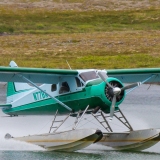
Well, as that article sort of suggested, the term “Seaplane” generally is used to refer to ANY fixed wing aircraft that is equipped to land and takeoff on water.
A floatplane refers to an airplane that was designed and constructed to operate as a land plane, but has been modified with floats, thus permitting it to land and takeoff on water.
As noted, there are straight floats and amphibious floats. Amphibious floats have retractable (usually) wheel gear that permits the airplane to land on water or land.
Then there are hull type seaplanes, which may be pure seaplanes, landing only on water or amphibious seaplanes, with retractable gear.
But, these are ALL defined as seaplanes. The appropriate authorization to operate any of these reads “SES” for single engine Seaplane, or MES for multi engine seaplane.
There is no mention in the regs or certification standards that suggest that one must land in open ocean to qualify as a “Seaplane Pilot”.
So, I think the author of that article is wrong on his definition of “Seaplane”. I’ve landed Super Cubs and a number of other floatplanes on open ocean. The issue there is doing so when th3 sea state is such that you don’t damage the plane.
MTV
A floatplane refers to an airplane that was designed and constructed to operate as a land plane, but has been modified with floats, thus permitting it to land and takeoff on water.
As noted, there are straight floats and amphibious floats. Amphibious floats have retractable (usually) wheel gear that permits the airplane to land on water or land.
Then there are hull type seaplanes, which may be pure seaplanes, landing only on water or amphibious seaplanes, with retractable gear.
But, these are ALL defined as seaplanes. The appropriate authorization to operate any of these reads “SES” for single engine Seaplane, or MES for multi engine seaplane.
There is no mention in the regs or certification standards that suggest that one must land in open ocean to qualify as a “Seaplane Pilot”.
So, I think the author of that article is wrong on his definition of “Seaplane”. I’ve landed Super Cubs and a number of other floatplanes on open ocean. The issue there is doing so when th3 sea state is such that you don’t damage the plane.
MTV


Wed Feb 21, 2018 8:03 am
Re: Difference Between Floats, Amphibs, Seaplane, Etc.
I have seen in videos where pilots are constantly extracting water from the floats at various intervals. Why don't float manufacturer's fill the floats with polystyrene foam and be done with it?
- DeltaRomeo offline
- Posts: 391
- Joined: Sun Oct 19, 2014 11:26 am
- Location: TX and NM
- Aircraft: M5 180C
Wed Feb 21, 2018 8:35 am
Re: Difference Between Floats, Amphibs, Seaplane, Etc.
It’s not the norm to be constantly extracting water from most floats, if floats are well maintained they don’t leak. I’ve been flying flying floats professionally for 10 years and it’s extremely rare to find much water.
Foam is light but I’d wager it would take hundreds of pounds of the stuff to totally fill a set of beaver floats.
Foam is light but I’d wager it would take hundreds of pounds of the stuff to totally fill a set of beaver floats.

Wed Feb 21, 2018 8:56 am
Re: Difference Between Floats, Amphibs, Seaplane, Etc.
Halestorm wrote:It’s not the norm to be constantly extracting water from most floats, if floats are well maintained they don’t leak. I’ve been flying flying floats professionally for 10 years and it’s extremely rare to find much water.
Foam is light but I’d wager it would take hundreds of pounds of the stuff to totally fill a set of beaver floats.
I can recall one operator of a Beaver with leaky floats who thought filling the float compartments with foam was a good idea......not legal, but, what the hey. That airplane got heavier and heavier, and barely escaped sinking with a load of passengers in a wind.
As Halestorm notes, pumping water from floats is similar to a pilot slumping the fuel drains in his fuel tanks, looking for contaminants or water......you don’t really expect to find anything, but it’s a precaution taken to discover a potential problem.
MTV
Wed Feb 21, 2018 9:13 am
Re: Difference Between Floats, Amphibs, Seaplane, Etc.
Filling the floats with foam, while making them virtually unsinkable pose a few issues besides weight. Floats get damaged, seams work and they leak, keel strip need replacing from time to time. So you would have to carve out all this foam to do a repair, not fun. Foam has the other issue of retain water, not much, but just enough to promote corrosion. If your unsure of this, just go to most older 210's and 206/207 that have the foam filled trim tabs, give them a light squeeze. You will find a whole lot of them are corroded from the inside out due to foam filling.
There have been recent advances in composite floats, these may well be a candidate for that concept. There is a weight penalty for sure. You could also achieve the similar effect with airbags of sorts. Most floatplanes sink due to some sort of pilot handling issue. So perhaps filling the pilot's head with foam might work better.
There have been recent advances in composite floats, these may well be a candidate for that concept. There is a weight penalty for sure. You could also achieve the similar effect with airbags of sorts. Most floatplanes sink due to some sort of pilot handling issue. So perhaps filling the pilot's head with foam might work better.
Wed Feb 21, 2018 10:54 am
Re: Difference Between Floats, Amphibs, Seaplane, Etc.
mtv wrote:But, these are ALL defined as seaplanes. The appropriate authorization to operate any of these reads “SES” for single engine Seaplane, or MES for multi engine seaplane.
MTV
When I first started on my SES rating, I flew a Lake amphib but was told if I get my rating in the Lake, I would not be able to fly a float plane as there would be a restriction on the rating. Is this not the case? ( This was in 1978 so things may have changed)
- pouellette offline
- Posts: 81
- Joined: Sat Jan 29, 2011 1:42 pm
- Location: WMA
- Aircraft: RANS S7S
CHEROKEE 140
Wed Feb 21, 2018 11:17 am
Re: Difference Between Floats, Amphibs, Seaplane, Etc.
dogpilot wrote:Filling the floats with foam, while making them virtually unsinkable pose a few issues besides weight....You could also achieve the similar effect with airbags of sorts. Most floatplanes sink due to some sort of pilot handling issue. So perhaps filling the pilot's head with foam might work better.
Ping pong balls!

Cessna Skywagon -- accept no substitute!
Wed Feb 21, 2018 11:18 am
Re: Difference Between Floats, Amphibs, Seaplane, Etc.
The 172E that I earned my SES in at Seattle Seaplanes had leaky floats, so that a substantial amount of water came out when pumped, if it sat overnight in the water. Apparently the leaks got worse, because the following year, it turned turtle while taxiing in to their dock at Lake Union. It was recovered, no one was hurt, and it's been restored--and I hope the floats were sealed better! It was a fun airplane to fly.
The DPE I flew with for my checkride had been a Lake Amphibian dealer, so in the course of our chats before and after the flight, he said that there are some significant differences between float planes and hull-type seaplanes, as far as operating technique goes. What that is, in detail, I really don't know, because he didn't say. I've only flown float planes, the one I trained in and one other. I've watched both take off and land, and I can't see any significant difference in the apparent operation.
The Lake amphibian that crashed on Lake Winnebago leaving the OSH seaplane base had other problems, not just that the lake was riled up. Whether the water was too rough or just operational problems, I can't say--I don't recall if the NTSB final is out or not, but I remember the factual indicating a number of issues leading up to a conclusion that there was a clear case of get-there-itis in play, and that the airplane had some serious mechanical issues.
As Mike indicated, the certificate is single engine sea (SES) or multi-engine sea (MES), but my guess is that anyone who has trained in one type or the other will need some transition training if switching to the other type. I would also guess that there's a certain amount of additional training necessary to land and take off an amphibian from land. It's like many of our certificates--they're all licenses to learn.
What I can say with absolute certainty is that my experience learning to fly on floats was without a doubt the most fun flying experience I have had in 45+ years of flying. It combined two of the things I enjoy the most, flying and boating. I've been boating since I was 8 years old, and all of that experience, in boats ranging from rowboats and canoes to 38' trawlers, made the water handling of the seaplane very easy to learn. I'd been flying at that point for 41+ years, mostly in airplanes very similar to their seaplane trainer, so there wasn't much transition to a float equipped version--in fact, theirs has the same engine conversion as mine does in a year newer model.
Cary
The DPE I flew with for my checkride had been a Lake Amphibian dealer, so in the course of our chats before and after the flight, he said that there are some significant differences between float planes and hull-type seaplanes, as far as operating technique goes. What that is, in detail, I really don't know, because he didn't say. I've only flown float planes, the one I trained in and one other. I've watched both take off and land, and I can't see any significant difference in the apparent operation.
The Lake amphibian that crashed on Lake Winnebago leaving the OSH seaplane base had other problems, not just that the lake was riled up. Whether the water was too rough or just operational problems, I can't say--I don't recall if the NTSB final is out or not, but I remember the factual indicating a number of issues leading up to a conclusion that there was a clear case of get-there-itis in play, and that the airplane had some serious mechanical issues.
As Mike indicated, the certificate is single engine sea (SES) or multi-engine sea (MES), but my guess is that anyone who has trained in one type or the other will need some transition training if switching to the other type. I would also guess that there's a certain amount of additional training necessary to land and take off an amphibian from land. It's like many of our certificates--they're all licenses to learn.
What I can say with absolute certainty is that my experience learning to fly on floats was without a doubt the most fun flying experience I have had in 45+ years of flying. It combined two of the things I enjoy the most, flying and boating. I've been boating since I was 8 years old, and all of that experience, in boats ranging from rowboats and canoes to 38' trawlers, made the water handling of the seaplane very easy to learn. I'd been flying at that point for 41+ years, mostly in airplanes very similar to their seaplane trainer, so there wasn't much transition to a float equipped version--in fact, theirs has the same engine conversion as mine does in a year newer model.
Cary

"I have slipped the surly bonds of earth..., put out my hand and touched the face of God." J.G. Magee
Wed Feb 21, 2018 12:26 pm
Re: Difference Between Floats, Amphibs, Seaplane, Etc.
pouellette wrote:mtv wrote:But, these are ALL defined as seaplanes. The appropriate authorization to operate any of these reads “SES” for single engine Seaplane, or MES for multi engine seaplane.
MTV
When I first started on my SES rating, I flew a Lake amphib but was told if I get my rating in the Lake, I would not be able to fly a float plane as there would be a restriction on the rating. Is this not the case? ( This was in 1978 so things may have changed)
Nope, the SES has always covered ALL single engine seaplanes. A SES done in a Lake would certainly LICENSE you to fly a floatplane. A checkout would still be a good idea, but as far as the FAA is concerned, you'd be good to go.
Same goes for amphib vs straight float airplane....if you have a complex endorsement and a SES, good to go.
MTV
Wed Feb 21, 2018 3:11 pm
Re: Difference Between Floats, Amphibs, Seaplane, Etc.
Some reading material. There may be better resources:
https://www.faa.gov/regulations_policie ... _handbook/
http://www.thresholdaviation.com/edo-how-to-fly-floats/
In my opinion the best way to learn about water operations is to read what's available then find an experienced flight instructor for review the written material while pursuing the rating. That may take some time and require renting an airplane and instruction if yours isn't equipped.
After the rating if possible practice within limits then plan another review of float flying based upon what you've learned. Don't assume there's not more to learn. There are stages to any learning and combining reading, experience, and periodic review worked best for me. I'm not an instructor so there may be other ways to become competent and safe.
I've flown with a few seaplane pilots over the last 53 years as a passenger and try to observe and learn from their performance. I wish now I'd done more of that as it takes experience to become a good instructor and finding one today can be a challenge.
Gary
https://www.faa.gov/regulations_policie ... _handbook/
http://www.thresholdaviation.com/edo-how-to-fly-floats/
In my opinion the best way to learn about water operations is to read what's available then find an experienced flight instructor for review the written material while pursuing the rating. That may take some time and require renting an airplane and instruction if yours isn't equipped.
After the rating if possible practice within limits then plan another review of float flying based upon what you've learned. Don't assume there's not more to learn. There are stages to any learning and combining reading, experience, and periodic review worked best for me. I'm not an instructor so there may be other ways to become competent and safe.
I've flown with a few seaplane pilots over the last 53 years as a passenger and try to observe and learn from their performance. I wish now I'd done more of that as it takes experience to become a good instructor and finding one today can be a challenge.
Gary
Thu Feb 22, 2018 4:37 pm
Re: Difference Between Floats, Amphibs, Seaplane, Etc.
A major contributing factor to the lake renegade accident at Oshkosh last summer was the fact that the flaps were not used for takeoff. It is very critical that the flaps are used for water operations on the lake. Also the lake requires quite different operating techniques compared to a floatplane, even though the SES is valid for either one.
Thu Feb 22, 2018 7:44 pm
Re: Difference Between Floats, Amphibs, Seaplane, Etc.
They’re all somewhat different, in fact. I can’t over emphasize that.
For many years, Lake owners have not been able to get insurance on a Lake without specific Lake training. Not a bad idea in any case.
But flaps for takeoff? One of my favorite “tricks for someone checking out in a Cessna 180/185 on floats has always been to distract them as they prepare to line up for takeoff. Do that enough and sooner or later, they’ll forget to lower the flaps for takeoff.
And guess what? Those airplanes are water loving beasts without flaps deployed.
Most folks will sit there trying to figure out what the hey is going on.....some will abort (a good move...stop and figure out what’s going on) some will realize what’s going on, reach down and pull flap handle to 20,and off we go.
It’s a very personal experience that will stick with you, as opposed to the verbal briefing on the subject.
Seaplanes have many common characteristics, but there are also different characteristics as well, and not just between airplane types....different floats on the same airplane can require very different technique.
Best advice I can offer: No matter what your experience, get a good checkout in any new type, especially seaplanes.
I love Lakes, they are great versatile airplanes. But they do have some characteristics that are quite different from float planes.
MTV
For many years, Lake owners have not been able to get insurance on a Lake without specific Lake training. Not a bad idea in any case.
But flaps for takeoff? One of my favorite “tricks for someone checking out in a Cessna 180/185 on floats has always been to distract them as they prepare to line up for takeoff. Do that enough and sooner or later, they’ll forget to lower the flaps for takeoff.
And guess what? Those airplanes are water loving beasts without flaps deployed.
Most folks will sit there trying to figure out what the hey is going on.....some will abort (a good move...stop and figure out what’s going on) some will realize what’s going on, reach down and pull flap handle to 20,and off we go.
It’s a very personal experience that will stick with you, as opposed to the verbal briefing on the subject.
Seaplanes have many common characteristics, but there are also different characteristics as well, and not just between airplane types....different floats on the same airplane can require very different technique.
Best advice I can offer: No matter what your experience, get a good checkout in any new type, especially seaplanes.
I love Lakes, they are great versatile airplanes. But they do have some characteristics that are quite different from float planes.
MTV
Thu Feb 22, 2018 8:23 pm
Re: Difference Between Floats, Amphibs, Seaplane, Etc.
If it says "Pan American" on it then its a Seaplane, everything else is an amphib or float plane. 

Fri Feb 23, 2018 7:43 am
Re: Difference Between Floats, Amphibs, Seaplane, Etc.
G44 wrote:If it says "Pan American" on it then its a Seaplane, everything else is an amphib or float plane.
Good one!
MTV
Mon Feb 26, 2018 9:51 pm
Re: Difference Between Floats, Amphibs, Seaplane, Etc.
I will throw "Notes of a seaplane instructor" in with the books mentioned above, I believe it is the best book on the subject written and still will peruse it every once in a while.
- Headoutdaplane offline
- Posts: 526
- Joined: Thu May 29, 2008 5:21 pm
- Location: Homer, AK
The winner is the person with the most stories when he dies, not the most gold.
www.belugaair.com
www.belugaair.com
Tue Feb 27, 2018 8:25 pm
DISPLAY OPTIONS
Who is online
Users browsing this forum: No registered users and 0 guests
Latest Features
-
Live to Tell
A Minnesota pilot is surprised to learn that the sudden asymmetric drag of an out-of-rig ski can…Read More -
Creators
Working in some of the Yukon's most beautiful and remote environments, photographer Simon Blakesley captures aircraft in…Read More -
Aircraft Ownership and Maintenance
Upgrading to big tires can make a huge difference in backcountry performance, but with those gains come…Read More -
Tales from Yesteryear
In this tale from bush flying yesteryear, Don Cogger signs up to help Atlee Dodge Jr recovery…Read More


Latest Knowledge Base
-
Destinations
A regional guide with ideas for winter camping destinations in California, Nevada, New Mexico, and Arizona.Read More -
Aircraft
Finding an affordable aircraft that can handle the backcountry for $80K or less? A challenge for sure, but with the…Read More -
Aircraft
01.29.2018 - Zane - Updated tire diameter graphic to add 8.50x10 Guide to tires for use in the backcountry and off-airport landing…Read More -
Pilots
12.22.2013 - Initial article format Operating aircraft on skis and negotiating a snow-covered landscape is an entirely unique skillset and environment.…Read More


