GumpAir wrote:If "X" type of flying job hooks you, it'll take more than a little bumpy air and stinking every day to keep you from doing it.
Welcome to the real world of driving airplanes for a living. It's mostly a lot of hard work, and doing awesome shit that no one but you is gonna know about.
Gump
agreed 100% and more…
and of course, the purpose of my post was not to 'glamorize' ag ( or SEAT) flying for that matter, nor was it intended to insinuate that those of us that do choose to fly ag are some kind of jedi super pilots…
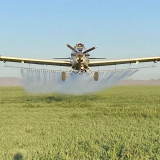
The intention behind the post was to illustrate the fact that the giant ultra picturesque wingover you see that almost empty 2014 AT-602 pulling next to the highway on a cool still summer morning, is not an accurate portrayal of the day to day grind of either of these careers.
Yes they are all hard work, and yes I believe that is true of the vast majority of flying careers. And sorry to burst any bubbles but…
whee wrote:Parts of Rob's story sounds great but then stuff like getting beat up in rough air with no option to quite make me wonder if I should just go back to a desk job

I know of no other phenomena (short of mother nature) that creates more 'weather' than fire! Guess what? being a SEAT driver, you're going to have to fly fires! you're not going to get the luxury of choosing when you want to fly, and it's guaranteed not to be the flying wx you'd choose for a nice sunday morning breakfast run

Breaking into ag…. there are a million ways to skin that cat, but Skaly, pretty much sums the whole thing up well. The one thing I will add is that if you truly want to fly a SEAT, then you are targeting the Air Tractor 802. This is essentially the top of the ag aviation fleet…. you will have to align your elected career path accordingly, and treat it as such.
Sorry Mike, there are no more pistons on Federal contracts, and most states are following suit. Arkansas still has Dromaders operated by Western Pilot Services, and there are a couple others, but not for long...
There is no one that is going to flip you the keys to a multi million dollar single seat aircraft without some way of showing you are competent to operate that aircraft (that by the way doesn't even begin to touch on the fact that operating the aircraft is secondary to actually performing the job of either fire fighting or aerial application). How do you get competent in an AT-802? well flying a 602 would be a pretty great in! Competence in a 602? well... flying a 502, 402, or Thrush of various flavor would do…. you get the idea… Just like no one is going to toss me the keys to a triple 7, without having taken some steps to reach that destination…
There are exceptions to every rule, and as such I know of two glider pilots who made it into the cockpit of working 802's with very minimal powered airplane time. Both were amazing sticks for their young years, both had solid 'ins' and both took other steps in their training to compensate for the areas they were short in. This is probably a lot less likely to occur flying ag, because there the task of flying (in most applications) is truly secondary to the task of applicating… you simply can't fake a 'kill' nor can you undo that potentially bankrupting demon called 'drift'… This is why Skaly will not be allowed to fly herbicide until he has gained experience.
Schools… There is no way in heck you are going to learn a whole lot about aerial application in the small time allotted to you by the financial constraints of your educational budget. Notice I didn't blame the school, because most schools have at least one working ag pilot on staff, several actually function as operators as well as schools. Consequently they should be thought of no differently than any other operator who is willing to train you. What a school will provide you with is insurability… This may or may not be of value to you. If you have an 'in' who is willing to take the time and expense of training you on, and if their insurance carrier will sign off on it, you will be time and money ahead to pass on the school. If you are not so fortunate, having gone to a school will make you insurable, and consequently more marketable to an operator who is not willing to risk their equipment or insurance training someone the basics. I have seen it done both ways, many, many times.
Even after attending an ag school you will probably know nothing of the application practices related to the region and / or crop you are tasked with taking care of. Insurable it will make you, an ag-pilot, it will not... Spraying fungicide on corn is vastly different than taking care of produce, which is a world apart from fertilizing timber or seeding rangeland, all of which are completely foreign to the guy planting rice… None of that will be a part of your ag school curriculum...
A couple last thoughts on training for now...
Make no mistake, regardless of how much weight an operator thinks he carries, it is ultimately his insurance carrier who will determine who sits in that cockpit. beyond that, using our company / equipment as an example, our Thrushes need to make $1,000/hr. to pencil out. So just how many hours do you expect the average operator wants to donate to a potential employee who just might walk the minute he learns a thing or two?
Stuff to chew on...
Take care, Rob