HF and Marine Radios in Seaplanes
Sun Jan 24, 2021 8:04 am
HF and Marine Radios in Seaplanes
Im building up the PT6 206 Amphib. Ive put in a lot of top quality avionics. The fantasy is to be flying it to far off destinations with limited Cell service etc (remember I said Fantasy), flying over a harbor and wanting to talk to boats/harbor master so I know where to park before shutdown. There is a large portion of Aviation HF that is going unused, that we can use inflight for aviation purposes, like long range contact with home airport. I have my Tech and working on my Amateur radio General license now so I would plan to us the HF radio for non aviation purposes. I have the radio that will cover all the bands required. The question is, Have any of you had that stuff in the plane and did you use it? CBs? I can upgrade my avionics to Sat phone in the future but it doesn't seem as romantic.
- Skydive206 offline

- Posts: 551
- Joined: Wed Mar 25, 2009 7:54 pm
- Location: Williamsburg, MO
Sun Jan 24, 2021 8:33 am
Re: HF and Marine Radios in Seaplanes
I have a programmable FM VHF radio which I use for talking to marinas, etc when on floats. It is extremely useful.
It can be programmed for almost any FM VHF frequencies, not just the marine channels, although that’s all I use it for. It also is a more powerful transmitter than most aircraft radios which might come in handy in some situations.
It is hooked into the audio panel COM3 selector through a Northern Airborne Technology NAT AA34 interface box. I’m not sure if they’re still around, but someone else must make something similar.
Chris
Sent from my iPad using Tapatalk
It can be programmed for almost any FM VHF frequencies, not just the marine channels, although that’s all I use it for. It also is a more powerful transmitter than most aircraft radios which might come in handy in some situations.
It is hooked into the audio panel COM3 selector through a Northern Airborne Technology NAT AA34 interface box. I’m not sure if they’re still around, but someone else must make something similar.
Chris
Sent from my iPad using Tapatalk

Sun Jan 24, 2021 8:43 am
Re: HF and Marine Radios in Seaplanes
Thanks for this info, Northern Airborne Technology NAT AA34 interface box. It talks about FM interface but I also want AM and SSB. Dont know why that would make a difference.
- Skydive206 offline
- Posts: 551
- Joined: Wed Mar 25, 2009 7:54 pm
- Location: Williamsburg, MO
Sun Jan 24, 2021 9:03 am
Re: HF and Marine Radios in Seaplanes
The manual also refers to “CB & mobile” radios....so that would be AM I believe. Perhaps someone here who knows these units better will chime in.
Chris
Sent from my iPad using Tapatalk
Chris
Sent from my iPad using Tapatalk
Sun Jan 24, 2021 9:12 am
Re: HF and Marine Radios in Seaplanes
I flew airplanes with HF radios for years in Alaska, mostly Kodiak. They work fairly well at great distances, due to skip, but not so well at closer ranges. They tend to be relatively heavy, though units have gotten smaller in ensuring years, but you’ll also need a “serious” antenna and tuner system, which adds weight and complexity.
Granted, one radio can cover a lot of frequency spread, the challenge becomes providing a well matched antenna for that bandwidth. I used tuners, dipole antennas, and trailing wire antennas at various times. The trailing wire works good, but is a huge PITA, especially if manually extended/retracted. Dipole works great, but is more frequency specific, and limited. Worst performance was a big whip with a tuner.
What worked best for me was to call KMI, the Marine Operator in San Francisco, and have them patch me into phone system. Don’t know if that system even exists now.
Otherwise HF comm was very spotty and often frustrating at best.
Last several years I flew in Alaska, I used Satellite phones...Iridium system, with panel mounted units. We also incorporated a tracking system into these phones.
Trust me....I would NEVER even think about installing an HF radio in another airplane, IF I wanted to use it to communicate. The Iridium satellite phone system has just about replaced HF in the marine (and aviation) worlds. You might still talk to Ham operators....
Finally, that plane is going to be HEAVY on amphibious floats. You’re going to be wishing for more useful load, and trust me, an HF radio is NOT useful. Sat phones are light and compact. I wouldn’t even think of going any other direction.
MTV
Granted, one radio can cover a lot of frequency spread, the challenge becomes providing a well matched antenna for that bandwidth. I used tuners, dipole antennas, and trailing wire antennas at various times. The trailing wire works good, but is a huge PITA, especially if manually extended/retracted. Dipole works great, but is more frequency specific, and limited. Worst performance was a big whip with a tuner.
What worked best for me was to call KMI, the Marine Operator in San Francisco, and have them patch me into phone system. Don’t know if that system even exists now.
Otherwise HF comm was very spotty and often frustrating at best.
Last several years I flew in Alaska, I used Satellite phones...Iridium system, with panel mounted units. We also incorporated a tracking system into these phones.
Trust me....I would NEVER even think about installing an HF radio in another airplane, IF I wanted to use it to communicate. The Iridium satellite phone system has just about replaced HF in the marine (and aviation) worlds. You might still talk to Ham operators....
Finally, that plane is going to be HEAVY on amphibious floats. You’re going to be wishing for more useful load, and trust me, an HF radio is NOT useful. Sat phones are light and compact. I wouldn’t even think of going any other direction.
MTV


Sun Jan 24, 2021 9:17 am
Re: HF and Marine Radios in Seaplanes
I've utilized the ARINC network for a VHF phone patch on many occasions but admittedly only from the higher altitudes. The ARINC frequency propagation chart is published in the communication section of the Jeppesen Enroute manuals for reference.

Sun Jan 24, 2021 9:27 am
Re: HF and Marine Radios in Seaplanes
I have an HF radio in my PA-12. I built a slide-in/out mount for it since my missions don't always require it. The transceiver (SG-2020) weighs about four pounds. The little antenna tuner (SG-211) weighs about a pound. The antenna is a wire from the cabin top to the tail to the left wing tip.
What MTV said is true. The satellite 'phone or InReach are more practical for basic comms and certainly more reliable.
But if you're a "ham" and you like to combine that hobby with flying, why not?
The 5 MHz (60 metre) band works well and is the most-reliable frequency in this neck of the woods. NavCanada (in this country) still monitors 5680 for aviation use, and we have "land-mobile" stations here (so-called "bush radio") that can have some practical and/or entertainment value.
PM me if you like.
What MTV said is true. The satellite 'phone or InReach are more practical for basic comms and certainly more reliable.
But if you're a "ham" and you like to combine that hobby with flying, why not?
The 5 MHz (60 metre) band works well and is the most-reliable frequency in this neck of the woods. NavCanada (in this country) still monitors 5680 for aviation use, and we have "land-mobile" stations here (so-called "bush radio") that can have some practical and/or entertainment value.
PM me if you like.
Last edited by NunavutPA-12 on Sun Jan 24, 2021 9:44 am, edited 1 time in total.
- NunavutPA-12 offline
- Posts: 123
- Joined: Sat Feb 22, 2014 8:52 pm
- Location: Kugluktuk
Sun Jan 24, 2021 9:31 am
Re: HF and Marine Radios in Seaplanes
Arctic Radio, Arctic Radio it's Bradley58 on 5680 in Eureka how do you read ?
Last edited by Mapleflt on Sun Jan 24, 2021 10:08 am, edited 1 time in total.
Sun Jan 24, 2021 9:40 am
Re: HF and Marine Radios in Seaplanes
Mapleflt wrote:Arctic Radio, Arctic Radio it's Bradley58 in Eureka how do you read ?
I heard a thousand similar calls on HF during my time as a radio operator. Did you fly for Bradley?
- NunavutPA-12 offline
- Posts: 123
- Joined: Sat Feb 22, 2014 8:52 pm
- Location: Kugluktuk
Sun Jan 24, 2021 9:48 am
Re: HF and Marine Radios in Seaplanes
NunavutPA-12 wrote:Mapleflt wrote:Arctic Radio, Arctic Radio it's Bradley58 in Eureka on 5680 how do you read ?
I heard a thousand similar calls on HF during my time as a radio operator. Did you fly for Bradley?
Yes; for many years Frobisher was a "southern" destination for me most of my flying was out of Resolute. Now that we've managed to derail the original thread I'll try to steer it back a bit.
If the OP is planning a significant amount of HF comms and can accept the added weight I'd highly recommend a SECAL encoder and tone generator. Having listening to endless hours of HF in my deep dark past I can tell you it is a blessing to have.
Last edited by Mapleflt on Sun Jan 24, 2021 10:09 am, edited 2 times in total.
Sun Jan 24, 2021 9:59 am
Re: HF and Marine Radios in Seaplanes
If your aircraft is communicating with fishing boats or USCG a lot, a small marine VHF is definitely nice patched into your audio panel. I have a 337 somewhere, will try to find it.
Iridium replaced HF (inflight) for most people in the Pacific islands.
But, marine VHF is still a must for many (fish spotting, SAR etc.) the units now are very light. Very nice in a seaplane to talk with boats for surface conditions and emergencies etc thru your headsets.
Iridium replaced HF (inflight) for most people in the Pacific islands.
But, marine VHF is still a must for many (fish spotting, SAR etc.) the units now are very light. Very nice in a seaplane to talk with boats for surface conditions and emergencies etc thru your headsets.

CFII, MEI, CFISES, ATPME, IA/AP, RPPL, Ski&Amphib ops, RHC mechanic cert, RHC SC— 3000TT
Sun Jan 24, 2021 3:09 pm
Re: HF and Marine Radios in Seaplanes
Most working helicopters here have FM, a lot are NAT. The repeater networks are pretty extensive. Not so common in airplane, though we'd carry some little $200 handheld FM's for CH16 sometimes in floaters. HF, hmm, not since the '90's, though a helicopter I was flying the other day had one, complete with the tailboom antenna, and we tested it by calling San Francisco. In the old days you'd call your wife on HF every couple of weeks or so from your tent camp. Don't think they'd still stick around these days.
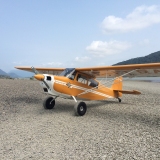
'74 7GCBC, 26" ABW, Aera 660 feeding G5 and FC-10 FF.
Mon Jan 25, 2021 6:53 am
Re: HF and Marine Radios in Seaplanes
Cool airplane!
My take on the marine radio. I saw a few early on and thought, that’d be a good idea. Never got around to it.
30 years of straight float flying later, having visited hundreds of places(including many marinas); I can’t remember a time where I needed one. I’d suggest saving the weight, space and bother.
My take on the marine radio. I saw a few early on and thought, that’d be a good idea. Never got around to it.
30 years of straight float flying later, having visited hundreds of places(including many marinas); I can’t remember a time where I needed one. I’d suggest saving the weight, space and bother.

Mon Jan 25, 2021 7:49 am
Re: HF and Marine Radios in Seaplanes
aqua wrote:Cool airplane!
My take on the marine radio. I saw a few early on and thought, that’d be a good idea. Never got around to it.
30 years of straight float flying later, having visited hundreds of places(including many marinas); I can’t remember a time where I needed one. I’d suggest saving the weight, space and bother.
What he ^^^ said.
For one thing, with any of these systems, you have to know what frequencies to use in an area. HF of course can be much longer range, but you still need to know the freq. to use. For VHF-FM, most are either government or Pvt. companies, who may not be happy you coming up their freq.
MTV
Mon Jan 25, 2021 9:11 am
Re: HF and Marine Radios in Seaplanes
Friend of mine is way into communications. He did the same kind of antenna setup as you on his Cessna 185. The radio was ICOM I believe. Hell of a looking conglomeration but it worked well for him. He did a lot of ski flying on the Quest.NunavutPA-12 wrote:I have an HF radio in my PA-12. I built a slide-in/out mount for it since my missions don't always require it. The transceiver (SG-2020) weighs about four pounds. The little antenna tuner (SG-211) weighs about a pound. The antenna is a wire from the cabin top to the tail to the left wing tip.
What MTV said is true. The satellite 'phone or InReach are more practical for basic comms and certainly more reliable.
But if you're a "ham" and you like to combine that hobby with flying, why not?
The 5 MHz (60 metre) band works well and is the most-reliable frequency in this neck of the woods. NavCanada (in this country) still monitors 5680 for aviation use, and we have "land-mobile" stations here (so-called "bush radio") that can have some practical and/or entertainment value.
PM me if you like.
Mon Jan 25, 2021 9:34 am
Re: HF and Marine Radios in Seaplanes
Going all the way back to your first 2 posts, I looked up the installation manual for the AA34 box online. What they refer to as inputs for FM or SSB radios are just generic audio inputs and outputs. Pretty wide range of levels, and adjustment POTs on the rear along with some micro switches inside for stuff like mic biasing. Bottom line is you should be able to use it with about any radio, but it will require some setting up and level setting to make it sound right. God luck and have fun.
Dale
Gravity Strikes Again.
Gravity Strikes Again.
Mon Jan 25, 2021 10:24 am
Re: HF and Marine Radios in Seaplanes
Weight, I work hard on shaving weight on my work planes. My PT6 206 jump planes come in at 1850 BOW. I do care on this plane but I started with some of the heaviest parts. The Wet-wing G model is heavy, The PT6A-21 is 50lbs heavier than the -20. Dual battery packs for starting power when you need it. Amphibs are heavy, These avionics are not light. I built it for a different purpose and understand this plane will not carry 6 plus bags, fuel for 3 hours. At my weight it will carry, Pilot plus 3, bags and fuel or 1h 15min plus 45m res. It is lighter than an H model with 3450As. More power, = or better avionics, My interior isnt as plush but you can still shimmy between seats. Still looking at adding the Rt copilots door. Maybe Ill get to H model weight.
It looks like I can Comm 3, Hard wire in the NAT, Dc 24 to DC 12 converter (Will use it for a couple other things) VHF ant, already have the HF ant, Then quick tray the Radio and tuner. Hoping to be able to also use the system for Handheld Sat phone of the day with a Switch and a couple panel mount plugs.
Thank you guys for all the input.
Edit to add. Since I weighed the plane, I went on a diet and lost 10lbs.
It looks like I can Comm 3, Hard wire in the NAT, Dc 24 to DC 12 converter (Will use it for a couple other things) VHF ant, already have the HF ant, Then quick tray the Radio and tuner. Hoping to be able to also use the system for Handheld Sat phone of the day with a Switch and a couple panel mount plugs.
Thank you guys for all the input.
Edit to add. Since I weighed the plane, I went on a diet and lost 10lbs.
Last edited by Skydive206 on Mon Jan 25, 2021 11:50 am, edited 1 time in total.
- Skydive206 offline
- Posts: 551
- Joined: Wed Mar 25, 2009 7:54 pm
- Location: Williamsburg, MO
Mon Jan 25, 2021 11:03 am
Re: HF and Marine Radios in Seaplanes
All of Kenmore’s airplanes have a uhf radio which uses a local repeater system to transmit over a few hundred miles. They are tied into com 3 on the garmin audio panel, works good.
I’ll echo several steady shared sentiments here. In 20 years of flying straight floats in Washington and British Columbia I’ve never had the need for a vhf to talk to boats and/or marinas. Cell phones work great, you can even clear customs with them! I’ve operated 2 beavers that had marine vhf installed and I never turned it on.
The 2 HF radios installed in the Boeings I fly to Hawaii are checked once briefly each flight and then we use satcom exclusively after that.
Sent from my iPhone using Tapatalk
I’ll echo several steady shared sentiments here. In 20 years of flying straight floats in Washington and British Columbia I’ve never had the need for a vhf to talk to boats and/or marinas. Cell phones work great, you can even clear customs with them! I’ve operated 2 beavers that had marine vhf installed and I never turned it on.
The 2 HF radios installed in the Boeings I fly to Hawaii are checked once briefly each flight and then we use satcom exclusively after that.
Sent from my iPhone using Tapatalk
Mon Jan 25, 2021 10:49 pm
Re: HF and Marine Radios in Seaplanes
Finally something I have a bit of experience with I can comment on! In about 350 hours in a straight float Beaver (rebuilt by Halestorm, great plane!) between Seattle and the Inside Passage of Vancouver Island, we had a small, panel mounted, Uniden marine VHF I used a bunch to track down boats where I needed to drop off passengers.
Would still work great I think, but a Bluetooth headset connection to a cell phone is simpler, and certainly less expensive. Though I've lost track of the legality of cell calls in flight on a GA flight in US or Canada.
Kevin
Sent from my iPhone using Tapatalk
Would still work great I think, but a Bluetooth headset connection to a cell phone is simpler, and certainly less expensive. Though I've lost track of the legality of cell calls in flight on a GA flight in US or Canada.
Kevin
Sent from my iPhone using Tapatalk

Tue Jan 26, 2021 2:11 am
Re: HF and Marine Radios in Seaplanes
I fly exclusively on floats, and even after 2 trips to Alaska, I have not had a need for a VHF radio yet.
However, a cell phone, connected to audio panel via reliable bluetooth connection - extremely valuable.
I also have an inreach I keep in the plane too, although I keep it in the back of the plane, connected to phone via bluetooth. Phone mounts to panel using a magnet.
However, a cell phone, connected to audio panel via reliable bluetooth connection - extremely valuable.
I also have an inreach I keep in the plane too, although I keep it in the back of the plane, connected to phone via bluetooth. Phone mounts to panel using a magnet.

DISPLAY OPTIONS
Who is online
Users browsing this forum: No registered users and 0 guests
Latest Features
-
Live to Tell
A Minnesota pilot is surprised to learn that the sudden asymmetric drag of an out-of-rig ski can…Read More -
Creators
Working in some of the Yukon's most beautiful and remote environments, photographer Simon Blakesley captures aircraft in…Read More -
Aircraft Ownership and Maintenance
Upgrading to big tires can make a huge difference in backcountry performance, but with those gains come…Read More -
Tales from Yesteryear
In this tale from bush flying yesteryear, Don Cogger signs up to help Atlee Dodge Jr recovery…Read More


Latest Knowledge Base
-
Destinations
A regional guide with ideas for winter camping destinations in California, Nevada, New Mexico, and Arizona.Read More -
Aircraft
Finding an affordable aircraft that can handle the backcountry for $80K or less? A challenge for sure, but with the…Read More -
Aircraft
01.29.2018 - Zane - Updated tire diameter graphic to add 8.50x10 Guide to tires for use in the backcountry and off-airport landing…Read More -
Pilots
12.22.2013 - Initial article format Operating aircraft on skis and negotiating a snow-covered landscape is an entirely unique skillset and environment.…Read More


