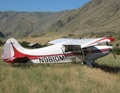
I was just leaving my hanger when I heard this on the news... KGHG is 15 or so miles from me. The eye witness describes "engine trouble" then the plane "making a U turn" back to the field where he hit the trees. Pilot ok thank God. Maule burned to the ground.
http://boston.cbslocal.com/2013/11/15/s ... d-airport/
Maule M5 Crash KGHG
Fri Nov 15, 2013 3:47 pm
- Bigrenna offline


- Posts: 2358
- Joined: Sun Sep 25, 2011 4:02 pm
- Location: New England
- Aircraft: C180H / C170B
www.bushwagoneast.com
Fri Nov 15, 2013 5:57 pm
Re: Maule M5 Crash KGHG
I flew over Marshfield today on my way back from Chatham.
I agree with you Greg, thank God he made it out OK.
I agree with you Greg, thank God he made it out OK.
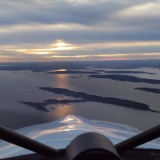
Maule MXT-7-180A
Fri Nov 15, 2013 7:33 pm
Re: Maule M5 Crash KGHG
Since the pilot is OK, I hope he can share some lessons learned from the experience. It is sad the plane is a loss, but having the pilot walk away from what sounds like engine failure on departure is a remarkably good outcome!


Sat Nov 16, 2013 2:15 am
Re: Maule M5 Crash KGHG
Glad the pilot is ok! But was there a flight plan? 

Sat Nov 16, 2013 7:31 am
Re: Maule M5 Crash KGHG
my god you don't think he flew without a flight plan??? when will those pilots ever learn... 

Sat Nov 16, 2013 9:19 am
Re: Maule M5 Crash KGHG
iceman wrote:my god you don't think he flew without a flight plan??? when will those pilots ever learn...
LOL

Sat Nov 16, 2013 1:51 pm
Re: Maule M5 Crash KGHG
Regardless of the reporting, it brings up the issue of the "impossible turn" again--and a reminder that although it's not really "impossible", it can be pretty difficult, and to do it successfully requires some practice.
Several years ago, I did a series of "impossible turn" practices at a safe altitude over a county road. Allowing for some reaction time, I found that if I dropped the nose to maintain glide airspeed and made a fairly steep bank (I used about 45 degrees), I could turn some 220 degrees left and 40 degrees right (to mimic getting lined up again on the runway) in about 620' pretty consistently. In a true emergency, I can't be sure I'd do it as well. So I therefore concluded that if I had 800' of altitude, I could pretty reliably return to land, 700' would be pretty dicey, and less than that probably wouldn't work. Since I usually turn crosswind at about 500', it's unlikely I'd be doing any turning around unless I'd just made a straight-out departure, but I would likely look for a flat place to put down within the 90 degree arc on either side of the departure heading.
As a result of my experimenting, I'd sure recommend practicing the "impossible turn". Knowing what you can and can't do takes the mystery out of things a bit.
Cary
Several years ago, I did a series of "impossible turn" practices at a safe altitude over a county road. Allowing for some reaction time, I found that if I dropped the nose to maintain glide airspeed and made a fairly steep bank (I used about 45 degrees), I could turn some 220 degrees left and 40 degrees right (to mimic getting lined up again on the runway) in about 620' pretty consistently. In a true emergency, I can't be sure I'd do it as well. So I therefore concluded that if I had 800' of altitude, I could pretty reliably return to land, 700' would be pretty dicey, and less than that probably wouldn't work. Since I usually turn crosswind at about 500', it's unlikely I'd be doing any turning around unless I'd just made a straight-out departure, but I would likely look for a flat place to put down within the 90 degree arc on either side of the departure heading.
As a result of my experimenting, I'd sure recommend practicing the "impossible turn". Knowing what you can and can't do takes the mystery out of things a bit.
Cary
"I have slipped the surly bonds of earth..., put out my hand and touched the face of God." J.G. Magee
Sun Nov 17, 2013 7:57 am
Re: Maule M5 Crash KGHG
During my time teaching in T-34C and T-6II's on a three year Navy exchange we would often practice up to 10 engine out approaches per day. We were allowed to do this from 300' AGL and up. This means I got really good at this. I currently teach engine out approaches in my current job as a Master CFI - Aerobatic teaching Upset Recovery Training and Aerobatics as well as working with independent students. I also routinely practice engine out work in my own C-170. Here are some things to think about:
1. Do you maintain runway heading on takeoff? If you have the option to offset 15-20 degrees towards the downwind side you buy yourself an increased safety margin to return to the airport. Due to the offset, you only need to execute a 200 - 180 degree turn back to the runway. You may not be able to do this everywhere due to parallel runways, but I do this on every takeoff at Arlington, Tx (KGKY), which is a towered airport and ATC has absolutely no problem with this.
2. If you decide to turn back, don't limit yourself to the runway. The area inside the airport fence usually provides a very suitable landing area. What about taxiways? Parallel or not, these often provide great landing sites and are accessible from a lower altitude because they require less of a turn. I also know what roads are available around my airport and don't forget open property around your airfield
3. Do you really understand the difference between Best Glide speed and Minimum Sink speed. If not, do a little research and do a little practice in your airplane. The last thing I want to do is arrive at a small emergency landing area at Best Glide speed. At that speed most airplanes will float forever!
4. Do you understand the difference of how your aircraft will perform at light weights, say half fuel and just yourself on board compared to max gross? At light weight, idle, 60 degrees of bank, 20-30 degrees nose low and 80 kts, my -170 won't stall! But it will at heavier weights. This plays heavily on my minimum altitudes.
5. Spend a little bit of money and fly with an instructor that can safely and confidently show you the finer points of engine out ops. How many of you have ever actually shut down or restarted an engine, let alone conducted a dead-stick landing? You say that is dangerous? Don't tell a glider pilot that, rumor has it they do it all the time. How long will your engine run if you accidentally run a tank dry or inadvertently switch the fuel off? How long does it take to restart it with: 1. Just turning fuel back on, 2 Using starter, 3 windmilling start if prop stops rotating. Wouldn't you rather have the answers to this before it happens the first time with the family on board? How much drag does your windmilling propeller create? What will it take to get your windmilling prop to stop? On my airplane I gain around 100-150FPM with a stopped propeller.
6. Bottom line though, and I stress this to all my students. It is better to arrive at a less than ideal landing sight under control, then crash on the airport property. Professional pilots will: 1. Practice returning to the field so that they know their airplanes capabilities, know their capabilities and can set a safe personnel limit that will lead to a high chance of success. 2. Start every takeoff roll knowing exactly where they are going at any altitude on their departure. Much like a high performance jet crew references V1, VR, V2. A professional single engine pilot should be referencing, landing straight ahead, 90 degrees of turn, 135 degrees of turn, 180+ degrees of turn altitudes.
7. Being a professional pilot has nothing to do with what you fly or how much you get paid. It has everything to do with always trying to learn, improving your skills and being disciplined. Know and respect your own skills and acceptable risk level and have fun.
Jughead
1. Do you maintain runway heading on takeoff? If you have the option to offset 15-20 degrees towards the downwind side you buy yourself an increased safety margin to return to the airport. Due to the offset, you only need to execute a 200 - 180 degree turn back to the runway. You may not be able to do this everywhere due to parallel runways, but I do this on every takeoff at Arlington, Tx (KGKY), which is a towered airport and ATC has absolutely no problem with this.
2. If you decide to turn back, don't limit yourself to the runway. The area inside the airport fence usually provides a very suitable landing area. What about taxiways? Parallel or not, these often provide great landing sites and are accessible from a lower altitude because they require less of a turn. I also know what roads are available around my airport and don't forget open property around your airfield
3. Do you really understand the difference between Best Glide speed and Minimum Sink speed. If not, do a little research and do a little practice in your airplane. The last thing I want to do is arrive at a small emergency landing area at Best Glide speed. At that speed most airplanes will float forever!
4. Do you understand the difference of how your aircraft will perform at light weights, say half fuel and just yourself on board compared to max gross? At light weight, idle, 60 degrees of bank, 20-30 degrees nose low and 80 kts, my -170 won't stall! But it will at heavier weights. This plays heavily on my minimum altitudes.
5. Spend a little bit of money and fly with an instructor that can safely and confidently show you the finer points of engine out ops. How many of you have ever actually shut down or restarted an engine, let alone conducted a dead-stick landing? You say that is dangerous? Don't tell a glider pilot that, rumor has it they do it all the time. How long will your engine run if you accidentally run a tank dry or inadvertently switch the fuel off? How long does it take to restart it with: 1. Just turning fuel back on, 2 Using starter, 3 windmilling start if prop stops rotating. Wouldn't you rather have the answers to this before it happens the first time with the family on board? How much drag does your windmilling propeller create? What will it take to get your windmilling prop to stop? On my airplane I gain around 100-150FPM with a stopped propeller.
6. Bottom line though, and I stress this to all my students. It is better to arrive at a less than ideal landing sight under control, then crash on the airport property. Professional pilots will: 1. Practice returning to the field so that they know their airplanes capabilities, know their capabilities and can set a safe personnel limit that will lead to a high chance of success. 2. Start every takeoff roll knowing exactly where they are going at any altitude on their departure. Much like a high performance jet crew references V1, VR, V2. A professional single engine pilot should be referencing, landing straight ahead, 90 degrees of turn, 135 degrees of turn, 180+ degrees of turn altitudes.
7. Being a professional pilot has nothing to do with what you fly or how much you get paid. It has everything to do with always trying to learn, improving your skills and being disciplined. Know and respect your own skills and acceptable risk level and have fun.
Jughead
- jugheadF15 offline

- Posts: 309
- Joined: Sun Sep 20, 2009 6:12 am
- Location: Snohomish
Sun Nov 17, 2013 9:50 am
Re: Maule M5 Crash KGHG
jugheadF15 wrote:
3. Do you really understand the difference between Best Glide speed and Minimum Sink speed. If not, do a little research and do a little practice in your airplane. The last thing I want to do is arrive at a small emergency landing area at Best Glide speed. At that speed most airplanes will float forever!
4. Do you understand the difference of how your aircraft will perform at light weights, say half fuel and just yourself on board compared to max gross? At light weight, idle, 60 degrees of bank, 20-30 degrees nose low and 80 kts, my -170 won't stall! But it will at heavier weights. This plays heavily on my minimum altitudes.
For these reasons, I can see the value of AOA indicators.
Sun Nov 17, 2013 10:33 am
Re: Maule M5 Crash KGHG
jugheadF15 wrote:6. Bottom line though, and I stress this to all my students. It is better to arrive at a less than ideal landing sight under control, then crash on the airport property.
And let me just add... Have that Plan B spring loaded in your head, so that if something burps or stumbles on climb out, you are slamming that nose down by instinct to maintain flying speed. Then, figure out what is wrong.
The laws of physics apply here big time, much better to roll into the rocks at 45 MPH under control, than to stall/spin from 200 feet up.
Gump
Sun Nov 17, 2013 11:40 am
Re: Maule M5 Crash KGHG
Gump and Squash's comments are both RIGHT ON!!
Engine out work isn't something you should be practicing Once/Year, You should be practicing it Several Times/Month!
Jughead
Engine out work isn't something you should be practicing Once/Year, You should be practicing it Several Times/Month!
Jughead
- jugheadF15 offline
- Posts: 309
- Joined: Sun Sep 20, 2009 6:12 am
- Location: Snohomish
Sun Nov 17, 2013 11:49 am
Re: Maule M5 Crash KGHG
Great discussion.
Until challenged by a BFR CFI to return to the runway (lake) from +/- 500'AGL, I had always been of the straight ahead mentality. It opened my eyes and changed the way I looked at the prospect of loosing power on departure. I've continued to practice it since.
Until challenged by a BFR CFI to return to the runway (lake) from +/- 500'AGL, I had always been of the straight ahead mentality. It opened my eyes and changed the way I looked at the prospect of loosing power on departure. I've continued to practice it since.
Sun Nov 17, 2013 1:21 pm
Re: Maule M5 Crash KGHG
GumpAir wrote:jugheadF15 wrote:6. Bottom line though, and I stress this to all my students. It is better to arrive at a less than ideal landing sight under control, then crash on the airport property.
And let me just add... Have that Plan B spring loaded in your head, so that if something burps or stumbles on climb out, you are slamming that nose down by instinct to maintain flying speed. Then, figure out what is wrong.
The laws of physics apply here big time, much better to roll into the rocks at 45 MPH under control, than to stall/spin from 200 feet up.
Gump
My experiance with flying it to the ground from about 200', Was just reaction to shove the nose over, I think if I had hessitated or thought about this I would have had a much differant outcome and you would of just read about it in a report!!

- M6RV6 offline
- Posts: 2313
- Joined: Mon Feb 25, 2008 5:52 pm
- Location: Rice Wa. 82WN Magee Creek AERODROME
- FindMeSpot URL: http://share.findmespot.com/shared/face ... sWKXuhKlg2
Have as much Fun as is Safe, and Keep SMILIN! GT,
Mon Nov 18, 2013 7:04 pm
Re: Maule M5 Crash KGHG
M6RV6 wrote:My experiance with flying it to the ground from about 200', Was just reaction to shove the nose over, I think if I had hessitated or thought about this I would have had a much differant outcome and you would of just read about it in a report!!
Yup, woulda been a fun five seconds sitting there thinking, "What the f**k???" And then a quick mush and nose over when the express elevator started down. You'd a made a nice nose-first hole in the runway George!!!!
Gump
Mon Nov 18, 2013 7:22 pm
Re: Maule M5 Crash KGHG
Yup. Lots easier to look at what it's telling you than go through any sort of computation exercise ("let's see, this stalls at 49 knots straight ahead with full flaps--I wonder what it's stall speed is at a 45 degree bank with no flaps--I know it's in the book somewhere---------------------------------------"For these reasons, I can see the value of AOA indicators.
Cary
"I have slipped the surly bonds of earth..., put out my hand and touched the face of God." J.G. Magee
Mon Nov 18, 2013 9:25 pm
Re: Maule M5 Crash KGHG
GumpAir wrote:M6RV6 wrote:My experiance with flying it to the ground from about 200', Was just reaction to shove the nose over, I think if I had hessitated or thought about this I would have had a much differant outcome and you would of just read about it in a report!!
Yup, woulda been a fun five seconds sitting there thinking, "What the f**k???" And then a quick mush and nose over when the express elevator started down. You'd a made a nice nose-first hole in the runway George!!!!
Gump
Wow! Glad you walked away from that one, GT! And it looks like you didn't have a prop strike.
DISPLAY OPTIONS
Who is online
Users browsing this forum: No registered users and 3 guests
Latest Features
-
-
Featured Bush Planes
As one of the undisputed legends of bush flying, the Cessna 180 hauls a…Read More -
Aircraft Ownership and Maintenance
9 modification mistakes aircraft owners make when trying to "bush out" their birds—why some…Read More -
Live to Tell
A Minnesota pilot is surprised to learn that the sudden asymmetric drag of an…Read More




Latest Knowledge Base
-
Destinations
Canada offers some of the most spectacular backcountry flying on the continent. Here's what you need to know before you go.Read More -
Safety and Survival
Hope that you never have to use your survival vest but knowing you have it and knowing how to use…Read More -
Destinations
A regional guide with ideas for winter camping destinations in California, Nevada, New Mexico, and Arizona.Read More -
Aircraft
Finding an affordable aircraft that can handle the backcountry for $80K or less? A challenge for sure, but with the…Read More



