FishDoc,
To your question related to the Lyc -360 series engines and 2 vs 3-blade props....The Lyc -360 engine generates the strongest pulse vibration of any gas aircraft engine. Only ones higher are the diesel (and MT is the ONLY prop that holds up to that punishment, but it uses a modified blade retention system). When you increase compression ratio or add electronic timing, you increase the internal cylinder pressures during the power stroke and this is felt and absorbed by the prop (and all other components turning in the engine as well). Any 2-blade prop will be in sync with those pulses. A 3-blade prop will act as a counter balance to those forces. For this reason we discourage the use of a 2-blade prop of any material when it is to be installed to a modified -360 series engine. The smaller diameter, narrower chord 3-blade would be a better choice in those cases. I have my choice of props to select from and I chose the 3 blade for my 200 hp C170B.
On the CC question: Years ago we installed our first generation 2-blade Husky prop to that plane. It worked great until they added 10;1 pistons and electronic ignition. On those, we began to see lengthwise cracking on the surface layers of the blade tips due to vibration. (the metal props would not pass the vibration analysis test to be able to be tried). We also saw this in some of the 2-blade 210cm props that were being run on Husky's with modified engines. As a result, MT made a design change about 2007 that resulted in a stronger blade by adding additional layers of carbon fiber cloth to the outer 1/3 of the blades. This is still in place today and we have not seen any Husky's or Cessna's or Scout's with cracking tips since. The cracks were not an airworthy issue, but MT offered to exchange blades with the handful of affected owners without charge. I feel CC would do well with any engine using the same prop I have on my plane now.
On the Static Pull Dialog: No two planes are alike. We found even bugs on a prop can change static thrust by 2%. NEVER relay upon data that compares a product between two different planes. All flight test comparisons we perform are done with the same plane, same day, adjusted for any changes in temp and pressure on a no-wind day with the ONLY item being changed is the prop.
On the Commercial Operator Question: MT supplies a composite props upgrade for use on most all of the turbine world. These ships run in some of the toughest environments and the use of beta adds to the damage possibility. These props use a thicker, wider, and harder nickel leading edge. Some time ago one of those turbine MT owners asked us to put nickel on his MT prop on his Skywagon. It looked so good that others began ordering that option just for the looks!! That option runs $750 per blade, but has proven over time that it holds up even better than the standard stainless steel edges. Instead of getting pea-sized dents that the owner fills with epoxy, the nickel pulverizes the stone and leaves only a dust stain behind. The take rate for this option is now well in excess of 75%, so it looks like we will begin to stock all our STC props with this option. Piston powered commercial operations need to operate very lean, the basic metal props are low cost and readily available and serviced. Composite props have been, and always will be, more expensive than a metal prop. That is a fact. What Flight Resource has done to support our commercial users is to have a set of exchange blades on the shelf at locations were commercial MT prop density is great. When needed, the operator simply pays an exchange fee and the labor to swap the blades. Easy, low cost and quick.
Once again we want to thank this community for the wonderful support!! With so many of the forums we participate in, this one is by far the most 'intelligent' and 'friendly'.
Best regards,
John
Mt props
Mon Jan 25, 2016 8:32 am

Mon Jan 25, 2016 9:12 am
Re: Mt props
Thanks for addressing these items John.
I knew you and MT would be a couple steps ahead of the game with any potential issues.
Can't wait to start making wind with my new MTV-9-B/198-52.
And the 3 blades will look way cooler than the 2 I have now....
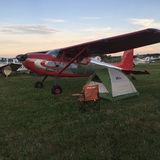
I'll replace this pic for one including the new prop as soon as I get the project finished.

I knew you and MT would be a couple steps ahead of the game with any potential issues.
Can't wait to start making wind with my new MTV-9-B/198-52.
And the 3 blades will look way cooler than the 2 I have now....
I'll replace this pic for one including the new prop as soon as I get the project finished.

1952 C-170B (with the sexy rounded tail)
Mon Jan 25, 2016 10:39 am
Re: Mt props
john54724 wrote:FishDoc,
<snip>
Composite props have been, and always will be, more expensive than a metal prop. That is a fact. What Flight Resource has done to support our commercial users is to have a set of exchange blades on the shelf at locations were commercial MT prop density is great. When needed, the operator simply pays an exchange fee and the labor to swap the blades. Easy, low cost and quick.
Once again we want to thank this community for the wonderful support!! With so many of the forums we participate in, this one is by far the most 'intelligent' and 'friendly'.
Best regards,
John
Although I haven't had to replace my prop yet (2 blade C/S McCauley on an O-360 Lycoming), one of my concerns has been the excessive down time I've read about with MT, including in this thread, of more than 6 months if something needs replacing or repairing. Do I gather from your comment that it's now a matter of simply replacing the blades from stock with an exchange fee, and not necessary to ship the prop back to Germany? If that's true, what is the exchange fee, approximately? Is that also true about other parts?
Cary

"I have slipped the surly bonds of earth..., put out my hand and touched the face of God." J.G. Magee
Mon Jan 25, 2016 10:50 am
Re: Mt props
Rob wrote:AK-HUNT wrote:The weight off the nose can be huge or it can be imperceptible, it depends on a couple more factors like what prop it's replacing and where the empty cg already is. As you already know, making a C180/185 lighter always makes it more nose heavy, and since nose heavy is bad anything you do to combat that is good. The guys that notice this the most will be the ones running the two blade, but it is not enough prop for the bigger engines. If you want a real good way to get a 'real world' assessment of the change in flight characteristics that may prove more tangible to you, look at it this way; A 3 blade MT equipped C185 is going to have the feel of a C66 (two blade) equipped airplane with the tug boat pull of a C401. It is extremely close in weight to the 2 blade mac while being extremely close to the 3 blade in performance.
For ME to compare 'pull' gets a little more complicated. The reason for that is because I judge how a prop performs based solely on how I intend to use it, and that is very different (how it's judged) than by what I see other folks doing…
Allow me to explain..
Pull / Thrust tests with a pull scale….
I'm not sure where this became the industry standard by which prop performance is measured, but somewhere along the way someone decided this was a good barometer, and I think that person was charismatic enough to get all the rest lined up behind him…
Let me get this right… we're going to tie the plane to a scale which is tied to a truck, pour the coals to it, and then pick the prop that pulls the hardest… Hmmm I wonder if that's a decent way to set our mixture too? after all every propellor ever made performs differently at varying DA's and no two props make those changes on the same scale. So my suggestion to anyone who is going to use the strain gauge to select a prop would be to make darn sure you're doing that pull test at a DA reasonably close to what most of your most critical ops are going to be at.
Take care, Rob
Well said. I've always wondered about pull tests. To me, you are taking the single part on an airplane that's the most dynamic and testing it statically. Essentially, every mode of flight or condition an airplane sees during a flight will have little to do with a tied down static test. Not busting anyone's chops for doing so, it's an interesting experiment, but I don't see that as being the main input into someone's decision on propeller selection. For me, selfishly, I'd want to try and quantify how it performs at altitude at cruise and at 75% power settings where I do most of my flying. I don't really go anywhere in my 185 that I'm limited in take off distance, I need overall efficiency and weight reduction. One of these days when my Mac 2 blade gives up, I'll probably swap it out for an MT 2 blade and do a comparison. This is against the intuitive though, many feel that the 2 blade MT is "not enough" for an IO-520. That's probably correct at 2700 to 2850 at full MP....but I only fly that way for maybe 30 seconds of my flight. The rest is spent 2400 and 21 inches at 7500'.
Great discussion.
Bill
- fiftynineSC offline

- Posts: 390
- Joined: Mon Dec 07, 2009 11:41 am
- Location: Frisco
- Aircraft: Cessna 185F
Mon Jan 25, 2016 11:03 am
Re: Mt props
Bill,
Swap your power settings in your 185, 2,100 rpm and 24 inches, you may be pleasantly surprised at you gain in efficiency. I used to run my 2 blade 86 inch Mac 185 this way for better miles per gallon. I do not remember numbers off the top of my head but I do remember I got better miles per gallon.
Kurt
Swap your power settings in your 185, 2,100 rpm and 24 inches, you may be pleasantly surprised at you gain in efficiency. I used to run my 2 blade 86 inch Mac 185 this way for better miles per gallon. I do not remember numbers off the top of my head but I do remember I got better miles per gallon.
Kurt


Mon Jan 25, 2016 11:25 am
Re: Mt props
G44 wrote:Bill,
Swap your power settings in your 185, 2,100 rpm and 24 inches, you may be pleasantly surprised at you gain in efficiency. I used to run my 2 blade 86 inch Mac 185 this way for better miles per gallon. I do not remember numbers off the top of my head but I do remember I got better miles per gallon.
Kurt
Excellent, thanks for the real world recommendation. Really appreciate it.
Bill
- fiftynineSC offline
- Posts: 390
- Joined: Mon Dec 07, 2009 11:41 am
- Location: Frisco
- Aircraft: Cessna 185F
Mon Jan 25, 2016 11:31 am
Re: Mt props
From the 1957 C180 POH (470K):
sea level ......22" 2300 67% 12.2 gph
23" 2200 67% 12.1 gph
Same power & pretty close fuel burn, whether slightly over-square or slightly under-square.
Unfortunately this the most over-square setting they show.
I had another chart on which I compared 22 squared with 21" / 2300 with 23" / 2100 & , and it showed about the same- all three were very close in both power & fuel burn.
The old rule of thumb used to be to avoid (sustained) over-square operations-- why is that?
sea level ......22" 2300 67% 12.2 gph
23" 2200 67% 12.1 gph
Same power & pretty close fuel burn, whether slightly over-square or slightly under-square.
Unfortunately this the most over-square setting they show.
I had another chart on which I compared 22 squared with 21" / 2300 with 23" / 2100 & , and it showed about the same- all three were very close in both power & fuel burn.
The old rule of thumb used to be to avoid (sustained) over-square operations-- why is that?

Cessna Skywagon -- accept no substitute!
Mon Jan 25, 2016 12:02 pm
Re: Mt props
No Nickel leading edge props for the O-360 though, correct John? Sure wish that was an option. Gravel beware 

Mon Jan 25, 2016 1:37 pm
Re: Mt props
Greg about the nickel on the -360 3-blade props: We are transitioning now to nickel for all our STC props. It is an expensive ($750 per blade) option that takes some time to phase in. We begin with the models that are closest to the ground (Cirrus, Bonanza, Mooney, Cessna 182/206/210) and expand from there. All props ordered in 2016 will have the nickel option added. It is not possible to retro fit nickel to a non-nickel blade. Notice my prop on my personal C170 does not have nickel as it was not available then and I am not going to change props just for that feature.
Regarding 'work that needs to go to Germany': The only time a blade would ever go back to Germany is if it has suffered damage to more than 15% of the blade length. Then it gets rebuilt to new dimensions for about $2350 per blade(2015 prices). Unfortunately, there are a few MT approved prop shops that are so busy fixing metal props, they find it less hassle for themselves to ship a damaged prop to the factory rather than fixing it in their shop. This is the source of those type of stories. Flight Resource owns 2 sets of 210-58 blades that we have for quick exchange use. We sell them at normal new blade price, then take the returned core blades and have them re-built to 0TSOH condition (same as new on an MT blade). When those are completed, we refund the difference so the customer ends up paying the net repair cost without any wait. But most shops are NOT aware of this option that is an exclusive to Flight Resource MT STC holders.
Good questions.
John
Regarding 'work that needs to go to Germany': The only time a blade would ever go back to Germany is if it has suffered damage to more than 15% of the blade length. Then it gets rebuilt to new dimensions for about $2350 per blade(2015 prices). Unfortunately, there are a few MT approved prop shops that are so busy fixing metal props, they find it less hassle for themselves to ship a damaged prop to the factory rather than fixing it in their shop. This is the source of those type of stories. Flight Resource owns 2 sets of 210-58 blades that we have for quick exchange use. We sell them at normal new blade price, then take the returned core blades and have them re-built to 0TSOH condition (same as new on an MT blade). When those are completed, we refund the difference so the customer ends up paying the net repair cost without any wait. But most shops are NOT aware of this option that is an exclusive to Flight Resource MT STC holders.
Good questions.
John
Mon Jan 25, 2016 3:05 pm
Re: Mt props
hotrod180 wrote:From the 1957 C180 POH (470K):
sea level ......22" 2300 67% 12.2 gph
23" 2200 67% 12.1 gph
Same power & pretty close fuel burn, whether slightly over-square or slightly under-square.
Unfortunately this the most over-square setting they show.
I had another chart on which I compared 22 squared with 21" / 2300 with 23" / 2100 & , and it showed about the same- all three were very close in both power & fuel burn.
The old rule of thumb used to be to avoid (sustained) over-square operations-- why is that?
As in most old wives tails, this is set in superstition!
Every truboed engine out there runs over Square!
My $.02 and worth it!!
- M6RV6 offline

- Posts: 2313
- Joined: Mon Feb 25, 2008 5:52 pm
- Location: Rice Wa. 82WN Magee Creek AERODROME
- FindMeSpot URL: http://share.findmespot.com/shared/face ... sWKXuhKlg2
Have as much Fun as is Safe, and Keep SMILIN! GT,
Mon Jan 25, 2016 4:02 pm
Re: Mt props
I believe that the "over-square" rule, (which I was taught in the sixties) was/is a hold over from old round engine days. May have been connected to purple gas - just a guess on that one.
Might see if there are any old round engine racers here. Maybe Contactdriver.
Might see if there are any old round engine racers here. Maybe Contactdriver.

53 C-170-B+
It is better to be late in this world, than early in the next.
It is better to be late in this world, than early in the next.
Mon Jan 25, 2016 4:09 pm
Re: Mt props
wannabe wrote:I believe that the "over-square" rule, (which I was taught in the sixties) was/is a hold over from old round engine days. May have been connected to purple gas - just a guess on that one.
Might see if there are any old round engine racers here. Maybe Contactdriver.
The P@W 985 runs over square all the time.
Not sure those without a supercharger did tho?
- M6RV6 offline
- Posts: 2313
- Joined: Mon Feb 25, 2008 5:52 pm
- Location: Rice Wa. 82WN Magee Creek AERODROME
- FindMeSpot URL: http://share.findmespot.com/shared/face ... sWKXuhKlg2
Have as much Fun as is Safe, and Keep SMILIN! GT,
Mon Jan 25, 2016 4:39 pm
Re: Mt props
John,
You reference the O-360 / 3 blade prop, but what about the 2-blade? I thought I asked you or Larry at the AK Airmen's and was told that the 2-blade had a harmonic issue with the nickel leading edge??
You reference the O-360 / 3 blade prop, but what about the 2-blade? I thought I asked you or Larry at the AK Airmen's and was told that the 2-blade had a harmonic issue with the nickel leading edge??
Mon Jan 25, 2016 5:28 pm
Re: Mt props
It's not over-square running that is the issue. Any engine, turbo/super-charged or not, will run over square for a bit, or a long time. The issue is under-square.... the rpm below the manifold pressure.
This seeped into lore for normally aspirated engines after the war. It is an issue in supercharged round engines and leads to the prop driving the engine... vice the engine developing power and driving the prop. What could happen is contact of the master rod bearing with the journal... and catastrophic failure. This is pretty much restricted to large displacement supercharged radials >/= 1300 cubic inches. Wrights seem to be more susceptible than Pratt's. There has been some research and I developed a brief for this problem... because it still exits in warbird engines. If someone would like a copy of this brief and the report it is based on I can send it to you.
It is not a factor for horizontally opposed piston engines, turbo/supercharged or not. The configuration and rotating mass of a radial is radically different than our GA engines.
gunny
This seeped into lore for normally aspirated engines after the war. It is an issue in supercharged round engines and leads to the prop driving the engine... vice the engine developing power and driving the prop. What could happen is contact of the master rod bearing with the journal... and catastrophic failure. This is pretty much restricted to large displacement supercharged radials >/= 1300 cubic inches. Wrights seem to be more susceptible than Pratt's. There has been some research and I developed a brief for this problem... because it still exits in warbird engines. If someone would like a copy of this brief and the report it is based on I can send it to you.
It is not a factor for horizontally opposed piston engines, turbo/supercharged or not. The configuration and rotating mass of a radial is radically different than our GA engines.
gunny
Tue Jan 26, 2016 11:05 am
Re: Mt props
akgreg wrote:John,
You reference the O-360 / 3 blade prop, but what about the 2-blade? I thought I asked you or Larry at the AK Airmen's and was told that the 2-blade had a harmonic issue with the nickel leading edge??
Greg, There is no harmonic or vibration issue within the prop with or without the nickel leading edge. We simply have found the 3-blade prop to be bullet proof when used on Lyc -360 engines that get 'pumped up'. We have had some minor issues with the 2-blade when it is installed to a -360 with EI and/or high compression pistons. To avoid any possibility of concern we really try to use the 3-blade in those applications.
John
Tue Jan 26, 2016 1:31 pm
Re: Mt props
John, do you have any vibe issues with your 2-blade props on a hopped up lyc -320?
- CamTom12 offline

- Posts: 3705
- Joined: Sun Jul 08, 2012 1:08 pm
- Location: Huntsville
- FindMeSpot URL: https://share.delorme.com/camtom12
- Aircraft: Ruppe Racer
Experimental Pacer
home hand jam "wizard"
Tue Jan 26, 2016 3:15 pm
Re: Mt props
G44 wrote:Bill,
Swap your power settings in your 185, 2,100 rpm and 24 inches, you may be pleasantly surprised at you gain in efficiency. I used to run my 2 blade 86 inch Mac 185 this way for better miles per gallon. I do not remember numbers off the top of my head but I do remember I got better miles per gallon.
Kurt
It's important to note that Continental has published critical CSB09-11A which strongly recommends against running below 2300 RPM. Every 6 cylinder Continental owner should read this document, http://www.tcmlink.com/pdf2/CSB09-11A.pdf
Chris

Tue Jan 26, 2016 6:48 pm
Re: Mt props
IO-520-D not listed. This is the engine that was in both of my 185's. Good info however. That being said, run it at 2300 rpm and a bit more MP and see if that helps miles per gallon. Your milage may improve, may not. Mine did.
Kurt
Kurt
Wed Jan 27, 2016 9:17 am
Re: Mt props
airChris wrote:It's important to note that Continental has published critical CSB09-11A which strongly recommends against running below 2300 RPM. Every 6 cylinder Continental owner should read this document, http://www.tcmlink.com/pdf2/CSB09-11A.pdf Chris
A bunch of 520 & 550's listed, but only one 470-- the G model.
Cessna Skywagon -- accept no substitute!
Wed Jan 27, 2016 12:35 pm
Re: Mt props
hotrod180 wrote:airChris wrote:It's important to note that Continental has published critical CSB09-11A which strongly recommends against running below 2300 RPM. Every 6 cylinder Continental owner should read this document, http://www.tcmlink.com/pdf2/CSB09-11A.pdf Chris
A bunch of 520 & 550's listed, but only one 470-- the G model.
Perhaps I should rephrase my original post.... anyone with a 6 cylinder Continental should check to see if the CSB applies to them. Also consider that there are many aftermarket STC/derivative engines with proprietary model designations that may be built up from an affected engine.
Chris
DISPLAY OPTIONS
Who is online
Users browsing this forum: No registered users and 2 guests
Latest Features
-
-
Featured Bush Planes
As one of the undisputed legends of bush flying, the Cessna 180 hauls a…Read More -
Aircraft Ownership and Maintenance
9 modification mistakes aircraft owners make when trying to "bush out" their birds—why some…Read More -
Live to Tell
A Minnesota pilot is surprised to learn that the sudden asymmetric drag of an…Read More




Latest Knowledge Base
-
Destinations
Canada offers some of the most spectacular backcountry flying on the continent. Here's what you need to know before you go.Read More -
Safety and Survival
Hope that you never have to use your survival vest but knowing you have it and knowing how to use…Read More -
Destinations
A regional guide with ideas for winter camping destinations in California, Nevada, New Mexico, and Arizona.Read More -
Aircraft
Finding an affordable aircraft that can handle the backcountry for $80K or less? A challenge for sure, but with the…Read More



