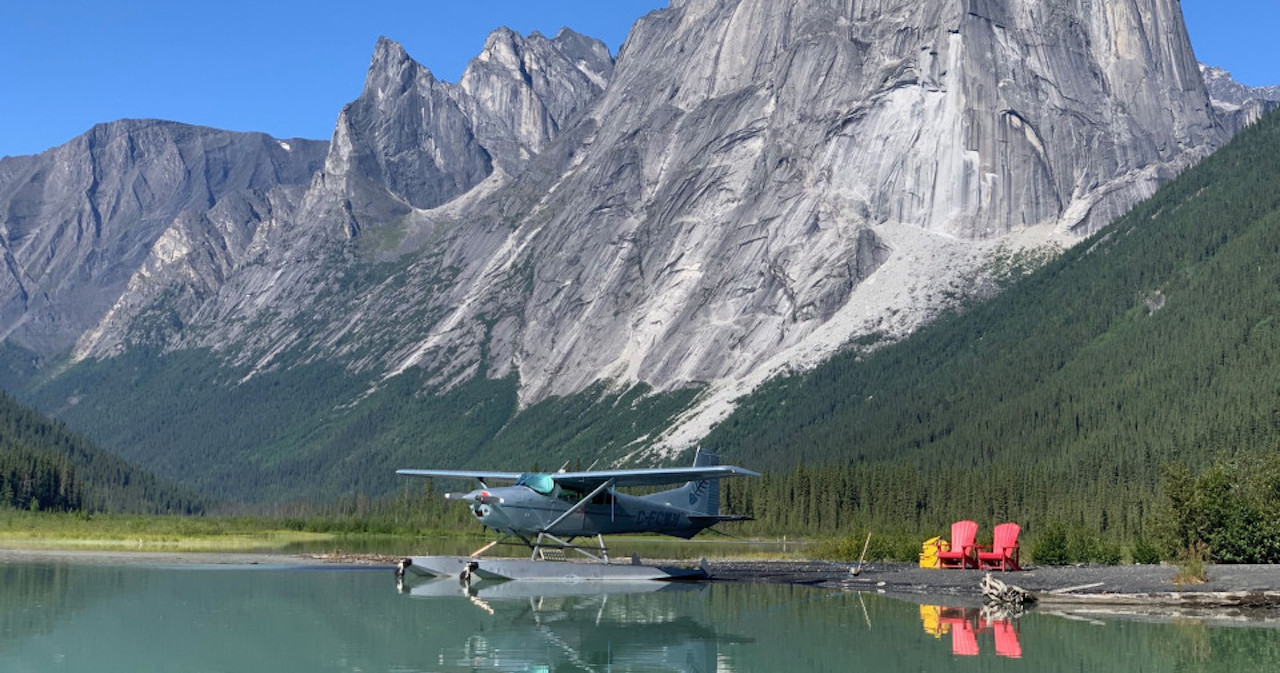
I'm mostly used to being an editor and bringing the best out of knowledge that others have submitted, but this article is something I've completely pulled out of my ass, so I'd appreciate a review. It's born of the "Boiling a Frog" thread. Please feel free to suggest corrections, additions, changes before I promote it. Thanks!
https://backcountrypilot.org/knowledge- ... fire-smoke
Need feedback: Hazards of Wildfire Smoke
Wed Sep 06, 2017 11:41 pm

Thu Sep 07, 2017 8:18 am
Re: Need feedback: Hazards of Wildfire Smoke
Looks good to me, Zzz. This is the second week with 1/2 mile vis at the house, so it seems apt!


Thu Sep 07, 2017 8:31 am
Re: Need feedback: Hazards of Wildfire Smoke
Good. My only critique would be that it's maybe a little long winded? Not that I could do better.
Thu Sep 07, 2017 9:10 am
Re: Need feedback: Hazards of Wildfire Smoke
gbflyer wrote:Good. My only critique would be that it's maybe a little long winded? Not that I could do better.
I'm a windbag so it comes with the territory... But do you mean there's too much hashing on the same topic? Or the sentences are too long?
My experience flying in smoke is actually pretty limited, but I have observed and learned some things. My question is: Will this article actually help anyone? Or is it just obvious stuff?
Change log:
09.07.2017 - Added resources section
08.16.2017 - Initial format article
Thu Sep 07, 2017 11:08 am
Re: Need feedback: Hazards of Wildfire Smoke
.
Last edited by glacier on Wed Feb 03, 2021 6:07 am, edited 1 time in total.
Thu Sep 07, 2017 11:19 am
Re: Need feedback: Hazards of Wildfire Smoke
.
Last edited by glacier on Wed Feb 03, 2021 6:07 am, edited 1 time in total.
Thu Sep 07, 2017 1:00 pm
Re: Need feedback: Hazards of Wildfire Smoke
I can't offer any editing suggestions--if it's too long winded, I wouldn't know, as I tend to do that, too--this post will probably prove that.
As for its usefulness to others, yes, it should be, especially to VFR-only pilots or those with relatively limited/rusty instrument skills or flying airplanes that aren't IFR equipped.
Like many, I've curtailed my flying a bit due to smoke, though we certainly don't have the issues on Colorado's Front Range that you out in the PNW have. On Labor Day morning, I checked local airports and found that the vis was only about 1/2 a mile. But it improved throughout the morning, and by 2:30, both GXY and FNL AWOSs were saying 4 miles. So I decided to go up, with no plans to go anywhere--a little landing practice wouldn't hurt.
Guesstimating visibility while on the ground is pretty hard to do, at least for me, unless I can compare it to some obstacle or terrain feature a known distance away. So I wasn't really sure of the visibility until I was in the air. GXY's 35 is 10,000' long. As I climbed through about 4-500' with about 8000' of the runway ahead of me, I could see past the end of the runway, but 2 1/2 miles past? I didn't think so. I turned crosswind after passing the end of the runway, and looking back toward the approach end of 35, I could just see the highway that is south of the airport--my assessment was that vis was 3 miles, not 4 miles. Other than the runway beside me and the hangars and ANG base at the south end, there wasn't much to see--the town was invisible, the mountains to the west were invisible, there was no horizon. I sure wasn't going to fly anywhere, without filing.
Meanwhile the wind increased and changed direction so that it was quartering off the runway, and it became very gusty. Sure, I can handle that, but the fun went out of it, so I decided to call it a day after only 2 landings. These days I fly for fun, not to prove anything.
As I put the airplane away, I realized that I was breathing pretty hard, and my eyes were very uncomfortable. There's no reason for me to be breathing hard under normal situations, as the electric tug does all the work--I just have to guide it. When I looked in the car's mirror, my eyes looked like they felt. I didn't think to check my pulse-ox; now I wish I had, just to see what the smoke was doing to that.
Overall, I'd have to say that flying in the smoky conditions of Monday wasn't pleasant. My best guess is that a VFR pilot would have found it even more unpleasant, even dangerous. There wasn't any visible horizon any direction, and outside of the airport environment, it would have been difficult to find recognizable checkpoints--electronic navigation would have been necessary. Out of years of habit, I scan the instruments whether it's VMC or IMC and I'm instrument current, so the lack of a horizon wasn't a problem for me. I wasn't going anywhere; if I'd wanted to, I would have filed.
So your article has a lot of merit, especially for VFR-only pilots and those whose airplanes are only VFR.
Cary
As for its usefulness to others, yes, it should be, especially to VFR-only pilots or those with relatively limited/rusty instrument skills or flying airplanes that aren't IFR equipped.
Like many, I've curtailed my flying a bit due to smoke, though we certainly don't have the issues on Colorado's Front Range that you out in the PNW have. On Labor Day morning, I checked local airports and found that the vis was only about 1/2 a mile. But it improved throughout the morning, and by 2:30, both GXY and FNL AWOSs were saying 4 miles. So I decided to go up, with no plans to go anywhere--a little landing practice wouldn't hurt.
Guesstimating visibility while on the ground is pretty hard to do, at least for me, unless I can compare it to some obstacle or terrain feature a known distance away. So I wasn't really sure of the visibility until I was in the air. GXY's 35 is 10,000' long. As I climbed through about 4-500' with about 8000' of the runway ahead of me, I could see past the end of the runway, but 2 1/2 miles past? I didn't think so. I turned crosswind after passing the end of the runway, and looking back toward the approach end of 35, I could just see the highway that is south of the airport--my assessment was that vis was 3 miles, not 4 miles. Other than the runway beside me and the hangars and ANG base at the south end, there wasn't much to see--the town was invisible, the mountains to the west were invisible, there was no horizon. I sure wasn't going to fly anywhere, without filing.
Meanwhile the wind increased and changed direction so that it was quartering off the runway, and it became very gusty. Sure, I can handle that, but the fun went out of it, so I decided to call it a day after only 2 landings. These days I fly for fun, not to prove anything.
As I put the airplane away, I realized that I was breathing pretty hard, and my eyes were very uncomfortable. There's no reason for me to be breathing hard under normal situations, as the electric tug does all the work--I just have to guide it. When I looked in the car's mirror, my eyes looked like they felt. I didn't think to check my pulse-ox; now I wish I had, just to see what the smoke was doing to that.
Overall, I'd have to say that flying in the smoky conditions of Monday wasn't pleasant. My best guess is that a VFR pilot would have found it even more unpleasant, even dangerous. There wasn't any visible horizon any direction, and outside of the airport environment, it would have been difficult to find recognizable checkpoints--electronic navigation would have been necessary. Out of years of habit, I scan the instruments whether it's VMC or IMC and I'm instrument current, so the lack of a horizon wasn't a problem for me. I wasn't going anywhere; if I'd wanted to, I would have filed.
So your article has a lot of merit, especially for VFR-only pilots and those whose airplanes are only VFR.
Cary
"I have slipped the surly bonds of earth..., put out my hand and touched the face of God." J.G. Magee
Thu Sep 07, 2017 1:24 pm
Re: Need feedback: Hazards of Wildfire Smoke
I'm located about 90-miles north of the arctic circle. I flew home (north) from my camp two weeks ago, 110-miles through some heavy smoke from BC wild fires. It was bad. I could get reasonable horizontal vis if I was down around 100-feet AGL, any higher and the "slant visibility" went to about half a mile. The higher I went, the greater the downward viewing angle to see the ground.
"It looks okay" when you're on the ground looking horizontally but that's deceiving.
"It looks okay" when you're on the ground looking horizontally but that's deceiving.
Last edited by NunavutPA-12 on Thu Sep 07, 2017 5:12 pm, edited 1 time in total.
- NunavutPA-12 offline
- Posts: 123
- Joined: Sat Feb 22, 2014 8:52 pm
- Location: Kugluktuk
Thu Sep 07, 2017 2:12 pm
Re: Need feedback: Hazards of Wildfire Smoke
It was good Zane. All true.
Since I fly for fun, and 1-2 miles in smoke is not fun, I'm saving a ton of money on airplane gas. I'm going out to was the ash off my truck and go bowling with some friends.
Cheers...Rob
Since I fly for fun, and 1-2 miles in smoke is not fun, I'm saving a ton of money on airplane gas. I'm going out to was the ash off my truck and go bowling with some friends.
Cheers...Rob
- OregonMaule offline
- Posts: 6986
- Joined: Fri Sep 01, 2006 9:44 pm
- Location: Orygun
My SPOT page
"They who can give up essential liberty to obtain a little temporary safety, deserve neither liberty nor safety". Ben Franklin
http://en.wikiquote.org/wiki/Benjamin_Franklin
"They who can give up essential liberty to obtain a little temporary safety, deserve neither liberty nor safety". Ben Franklin
http://en.wikiquote.org/wiki/Benjamin_Franklin
Thu Sep 07, 2017 2:18 pm
Re: Need feedback: Hazards of Wildfire Smoke
Consider that smokey areas, when entered from clear air, will be hazy at the outskirts and gradually worsen at an unknown rate, and often at ann unknown directional vector.
Good stuff Z. I noticed one typo in the sentence above in your Closing Remarks. "... and often at ann unknown....
- SkySteve offline
- Posts: 258
- Joined: Mon May 12, 2008 11:20 am
- Location: Huntsville
- FindMeSpot URL: http://share.findmespot.com/shared/face ... ognaNo67qS
- Aircraft: Kitfox
Thu Sep 07, 2017 2:38 pm
Re: Need feedback: Hazards of Wildfire Smoke
glacier wrote:ok, read the article.
No, not obvious stuff, yes it can help people.
I thought it a bit wordy too, but it'd be hard to change that because of the style (which is good). Maybe a few bullets at the start with the take home points could help those with limited attention spans or who may just want the tips without the story.
That is helpful, thank you.
I added a paragraph in the Low Visibility Flying section about slowing down when it gets hairy and decisions need to be made. I think CAVU suggested that.
I'll add some topical bullet points in the intro paragraph.
SkySteve wrote:Good stuff Z. I noticed one typo in the sentence above in your Closing Remarks. "... and often at ann unknown....
Good eye. Fixed.
Thu Sep 07, 2017 2:48 pm
Re: Need feedback: Hazards of Wildfire Smoke
I have flown in smoke that was not too bad. Had a god horizon so no prob. If slowly degraded and after what seems like a long time I was hard IFR could not see the ground or the sky. I was able to climb above it. Bad thing about smoke is it just creeps up on you.
Now as far as the frog goes. At age 11 is when I heard the boiling frog story. It was in church and had something to getting used to sin ever so slowly. Well at the first opportunity I tried to boil a live frog. As the water warmed up I think he enjoyed the experience. After a while he jumped right out of the pot. Maybe there was a Darwin effect here as all the dumb frogs had already been boiled to death.
Tim
Now as far as the frog goes. At age 11 is when I heard the boiling frog story. It was in church and had something to getting used to sin ever so slowly. Well at the first opportunity I tried to boil a live frog. As the water warmed up I think he enjoyed the experience. After a while he jumped right out of the pot. Maybe there was a Darwin effect here as all the dumb frogs had already been boiled to death.
Tim
- qmdv offline

- Posts: 3635
- Joined: Wed Feb 15, 2006 10:22 pm
- Location: Payette
- FindMeSpot URL: http://share.findmespot.com/shared/face ... I5tqEOk0rc
- Aircraft: Cessna 182
Thu Sep 07, 2017 2:56 pm
Re: Need feedback: Hazards of Wildfire Smoke
qmdv wrote: I tried to boil a live frog. As the water warmed up I think he enjoyed the experience. After a while he jumped right out of the pot.
I LOL'd. I never thought to actually try it. I wonder who did to get that parable.
Thu Sep 07, 2017 3:07 pm
Re: Need feedback: Hazards of Wildfire Smoke
Zzz wrote:qmdv wrote: I tried to boil a live frog. As the water warmed up I think he enjoyed the experience. After a while he jumped right out of the pot.
I LOL'd. I never thought to actually try it. I wonder who did to get that parable.
Well I was only 11 and had an inquiring mind. Only tried it once so I never actually thought that I was a frog boiling expert. But to this day when in situation as church, politics, college or any other place somebody roles out the boiled frog story I always ask if they ever tried boiling a frog. Never have met anybody that tells the story as if they are experts that has actually tried it.
Tim
- qmdv offline
- Posts: 3635
- Joined: Wed Feb 15, 2006 10:22 pm
- Location: Payette
- FindMeSpot URL: http://share.findmespot.com/shared/face ... I5tqEOk0rc
- Aircraft: Cessna 182
Thu Sep 07, 2017 5:06 pm
Re: Need feedback: Hazards of Wildfire Smoke
Looks good Zane.
Here are some resources, including a fantastic smoke forecast model:
Alaska Air Quality Predictive Services: https://fire.ak.blm.gov/predsvcs/airquality.php
USFS Smoke Forecast Models: https://www.airfire.org/data/bluesky-daily/
Here are some resources, including a fantastic smoke forecast model:
Alaska Air Quality Predictive Services: https://fire.ak.blm.gov/predsvcs/airquality.php
USFS Smoke Forecast Models: https://www.airfire.org/data/bluesky-daily/
Thu Sep 07, 2017 5:12 pm
Re: Need feedback: Hazards of Wildfire Smoke
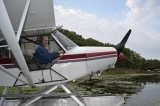
We're still pretty smokey here, but it looks like heavy humidty:

Thu Sep 07, 2017 5:58 pm
Re: Need feedback: Hazards of Wildfire Smoke
Prosaria wrote:Looks good Zane.
Here are some resources, including a fantastic smoke forecast model:
Alaska Air Quality Predictive Services: https://fire.ak.blm.gov/predsvcs/airquality.php
USFS Smoke Forecast Models: https://www.airfire.org/data/bluesky-daily/
Great finds! Added to resources section of article.
Thu Sep 07, 2017 6:44 pm
Re: Need feedback: Hazards of Wildfire Smoke
Zane,
Some good thoughts in your article. I would add another point. When one finds him or herself in smoke, and as that smoke thickens, there is often temptation to climb, intending to "top out" of the smoke and cruise along in clear air. After all, you can look out the top of your windscreen, and clearly see that inviting blue sky above. Surely it's not much higher, right?
I've gone for that bait on more than one occasion. In one case, I did wind up on top....at 12,500 feet. Terrain heights in the area ran between 500 and 1000 feet.
In a few other cases, I got to oxygen altitudes with absolutely no lessening of the density of the smoke. And, to complicate matters, I could no longer see the ground at all.....so true IMC.....all while trying to reach that very inviting blue sky above, which turned out to be just a little higher. No matter how high I flew. It's an interesting optical illusion.
Next time you're flying in smoke, look up.....you'll be convinced the top of the stuff is "right there".
MTV
Some good thoughts in your article. I would add another point. When one finds him or herself in smoke, and as that smoke thickens, there is often temptation to climb, intending to "top out" of the smoke and cruise along in clear air. After all, you can look out the top of your windscreen, and clearly see that inviting blue sky above. Surely it's not much higher, right?
I've gone for that bait on more than one occasion. In one case, I did wind up on top....at 12,500 feet. Terrain heights in the area ran between 500 and 1000 feet.
In a few other cases, I got to oxygen altitudes with absolutely no lessening of the density of the smoke. And, to complicate matters, I could no longer see the ground at all.....so true IMC.....all while trying to reach that very inviting blue sky above, which turned out to be just a little higher. No matter how high I flew. It's an interesting optical illusion.
Next time you're flying in smoke, look up.....you'll be convinced the top of the stuff is "right there".
MTV


Thu Sep 07, 2017 7:53 pm
Re: Need feedback: Hazards of Wildfire Smoke
+1
mtv wrote:Zane,
Some good thoughts in your article. I would add another point. When one finds him or herself in smoke, and as that smoke thickens, there is often temptation to climb, intending to "top out" of the smoke and cruise along in clear air. After all, you can look out the top of your windscreen, and clearly see that inviting blue sky above. Surely it's not much higher, right?
I've gone for that bait on more than one occasion. In one case, I did wind up on top....at 12,500 feet. Terrain heights in the area ran between 500 and 1000 feet.
In a few other cases, I got to oxygen altitudes with absolutely no lessening of the density of the smoke. And, to complicate matters, I could no longer see the ground at all.....so true IMC.....all while trying to reach that very inviting blue sky above, which turned out to be just a little higher. No matter how high I flew. It's an interesting optical illusion.
Next time you're flying in smoke, look up.....you'll be convinced the top of the stuff is "right there".
MTV
Thu Sep 07, 2017 8:19 pm
Re: Need feedback: Hazards of Wildfire Smoke
mtv wrote:Zane,
Some good thoughts in your article. I would add another point. When one finds him or herself in smoke, and as that smoke thickens, there is often temptation to climb, intending to "top out" of the smoke and cruise along in clear air. After all, you can look out the top of your windscreen, and clearly see that inviting blue sky above. Surely it's not much higher, right?
I've gone for that bait on more than one occasion. In one case, I did wind up on top....at 12,500 feet. Terrain heights in the area ran between 500 and 1000 feet.
In a few other cases, I got to oxygen altitudes with absolutely no lessening of the density of the smoke. And, to complicate matters, I could no longer see the ground at all.....so true IMC.....all while trying to reach that very inviting blue sky above, which turned out to be just a little higher. No matter how high I flew. It's an interesting optical illusion.
Next time you're flying in smoke, look up.....you'll be convinced the top of the stuff is "right there".
MTV
Excellent point. I did almost the same thing once. Happened to look down and see the ground looking a little grainy and I wasn't above the smoke yet. Came right back down and had to get a special VFR arrival into the PAFA class D.
It's deceptive, to be sure.
- CamTom12 offline

- Posts: 3705
- Joined: Sun Jul 08, 2012 1:08 pm
- Location: Huntsville
- FindMeSpot URL: https://share.delorme.com/camtom12
- Aircraft: Ruppe Racer
Experimental Pacer
home hand jam "wizard"
DISPLAY OPTIONS
Who is online
Users browsing this forum: No registered users and 0 guests
Latest Features
-
-
Featured Bush Planes
As one of the undisputed legends of bush flying, the Cessna 180 hauls a…Read More -
Aircraft Ownership and Maintenance
9 modification mistakes aircraft owners make when trying to "bush out" their birds—why some…Read More -
Live to Tell
A Minnesota pilot is surprised to learn that the sudden asymmetric drag of an…Read More


Latest Knowledge Base
-
Destinations
Canada offers some of the most spectacular backcountry flying on the continent. Here's what you need to know before you go.Read More -
Safety and Survival
Hope that you never have to use your survival vest but knowing you have it and knowing how to use…Read More -
Destinations
A regional guide with ideas for winter camping destinations in California, Nevada, New Mexico, and Arizona.Read More -
Aircraft
Finding an affordable aircraft that can handle the backcountry for $80K or less? A challenge for sure, but with the…Read More