Oil Temp Too Cold? What to do. UPDATE: Problem Solved
Wed Dec 18, 2013 4:31 pm
Re: Oil Temp Too Cold? What to do.
I've always been slow to pull power off...at least once I became a bit more aware of being nice to engines. One thing I really like about having an engine analyzer is that you can see the rate of cooling and set an alarm to warn you if it breaches your defined threshhold. It's a nice awareness tool and it was nice to see that my normal technique is well within that threshhold.
- Grassstrippilot offline

- Posts: 3536
- Joined: Wed May 31, 2006 6:17 am
- Location: Syracuse, UT
- FindMeSpot URL: https://share.garmin.com/WolfAdventures
- Aircraft: Cessna 205
Fri Dec 27, 2013 3:31 pm
Re: Oil Temp Too Cold? What to do.
I finally got out to do some flying yesterday afternoon. Unfortunately I ran out of time to fly with all the configurations that I wanted. Here is how I was configured:
Winter kit as discussed above was on.
The oil cooler taped over along the diagonal (basically half covered).
Oil temp on start up was around 50 degrees, same as hanger. After start it dropped into the high 30s as normal.
Outside air temp on the ground was 32 degrees.
On takeoff, a couple of CHTs got warm quicker than normal due to it being warmer outside and having the winter kit on. Ideally I would have liked to have flown it with and without it on, but I ran out if time. Lowering the nose took care of this. I climbed to 7K feet and set it up roughly 100-120 ROP. Power set at 21.5" and 2200 RPM. Oil temps continued to climb during the climb out to read 145-150 on the analog, 148 on the JPI EDM-700. Cowl flaps were closed until a few minutes in when one CHT got a little warm at which time I opened them 2 notches, which from experience is enough to reverse the trend. Again, without the winter kit on, I would expect I could have left them closed. OAT at 7K was 44 degrees on the EDM and 42 degrees on the analog air vent gauge. I calibrated the EDM to it before flight.
Then I went to LOP at the same altitude and temperature. Oil temps stayed between 148-150 degrees. The analog gauge showed 145-150. CHTs were all 300-350 degrees with cowl flaps now fully closed.
The other downside to this flight was that it was relatively short, :41 total from start to shut down. I would have liked for it to be longer and need to do a longer flight at both settings to see how the oil temps react. I'm hoping to get a couple of longer flights in mid week next week. I'll also pull the winter kit off.
Winter kit as discussed above was on.
The oil cooler taped over along the diagonal (basically half covered).
Oil temp on start up was around 50 degrees, same as hanger. After start it dropped into the high 30s as normal.
Outside air temp on the ground was 32 degrees.
On takeoff, a couple of CHTs got warm quicker than normal due to it being warmer outside and having the winter kit on. Ideally I would have liked to have flown it with and without it on, but I ran out if time. Lowering the nose took care of this. I climbed to 7K feet and set it up roughly 100-120 ROP. Power set at 21.5" and 2200 RPM. Oil temps continued to climb during the climb out to read 145-150 on the analog, 148 on the JPI EDM-700. Cowl flaps were closed until a few minutes in when one CHT got a little warm at which time I opened them 2 notches, which from experience is enough to reverse the trend. Again, without the winter kit on, I would expect I could have left them closed. OAT at 7K was 44 degrees on the EDM and 42 degrees on the analog air vent gauge. I calibrated the EDM to it before flight.
Then I went to LOP at the same altitude and temperature. Oil temps stayed between 148-150 degrees. The analog gauge showed 145-150. CHTs were all 300-350 degrees with cowl flaps now fully closed.
The other downside to this flight was that it was relatively short, :41 total from start to shut down. I would have liked for it to be longer and need to do a longer flight at both settings to see how the oil temps react. I'm hoping to get a couple of longer flights in mid week next week. I'll also pull the winter kit off.
- Grassstrippilot offline
- Posts: 3536
- Joined: Wed May 31, 2006 6:17 am
- Location: Syracuse, UT
- FindMeSpot URL: https://share.garmin.com/WolfAdventures
- Aircraft: Cessna 205
Fri Dec 27, 2013 3:48 pm
Re: Oil Temp Too Cold? What to do.
GumpAir wrote:mtv wrote:Again, if you go to interior and northern Alaska in the dead of winter, and look at the Cessnas on the ramps, you won't see many if any wearing those winter fronts, but you'll see a lot of duct tape on the oil coolers......
MTV
Yup... No one I worked for had A&P's who allowed the winter fronts. We taped the oil coolers, climbed just a few feet into warmer air, and held power in the green until the wheels touched the ground. We were taught the colder it is, the slower you do everything.
Technique plays a huge part in keeping cylinders, and oil, warm. My rule was always be at pattern altitude at least ten miles out, and never pull back more than an inch every three minutes, stopping at the bottom of the green on the MP. All the gauges stay in the middle, right where they belong.
Some outfits did really shitty pilot training for winter ops, and I'd watch their guys come in on -40 days and be 3,000 AGL at three miles out. You could hear 'em cut power and stuff the nose down to come in and land. They replaced a jug a week. Us Chickenshits who kept our engines warm and at cruise power, ran engines from new in the crate to TBO without a squawk.
Using the winter fronts, and even more so taping off cowlings, is scary. You disrupt airflow over the cylinders, and even though the heads might show CHT's where you want them, you run the risk of hot spots on the cylinder walls.
Gump
Good call GUMP, Just another thought for you guys just getting into the cold weather!!
You start Planning your landing, just about the time the wheels get off the ground on take off!!
DON"T WAIT UNTIL YOU SEE THE AIRPORT!!
- M6RV6 offline
- Posts: 2313
- Joined: Mon Feb 25, 2008 5:52 pm
- Location: Rice Wa. 82WN Magee Creek AERODROME
- FindMeSpot URL: http://share.findmespot.com/shared/face ... sWKXuhKlg2
Have as much Fun as is Safe, and Keep SMILIN! GT,
Thu Jan 02, 2014 6:31 pm
Re: Oil Temp Too Cold? What to do.
I finally got a chance to call the oil cooler place who made my cooler and ask them about this issue. I told them what I am seeing, what I've done, and the results. His thoughts were just as Glidergeek thought: vernatherm. He says seeing the rise in temp that then stayed steady also tells him it isn't working. He says it sounds like it has failed in the extended position and the oil is going through the cooler all the time. He recommended that I take it out, inspect it, and test it.
So, that will be next week's project! I'll let you all know what I find.
So, that will be next week's project! I'll let you all know what I find.
- Grassstrippilot offline
- Posts: 3536
- Joined: Wed May 31, 2006 6:17 am
- Location: Syracuse, UT
- FindMeSpot URL: https://share.garmin.com/WolfAdventures
- Aircraft: Cessna 205
Thu Jan 02, 2014 9:18 pm
Re: Oil Temp Too Cold? What to do.
AH HA  .....
.....
.....
Wed Jan 29, 2014 7:38 pm
Re: Oil Temp Too Cold? What to do. Problem Solved!
Well, it looks like I got this taken care of. Here's what I found.
Last week I got the vernatherm pulled thanks to Glidergeek lending me a custom, purpose made wrench to take it off without removing the prop. With it off, I put it in a pot and heated it up to 190 degrees and could see that the vernatherm was actuating. Two things confused me. One, when I got took it off, I could see that it said 148 F on the vernatherm cap. Second, it seemed to be actuating the total distance that it was supposed to move.
Vernatherm in boiling water

Vernatherm with noticeable movement


Cap of the old vernatherm

Instructions for testing vernatherm.

So, the next day I talked to Cessna Tech Support and Continental. The fellow at Cessna didn't have the specs as to what the temp stamped on cap meant, but the Continental guy said it was the temp when the vernatherm started to move (although based on what I now see, I believe it actually may be the temp when the vernatherm is completely extended. That makes more sense with the test instructions that give you a specific distance at 173F. More on that in a minute). The guy at Cessna felt pretty confident that it was the vernatherm.
So, after sleeping on it, I pulled the trigger and ordered a new one (suckers aren't cheap! $400!). Fast forward and it showed up today. As soon as I got it, I opened it up and knew I had made the right call. Stamped on the cap was 173 F. A temp a full 25 degrees higher than the one on the old original part number. This part has been superseded 4 times and it appears somewhere along the line the temp was raised. So, with the part in hand, I headed to the airport. It went in quickly and soon it was time for a test drive. Big difference! Oil temp seemed to come up faster and before takeoff, it was at 140. With the old one, we were having a hard time getting that in cruise! Shortly after takeoff, it climbed to 165 with an OAT of 45F. LOP it dropped to 160 and stayed there the rest of the flight. On the ground, no leaks.
Cap on the new vernatherm indicating 173F.

So, I think I've put this one to bed. We will be heading to Chicken Strip Friday morning so I'll get a good cross country to see how it does. Thanks to everyone for the input and help. And a big thanks to Russ for the wrench and Rich for the insight/technical help!
Last week I got the vernatherm pulled thanks to Glidergeek lending me a custom, purpose made wrench to take it off without removing the prop. With it off, I put it in a pot and heated it up to 190 degrees and could see that the vernatherm was actuating. Two things confused me. One, when I got took it off, I could see that it said 148 F on the vernatherm cap. Second, it seemed to be actuating the total distance that it was supposed to move.
Vernatherm in boiling water
Vernatherm with noticeable movement
Cap of the old vernatherm
Instructions for testing vernatherm.
So, the next day I talked to Cessna Tech Support and Continental. The fellow at Cessna didn't have the specs as to what the temp stamped on cap meant, but the Continental guy said it was the temp when the vernatherm started to move (although based on what I now see, I believe it actually may be the temp when the vernatherm is completely extended. That makes more sense with the test instructions that give you a specific distance at 173F. More on that in a minute). The guy at Cessna felt pretty confident that it was the vernatherm.
So, after sleeping on it, I pulled the trigger and ordered a new one (suckers aren't cheap! $400!). Fast forward and it showed up today. As soon as I got it, I opened it up and knew I had made the right call. Stamped on the cap was 173 F. A temp a full 25 degrees higher than the one on the old original part number. This part has been superseded 4 times and it appears somewhere along the line the temp was raised. So, with the part in hand, I headed to the airport. It went in quickly and soon it was time for a test drive. Big difference! Oil temp seemed to come up faster and before takeoff, it was at 140. With the old one, we were having a hard time getting that in cruise! Shortly after takeoff, it climbed to 165 with an OAT of 45F. LOP it dropped to 160 and stayed there the rest of the flight. On the ground, no leaks.
Cap on the new vernatherm indicating 173F.
So, I think I've put this one to bed. We will be heading to Chicken Strip Friday morning so I'll get a good cross country to see how it does. Thanks to everyone for the input and help. And a big thanks to Russ for the wrench and Rich for the insight/technical help!
- Grassstrippilot offline
- Posts: 3536
- Joined: Wed May 31, 2006 6:17 am
- Location: Syracuse, UT
- FindMeSpot URL: https://share.garmin.com/WolfAdventures
- Aircraft: Cessna 205
Wed Jan 29, 2014 9:16 pm
Re: Oil Temp Too Cold? What to do. UPDATE: Problem Solved
Congratulations on solving the oil temp issue. You want to be sure to get oil temp up to at least 180 f for a half hour if at all possible on every flight, to cook off the moisture left in the oil during the combustion process. If your oil temps are lower, I'd add some tape on the cooler, once you get the new vernatherm figured out.
And, read the POH supplement guidance on use of those winter fronts. I think you'll find that they prohibit their use at the temperatures you describe here. If you're having to open cowl flaps to cool CHTs, get rid of those winter fronts....your engine will thank you by lasting longer.
In short, as Gump and I have both recommended, hang those winter fronts on the hangar wall and leave them there.
MTV
And, read the POH supplement guidance on use of those winter fronts. I think you'll find that they prohibit their use at the temperatures you describe here. If you're having to open cowl flaps to cool CHTs, get rid of those winter fronts....your engine will thank you by lasting longer.
In short, as Gump and I have both recommended, hang those winter fronts on the hangar wall and leave them there.
MTV

Thu Jan 30, 2014 12:10 am
Re: Oil Temp Too Cold? What to do. UPDATE: Problem Solved
Where's the 'like' button?
Great to silently follow threads like this.
Great learning experiences.
-Threeper
Great to silently follow threads like this.
Great learning experiences.
-Threeper
- WilgaBeast offline

- Posts: 254
- Joined: Sat Mar 24, 2012 7:54 am
- Location: Riverton, Utah
- FindMeSpot URL: http://share.findmespot.com/shared/face ... OvNBuHnxKg
Thu Jan 30, 2014 5:11 am
Re: Oil Temp Too Cold? What to do. UPDATE: Problem Solved
can't let any of these beauties disappear.... 
Thu Jan 30, 2014 7:19 am
Re: Oil Temp Too Cold? What to do. UPDATE: Problem Solved
Thanks guys.
MTV, I took them off several weeks ago when we got out of that cold snap we had. The POH has one sentence regarding them. "For continuous operation in temperatures consistently below 20F, the Cessna winterization kit, available from your Cessna dealer, should be installed to improve engine operation." I didn't seem to have an issue with CHTs getting too warm, but don't see myself putting them on unless it's really cold and I'm having a problem with cold CHT temps.
Thanks again everyone!
MTV, I took them off several weeks ago when we got out of that cold snap we had. The POH has one sentence regarding them. "For continuous operation in temperatures consistently below 20F, the Cessna winterization kit, available from your Cessna dealer, should be installed to improve engine operation." I didn't seem to have an issue with CHTs getting too warm, but don't see myself putting them on unless it's really cold and I'm having a problem with cold CHT temps.
Thanks again everyone!
- Grassstrippilot offline
- Posts: 3536
- Joined: Wed May 31, 2006 6:17 am
- Location: Syracuse, UT
- FindMeSpot URL: https://share.garmin.com/WolfAdventures
- Aircraft: Cessna 205
Thu Jan 30, 2014 7:21 am
Re: Oil Temp Too Cold? What to do. UPDATE: Problem Solved
Sounds like you are making good progress towards the goal of 180* - 200* F Cory.
I am in a similar predicament with the 0-360 on the Maule, and as I have found the tape method to be unacceptable due to the wild swings in OAT's, I am in the progress of having an IA create a cockpit operatable gate for the oil cooler where I can precisely set the desired oil temperature inflight.
He has made them in the past and received FAA field approvals.
As Troy mentioned, there will always be some oil going through the oil cooler so you will most likely still have to utilize a little tape.
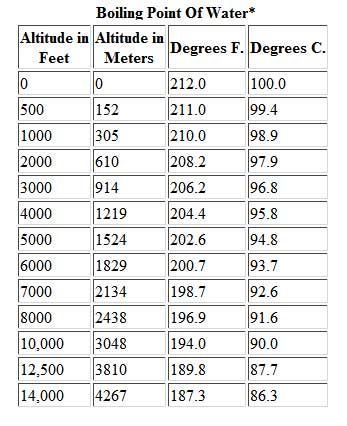
As Zane mentioned, water will still vaporize at less than 212* F, but the closer to 180* - 200* F range the better.
The chart below illustrates how altitude will effect the boiling point of water.
I am in a similar predicament with the 0-360 on the Maule, and as I have found the tape method to be unacceptable due to the wild swings in OAT's, I am in the progress of having an IA create a cockpit operatable gate for the oil cooler where I can precisely set the desired oil temperature inflight.
He has made them in the past and received FAA field approvals.
As Troy mentioned, there will always be some oil going through the oil cooler so you will most likely still have to utilize a little tape.
As Zane mentioned, water will still vaporize at less than 212* F, but the closer to 180* - 200* F range the better.
The chart below illustrates how altitude will effect the boiling point of water.

Maule MXT-7-180A
Thu Jan 30, 2014 8:22 am
Re: Oil Temp Too Cold? What to do. UPDATE: Problem Solved
And, bear in mind that, while the oil temp at the sensor may be 180, SOMEwhere in that engine, that oil is in fact in excess of the boiling point. As that water vaporizes there, it passes through the engine and is evacuated through the crankcase vent.
At the Lycoming Piston Engine Service School, they emphasized the notion that if you get the indicated operating temp to 180 and keep it there for a while, you'll cook off most of the moisture in the oil, and your engine will last a lot longer.
So, the magic number is 180 f.
It's also a good idea to calibrate you oil temp probe, to verify the accuracy of the instrument...I found one once that was waaaay off, on the low side.
Grasstrip....yes, the 20 degree F admonition was what I recalled. In Fairbanks in mid winter, we couldn't run them, because at any decent altitude the CHTs would rise alarmingly. Once you're airborne, and find that inversion, it's hard to remove those things....
MTV
At the Lycoming Piston Engine Service School, they emphasized the notion that if you get the indicated operating temp to 180 and keep it there for a while, you'll cook off most of the moisture in the oil, and your engine will last a lot longer.
So, the magic number is 180 f.
It's also a good idea to calibrate you oil temp probe, to verify the accuracy of the instrument...I found one once that was waaaay off, on the low side.
Grasstrip....yes, the 20 degree F admonition was what I recalled. In Fairbanks in mid winter, we couldn't run them, because at any decent altitude the CHTs would rise alarmingly. Once you're airborne, and find that inversion, it's hard to remove those things....
MTV
Thu Jan 30, 2014 10:17 am
Re: Oil Temp Too Cold? What to do. UPDATE: Problem Solved
mtv wrote:And, bear in mind that, while the oil temp at the sensor may be 180, SOMEwhere in that engine, that oil is in fact in excess of the boiling point. As that water vaporizes there, it passes through the engine and is evacuated through the crankcase vent.
At the Lycoming Piston Engine Service School, they emphasized the notion that if you get the indicated operating temp to 180 and keep it there for a while, you'll cook off most of the moisture in the oil, and your engine will last a lot longer.
So, the magic number is 180 f.
It's also a good idea to calibrate you oil temp probe, to verify the accuracy of the instrument...I found one once that was waaaay off, on the low side.
Grasstrip....yes, the 20 degree F admonition was what I recalled. In Fairbanks in mid winter, we couldn't run them, because at any decent altitude the CHTs would rise alarmingly. Once you're airborne, and find that inversion, it's hard to remove those things....
MTV
One follow-up comment to MTV's post to make sure it is clear. First, the reason for the 180F oil temp operational goal is that the oil temp sensor is in the part of the engine that is coolest during operation. Hence the statement that somewhere else the oil will be warmer...pretty much everywhere else, and as he said, it will be above the 212F point elsewhere, so it really does boil off water.
Second, a follow-up question. When it is cold in Alaska (or so I seem to recall...it does get cold here, doesn't it?...) we are usually sitting beneath an inversion and you can climb up, often around 1,000 feet AGL, and find temperatures that are much warmer. My question is whether the lower 48 has the same pattern when temperatures are subzero, or even sub +15F?
- Troy Hamon offline
- Posts: 913
- Joined: Tue Apr 06, 2010 8:27 am
- Location: King Salmon
- FindMeSpot URL: http://share.findmespot.com/shared/face ... 04iX0FXjV2
- Aircraft: Piper PA-22
Thu Jan 30, 2014 10:30 am
Re: Oil Temp Too Cold? What to do. UPDATE: Problem Solved
It is the same down here as well Troy.
As it was ~ 20* F on the ground, I decided to tape off the oil cooler inlet 100%.
At 3000' it was 37* F with the oil temp rising and no intention of stopping.
Top temperature upon landing was 221* F, so I went down to covering it 50%
Looking forward to the oil cooler gate so I can get the exact temperature I desire from the cockpit.
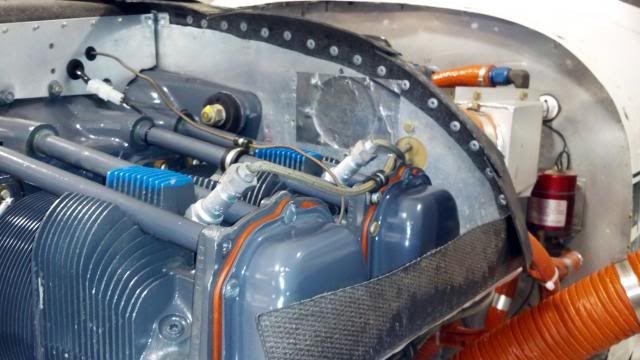
As it was ~ 20* F on the ground, I decided to tape off the oil cooler inlet 100%.
At 3000' it was 37* F with the oil temp rising and no intention of stopping.
Top temperature upon landing was 221* F, so I went down to covering it 50%
Looking forward to the oil cooler gate so I can get the exact temperature I desire from the cockpit.
Maule MXT-7-180A
DISPLAY OPTIONS
Who is online
Users browsing this forum: No registered users and 0 guests
Latest Features
-
Live to Tell
A Minnesota pilot is surprised to learn that the sudden asymmetric drag of an out-of-rig ski can…Read More -
Creators
Working in some of the Yukon's most beautiful and remote environments, photographer Simon Blakesley captures aircraft in…Read More -
Aircraft Ownership and Maintenance
Upgrading to big tires can make a huge difference in backcountry performance, but with those gains come…Read More -
Tales from Yesteryear
In this tale from bush flying yesteryear, Don Cogger signs up to help Atlee Dodge Jr recovery…Read More


Latest Knowledge Base
-
Destinations
A regional guide with ideas for winter camping destinations in California, Nevada, New Mexico, and Arizona.Read More -
Aircraft
Finding an affordable aircraft that can handle the backcountry for $80K or less? A challenge for sure, but with the…Read More -
Aircraft
01.29.2018 - Zane - Updated tire diameter graphic to add 8.50x10 Guide to tires for use in the backcountry and off-airport landing…Read More -
Pilots
12.22.2013 - Initial article format Operating aircraft on skis and negotiating a snow-covered landscape is an entirely unique skillset and environment.…Read More


