Anybody have experience with the previously mentioned PreKote wipes? I’m adding Acorn’s firewall beef up kit to my 182 and debating going the Guinea pig route with the wipes. Any thoughts?
Chris
Painting without prep
Thu Dec 02, 2021 10:43 am
- flyingzebra offline

- Posts: 479
- Joined: Sat Jan 24, 2009 4:53 am
- Location: Northwest Washington state
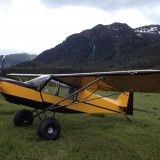
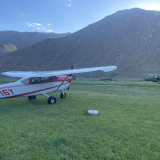
- Aircraft: Cessna Skylane 182 N3440S, Aviat Husky N2918L
Mon Dec 27, 2021 6:43 pm
Re: Painting without prep
Progress report: all windows and interior removed, finishing up interior cleanup right now. Will then install windows, tape and paint. Peerco Adhesive Remover has been an outstanding solution for removing the black, petrified baby diarrhea that is painted onto the interior of the fuselage. It's FAR less toxic than ketone solvents.

The first step: wife and daughter tear out the foam.


These two photos show the Peerco "in process". After removing as much as possible with Peerco and scrapers ground out of old airplane windows, I'm using a brass brush and some scotchbrite pads to mechanically remove stubborn bits - especially around rivets. Then I'm using a rag to go over everything with acetone. MEK is "stronger" than acetone in the sense that its slower evaporation allows it to work longer, but acetone is cheaper, a bit less nasty, and actually removes a wider range of substances. So I prefer it.
The first step: wife and daughter tear out the foam.
These two photos show the Peerco "in process". After removing as much as possible with Peerco and scrapers ground out of old airplane windows, I'm using a brass brush and some scotchbrite pads to mechanically remove stubborn bits - especially around rivets. Then I'm using a rag to go over everything with acetone. MEK is "stronger" than acetone in the sense that its slower evaporation allows it to work longer, but acetone is cheaper, a bit less nasty, and actually removes a wider range of substances. So I prefer it.
Tue Dec 28, 2021 7:33 pm
Re: Painting without prep
I have used the prekote wipes and my paint hasnt fallen off yet. Maroon scotchbrite is your friend
Tue Dec 28, 2021 8:40 pm
Re: Painting without prep
That’s a lot of work. Good job, looks great.Whale wrote:Progress report: all windows and interior removed, finishing up interior cleanup right now. Will then install windows, tape and paint. Peerco Adhesive Remover has been an outstanding solution for removing the black, petrified baby diarrhea that is painted onto the interior of the fuselage. It's FAR less toxic than ketone solvents.
The first step: wife and daughter tear out the foam.
These two photos show the Peerco "in process". After removing as much as possible with Peerco and scrapers ground out of old airplane windows, I'm using a brass brush and some scotchbrite pads to mechanically remove stubborn bits - especially around rivets. Then I'm using a rag to go over everything with acetone. MEK is "stronger" than acetone in the sense that its slower evaporation allows it to work longer, but acetone is cheaper, a bit less nasty, and actually removes a wider range of substances. So I prefer it.
Do you have any concerns about using brass on the aluminum? I work around sea water a lot and we avoid that combination, instead using a stainless brush. Maybe not a concern for your application.
Wed Dec 29, 2021 2:00 pm
Re: Painting without prep
As far as galvanic corrosion is concerned, I think stainless steel and brass (copper + zinc alloy) have similar relationships to the aluminum used in airplanes. Copper and steel are both less reactive than aluminum. I'm also using stainless brushes. Copper is closest to the aluminum in galvanic potential, so a pure copper brush would be superior to brass or stainless in terms of preventing corrosion. In any case, after the mechanical abrasion, I'll be cleaning everything thoroughly with a solvent, then hitting it with Prekote, then painting. If anyone's got evidence that stainless is better than brass, or vice versa, I'd love to know. Now I'm wondering.
Thu Dec 30, 2021 12:27 am
Re: Painting without prep
I am removing the same gunk. Mineral spirits is working great and better than acetone for me. Not stinky al all and not evaporating anytime soon.
Mon Jan 03, 2022 3:22 pm
Re: Painting without prep
Has anybody painted Cessna heater boxes with epoxy? I have no idea how hot they get.
- flyingzebra offline
- Posts: 479
- Joined: Sat Jan 24, 2009 4:53 am
- Location: Northwest Washington state
- Aircraft: Cessna Skylane 182 N3440S, Aviat Husky N2918L
Tue Jan 11, 2022 5:55 pm
Re: Painting without prep

Doors ready for paint. Took two rounds with paint stripper, plus a round of scraping, then scotchbrite, then rotary grinder for the last little tough bits. Very time consuming. Note on paint stripper: have excessive ventilation and/or use an appropriate breathing filter. The fumes are nasty.
At this point, the doors will get a thorough scrub down with MEK and then a PreKote wipe down right before paint.
My project received a bit of an extended timeline. Two cylinders came off to be rehabilitated (28/80 compressions). This lead to discovering that 5 out of my 6 cylinders cannot go back on the engine due to an AD. This in turn led to examining the cam lobes and lifters, where the spalling was bad enough to require splitting the case. I figured may as well do a major overhaul if we're splitting the case. Engine is at 1000 hours SMOH, but it's also been 22 years. And there were some periods of inactivity prior to my ownership...so despite the financial suffering, this makes sense and it'll feel good to have new cylinders that don't have an excessive risk of exploding.
Wed Jan 12, 2022 1:51 am
Re: Painting without prep
Yes, several times. I’ve repaired Cessna heater boxes with West System epoxy and then painted them with epoxy primers and polyurethane paints. These 2 have held up well for years now.flyingzebra wrote:Has anybody painted Cessna heater boxes with epoxy? I have no idea how hot they get.


Sat Jan 22, 2022 8:22 pm
Re: Painting without prep
Pretty heater boxes. 
Some informational updates for anyone contemplating or doing interior refinishing work:
Stoddard Solvent has been the best for removing the goopy stuff Cessna originally seated the windows in. It's a gummy mess which cleaned up easiest by scraping and then using that solvent to mop up remnants.
Prepping the interior for painting takes many, many hours. I'm keeping track and will provide a tally eventually. I've bead blasted all the little window retaining strips. The plan is to paint those and the interiors of the doors, and then prep the fuselage for painting. Then paint the interior, install the windows (rivets), then touch up paint on the rivets inside. The other option was to install all the windows THEN paint the interior, but I've opted to do it differently so that I can fully paint all the retaining strips. It also makes paint prep a little easier for the spraying part, as we don't need to worry about the windows. If there is some strong reason for installing all the windows first, I'd love to hear it.
Removing all the paint around the door jambs has been extremely labor intensive. A lot of rivets. The blue AVFN scotchbrite roloc discs have been my friends. The medium/red ones are too aggressive. The blue discs are also fantastic for dealing with any small areas of corrosion that you might discover. Experimenting with solvents, I have to say that lacquer thinner has been the best for me on paint clean up. Getting very close to painting now.
Temperatures may force me to use something other than the Stewart Systems EkoPoxy. There's just no way to get up to the application temperature of 70+ where I am.
Some informational updates for anyone contemplating or doing interior refinishing work:
Stoddard Solvent has been the best for removing the goopy stuff Cessna originally seated the windows in. It's a gummy mess which cleaned up easiest by scraping and then using that solvent to mop up remnants.
Prepping the interior for painting takes many, many hours. I'm keeping track and will provide a tally eventually. I've bead blasted all the little window retaining strips. The plan is to paint those and the interiors of the doors, and then prep the fuselage for painting. Then paint the interior, install the windows (rivets), then touch up paint on the rivets inside. The other option was to install all the windows THEN paint the interior, but I've opted to do it differently so that I can fully paint all the retaining strips. It also makes paint prep a little easier for the spraying part, as we don't need to worry about the windows. If there is some strong reason for installing all the windows first, I'd love to hear it.
Removing all the paint around the door jambs has been extremely labor intensive. A lot of rivets. The blue AVFN scotchbrite roloc discs have been my friends. The medium/red ones are too aggressive. The blue discs are also fantastic for dealing with any small areas of corrosion that you might discover. Experimenting with solvents, I have to say that lacquer thinner has been the best for me on paint clean up. Getting very close to painting now.
Temperatures may force me to use something other than the Stewart Systems EkoPoxy. There's just no way to get up to the application temperature of 70+ where I am.
Sat Jan 22, 2022 8:51 pm
Re: Painting without prep
flyingzebra wrote:Has anybody painted Cessna heater boxes with epoxy? I have no idea how hot they get.

Sun Jan 30, 2022 5:54 pm
Re: Painting without prep
Damn. That is a pretty fine firewall forward.
I'm getting very close to being ready to paint my interior, and I'm going to use a SEM rattle can to paint my pedestal cover black.
Does anyone have any tips for how to preserve the various markings on the pedestal (the hash marks and the "nose up trim" etc.)? I suppose I could tape over them, but then that would end up looking pretty bad, as you'd see the old color underneath/behind the lettering.
I'm getting very close to being ready to paint my interior, and I'm going to use a SEM rattle can to paint my pedestal cover black.
Does anyone have any tips for how to preserve the various markings on the pedestal (the hash marks and the "nose up trim" etc.)? I suppose I could tape over them, but then that would end up looking pretty bad, as you'd see the old color underneath/behind the lettering.
Mon Jan 31, 2022 8:59 am
Re: Painting without prep
Have someone outside the plane ready with a rag as you spray the interior. It is amazing how much primer/paint will want to flow out the seams of the aircraft skin. DENNY
DENNY
Mon Mar 07, 2022 3:45 pm
Re: Painting without prep
Progress report and things learned:
It took around 200 hours to completely clean out the interior - all the adhesive, black glop, light corrosion - and prep for painting. It's a lot of taping. Riveting in the new back windows, by comparison, was a very quick job. Trivia: rear window is 85 rivets. Side, rear windows are 77 rivets per window. But you can leave the forward-most inner bracket riveted in to both remove the old window and install the new window. You do need to drill out a few rivets at the top and bottom of that forward bracket. But by doing this, you reduce each back window to only drilling out and riveting 47 times per window.
By the way, "3M 7515 Scotch-Brite Roloc Surface Conditioning Disc, Blue, 2 in, Very Fine" is THE ideal tool for cleaning up corrosion inside the fuselage. The red discs are too aggressive.
On the painting, I had wanted to use Stewart Systems, but ended up going with products the local paint guy had the most experience with, since he was doing the spraying. He used a self-etching primer and a PPG topcoat. Prior to him doing his thing, I did a final wipe down with lacquer thinner, and then two treatments of the PreKote wipes. Adhesion seems to be excellent. Some areas, such as the insides of the doors and the doorframes, I had to treat multiple times with paint stripper. But lacquer thinner worked well for everything else. Lacquer thinner also worked well on old adhesive and the black glop, but I used Peerco as much as possible due to less toxicity.
For the back windows, solar grays from GLAP, I used the edge products (felt, etc.) they came with, plus ran a thinning out ring of 3M strip caulk 08578 (soft, paintable butyl rubber) around the inside of the fuselage near the window edge - to help create a flexible, fool-proof moisture barrier. I read one comment somewhere that this butyl rubber gets a tad squishy exposed to prolong, very high temperatures. But many more people swear by it, and it was easy to work with. Cleaning out the old chromate putty from the window frames required Stoddard Solvent. Also, the Great Lakes windows were all PERFECT fits. This made the job seem so easy.
I have not installed the windshield yet, but I was able to acquire some Cessna 579.6 Presstite seal tape to help for that install (Chief Aircraft), along with the felt. Soon, I will tape off and edge all the back/side windows with PR 1425 B 1/2. Dunno about the windshield. (?) I know GLAP recommends using clear silicone as an option for sealing windows. After cleaning up the old silicone, I will NEVER use it for this purpose. Awful.
With the engine off, I decided to install Acorn's Firewall Beef-up kit which massively reinforces the lower firewall. Strangely enough, sometime in the 80s the owner had SK182-44 (the firewall & tunnel reinforcement kit) installed, but ONLY the tunnel part of the kit. The work was extremely well done, but it's nutty that they went to all the effort but then skipped 0753102-5 and -6 (the firewall forward stiffeners). So now I get to purchase those for a massively inflated price. But once those and Acorn's kit are in, I'll feel a lot better about exploring the more soft fields and "gentle" off-airport areas, as well as letting students join in.
Last week was spent taping up the left fuel bay and installing a new extended range fuel cell from Eagle (replaced under warranty - as it had some issues). Installing fuel cells isn't brutally hard, but man it beats you up. I was bruised from wrists to shoulders - bruised ribs, etc. Not a fun job, though I feel like it'll be a lot easier if I have to do it again sometime. Picked up some tricks.
Whew - a lot of info. I hope it's useful to someone down the line. Will share some pics soon.
It took around 200 hours to completely clean out the interior - all the adhesive, black glop, light corrosion - and prep for painting. It's a lot of taping. Riveting in the new back windows, by comparison, was a very quick job. Trivia: rear window is 85 rivets. Side, rear windows are 77 rivets per window. But you can leave the forward-most inner bracket riveted in to both remove the old window and install the new window. You do need to drill out a few rivets at the top and bottom of that forward bracket. But by doing this, you reduce each back window to only drilling out and riveting 47 times per window.
By the way, "3M 7515 Scotch-Brite Roloc Surface Conditioning Disc, Blue, 2 in, Very Fine" is THE ideal tool for cleaning up corrosion inside the fuselage. The red discs are too aggressive.
On the painting, I had wanted to use Stewart Systems, but ended up going with products the local paint guy had the most experience with, since he was doing the spraying. He used a self-etching primer and a PPG topcoat. Prior to him doing his thing, I did a final wipe down with lacquer thinner, and then two treatments of the PreKote wipes. Adhesion seems to be excellent. Some areas, such as the insides of the doors and the doorframes, I had to treat multiple times with paint stripper. But lacquer thinner worked well for everything else. Lacquer thinner also worked well on old adhesive and the black glop, but I used Peerco as much as possible due to less toxicity.
For the back windows, solar grays from GLAP, I used the edge products (felt, etc.) they came with, plus ran a thinning out ring of 3M strip caulk 08578 (soft, paintable butyl rubber) around the inside of the fuselage near the window edge - to help create a flexible, fool-proof moisture barrier. I read one comment somewhere that this butyl rubber gets a tad squishy exposed to prolong, very high temperatures. But many more people swear by it, and it was easy to work with. Cleaning out the old chromate putty from the window frames required Stoddard Solvent. Also, the Great Lakes windows were all PERFECT fits. This made the job seem so easy.
I have not installed the windshield yet, but I was able to acquire some Cessna 579.6 Presstite seal tape to help for that install (Chief Aircraft), along with the felt. Soon, I will tape off and edge all the back/side windows with PR 1425 B 1/2. Dunno about the windshield. (?) I know GLAP recommends using clear silicone as an option for sealing windows. After cleaning up the old silicone, I will NEVER use it for this purpose. Awful.
With the engine off, I decided to install Acorn's Firewall Beef-up kit which massively reinforces the lower firewall. Strangely enough, sometime in the 80s the owner had SK182-44 (the firewall & tunnel reinforcement kit) installed, but ONLY the tunnel part of the kit. The work was extremely well done, but it's nutty that they went to all the effort but then skipped 0753102-5 and -6 (the firewall forward stiffeners). So now I get to purchase those for a massively inflated price. But once those and Acorn's kit are in, I'll feel a lot better about exploring the more soft fields and "gentle" off-airport areas, as well as letting students join in.
Last week was spent taping up the left fuel bay and installing a new extended range fuel cell from Eagle (replaced under warranty - as it had some issues). Installing fuel cells isn't brutally hard, but man it beats you up. I was bruised from wrists to shoulders - bruised ribs, etc. Not a fun job, though I feel like it'll be a lot easier if I have to do it again sometime. Picked up some tricks.
Whew - a lot of info. I hope it's useful to someone down the line. Will share some pics soon.
Thu Jul 13, 2023 4:12 pm
Re: Painting without prep
Does anybody have experience with alternative, easily obtainable acid etch for paint prep on aluminum, something I can buy at Lowe’s or NAPA? I just have a few parts to do and don’t want to wait for more Bonderite brand stuff to show up from Spruce.
Also, FWIW, I used out of date PreKote wipes in a few places and some of the paint came off with the tape. The wipes were at least a year out of date but the container had been kept closed and in a sealed bag.
Also, FWIW, I used out of date PreKote wipes in a few places and some of the paint came off with the tape. The wipes were at least a year out of date but the container had been kept closed and in a sealed bag.
- flyingzebra offline
- Posts: 479
- Joined: Sat Jan 24, 2009 4:53 am
- Location: Northwest Washington state
- Aircraft: Cessna Skylane 182 N3440S, Aviat Husky N2918L
Thu Jul 13, 2023 8:36 pm
Re: Painting without prep
Either Napa or Lowes shoiuld have etch. It's common for most paint systems. I've used PPG, Napa and a few others....they're all basically the same.
John
John
- hardtailjohn offline
- Posts: 924
- Joined: Thu Mar 16, 2006 7:06 pm
- Location: Marion, Montana
God put me here to accomplish a certain amount of things...right now I'm so far behind, I'll never die!!
Fri Jul 14, 2023 4:14 pm
Re: Painting without prep
flyingzebra wrote:Does anybody have experience with alternative, easily obtainable acid etch for paint prep on aluminum, something I can buy at Lowe’s or NAPA? I just have a few parts to do and don’t want to wait for more Bonderite brand stuff to show up from Spruce.
Also, FWIW, I used out of date PreKote wipes in a few places and some of the paint came off with the tape. The wipes were at least a year out of date but the container had been kept closed and in a sealed bag.
I’ve got a gallon of bonderite I’ll let go at my cost, plus shipping.
- skyward II offline
- Posts: 447
- Joined: Sun Jul 05, 2020 9:42 pm
- Location: Upland, CA/Etna, Wy
Sat Jul 15, 2023 4:08 pm
Re: Painting without prep
I found some at an automotive paint store.
- flyingzebra offline
- Posts: 479
- Joined: Sat Jan 24, 2009 4:53 am
- Location: Northwest Washington state
- Aircraft: Cessna Skylane 182 N3440S, Aviat Husky N2918L
DISPLAY OPTIONS
Who is online
Users browsing this forum: No registered users and 1 guest
Latest Features
-
Live to Tell
A Minnesota pilot is surprised to learn that the sudden asymmetric drag of an out-of-rig ski can…Read More -
Creators
Working in some of the Yukon's most beautiful and remote environments, photographer Simon Blakesley captures aircraft in…Read More -
Aircraft Ownership and Maintenance
Upgrading to big tires can make a huge difference in backcountry performance, but with those gains come…Read More -
Tales from Yesteryear
In this tale from bush flying yesteryear, Don Cogger signs up to help Atlee Dodge Jr recovery…Read More


Latest Knowledge Base
-
Destinations
A regional guide with ideas for winter camping destinations in California, Nevada, New Mexico, and Arizona.Read More -
Aircraft
Finding an affordable aircraft that can handle the backcountry for $80K or less? A challenge for sure, but with the…Read More -
Aircraft
01.29.2018 - Zane - Updated tire diameter graphic to add 8.50x10 Guide to tires for use in the backcountry and off-airport landing…Read More -
Pilots
12.22.2013 - Initial article format Operating aircraft on skis and negotiating a snow-covered landscape is an entirely unique skillset and environment.…Read More


