First of all, can we rename the thread?
You are very correct. The majority of younger folks that are getting into aviation are on the airline track and being taken for a ride by the larger schools coming out with certificates, a degree (in some cases), a load of debt and very specific (read: limited) flying and decision making skills. They are smart and see the right seat as the fastest easiest way to get to "big" money.
The pilots that do come up here for a year or two, come out of Alaska with something students/pilots don't get in the straight to the right seat program: They have made command go/no go decisions, have scared themselves, and can fly a plane at gross in crappy weather. In short the airlines will get a much better pilot. But, they will have to take a pay cut when they go to the airline, and his/her all important hire date will be two years behind his peers.
I don't know the answer for the shortage. In my view the ATP for right seat was the right thing to do and it did force the higher wages that we see today (and still coming). Even if the regionals started paying 100K per year for a brand new right seater, the ramp up for the training pipeline is counted in years.
I do believe that drones will take over the airline industry within 15 to 20 years. It will start with freight jets in Africa, then move to passengers in Africa, and the same in the US and Europe. Lets face it the most dangerous thing in the aircraft is the pilot, for every Sully, there are 1000 pilot error accidents.
Pilot shortage
Sat Jan 07, 2017 11:38 am
- Headoutdaplane offline
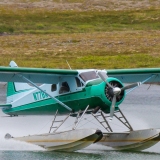
- Posts: 526
- Joined: Thu May 29, 2008 5:21 pm
- Location: Homer, AK
The winner is the person with the most stories when he dies, not the most gold.
www.belugaair.com
www.belugaair.com
Sat Jan 07, 2017 1:08 pm
Re: Delete
When I first went far north to start my flying career in the late 70's we had plenty of guys who were openly just building time in order to go to the majors. They were there for hours only, and you didn't dare get in their way as they fought seniority lists for flight time and multi/IFR experience.
But, we also had a core group of guys, and gals, who were exactly where they wanted to be, doing the kind of flying they wanted to do. Misfits all, but there for the Arctic experience and some pretty wild and free flying. The money, and housing (can you say honey bucket?) was way down on the list of priorities. They were my tribe, and damn we had fun.
Once in a while one of "us" would decide to "go legit" and move off to the majors or corporate world. It was relatively easy with our hours and experience. I know I did a couple times, but I hated every minute of it, and a lot of us came right back to what we knew, and what fulfilled us. And we also had some who went the complete opposite direction, and moved in with the small Arctic villages to run the town airplane, start families, and stay forever. I got that offer from the village of Kivalina... "We'll buy you an airplane if you move here to be OUR pilot." Almost 20 years later, I still kind of regret not doing it....
Nowadays with big runways, kerosene, and GPS approaches required almost everywhere up there, I really wonder what kind of pilots are going to replace the few old farts left. The flying in white-outs and scud running in Sled days are long gone, and the new pilots are smart enough not to miss it.
But also I'm afraid they're going to lose the connections to the villages and the people of the Arctic that we had. That is tragic.
Gump
But, we also had a core group of guys, and gals, who were exactly where they wanted to be, doing the kind of flying they wanted to do. Misfits all, but there for the Arctic experience and some pretty wild and free flying. The money, and housing (can you say honey bucket?) was way down on the list of priorities. They were my tribe, and damn we had fun.
Once in a while one of "us" would decide to "go legit" and move off to the majors or corporate world. It was relatively easy with our hours and experience. I know I did a couple times, but I hated every minute of it, and a lot of us came right back to what we knew, and what fulfilled us. And we also had some who went the complete opposite direction, and moved in with the small Arctic villages to run the town airplane, start families, and stay forever. I got that offer from the village of Kivalina... "We'll buy you an airplane if you move here to be OUR pilot." Almost 20 years later, I still kind of regret not doing it....
Nowadays with big runways, kerosene, and GPS approaches required almost everywhere up there, I really wonder what kind of pilots are going to replace the few old farts left. The flying in white-outs and scud running in Sled days are long gone, and the new pilots are smart enough not to miss it.
But also I'm afraid they're going to lose the connections to the villages and the people of the Arctic that we had. That is tragic.
Gump
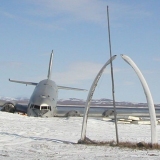
Sat Jan 07, 2017 1:12 pm
Re: Delete
Headoutdaplane wrote:Lets face it the most dangerous thing in the aircraft is the pilot, for every Sully, there are 1000 pilot error accidents.
True, but... The Air France incident offers an interesting perspective. The pilots did everything wrong, however that was largely based on faulty information fed to them by computers that had lost touch with reality, based on a faulty design that hit "perfect storm" criterna. How many incidents are avoided and go without record when automation and computers fail us, and the pilots manage to do what pilots do - take over and fly the plane?
I think the data around pilot error causing significant bent metal and human injury/fatality are quite well documented at this point, vis a vis NTSB reports going back decades. It would be very interesting to see data from pilots who could tell you about those times where just letting the airplane fly itself would have resulted in disaster. I suppose some of that data might be contained in an interpretive scan of ASRS reports, but would probably have to come from a survey of pilots across the entire spectrum.
It will be a good long while before I ever trust my life 100% to a computer in the air, both as a technologist and a pilot myself. Humans are fallible, but at least have the capacity (even if not always used) to realize that the computer has gone tits up and do something about it. Computers have no such self realization, or ability to take over from themselves, so if that happens without a human intervention possible you are pretty well screwed. Of course on the flip side, there are plenty of examples of computers working just fine and the pilots still lawn-darting a perfectly good plane, so I suppose it's a calculated risk either way.
Sat Jan 07, 2017 1:36 pm
Re: Pilot shortage
Having taught aviation subjects in a University for seven years, I can tell you that there are still a fair number of young folks who have no interest in airline flying, for a lot of reasons. Part of the problem is that "we" as in the aviation industry, literally only talk about airline flying as a career.
How often do you see aerial applicator given as a possible career track? Like almost never, except within that community. How about law enforcement flying, or natural resource flying, or back to the original topic....air taxi flying in Alaska or elsewhere?
Of my students at the University, a majority of them who've gone on to careers in aviation are now aerial applicators. And that industry is in the same boat as Alaska air taxi work....lots of old timers retiring, so lots of good jobs available. Many of these are also seasonal jobs, but pay well enough that the pilots can live on their wages all year.
Believe me, there are young pilots out there who are looking for jobs, and willing to work. Tell me that Ag pilots don't bust their butts for a big part of the year.....But, the industry (us) don't give them the guidance and information to make those connections to the jobs. For the most part.
When I was at the U, I was contacted by a big ag operator. They wanted good pilots who were willing to do the job. I sent them a few, and the response from the operator was "If you've got any more like those, send them down here." Those kids started with this operator with no ag flying experience....the operator took care of that, while the newbie loaded for them. Their third season, they were spraying. Students went to them with Commercial, Instrument and 20 + hours tailwheel time.
Jobs are there, and there are lots of young folks who'd kill for those jobs. The key is getting those two commodities together.
MTV
How often do you see aerial applicator given as a possible career track? Like almost never, except within that community. How about law enforcement flying, or natural resource flying, or back to the original topic....air taxi flying in Alaska or elsewhere?
Of my students at the University, a majority of them who've gone on to careers in aviation are now aerial applicators. And that industry is in the same boat as Alaska air taxi work....lots of old timers retiring, so lots of good jobs available. Many of these are also seasonal jobs, but pay well enough that the pilots can live on their wages all year.
Believe me, there are young pilots out there who are looking for jobs, and willing to work. Tell me that Ag pilots don't bust their butts for a big part of the year.....But, the industry (us) don't give them the guidance and information to make those connections to the jobs. For the most part.
When I was at the U, I was contacted by a big ag operator. They wanted good pilots who were willing to do the job. I sent them a few, and the response from the operator was "If you've got any more like those, send them down here." Those kids started with this operator with no ag flying experience....the operator took care of that, while the newbie loaded for them. Their third season, they were spraying. Students went to them with Commercial, Instrument and 20 + hours tailwheel time.
Jobs are there, and there are lots of young folks who'd kill for those jobs. The key is getting those two commodities together.
MTV


Sat Jan 07, 2017 1:38 pm
Re: Pilot shortage
[quote="Headoutdaplane"]First of all, can we rename the thread?
Sorry Z had a problem with something so I deleted it. Don't even remember what it was. Renamed thread seems to be some good thought provoking responses to the original intent of the post
Sorry Z had a problem with something so I deleted it. Don't even remember what it was.
Renamed thread seems to be some good thought provoking responses to the original intent of the post 
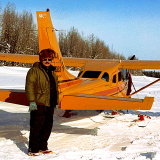
Keep the shiney side up and the dirty side down...
Sat Jan 07, 2017 1:43 pm
Re: Pilot shortage
This really is a great thread. Lots of insight here, thanks for sharing it. I'm still undecided what I want to do when I grow up, but going back to Alaska to fly for a living after I retire from the military is really high up there in my courses of action.
Sent from my iPhone using Tapatalk
Sent from my iPhone using Tapatalk
- CamTom12 offline

- Posts: 3705
- Joined: Sun Jul 08, 2012 1:08 pm
- Location: Huntsville
- FindMeSpot URL: https://share.delorme.com/camtom12
- Aircraft: Ruppe Racer
Experimental Pacer
home hand jam "wizard"
Sat Jan 07, 2017 2:25 pm
Re: Pilot shortage
Gump, the days of scud running in the sled are alive and well(?). As much as the GPS has changed things (I was here before and after the change) many still stay the same. The difference is that folks CFIT on the way to the villages instead of the way home. Folks are willing to take off and fly in weather that frankly we avoided at all costs before, just to "take a look" because of the GPS will tell you where the mountains are, but they are still hitting mountains, in 2016 alone 4 that I know of.
I heard after the last one this year Haagland is getting rid of VFR flights, all will be on instrument flight plans and following strict routes, no more looking for caribou or bears for them, but there are a lot of operators out there.
Your description of the 'misfits' still remains, there are a lot of folks, of which I am one, that don't fit in Outside. I will take flying out of Deadhorse in the winter to flying out of John Wayne in a lear anyday.
I heard after the last one this year Haagland is getting rid of VFR flights, all will be on instrument flight plans and following strict routes, no more looking for caribou or bears for them, but there are a lot of operators out there.
Your description of the 'misfits' still remains, there are a lot of folks, of which I am one, that don't fit in Outside. I will take flying out of Deadhorse in the winter to flying out of John Wayne in a lear anyday.
- Headoutdaplane offline
- Posts: 526
- Joined: Thu May 29, 2008 5:21 pm
- Location: Homer, AK
The winner is the person with the most stories when he dies, not the most gold.
www.belugaair.com
www.belugaair.com
Sat Jan 07, 2017 2:50 pm
Re: Pilot shortage
I think one of the best aids to help VFR Part 135 operators is the web cams in all the passes.  Dam I wish we would have had those back in the day. It would have made for a lot better decision making rather then go take a look..
  And I wouldn't have all this gray hair which by the way is leaving faster then I anticipated
Dam I wish we would have had those back in the day. It would have made for a lot better decision making rather then go take a look.. And I wouldn't have all this gray hair which by the way is leaving faster then I anticipated Keep the shiney side up and the dirty side down...
Sat Jan 07, 2017 2:59 pm
Re: Pilot shortage
Your description of the 'misfits' still remains, there are a lot of folks, of which I am one, that don't fit in Outside. I will take flying out of Deadhorse in the winter to flying out of John Wayne in a lear anyday.
Does my heart good to hear that.
I spent time flying at Deadhorse and really enjoyed it. The flying was technically a challenge, and I never took for granted the fact of exactly WHERE I was flying. I was always in awe of what I saw out the windshield every day.
Problem is, we're losing our mentors in the Arctic. When I got up there we had some true Alaska bush pilots left. When they spoke, I listened, and it's because of their wisdom that I didn't die many, many times over when things got shitty.
The equivalent Lower 48 I guess could be in the new breed of tailwheel instructors. I listen to them talk, or to the horror stories of guys who have had tailwheel sign-offs, whose instructors have zero experience and spout a lot of old wives tale BS. It's sad.
Gump
Sat Jan 07, 2017 4:28 pm
Re: Pilot shortage
I hate iPhones, just wrote up a few paragraphs to add to the AG jobs MTV wrote about and it got lost at reply, anyways , pretty much spot on but left out the majority of the operators today that don't back or have any loyalty to their employees, hense the new paradigm of new potential pilots that lack interest for flying for Mr. Podunk Undercut cropdusting LLC, because of these stories from their friends, so it works both ways.
I did my time flying Ag junk planes, then was burned multiple times by mutiple so called "honest" mom and pop operators, I had my share then went and got my own 137, ohh and did that kick the hornets nest! Haha!
Anyways, if I hadn't done the AG flying I wouldn't have got my gig flying Fires, nor with the Gubment. Long story short.
But the "kids" now don't see the stepping stones needed, they only see the student loan bill in the mail, and the Captain in the left seat to pay it off.
I did my time flying Ag junk planes, then was burned multiple times by mutiple so called "honest" mom and pop operators, I had my share then went and got my own 137, ohh and did that kick the hornets nest! Haha!
Anyways, if I hadn't done the AG flying I wouldn't have got my gig flying Fires, nor with the Gubment. Long story short.
But the "kids" now don't see the stepping stones needed, they only see the student loan bill in the mail, and the Captain in the left seat to pay it off.
Sat Jan 07, 2017 10:02 pm
Re: Pilot shortage
Sad to hear about so many shysters in AG now. Back when nobody got rich doing it, you could pretty much depend on low pay, simple living conditions, and a fair operation. I started with my own 137, but liked working for others. I was a terrible business man.
I think more kids would stick with simple flying careers if there was less big money orientation in flight schools and flying in general. Did I say I was a terrible business man?
I think more kids would stick with simple flying careers if there was less big money orientation in flight schools and flying in general. Did I say I was a terrible business man?
- contactflying offline
- Posts: 4972
- Joined: Wed Apr 03, 2013 7:36 pm
- Location: Aurora, Missouri 2H2
Download my free "https://tinyurl.com/Safe-Maneuvering" e-book.
Sun Jan 08, 2017 7:30 am
Re: Pilot shortage
Maybe (probably) my students got lucky, or maybe different parts of the country are different in this regard. None of these kids have had a bad experience of that sort in ag flying. They're all working turbine powered airplanes now, and some of them are working for slave drivers, no doubt. But they're being paid well enough that they ice fish most winters.
As with any job, I've always told students to do some serious research prior to going to work for someone. Aviation is a small world, and if someone is a shyster, it's usually not that hard to find that out.
MTV
As with any job, I've always told students to do some serious research prior to going to work for someone. Aviation is a small world, and if someone is a shyster, it's usually not that hard to find that out.
MTV
Sun Jan 08, 2017 8:49 am
Re: Pilot shortage
MTV, I'm just guessing but my guess based on where you were teaching would be that your students were farm kids. They knew ag and how to work hard by the time they were 14 years old. Though few want to admit it, willingness to work hard is usually a factor in success in any venture.
Tim
Tim

Sun Jan 08, 2017 9:30 am
Re: Pilot shortage
bat443 wrote:MTV, I'm just guessing but my guess based on where you were teaching would be that your students were farm kids. They knew ag and how to work hard by the time they were 14 years old. Though few want to admit it, willingness to work hard is usually a factor in success in any venture.
Tim
No doubt about that.
MTV
Sun Jan 08, 2017 10:03 am
Re: Delete
colopilot wrote:True, but... The Air France incident offers an interesting perspective. The pilots did everything wrong, however that was largely based on faulty information fed to them by computers that had lost touch with reality, based on a faulty design that hit "perfect storm" criterna. How many incidents are avoided and go without record when automation and computers fail us, and the pilots manage to do what pilots do - take over and fly the plane?
It will be a good long while before I ever trust my life 100% to a computer in the air, both as a technologist and a pilot myself. Humans are fallible, but at least have the capacity (even if not always used) to realize that the computer has gone tits up and do something about it.
Not suggesting that we take humans out of the cockpit, but 447 isn't a great example. The computer went tits up and a human worked really, really hard to override the aerodynamics of the airplane to cause the crash. In that case it's a near certainty that if the computer hadn't disconnected and instead simply gone into a "safe" mode or some sort that they would all be here to talk about it.
- rw2 offline
- Posts: 1799
- Joined: Sat Dec 22, 2012 1:10 pm
- Location: San Miguel de Allende
- FindMeSpot URL: https://share.delorme.com/LaNaranjaDanzante
- Aircraft: Experimental Maule
Follow my Flying, Cooking and Camping adventures at RichWellner.com
Sun Jan 08, 2017 11:12 am
Re: Pilot shortage
Just to be clear I don't want drone airlines to happen, but I don't want self-driving cars either. Unfortunately, like self-driving cars I believe drone airlines will be a reality within 15-20 years (which is a really long time in technology).
Now, I don't believe that drones can do my job....yet. The variables that are involved in flying floats into a moving river with wind and tidal effects and then deciding where and how to beach, needs a dynamic kind of thought process that I don't believe exists in technology, but AI is coming.
Now, I don't believe that drones can do my job....yet. The variables that are involved in flying floats into a moving river with wind and tidal effects and then deciding where and how to beach, needs a dynamic kind of thought process that I don't believe exists in technology, but AI is coming.
- Headoutdaplane offline
- Posts: 526
- Joined: Thu May 29, 2008 5:21 pm
- Location: Homer, AK
The winner is the person with the most stories when he dies, not the most gold.
www.belugaair.com
www.belugaair.com
Sun Jan 08, 2017 11:25 am
Re: Pilot shortage
Computers will do ever more in our world. But they will never know all the ifs and thus handle all the thens.The tactical situation is and will remain fluid.
- contactflying offline
- Posts: 4972
- Joined: Wed Apr 03, 2013 7:36 pm
- Location: Aurora, Missouri 2H2
Download my free "https://tinyurl.com/Safe-Maneuvering" e-book.
Mon Jan 09, 2017 6:10 am
Re: Pilot shortage
Any operators needing help flying in AK during the winter that anyone knows about? I can pass the info to one of my buddies.
Mon Jan 09, 2017 3:14 pm
Re: Pilot shortage
Headoutdaplane wrote:Now, I don't believe that drones can do my job....yet. The variables that are involved in flying floats into a moving river with wind and tidal effects and then deciding where and how to beach, needs a dynamic kind of thought process that I don't believe exists in technology, but AI is coming.
The next 25-100 years in a nutshell.
1. A robot/computer cannot possibly do the tasks I do.
2. [Later.] OK, it can do a lot of those tasks, but it can’t do everything I do.
3. [Later.] OK, it can do everything I do, except it needs me when it breaks down, which is often.
4. [Later.] OK, it operates flawlessly on routine stuff, but I need to train it for new tasks.
5. [Later.] OK, OK, it can have my old boring job, because it’s obvious that was not a job that humans were meant to do.
6. [Later.] Wow, now that robots are doing my old job, my new job is much more interesting and pays more!
7. [Later.] I am so glad a robot/computer cannot possibly do what I do now.
[Repeat.]
- rw2 offline
- Posts: 1799
- Joined: Sat Dec 22, 2012 1:10 pm
- Location: San Miguel de Allende
- FindMeSpot URL: https://share.delorme.com/LaNaranjaDanzante
- Aircraft: Experimental Maule
Follow my Flying, Cooking and Camping adventures at RichWellner.com
Mon Jan 09, 2017 3:48 pm
Re: Pilot shortage
rw2 wrote:Headoutdaplane wrote:Now, I don't believe that drones can do my job....yet. The variables that are involved in flying floats into a moving river with wind and tidal effects and then deciding where and how to beach, needs a dynamic kind of thought process that I don't believe exists in technology, but AI is coming.
The next 25-100 years in a nutshell.
1. A robot/computer cannot possibly do the tasks I do.
2. [Later.] OK, it can do a lot of those tasks, but it can’t do everything I do.
3. [Later.] OK, it can do everything I do, except it needs me when it breaks down, which is often.
4. [Later.] OK, it operates flawlessly on routine stuff, but I need to train it for new tasks.
5. [Later.] OK, OK, it can have my old boring job, because it’s obvious that was not a job that humans were meant to do.
6. [Later.] Wow, now that robots are doing my old job, my new job is much more interesting and pays more!
7. [Later.] I am so glad a robot/computer cannot possibly do what I do now.
[Repeat.]
The circle of life, tech style.

Cary
"I have slipped the surly bonds of earth..., put out my hand and touched the face of God." J.G. Magee
DISPLAY OPTIONS
Who is online
Users browsing this forum: No registered users and 1 guest
Latest Features
-
Live to Tell
A Minnesota pilot is surprised to learn that the sudden asymmetric drag of an out-of-rig ski can…Read More -
Creators
Working in some of the Yukon's most beautiful and remote environments, photographer Simon Blakesley captures aircraft in…Read More -
Aircraft Ownership and Maintenance
Upgrading to big tires can make a huge difference in backcountry performance, but with those gains come…Read More -
Tales from Yesteryear
In this tale from bush flying yesteryear, Don Cogger signs up to help Atlee Dodge Jr recovery…Read More


Latest Knowledge Base
-
Destinations
A regional guide with ideas for winter camping destinations in California, Nevada, New Mexico, and Arizona.Read More -
Aircraft
Finding an affordable aircraft that can handle the backcountry for $80K or less? A challenge for sure, but with the…Read More -
Aircraft
01.29.2018 - Zane - Updated tire diameter graphic to add 8.50x10 Guide to tires for use in the backcountry and off-airport landing…Read More -
Pilots
12.22.2013 - Initial article format Operating aircraft on skis and negotiating a snow-covered landscape is an entirely unique skillset and environment.…Read More


