Mountain flying: what do you know now that you didn’t then?
Wed Jun 10, 2026 1:25 pm
Mountain flying: what do you know now that you didn’t then?
Before flying in the mountains, what’s one thing you do now that you didn’t do when you started?

Wed Jun 10, 2026 6:01 pm
Re: Mountain flying: what do you know now that you didn’t th
What the elders said about high density altitude is TRUE.
Wed Jun 10, 2026 8:56 pm
Re: Mountain flying: what do you know now that you didn’t th
Wind matters more than most things. Understanding how it will help and hurt you will keep you alive, regardless of density altitude and how much horsepower you have. Better yet, understand how it works, and how to identify it.
Wed Jun 10, 2026 8:56 pm
Re: Mountain flying: what do you know now that you didn’t th
You can’t see rotor winds, but you can predict them.
- skyward II offline

- Posts: 475
- Joined: Sun Jul 05, 2020 9:42 pm
- Location: Upland, CA/Etna, Wy
Thu Jun 11, 2026 9:43 am
Re: Mountain flying: what do you know now that you didn’t th
Brief your passengers before you go, and talk them through what you are going to do before you do it. Most passengers aren't used to flying close to terrain, flying low, flying in canyons, landing on short, rough strips. Talk about overflying to examine the runway, and go arounds. Make sure they understand the plan, and don't push them into uncomfortable situations.
I scared my wife at Red's Horse Ranch by not telling her we would turn about 20 degrees during our takeoff roll due to a bend in the grass runway, stay in ground effect a while to gain speed, and then climb out slowly so I could see the trees and terrain. She thought we dramatically swerved, and then weren't climbing. All while in the bottom of a treed canyon with nowhere to crash land.
I scared my wife at Red's Horse Ranch by not telling her we would turn about 20 degrees during our takeoff roll due to a bend in the grass runway, stay in ground effect a while to gain speed, and then climb out slowly so I could see the trees and terrain. She thought we dramatically swerved, and then weren't climbing. All while in the bottom of a treed canyon with nowhere to crash land.
Thu Jun 11, 2026 9:57 am
Re: Mountain flying: what do you know now that you didn’t th
It was always pretty obvious to me, but "keeping a door open" is a necessity. An egress path through which you can glide away from terrain can buy you some altitude and time if something unusual happens.
There are times when this isn't easy or even possible, especially when crossing ridges with peaks obscured and limited clearance between saddles and cloud base. Can't say I haven't done that a few times, but at those times, alarms that are impossible to ignore should be going off in your head.
There are times when this isn't easy or even possible, especially when crossing ridges with peaks obscured and limited clearance between saddles and cloud base. Can't say I haven't done that a few times, but at those times, alarms that are impossible to ignore should be going off in your head.
- Scolopax offline
- Posts: 1716
- Joined: Tue Sep 27, 2005 5:02 pm
- Location: Nottingham
- FindMeSpot URL: http://share.findmespot.com/shared/face ... 4aYqSexnZC
Thu Jun 11, 2026 3:04 pm
Re: Mountain flying: what do you know now that you didn’t th
That not all pilots can actually fly well enough to fly the backcountry.
- StillLearning offline
- Posts: 463
- Joined: Mon Nov 05, 2018 6:22 pm
- Location: Salmon
- Aircraft: Cessna 180 Skywagon 1953
Fri Jun 12, 2026 8:35 am
Re: Mountain flying: what do you know now that you didn’t th
StillLearning wrote:That not all pilots can actually fly well enough to fly the backcountry.
Even pilots that can fly well can be taken by surprise, if they're not used to operating high hot & heavy.
Cessna Skywagon -- accept no substitute!
Fri Jun 12, 2026 9:35 am
Re: Mountain flying: what do you know now that you didn’t th
hotrod180 wrote:StillLearning wrote:That not all pilots can actually fly well enough to fly the backcountry.
Even pilots that can fly well can be taken by surprise, if they're not used to operating high hot & heavy.
Bingo! The ability to plan for variability, build margin through superior flight planning, expect surprises, and the sense to GTFO if things aren't right is the name of the game.
Humility is your very best friend in aviation.
He or she who asses themselves as "Hot $#!+" has it coming. The examples of this are plentiful...
- Scolopax offline
- Posts: 1716
- Joined: Tue Sep 27, 2005 5:02 pm
- Location: Nottingham
- FindMeSpot URL: http://share.findmespot.com/shared/face ... 4aYqSexnZC
Fri Jun 12, 2026 11:00 am
Re: Mountain flying: what do you know now that you didn’t th
StillLearning wrote:That not all pilots can actually fly well enough to fly the backcountry.
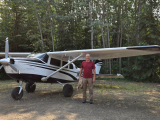
I am haunted by this one. A couple of summers after I first took dual instruction in Idaho, I was camped out up at Thomas Creek when my instructor died while teaching a flatlander like me in his 182. We'll never know that cause, but one possibility (for which there was some evidence, I was told), was that the student pulled up prematurely, stalled the wing, and the instructor couldn't overpower him on the yoke. The NTSB's probable cause was "failure to maintain clearance from trees."
I also remember my instructor cautioning me about winds, how too many risk factors can stack up, and it can happen when you least expect it. I generally don't think of my family or others in the plane as a risk factor, but, in the decades since, I've been in a couple of tight spots where the composure--or lack thereof--of the person in the right seat made things much easier or much harder to deal with. I take that into account now, and do not take folks who are afraid of flying into challenging places. I'm also cautious about who I fly with, and I am intensely aware of the responsibility and trust it shows when someone agrees to ride with me.
Fri Jun 12, 2026 11:59 am
Re: Mountain flying: what do you know now that you didn’t th
jcadwell wrote:Brief your passengers before you go, and talk them through what you are going to do before you do it. Most passengers aren't used to flying close to terrain, flying low, flying in canyons, landing on short, rough strips. Talk about overflying to examine the runway, and go arounds. Make sure they understand the plan, and don't push them into uncomfortable situations.
This was one I learned as well. Any time someone is sitting in another seat in a small plane, they're part of the flight crew. They may not be able to fly, but they can sure make flying tougher if they don't know what to do.
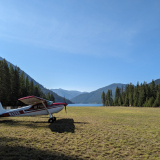
Years ago departing the grass runway in roundup MT mid day, bounced around pretty good before we finally got off the deck. Just as we did glove box popped open and a medicine bottle of spare bulbs/screws/fuses fell out. Passenger let out a pretty good scream, didn't know if the airplane was falling apart. Meanwhile I'm fighting high DA in ground effect with the end of the mesa approaching. Got a climb established and de-fused situation, and have since added to my briefing that I really only need to know if the airplane is dumping gas and on fire - and even then I'll fly the gas fireball somewhere soft to crash.
- DreadPirateWill offline
- Posts: 124
- Joined: Wed Dec 06, 2017 10:40 am
- Location: Spokane
Fri Jun 12, 2026 3:00 pm
Re: Mountain flying: what do you know now that you didn’t th
The updraft elevator. Sunny side of the valley and the downwind or updraft side of the valley. Pay very close attention. Save you or kill you. Fly very close to terrain.
Sun Jun 14, 2026 12:17 pm
Re: Mountain flying: what do you know now that you didn’t th
Beware of hazardous attitudes.
Lots of us "behave" when we're in busy airspace, talking to ATC, etc. We don't want to get in trouble. Then we get out away from all that and we think that we can relax and not follow the rules/procedures etc. that usually exist to keep us safe. An element of machismo creeps in. Sometimes that leads us to operate in a riskier manner which is a dangerous concept when coupled with the inherent risk of backcountry aviation.
Lots of us "behave" when we're in busy airspace, talking to ATC, etc. We don't want to get in trouble. Then we get out away from all that and we think that we can relax and not follow the rules/procedures etc. that usually exist to keep us safe. An element of machismo creeps in. Sometimes that leads us to operate in a riskier manner which is a dangerous concept when coupled with the inherent risk of backcountry aviation.
Wed Jun 17, 2026 2:38 pm
Re: Mountain flying: what do you know now that you didn’t th
1. In low ceilings, stay away from fuzzy ridges. Even sharp ridges can have a fuzzy one behind them. Approach the sharp ones a bit obliqely if you can. The 180˚ turn is a little easier that way.
2. Watch out for the firefighting restricted areas. You may be in the wilderness, but they can be, too.
2. Watch out for the firefighting restricted areas. You may be in the wilderness, but they can be, too.
DISPLAY OPTIONS
Who is online
Users browsing this forum: No registered users and 6 guests
Latest Features
-
-
Featured Bush Planes
As one of the undisputed legends of bush flying, the Cessna 180 hauls a…Read More -
Aircraft Ownership and Maintenance
9 modification mistakes aircraft owners make when trying to "bush out" their birds—why some…Read More -
Live to Tell
A Minnesota pilot is surprised to learn that the sudden asymmetric drag of an…Read More




Latest Knowledge Base
-
Destinations
Canada offers some of the most spectacular backcountry flying on the continent. Here's what you need to know before you go.Read More -
Safety and Survival
Hope that you never have to use your survival vest but knowing you have it and knowing how to use…Read More -
Destinations
A regional guide with ideas for winter camping destinations in California, Nevada, New Mexico, and Arizona.Read More -
Aircraft
Finding an affordable aircraft that can handle the backcountry for $80K or less? A challenge for sure, but with the…Read More



