I've searched around everywhere and have read up on people using Delfleet on fabric planes but I've got it stuck in my head that auto paints on fabric paints are sacrilege. I'm inching closer to painting a RANS S-20 and I'm in decision mode. I'm using Stewart Systems up through their primer and I'm undecided on the topcoat.
Does anyone here have any experience with how well Delfleet (or any PPG or Dupont products) hold up on fabric airplanes? I know I've seen mentions of some manufacturers using it, but I haven't heard any reports from a few years past application on whether or not it is still looking good.
Thanks in advance.
PPG Delfleet
Mon Feb 15, 2016 9:33 am
Mon Feb 15, 2016 9:40 am
Re: PPG Delfleet
In my experience automotive polyurethane is not the best for fabric airplanes. Usually not flexible enough for the application.
What's wrong with using the Stewart's EkoPoly? You can get a very nice finish with a little practice and you'd be supporting a small mom and pop aerospace coatings company, can't be too many of those around. Great people and customer support too.
Sam
What's wrong with using the Stewart's EkoPoly? You can get a very nice finish with a little practice and you'd be supporting a small mom and pop aerospace coatings company, can't be too many of those around. Great people and customer support too.
Sam

Mon Feb 15, 2016 4:42 pm
Re: PPG Delfleet
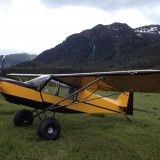
I used Delfleet on my Kitfox 7 back in 2008 and it still looks excellent. In my search for colors I ran across an Aviat Husky and I liked the colors so I called Aviat and found out they paint their Huskies with Delfleet. In fact, the red I used is called Aviat Red.
I figured if it was good enough for a $200k Husky it would be fine on my Kitfox. I love the paint and it works equally as good on pretty much any substrate and is very durable. A bit more involved in the mixing process as it requires a drying agent along with catalyst and reducer but not too bad.

I figured if it was good enough for a $200k Husky it would be fine on my Kitfox. I love the paint and it works equally as good on pretty much any substrate and is very durable. A bit more involved in the mixing process as it requires a drying agent along with catalyst and reducer but not too bad.
Darin H.
KOGD
KOGD
Mon Feb 15, 2016 5:05 pm
Re: PPG Delfleet
Halestorm wrote:In my experience automotive polyurethane is not the best for fabric airplanes. Usually not flexible enough for the application.
What's wrong with using the Stewart's EkoPoly? You can get a very nice finish with a little practice and you'd be supporting a small mom and pop aerospace coatings company, can't be too many of those around. Great people and customer support too.
Sam
I have no idea what Delfleet costs but at $300/gal I'm hesitating on using Ekopoly even though I will be using Stewart's up through primer...I think.

Mon Feb 15, 2016 7:33 pm
Re: PPG Delfleet
Rans uses Delfleet when they do the painting I do believe.
Mon Feb 15, 2016 8:05 pm
Re: PPG Delfleet
Darinh wrote:I used Delfleet on my Kitfox 7 back in 2008 and it still looks excellent. In my search for colors I ran across an Aviat Husky and I liked the colors so I called Aviat and found out they paint their Huskies with Delfleet. In fact, the red I used is called Aviat Red.
I figured if it was good enough for a $200k Husky it would be fine on my Kitfox. I love the paint and it works equally as good on pretty much any substrate and is very durable. A bit more involved in the mixing process as it requires a drying agent along with catalyst and reducer but not too bad.
Nice looking plane!
- Sierra Victor offline
- Posts: 338
- Joined: Sat Aug 24, 2013 3:10 pm
- Location: Denton
- Aircraft: Cessna T206H
Mon Feb 15, 2016 9:14 pm
Re: PPG Delfleet
Hard to go past Aerothane, although like any paint, it's all in the preparation. Flex additives are also useful if you have any concerns. There are some stunning fabric aircraft and schemes out there ruined due to crazing and cracking of the paint
Mon Feb 15, 2016 10:08 pm
Re: PPG Delfleet
Rans does indeed paint with Delfleet. I finished my airplane with it and have about 250 hrs on it with no problems.
Tue Feb 16, 2016 6:42 am
Re: PPG Delfleet
Todays flex agents give temporary flex to the paint, so that the flexible part can be manipulated into place on the vehicle. My paint rep tells me it drys out in a couple of months and become just as brittle as non flexed paint. Back in the day , flex agents kept the paint flexible. EPA rules or tighter profit margins has ruled out the good old flex agent. I went to a few Akzo Nobel (Sikkens) paint courses in the late eighties and early ninties and they had a nerf ball painted with flexed single stage paint. It was soft and flexible over the 4 year period that I went to their training center. ( 4 one week courses, it ain't college).
I have sprayed hundreds of gallons of single stage paint in the last 35 plus years of being in the paint business. About 18 years ago I was painting a Twin Otter for a skydiving business at their hangar. The owner was trying to keep costs down. I talked to the local paint rep and ended up using PPG AUE-300 polyurethane paint. It is a very inexpensive, but decent paint. The Otter came out pretty nice for basically painting it out side and held up good over the years.
Fast forward to a few years ago. I was painting a homebuilt for a customer using Aerothane. The paint worked great, it mixed and sprayed exactly like AUE-300 which I used on many airplanes, trucks and equipment over the years. When you finish painting there is always some catalyzed paint left in the gun. You dump it in a mixing cup and let it harden and end up with a hocky puck of flexible paint. I had saved a few of the AUE-300 pucks to show customers how flexible and tight it remains even when it is 1 inch thick. Well, I ended up with a couple of aerothane pucks also from painting the homebuilt. They were Identical. I would put them out side for months at a time and every once in a while check them for there shrinkage and flexibility. Over a 4 year period the Aroethane and AUE-300 pucks were identical. Neither cracked or lost their flexibility.
I talked to people at PPG about there paint for fabric covered airplanes. There paint is called Desothane. It is only sold to customers who relabel it and sell it. I was unable to buy Desothane from PPG, it is only sold in massive bulk. I kept digging and asking question. I was at a ppg sponsered event and a very knowledgeable rep was answering questions during the seminar. When the seminar was over I struck up a conversation with him. I asked him about Desothane, He, in not so many words, told me that Desothane and AUE-300 were basically the same paint. Desothane is certified, AUE-300 is not. I don't know for sure that the flexible polyurethane paints sold by popular aircraft companys is Desothane, but I do know from experience that they Look, work, smell, mix, and spray the same. I have sprayed AUE-300 on the fuselage of an Avid flyer a few years ago and it is holding up fine. AUE-300 is half the price of any certified paint.
All that being said, I personally wouldn't use polyurethane paint on my own fabric covered airplanes. I find Polytone to work great. It is light, easy to spray, and very repairable. It can be buffed to a high shine that looks like a hand rubbed lacquer job. I dont think that Polytone will go over Ekofill. I wouldn't try it.
I have sprayed hundreds of gallons of single stage paint in the last 35 plus years of being in the paint business. About 18 years ago I was painting a Twin Otter for a skydiving business at their hangar. The owner was trying to keep costs down. I talked to the local paint rep and ended up using PPG AUE-300 polyurethane paint. It is a very inexpensive, but decent paint. The Otter came out pretty nice for basically painting it out side and held up good over the years.
Fast forward to a few years ago. I was painting a homebuilt for a customer using Aerothane. The paint worked great, it mixed and sprayed exactly like AUE-300 which I used on many airplanes, trucks and equipment over the years. When you finish painting there is always some catalyzed paint left in the gun. You dump it in a mixing cup and let it harden and end up with a hocky puck of flexible paint. I had saved a few of the AUE-300 pucks to show customers how flexible and tight it remains even when it is 1 inch thick. Well, I ended up with a couple of aerothane pucks also from painting the homebuilt. They were Identical. I would put them out side for months at a time and every once in a while check them for there shrinkage and flexibility. Over a 4 year period the Aroethane and AUE-300 pucks were identical. Neither cracked or lost their flexibility.
I talked to people at PPG about there paint for fabric covered airplanes. There paint is called Desothane. It is only sold to customers who relabel it and sell it. I was unable to buy Desothane from PPG, it is only sold in massive bulk. I kept digging and asking question. I was at a ppg sponsered event and a very knowledgeable rep was answering questions during the seminar. When the seminar was over I struck up a conversation with him. I asked him about Desothane, He, in not so many words, told me that Desothane and AUE-300 were basically the same paint. Desothane is certified, AUE-300 is not. I don't know for sure that the flexible polyurethane paints sold by popular aircraft companys is Desothane, but I do know from experience that they Look, work, smell, mix, and spray the same. I have sprayed AUE-300 on the fuselage of an Avid flyer a few years ago and it is holding up fine. AUE-300 is half the price of any certified paint.
All that being said, I personally wouldn't use polyurethane paint on my own fabric covered airplanes. I find Polytone to work great. It is light, easy to spray, and very repairable. It can be buffed to a high shine that looks like a hand rubbed lacquer job. I dont think that Polytone will go over Ekofill. I wouldn't try it.
Tue Feb 16, 2016 8:26 am
Re: PPG Delfleet
+1 for using Stewarts Eko Poly!! NONE of the other paints are as flexible over the years as that paint is. I've got samples from 1999 that we had at Oshkosh that were wadded up and flattened out countless times, some have gone through the washer a few times when I forgot them in my pants pocket, and they've still go the flexibility to be wadded up into a little ball and flattened out again without cracking. I've got samples from Aerothane that I've shot since then, and they crack when bent.
John
John
- hardtailjohn offline
- Posts: 924
- Joined: Thu Mar 16, 2006 7:06 pm
- Location: Marion, Montana
God put me here to accomplish a certain amount of things...right now I'm so far behind, I'll never die!!
DISPLAY OPTIONS
Who is online
Users browsing this forum: No registered users and 0 guests
Latest Features
-
Live to Tell
A Minnesota pilot is surprised to learn that the sudden asymmetric drag of an out-of-rig ski can…Read More -
Creators
Working in some of the Yukon's most beautiful and remote environments, photographer Simon Blakesley captures aircraft in…Read More -
Aircraft Ownership and Maintenance
Upgrading to big tires can make a huge difference in backcountry performance, but with those gains come…Read More -
Tales from Yesteryear
In this tale from bush flying yesteryear, Don Cogger signs up to help Atlee Dodge Jr recovery…Read More


Latest Knowledge Base
-
Destinations
A regional guide with ideas for winter camping destinations in California, Nevada, New Mexico, and Arizona.Read More -
Aircraft
Finding an affordable aircraft that can handle the backcountry for $80K or less? A challenge for sure, but with the…Read More -
Aircraft
01.29.2018 - Zane - Updated tire diameter graphic to add 8.50x10 Guide to tires for use in the backcountry and off-airport landing…Read More -
Pilots
12.22.2013 - Initial article format Operating aircraft on skis and negotiating a snow-covered landscape is an entirely unique skillset and environment.…Read More


