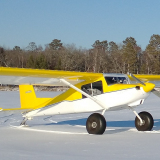
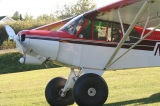
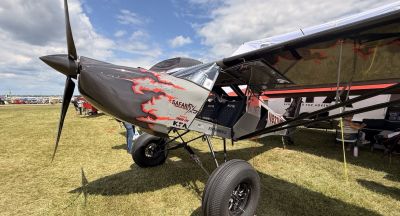
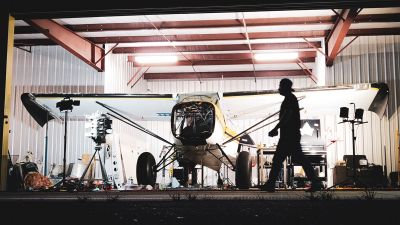
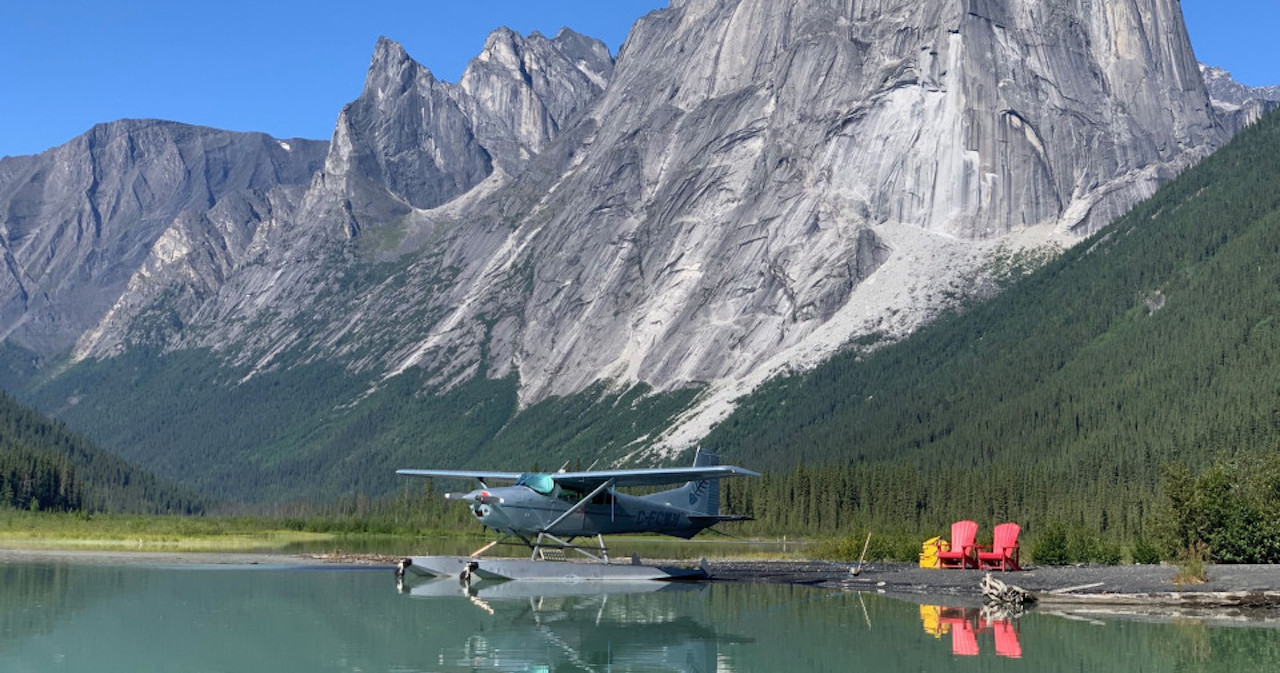
As many of you know, I’ve been testing the T3 Tailwheel Suspension (dual shock) on a Bearhawk since mid-January and now, after two months of flying with it, wanted to provide an update.

This was a heavy snow winter so initial testing was done on a paved and plowed runway as shown in this previously posted video.
I was very impressed by the performance and ability of the T3 to absorb landing impacts. Although I was confined to pavement early on, it was very clear that this was a big improvement over leaf springs.
The first chance to take it off pavement came with a camping trip to Death Valley. The two of us didn’t skimp on gear and with large distances between fuel stops we topped off with 70 gallons in Tonapah, NV, about 45 minutes from our camping spot, the Chicken Strip. We made an excursion without the camping gear to Stovepipe Wells and Furnace Creek the next day. Both are paved runways. The following day we loaded all the gear and headed to Panamint Springs (gravel strip), and Ballarat (dirt road landing). The Air Shocks performed very well. Maverick recommended Lizard Skins to cover the shocks so there would be less chance of getting minor pits and dings on the smooth shaft that the seals ride on.
 http://shop.lizardskins.com/products/rear-suspension-boot
I removed air shocks to test coil overs, then went on a one week, 2,000 mile trip to Baja Mexico. Heavy loads of maximum 2,700 lbs takeoff weight, 2,500 lbs maximum landing weight; 3 people, baggage, and 70 gallons of fuel. We made over a dozen landings on well graded dirt strips and one off strip desert landing in Arizona plus numerous pavement landings.

Since then, I've made several landings on remote Idaho desert airstrips and several landings on Elko Mountain. I’ll soon post a video of the T3 taking a pounding in Nevada.
Finally, the video showing some landings and takeoffs on a Elko Mountain is up!Both air shocks and coil overs perform well. Air shocks require checking and adjusting pressures each day before flight. Coil overs don’t and can be adjusted by adjusting the spring pre-load by turning the large adjustment nut at the base of the coil spring and also have a rebound adjustment knob. I was able to turn mind by hand with the tailwheel off the ground.
This video comparing drop tests of leaf spring, air shocks, and coil overs clearly shows why the T3 is such an improvement over standard leaf springs by absorbing impact energy and dampening rebound.
The weight is comparable with the OEM spring weight:
Leaf Spring – 5lbs
T3 with Air Shocks – 5lbs
T3 with Coil Overs - 6lbs
T3 Steering – 1lb
To install this on a flying Bearhawk, I had to modify the rudder steering arm which is welded to the rudder. On most other planes, this arm is bolted on instead, so
the next section only relates to a Bearhawk installation. It is much simpler on Cubs and others.First, I took the rudder off the plane and used an acetylene torch and pliers to bend the moustache shaped rudder steering arms to horizontal. Then, I cut them off about 1/3 of the length from the rudder attach point. This is done so the rudder can hit the factory stops. Otherwise, the horizontal arms hit the fuselage and prevent the rudder from hitting the stops. In total, this mod only took about an hour so it’s pretty easy to do.


Since I was adding steering, I next drilled and bolted a new steering arm, affectionately named the “batwing” and provided by Dan to the old rudder arm stubs.

Then I made and added 3/16 spacer that goes between the T3 mounting plate and the 2-hole mount point on the fuselage to provide a little more clearance. This may not be needed in all cases as the unit just bolts on.
The steering is still being fine-tuned on my plane, and while it isn’t really needed. It does make taxing easier, especially in cross winds.

So to sum this all up, both the air shocks and coil overs work well and make the ride much smoother, air frame stresses are reduced, and the pilot is much happier not feeling the spring induced jarring and bounces. The weight is comparable to a spring so that isn’t much of a change or concern. Steering is a take it or leave it, but I will admit it is nice to have for long x-wind taxis. I’ve been hoping to make more off airport landings, but this was a bad snow year for us so I haven’t been off airport as much as I would have liked. I have put it through some abuse (as shown in the to be posted video) and it has held up well. In the 35 hours I’ve flown with it, it has performed very well and is holding up great.
It is too early to tell what the maintenance frequency will be long term, but it is easy to take apart and reassemble. Since this system has more moving parts, I assume there will be a maintenance requirement, but the suspension performance is enough to justify it my opinion. With the leaf spring, I was re-arching that at least once a year, and after two re-arches I would just order a new spring to avoid breakage from metal fatigue, so even leaf springs, as basic as they are, required annual maintenance too.
We recently measured the static tail height against Cowdog's and Maverick's Bearhawk which has a new leaf spring on it (for now at least, they will soon be ordering a T3). The T3 on my plane vs theirs was 1/2-inch lower. Since the range of movement in the T3 is greater it will be even lower with additional weight or load from acceleration and/or up elevator. The point being the wing angle of attack would increase, potentially allowing for shorter takeoffs. Other planes maybe different, but that has been my experience to date.
The more landings I make with this, the more I like it; there is no going back to leaf springs for me.

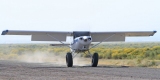


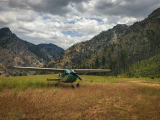


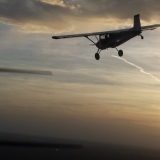
 with along with the report, but the internet connection keeps dropping, it amazes me to watch how much the tailwheel takes when on the ground. Makes a good case for wheel landings. However when we cant, I'm glad to be rid of the leaf spring.