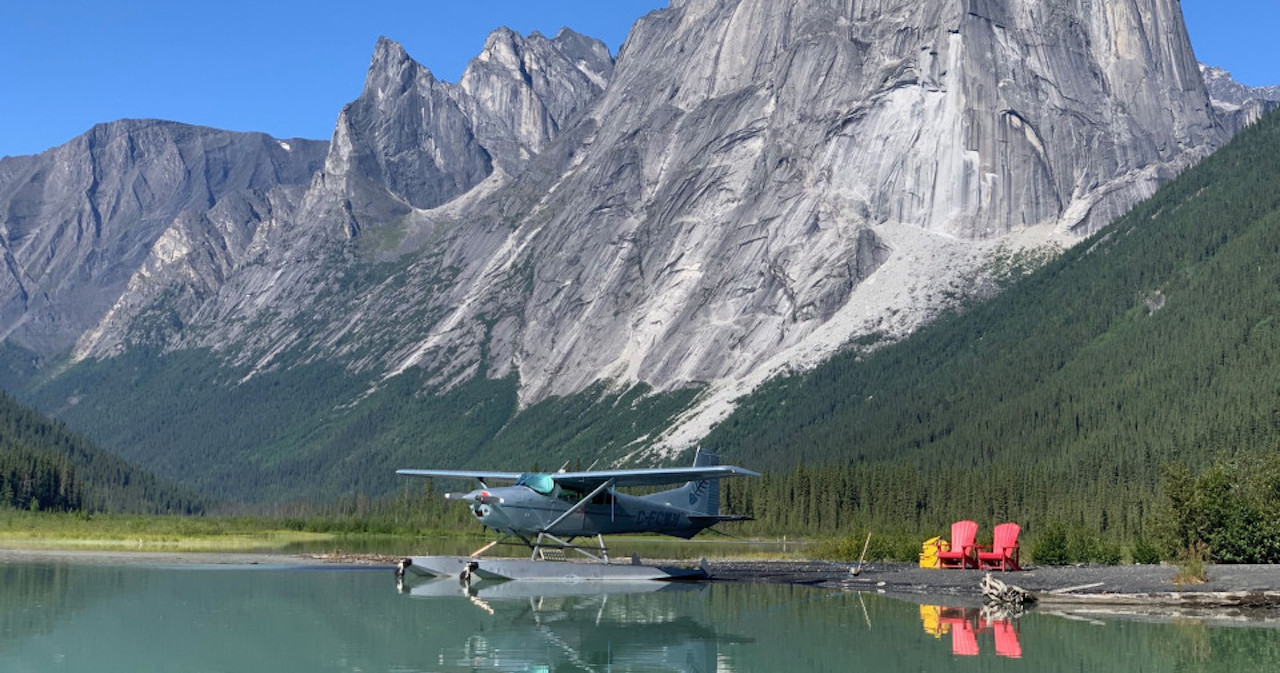
There's already been some discussion of the video, but here's the full article for the first installment:
http://www.backcountrypilot.org/news/articles/the-approach/the-approach-attitude-flying
Patrick (learntolandshort) has been a BCP member for several years, has been an instructor since he was a teenager, and of late he's been doing a great job getting some of his knowledge turned into articles and content. He's an active backcountry flying instructor in the Boulder area and a RAF liaison for the state of Colorado. We need more people like him.
In addition to discussing this first chapter on attitude flying and AOA, I'd like to hear from some of you guys on ideas for future installments. The one I've been wanting to work up for months now is the unorthodox approach, or evaluating oddball airstrips where square patterns aren't possible.
The Approach: A new series on backcountry flying strategy
Fri Dec 27, 2013 6:37 pm

Fri Dec 27, 2013 7:26 pm
Re: The Approach: A new series on backcountry flying strateg
The only gripe I have with the text and video is that at times there is no horizon to compare the wing to. Since I do have an AOA gauge, I use it. But I agree that when it's showing the appropriate AOA for a slow short approach, the bottom of the wing is close to parallel with the horizon when I can see a horizon.
Other things I agree with: the bad practice of high AOA and high power, essentially hanging it on the prop/dragging it in. Even a slight hiccup of the engine can cause an unpleasant early arrival. Much better to trade vertical energy for horizontal energy, with very little engine power. With a little practice, it's not even necessary to add throttle at the end to soften the landing--just pitch down to gain a couple of knots at the end of the descent, then pitch back up to touch down. But absent that method, adding just a tad of throttle on the pitch up softens the touchdown.
I think many of us, unless it's necessary, tend to get sloppy with our precision landings, since most of our landings are on longer runways. We don't often practice precision spot landings, although we "know how", because we don't have to. Like any skill, unless it's done often, it won't be done well when it's necessary.
Cary
Other things I agree with: the bad practice of high AOA and high power, essentially hanging it on the prop/dragging it in. Even a slight hiccup of the engine can cause an unpleasant early arrival. Much better to trade vertical energy for horizontal energy, with very little engine power. With a little practice, it's not even necessary to add throttle at the end to soften the landing--just pitch down to gain a couple of knots at the end of the descent, then pitch back up to touch down. But absent that method, adding just a tad of throttle on the pitch up softens the touchdown.
I think many of us, unless it's necessary, tend to get sloppy with our precision landings, since most of our landings are on longer runways. We don't often practice precision spot landings, although we "know how", because we don't have to. Like any skill, unless it's done often, it won't be done well when it's necessary.
Cary
"I have slipped the surly bonds of earth..., put out my hand and touched the face of God." J.G. Magee
Fri Dec 27, 2013 7:52 pm
Re: The Approach: A new series on backcountry flying strateg
I'd like to see something on evaluating surface conditions of your desired landing spot. IE, is your craft and are YOU capable of landing there?
Sat Dec 28, 2013 12:42 pm
Re: The Approach: A new series on backcountry flying strateg
Like Cary, I dislike hanging on the prop over trees, wires, or rough terrain. I like the power/pitch approach that continuously decelerates to near stall before the intended spot of landing, so that landing on that spot is assured. On long runways, that spot can be beyond the numbers. On short ones, this makes the landing safer. We just need to land where we intend, not somewhere down a long runway. I also agree that we need to practice power off spot landings.
A general problem that has increased in frequency over time is that most pilots don't have any idea where they are going to touch down. They just roundout over the numbers and hold off until they come down. This, to me, is an uncontrolled landing.
It is possible to reduce airspeed to near stall, before the numbers, by using either spoilers to kill the extra gravity thrust or by using power to manage the necessary increase in angle of attack for airplanes without spoilers. If we have no spoilers, we can simply manage the groundspeed reduction by keeping the apparent groundspeed the same all the way down whatever glide angle is necessary to have the intended landing spot in sight all the way down.
Wind management helps. With headwinds, we will have more airspeed while controlling groundspeed. Adding airspeed, because of high winds and gusts, gives up this free groundspeed reduction. If we have to land with a tailwind, we will have to use more power to keep an angle of attack, on short final, that will give us the slow groundspeed we desire.
This kind of groundspeed management is not possible while making an instrument approach. If we are using the airspeed indicator, rather than outside, visual, apparent rate of closure information, we are making an instrument approach. This extra airspeed works fine on long runways, but is inadequate management for very short fields. Glide angle problems in gusts can be managed with throttle.
There is nothing really dangerous about dragging it in, in ground effect over smooth terrain. It is a harder approach because the apparent ground speed is too high all the way in. It works best if we actually slow to below stall speed prior to the intended spot. This is possible because of the extra kinetic energy of ground effect.
Using the normal glide angle all the way down is easier because the apparent ground speed is the same all the way down. The ground appears to speed up, as we get lower and closer to the spot. This should cause us to use elevator to keep the same apparent ground speed and power to maintain the glide angle.
A general problem that has increased in frequency over time is that most pilots don't have any idea where they are going to touch down. They just roundout over the numbers and hold off until they come down. This, to me, is an uncontrolled landing.
It is possible to reduce airspeed to near stall, before the numbers, by using either spoilers to kill the extra gravity thrust or by using power to manage the necessary increase in angle of attack for airplanes without spoilers. If we have no spoilers, we can simply manage the groundspeed reduction by keeping the apparent groundspeed the same all the way down whatever glide angle is necessary to have the intended landing spot in sight all the way down.
Wind management helps. With headwinds, we will have more airspeed while controlling groundspeed. Adding airspeed, because of high winds and gusts, gives up this free groundspeed reduction. If we have to land with a tailwind, we will have to use more power to keep an angle of attack, on short final, that will give us the slow groundspeed we desire.
This kind of groundspeed management is not possible while making an instrument approach. If we are using the airspeed indicator, rather than outside, visual, apparent rate of closure information, we are making an instrument approach. This extra airspeed works fine on long runways, but is inadequate management for very short fields. Glide angle problems in gusts can be managed with throttle.
There is nothing really dangerous about dragging it in, in ground effect over smooth terrain. It is a harder approach because the apparent ground speed is too high all the way in. It works best if we actually slow to below stall speed prior to the intended spot. This is possible because of the extra kinetic energy of ground effect.
Using the normal glide angle all the way down is easier because the apparent ground speed is the same all the way down. The ground appears to speed up, as we get lower and closer to the spot. This should cause us to use elevator to keep the same apparent ground speed and power to maintain the glide angle.
- contactflying offline
- Posts: 4972
- Joined: Wed Apr 03, 2013 7:36 pm
- Location: Aurora, Missouri 2H2
Download my free "https://tinyurl.com/Safe-Maneuvering" e-book.
Sun Dec 29, 2013 8:44 am
Re: The Approach: A new series on backcountry flying strateg
Great info and technique that is well presented! Thanks Zzz and Patrick.
CW
CW
- clippwagon offline
- Posts: 737
- Joined: Sun Nov 13, 2011 9:49 pm
- Location: Oregon
Sun Dec 29, 2013 12:06 pm
Re: The Approach: A new series on backcountry flying strateg
I'd say that the main takeaway from this article and video should be that flying a constant AOA and moderating it with power is an indispensable skill for shortfield work.
Whether you decide to sink in steeply at a level pitch attitude with a little power, or "drag it in" or "hang on the prop" (neither of which are being recommended, and in fact are discouraged in the article), or just make normal 60 mph county airport approaches, this technique applies to all.
Whether you decide to sink in steeply at a level pitch attitude with a little power, or "drag it in" or "hang on the prop" (neither of which are being recommended, and in fact are discouraged in the article), or just make normal 60 mph county airport approaches, this technique applies to all.
Mon Apr 21, 2014 9:02 pm
Re: The Approach: A new series on backcountry flying strateg
New installment of The Approach -- This time the topic is takeoffs.
Mon Apr 21, 2014 9:47 pm
Re: The Approach: A new series on backcountry flying strateg
great piece zzz, thanks and keep them coming....!

jomac
Tue Apr 22, 2014 8:53 am
Re: The Approach: A new series on backcountry flying strateg
All credit to @learntolandshort, I'm just the article editor.
Tue Apr 22, 2014 9:12 am
Re: The Approach: A new series on backcountry flying strateg
Great Vid Z, You are helping so many folks with this site!!, Thanks
Also Landshort is doing a great job in communicating!!
Kudu's to both of You!!
Also Landshort is doing a great job in communicating!!
Kudu's to both of You!!
- M6RV6 offline
- Posts: 2313
- Joined: Mon Feb 25, 2008 5:52 pm
- Location: Rice Wa. 82WN Magee Creek AERODROME
- FindMeSpot URL: http://share.findmespot.com/shared/face ... sWKXuhKlg2
Have as much Fun as is Safe, and Keep SMILIN! GT,
Tue Apr 22, 2014 9:26 am
Re: The Approach: A new series on backcountry flying strateg
Great work guys. I appreciate the effort that has gone into these videos. Thanks!!
- highroad offline

- Posts: 785
- Joined: Wed Feb 20, 2008 10:28 am
- Location: Southern Oregon Coast
- FindMeSpot URL: http://share.findmespot.com/shared/face ... SBWeUVDhQd
- Aircraft: A Maule we call X-ray
Tue Apr 22, 2014 10:25 am
Re: The Approach: A new series on backcountry flying strateg
Nice work, guys.
I really like the idea of getting a count for each phase of the takeoff evolution, so you know early on if a takeoff is going sour. Besides, this gives me an excuse to go out and start developing a "potato count" for each bird I fly!
Please keep the tips and videos coming.
I really like the idea of getting a count for each phase of the takeoff evolution, so you know early on if a takeoff is going sour. Besides, this gives me an excuse to go out and start developing a "potato count" for each bird I fly!
Please keep the tips and videos coming.
- RanchPilot offline

- Posts: 974
- Joined: Mon Jan 24, 2011 5:18 pm
- Location: Wyoming
Experience is the knowledge that enables you to recognize a mistake when you make it again.
RanchPilot Facebook Community: http://www.facebook.com/ranchpilot777
RanchPilot Facebook Community: http://www.facebook.com/ranchpilot777
Tue Apr 22, 2014 10:35 am
Re: The Approach: A new series on backcountry flying strateg
I like the potato count "Approach" as well. I can't wait to start practicing.
I was watching some new footage I took recently and my ground roll is definitely based on the "airspeed alive" concept. Im sure I can be rotating way sooner but will approach this potato count practice with caution.
I'm stoked to try though!
I was watching some new footage I took recently and my ground roll is definitely based on the "airspeed alive" concept. Im sure I can be rotating way sooner but will approach this potato count practice with caution.
I'm stoked to try though!
- Crzyivan13 offline
- Posts: 1811
- Joined: Sat Nov 24, 2012 9:50 pm
- Location: Ohio- OI27 Checkpoint Charlie
- FindMeSpot URL: https://share.delorme.com/EvanDavis
- Aircraft: 1957 Cessna 182A
Tue Apr 22, 2014 12:23 pm
Re: The Approach: A new series on backcountry flying strateg
Another great video and article Patrick!!!
I'll add that it seems each aircraft has its own sweet spot on trim settings for getting the tail up pronto, and that will vary with tire size, airframe mods, weight and balance etc.
As was mentioned in the video, it is a good idea to keep the wheels pinned a little longer in gusty crosswinds. I've had some real close calls on short strips in strong gusty winds where my headwind of 20-35 knots went to tailwind right about when I pulled full flaps
The closest I've been to wrecking my plane was in a similar scenario, but on my home strip thats 3800'. Winds were down the pipe at 25-30 knots and about 2 seconds after I got in ground effect Godzilla (powerful thermal) grabbed my ass and shook me side to side, threw me back on the ground and dang near put my nose in the dirt. Bushwheels extra prop clearance was probably the only thing that saved my ass that day.
You can get off really short pulling full flaps, but if you have to hold them in for longer than just an instant to stay afloat, it might not be a bad idea to stay on earth just a couple seconds longer. In cool temps and calmer winds I always get in ground effect as quick as I can and that means working 30-40 flaps for as much as 3-5 seconds when heavy. However, when its summertime the DA where I live gets 7-9K and super thermally, my guts have learned to err on the side of caution in thermally gusty winds at any altitude, but especially high DA...Ground effect is a wonderful thing, and I'll take airspeed over altitude almost all of the time
I'll add that it seems each aircraft has its own sweet spot on trim settings for getting the tail up pronto, and that will vary with tire size, airframe mods, weight and balance etc.
As was mentioned in the video, it is a good idea to keep the wheels pinned a little longer in gusty crosswinds. I've had some real close calls on short strips in strong gusty winds where my headwind of 20-35 knots went to tailwind right about when I pulled full flaps
The closest I've been to wrecking my plane was in a similar scenario, but on my home strip thats 3800'. Winds were down the pipe at 25-30 knots and about 2 seconds after I got in ground effect Godzilla (powerful thermal) grabbed my ass and shook me side to side, threw me back on the ground and dang near put my nose in the dirt. Bushwheels extra prop clearance was probably the only thing that saved my ass that day.
You can get off really short pulling full flaps, but if you have to hold them in for longer than just an instant to stay afloat, it might not be a bad idea to stay on earth just a couple seconds longer. In cool temps and calmer winds I always get in ground effect as quick as I can and that means working 30-40 flaps for as much as 3-5 seconds when heavy. However, when its summertime the DA where I live gets 7-9K and super thermally, my guts have learned to err on the side of caution in thermally gusty winds at any altitude, but especially high DA...Ground effect is a wonderful thing, and I'll take airspeed over altitude almost all of the time
Tue Apr 22, 2014 2:00 pm
Re: The Approach: A new series on backcountry flying strateg
1skywagon...2skywagon....3skywagon.
1maule...2maule...3maule.
I just figured out why those Maule's get off the ground quick.....it's a short word?
1maule...2maule...3maule.
I just figured out why those Maule's get off the ground quick.....it's a short word?
- Terry offline
- Posts: 1365
- Joined: Sat Nov 10, 2007 9:11 pm
- Location: Willamette Valley
- FindMeSpot URL: http://share.findmespot.com/shared/face ... 4GzPHI6t1d
Tue Apr 22, 2014 2:05 pm
Re: The Approach: A new series on backcountry flying strateg
Terry wrote:1skywagon...2skywagon....3skywagon.
1maule...2maule...3maule.
I just figured out why those Maule's get off the ground quick.....it's a short word?
Dang, I thought it was because they were so ugly the ground repelled them!

CW
- clippwagon offline
- Posts: 737
- Joined: Sun Nov 13, 2011 9:49 pm
- Location: Oregon
Tue Apr 22, 2014 2:06 pm
Re: The Approach: A new series on backcountry flying strateg
Great video!
I'd like to hear their thoughts for the nose wheel and electric flap drivers. Not all of us have Johnson Bars unfortunately.
I'd like to hear their thoughts for the nose wheel and electric flap drivers. Not all of us have Johnson Bars unfortunately.
- Grassstrippilot offline

- Posts: 3536
- Joined: Wed May 31, 2006 6:17 am
- Location: Syracuse, UT
- FindMeSpot URL: https://share.garmin.com/WolfAdventures
- Aircraft: Cessna 205
Tue Apr 22, 2014 2:30 pm
Re: The Approach: A new series on backcountry flying strateg
Grassstrippilot wrote:Great video!
I'd like to hear their thoughts for the nose wheel and electric flap drivers. Not all of us have Johnson Bars unfortunately.
That's a good point, but unfortunately that's the downside to electric flaps: It's hard to "pop" them on due to the slower response.
Tue Apr 22, 2014 5:40 pm
Re: The Approach: A new series on backcountry flying strateg
Grassstrippilot,
I used several different 150s, 152s and 172s on the pipeline and they are not standard or dependable on how much flap you get without looking where you don't need to be looking. I just set the flap one notch or ten percent before adding power and kept the stick full back until the nose wheel came off. I held the nose wheel just off until the mains came off and then pushed over hard to stay in very low ground effect. The difference in six inches and six feet extra ground effect acceleration rate is tremendous. Like spraying in the crop field, it is important to proactively and dynamically move the wheel/stick fore aft slightly to stay ahead of the airplane. If you just hold the wheel, you will invariably get climb or descend.
The same fore/aft stick technique is necessary to stay in low ground effect with a tailwheel airplane.
Another important technique with crooked runways or departure zones or laterally limited obstructions is to maintain wings level in low ground effect while pushing the nose around with rudder, a skid, to miss the obstruction laterally. We crop dusters never attempt to go over anything we can rudder turn around in ground effect. The common habit of pulling up and putting a wing down to turn before plenty of maneuvering speed is achieved is dangerous. It often gives up the free energy of ground effect prematurely. Once that wing goes down, we can't regain ground effect unless we level the wing. I cartwheeled an A9 Callair and walked away. Spray planes are designed to crash, however. I broke the right wooden spar twice and knocked the engine off.
I can't scientifically explain why, but hitting wind shears and gust spreads in low ground effect always take us sideways, as the other pilot mentioned. I think the hard cushion in low ground effect prevents descent, unless very slow anyway. You would think that in the crop field at greater than cruise speed (because of ground effect) we would sometimes balloon. In 17,000 hours, it never happened to me.
Rapid acceleration is the key to getting off short when heavy and/or at high density altitude. The engine, with less fuel air mixture (lean to peak) can't help. You may already be at ceiling where there is no excess engine thrust for climb. In this case, attempting climb is the most dangerous thing you can do. That is why we always want to know which way is down hill and how we might get there in ground effect, if possible. This is often possible in the high desert and mountains because of the lack of vegetation. Airplanes accelerate well with the nose wheel off or with no angle of attack (tailwheel up and fuse level). They accelerate even better with no ground contact in low ground effect. This is why the test pilot records the max speed when in low ground effect over the beach.
I used several different 150s, 152s and 172s on the pipeline and they are not standard or dependable on how much flap you get without looking where you don't need to be looking. I just set the flap one notch or ten percent before adding power and kept the stick full back until the nose wheel came off. I held the nose wheel just off until the mains came off and then pushed over hard to stay in very low ground effect. The difference in six inches and six feet extra ground effect acceleration rate is tremendous. Like spraying in the crop field, it is important to proactively and dynamically move the wheel/stick fore aft slightly to stay ahead of the airplane. If you just hold the wheel, you will invariably get climb or descend.
The same fore/aft stick technique is necessary to stay in low ground effect with a tailwheel airplane.
Another important technique with crooked runways or departure zones or laterally limited obstructions is to maintain wings level in low ground effect while pushing the nose around with rudder, a skid, to miss the obstruction laterally. We crop dusters never attempt to go over anything we can rudder turn around in ground effect. The common habit of pulling up and putting a wing down to turn before plenty of maneuvering speed is achieved is dangerous. It often gives up the free energy of ground effect prematurely. Once that wing goes down, we can't regain ground effect unless we level the wing. I cartwheeled an A9 Callair and walked away. Spray planes are designed to crash, however. I broke the right wooden spar twice and knocked the engine off.
I can't scientifically explain why, but hitting wind shears and gust spreads in low ground effect always take us sideways, as the other pilot mentioned. I think the hard cushion in low ground effect prevents descent, unless very slow anyway. You would think that in the crop field at greater than cruise speed (because of ground effect) we would sometimes balloon. In 17,000 hours, it never happened to me.
Rapid acceleration is the key to getting off short when heavy and/or at high density altitude. The engine, with less fuel air mixture (lean to peak) can't help. You may already be at ceiling where there is no excess engine thrust for climb. In this case, attempting climb is the most dangerous thing you can do. That is why we always want to know which way is down hill and how we might get there in ground effect, if possible. This is often possible in the high desert and mountains because of the lack of vegetation. Airplanes accelerate well with the nose wheel off or with no angle of attack (tailwheel up and fuse level). They accelerate even better with no ground contact in low ground effect. This is why the test pilot records the max speed when in low ground effect over the beach.
- contactflying offline
- Posts: 4972
- Joined: Wed Apr 03, 2013 7:36 pm
- Location: Aurora, Missouri 2H2
Download my free "https://tinyurl.com/Safe-Maneuvering" e-book.
Tue Apr 22, 2014 10:41 pm
Re: The Approach: A new series on backcountry flying strateg
Thanks for watching! and Zane is being Modest, I basically give him a comma-less, period-less mass of words and he arranges them to be useful.
I am on a limited internet connection so I will try to PM or answer the questions I saw when I get a chance.
I am on a limited internet connection so I will try to PM or answer the questions I saw when I get a chance.
- learntolandshort offline
- Posts: 82
- Joined: Wed Oct 06, 2010 1:11 pm
- Location: colorado
DISPLAY OPTIONS
Who is online
Users browsing this forum: No registered users and 4 guests
Latest Features
-
-
Featured Bush Planes
As one of the undisputed legends of bush flying, the Cessna 180 hauls a…Read More -
Aircraft Ownership and Maintenance
9 modification mistakes aircraft owners make when trying to "bush out" their birds—why some…Read More -
Live to Tell
A Minnesota pilot is surprised to learn that the sudden asymmetric drag of an…Read More


Latest Knowledge Base
-
Destinations
Canada offers some of the most spectacular backcountry flying on the continent. Here's what you need to know before you go.Read More -
Safety and Survival
Hope that you never have to use your survival vest but knowing you have it and knowing how to use…Read More -
Destinations
A regional guide with ideas for winter camping destinations in California, Nevada, New Mexico, and Arizona.Read More -
Aircraft
Finding an affordable aircraft that can handle the backcountry for $80K or less? A challenge for sure, but with the…Read More