Frustratingly I only manage around 50-60 hours in my PA-18. I believe around 90 hours is a reasonable threshold for both economics and keeping the aircraft happy.
The C-90 might be a bit more tolerant of lower useage and mine seems quite happy after half a dozen years of 50-60 hours p.a. - I do run it at 2300/2350 RPM, which makes it happier.
Unoriginal PA20/22 Question
Sat Dec 15, 2018 4:03 am
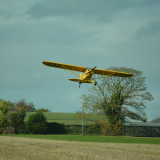
Sat Dec 15, 2018 6:24 am
Re: Unoriginal PA20/22 Question
I try to fly my planes 100 hrs a year each, regular exercise is the key to good health. It hardly seems worth buying if you’re flying less than 75 hrs a year, nothing about ownership is cheap.
Another thing to think about is whether you’ll be tuned up enough to fly into tight strips if you’re only flying 4 hrs/month. I’ll readily admit I’m not hotshot, it takes me several hours to get the feel back to where I’m comfortable enough to go start playing in the dirt. There’s only one solution, figure out a way to fly more!
Another thing to think about is whether you’ll be tuned up enough to fly into tight strips if you’re only flying 4 hrs/month. I’ll readily admit I’m not hotshot, it takes me several hours to get the feel back to where I’m comfortable enough to go start playing in the dirt. There’s only one solution, figure out a way to fly more!
- CenterHillAg offline

- Posts: 204
- Joined: Sun Nov 09, 2014 3:13 pm
- Location: Texas Coast
- Aircraft: J3 Cub
'56 182
Mon Dec 17, 2018 7:35 am
Re: Unoriginal PA20/22 Question
I own my Citabria ('65 7ECA with O-200), and it makes absolutely zero financial sense.
I fly between 50-75 hours per year, and my direct costs are pretty small – under $30 per hour for gas, oil, and filters for 2 oil changes (my labor). Flying 50 hours a year, insurance adds $12.40 / hour, and an annual inspection adds about $15 / hour. Still, at roughly $60 per hour, those direct costs are WAY cheaper than anything I can rent around here (where 172s with instructors go for $275/hr at the local flight school).
But the killer expense here on the east side of the DFW metroplex is hangar rental ($345/month), which quadruples my costs, adding $82.80 per hour! And that's sharing a hanger (and splitting costs 50/50) with another guy. Suddenly I'm at almost $145 per hour – a number that seems totally ridiculous for a 85-90 mph cruise 2-seater!
But I don't regret any of it. I never have to worry about going to the airport, only to find someone didn't return on time so my flight has to be scrubbed. I never find any trash in my airplane, or that someone left the master switch on and the battery is dead. I never have scheduling conflicts when I decide on Saturday morning that I'm going to fly to Austin to see my grandkids for a couple of hours. If I want to make a sunrise or sunset flight at the last minute, I just jump in the car and go, with no worries about whether the plane is available or not.
Scratching that tail-dragger itch is what it's all about. And to me, it's worth every penny! After all, if I wasn't spending it on aviation-related stuff, I'd probably just waste it!
I fly between 50-75 hours per year, and my direct costs are pretty small – under $30 per hour for gas, oil, and filters for 2 oil changes (my labor). Flying 50 hours a year, insurance adds $12.40 / hour, and an annual inspection adds about $15 / hour. Still, at roughly $60 per hour, those direct costs are WAY cheaper than anything I can rent around here (where 172s with instructors go for $275/hr at the local flight school).
But the killer expense here on the east side of the DFW metroplex is hangar rental ($345/month), which quadruples my costs, adding $82.80 per hour! And that's sharing a hanger (and splitting costs 50/50) with another guy. Suddenly I'm at almost $145 per hour – a number that seems totally ridiculous for a 85-90 mph cruise 2-seater!
But I don't regret any of it. I never have to worry about going to the airport, only to find someone didn't return on time so my flight has to be scrubbed. I never find any trash in my airplane, or that someone left the master switch on and the battery is dead. I never have scheduling conflicts when I decide on Saturday morning that I'm going to fly to Austin to see my grandkids for a couple of hours. If I want to make a sunrise or sunset flight at the last minute, I just jump in the car and go, with no worries about whether the plane is available or not.
Scratching that tail-dragger itch is what it's all about. And to me, it's worth every penny! After all, if I wasn't spending it on aviation-related stuff, I'd probably just waste it!


Tue Oct 22, 2019 9:08 pm
Re: Unoriginal PA20/22 Question
Just saw this post and had to add my .02 from a few years of Tripacer ownership.
here are the first 5 STC's or mods I would add to a new to me Tripacer assuming it did not come with them.
1. Casper Labs Oil filter. The original O-320 A and B series came with a pressure screen and adding a filter makes for a lot better internal lubrication. Plus you then get to stretch oil changes out to 50 hours.
2. Replace the stock oil cooler lines with braided flex hoses. I was horrified when I found out that the only thing attaching the oil cooler lines was squished rubber grommets in the fittings at each end. Plus the flex lines set you up for an alternator.
3. L.E.D. landing and taxi lights. Much less power draw and last forever. If you have a bird with a generator these will make night flying feasible.
4. L.E.D. Nav lights.
5. Bogert pass thru battery box cables. My bird had the original two part cables and they caused me all kinds of problems. I did the battery box mod and haven't had a problem since. Plus the motor cranks reliably every time even in cold weather.
All these mods added capability or improved reliability. What's more they are all quite inexpensive. The most expensive one I did was the oil filter and it came in for under $300 not including installation and the others where considerably less.
STOL and bushplane mods are sexy. But the reality is that you won't notice the difference they make until you get quite a bit of experience. A stock tripacer can land in less than 600 feet and take back off in around 800. But it can only do this if the pilot flies it right. As pilot new to shortwings you will need a couple of dozen hours to get good in it. Focusing on reliability and utility while keeping a war chest early on will serve you best while you get that time.
Bonus item: If you want to add some bush chops to a Tripacer, you can do so for less than $5. First air up the nose strut so that you have 4-6 inches of chrome when the plane is loaded and ready to go. Then go buy 2 inches of 2inch diameter hose and a hose clamp. Then wrap the hose around the bottom of the nose strut down by the tire and secure it with the hose clamp. The hose will then act as a bumper to keep the prop up away from sucking up dirt and rocks.
Seriously, keep your money for flying gas and repairs. The best backcountry improvement you can get is practice time and the more flying you get in the better.
here are the first 5 STC's or mods I would add to a new to me Tripacer assuming it did not come with them.
1. Casper Labs Oil filter. The original O-320 A and B series came with a pressure screen and adding a filter makes for a lot better internal lubrication. Plus you then get to stretch oil changes out to 50 hours.
2. Replace the stock oil cooler lines with braided flex hoses. I was horrified when I found out that the only thing attaching the oil cooler lines was squished rubber grommets in the fittings at each end. Plus the flex lines set you up for an alternator.
3. L.E.D. landing and taxi lights. Much less power draw and last forever. If you have a bird with a generator these will make night flying feasible.
4. L.E.D. Nav lights.
5. Bogert pass thru battery box cables. My bird had the original two part cables and they caused me all kinds of problems. I did the battery box mod and haven't had a problem since. Plus the motor cranks reliably every time even in cold weather.
All these mods added capability or improved reliability. What's more they are all quite inexpensive. The most expensive one I did was the oil filter and it came in for under $300 not including installation and the others where considerably less.
STOL and bushplane mods are sexy. But the reality is that you won't notice the difference they make until you get quite a bit of experience. A stock tripacer can land in less than 600 feet and take back off in around 800. But it can only do this if the pilot flies it right. As pilot new to shortwings you will need a couple of dozen hours to get good in it. Focusing on reliability and utility while keeping a war chest early on will serve you best while you get that time.
Bonus item: If you want to add some bush chops to a Tripacer, you can do so for less than $5. First air up the nose strut so that you have 4-6 inches of chrome when the plane is loaded and ready to go. Then go buy 2 inches of 2inch diameter hose and a hose clamp. Then wrap the hose around the bottom of the nose strut down by the tire and secure it with the hose clamp. The hose will then act as a bumper to keep the prop up away from sucking up dirt and rocks.
Seriously, keep your money for flying gas and repairs. The best backcountry improvement you can get is practice time and the more flying you get in the better.
- Huskytracks offline
- Posts: 15
- Joined: Tue Oct 22, 2019 8:00 pm
- Location: Conneaut
- Aircraft: PA-22
Wed Oct 23, 2019 3:15 am
Re: Unoriginal PA20/22 Question
There has been mention here of tuning up for more challenging backcountry operations. I was never a serious recreational backcountry pilot. Mostly getting a 100 mph Pawnee close to the work and precautionary landings in marginal weather going to weekend warrior work and on 3500 mile pipeline loops.
This is my stay current suggestion for those not able to put in a lot of backcountry hours. On takeoff generally stay in low ground effect as long as possible toward lower terrain if practicable. At least think about which way is down hill. Use some form of power/pitch to decelerate on short final so that you will touchdown slowly and softly on or very near the numbers. Establish defaults that work in most all situations.
It is sort of like forced landing or playing a competitive sport. Game day we play very much like we have practiced.
This is my stay current suggestion for those not able to put in a lot of backcountry hours. On takeoff generally stay in low ground effect as long as possible toward lower terrain if practicable. At least think about which way is down hill. Use some form of power/pitch to decelerate on short final so that you will touchdown slowly and softly on or very near the numbers. Establish defaults that work in most all situations.
It is sort of like forced landing or playing a competitive sport. Game day we play very much like we have practiced.
- contactflying offline
- Posts: 4972
- Joined: Wed Apr 03, 2013 7:36 pm
- Location: Aurora, Missouri 2H2
Download my free "https://tinyurl.com/Safe-Maneuvering" e-book.
Wed Oct 23, 2019 3:03 pm
Re: Unoriginal PA20/22 Question
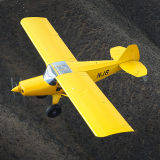
This thread needed pictures of heavily modified Pacers.


DISPLAY OPTIONS
Who is online
Users browsing this forum: No registered users and 9 guests
Latest Features
-
Live to Tell
A Minnesota pilot is surprised to learn that the sudden asymmetric drag of an out-of-rig ski can…Read More -
Creators
Working in some of the Yukon's most beautiful and remote environments, photographer Simon Blakesley captures aircraft in…Read More -
Aircraft Ownership and Maintenance
Upgrading to big tires can make a huge difference in backcountry performance, but with those gains come…Read More -
Tales from Yesteryear
In this tale from bush flying yesteryear, Don Cogger signs up to help Atlee Dodge Jr recovery…Read More


Latest Knowledge Base
-
Destinations
A regional guide with ideas for winter camping destinations in California, Nevada, New Mexico, and Arizona.Read More -
Aircraft
Finding an affordable aircraft that can handle the backcountry for $80K or less? A challenge for sure, but with the…Read More -
Aircraft
01.29.2018 - Zane - Updated tire diameter graphic to add 8.50x10 Guide to tires for use in the backcountry and off-airport landing…Read More -
Pilots
12.22.2013 - Initial article format Operating aircraft on skis and negotiating a snow-covered landscape is an entirely unique skillset and environment.…Read More


