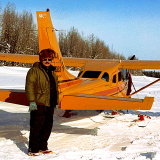
TomD wrote:Yeah, I am not certain on the ND filter. Zane posted a comment on Jerry's Vimeo site as to what is functionally happening, so maybe you really need the 8 stop filter. Not sure.
If the "shutter speed" remained the same w/ a ND8 filter the apparent intensity would have dropped off markedly; therefore, I have to assume the shutter speed became slower (exposure time became longer) to allow more light to the CCD and when that happened the prop movement became averaged out as it does with your eyes looking through the disk.
If you could control the f stop on the camera, going to a higher f stop with automatic exposure control would accomplish the same thing.
TD
Exactly. The ND filter relies on the auto-exposure using a slower shutter speed to achieve the same amount of light exposure, after reducing the available light, blurring the prop to a point where the horizontal blinds effect is unnoticeable.
Most small camcorders are auto only, so this works fine. However, if you shoot with a camera capable of manual exposure or variant exposure modes, you can bump the F-stop value up and sort of achieve the same thing. You set a fixed aperture setting (higher, less light) and let the camera determine shutter speed. It will use slower shutter speed values, but vary them to avoid under or over exposure in a range that blurs the prop.
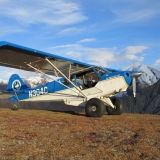

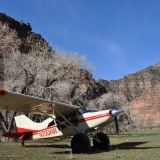
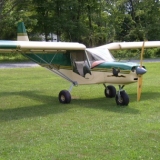
 It was mounted on the gear leg, worked very well. I'm not impressed with that old camera anymore but it got the job done.











 .........he wouldn't do any of that stuff
  Fly By Night Air Air