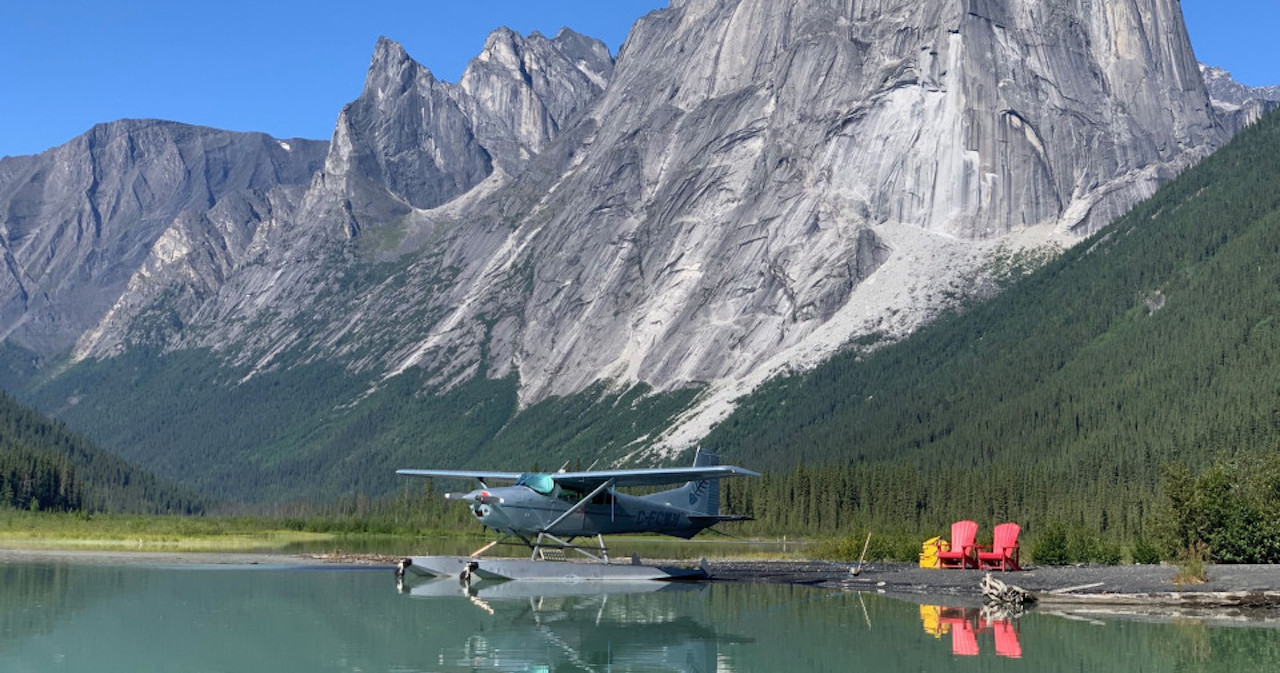
What’s one STOL technique you wish you knew earlier?
Fri Jun 20, 2025 10:58 am
What’s one STOL technique you wish you knew earlier?
What’s one STOL tip or technique you wish you’d learned sooner? Some of the most useful insights come from experience. Was there a moment when something clicked, a lesson that stuck with you, or a small adjustment that made a noticeable difference? Would be great to hear the story behind it.


Fri Jun 20, 2025 11:44 am
Re: What’s one STOL technique you wish you knew earlier?
When I realized that you can basically slow down an airplane at a reasonably level pitch angle, and kinda "sink" it down at a wildly low forward airspeed, using very little forward distance over ground, even maneuver a bit if you don't rapidly load the wing...that's when my game shortened up quite a bit. You have to plan for power or airspeed adjustment to arrest your descent rate to avoid pancaking, but it works well.
Sat Jun 21, 2025 9:10 am
Re: What’s one STOL technique you wish you knew earlier?
For me finding that approach angle, rather than an air speed, did not click until I was taught to slow the airplane down to that point when you could just feel it starting to sink and then holding that attitude.
Sat Jun 21, 2025 10:24 am
Re: What’s one STOL technique you wish you knew earlier?
For the overall shortest landing distance as measured by the actual landing area starting from the beginning of the zone and not by your ground roll from the beginning of your tire marks, it is better to nail your touchdown spot rather than come in at the slowest possible speed or critical AOA and miss the spot by 100 feet. This is what a taildragger plane can do better than a nosedragger because you can plant the mains on your spot and start braking even if you arrive at slightly the wrong airspeed or attitude for a three point or nose wheel landing, but you have to be good at wheel landings. And this is why wheel landings have so much utility. My opinion as with all my posts.
Sat Jun 21, 2025 12:34 pm
Re: What’s one STOL technique you wish you knew earlier?
Slow down, know your planes capabilities and have the AOA (assuming you have one) calibrated properly. With a well calibrated AOA you really don’t need to pay a lot of attention to the IAS. I use every landing as a practice for the backcountry, hit your spot even if it is a plop..
But the really deal is just to get out and practice
But the really deal is just to get out and practice
Sun Jun 22, 2025 6:34 am
Re: What’s one STOL technique you wish you knew earlier?
Utah-Jay said it best, “Just get out and practice.” And HIT THE SPOT!
I put out orange traffic cones (well off to the side) of our gravel runway. Both ends, both sides, 300’ apart, probably at least 200 feet from the threshold. Makes it easy to assess proficiency at both hitting the spot and landing (stopping) distance, especially when using a 360° camera to later “grade” the approach, touchdown & stopping distance. I have a few YouTube videos of this
https://youtu.be/AH_V84aviVc?si=8IkQHH6q0rwZs8rS
I put out orange traffic cones (well off to the side) of our gravel runway. Both ends, both sides, 300’ apart, probably at least 200 feet from the threshold. Makes it easy to assess proficiency at both hitting the spot and landing (stopping) distance, especially when using a 360° camera to later “grade” the approach, touchdown & stopping distance. I have a few YouTube videos of this
https://youtu.be/AH_V84aviVc?si=8IkQHH6q0rwZs8rS
- tedwaltman offline


- Posts: 365
- Joined: Sat May 17, 2014 7:51 pm
- Location: Lakewood
- FindMeSpot URL: https://share.delorme.com/tedwaltman
- Aircraft: Experimental Super Cub
Sun Jun 22, 2025 8:06 am
Re: What’s one STOL technique you wish you knew earlier?
When I first started flying the Husky most of my head space was focused on approach and landing. Hitting the desired spot and keeping it short. But when I started using those skills in real world of off-airport flying it became clear that takeoff and initial climb out technique was probably more critical to safe operation. Being able to assess the height and distance of departure obstacles and DA performance of your aircraft. Knowing when to accelerate in ground effect to gain that ‘free energy’ before initiating a climb. Knowing your Vx with maximum lift flap setting to get the steepest initial climb gradient. Knowing how both those techniques are impacted by weight and DA, and knowing how to use them with confidence. I wish I’d spent as much time in my initial practice learning those things as I did on steep, slow approaches and spot landings.
My $0.02.
Cheers.
Mike
My $0.02.
Cheers.
Mike
- Belloypilot offline

- Posts: 123
- Joined: Thu Dec 24, 2015 10:45 pm
- Location: Grande Prairie
- Aircraft: Husky A-1B, Bonanza V35B, AcroSport II
Sun Jun 22, 2025 8:54 am
Re: What’s one STOL technique you wish you knew earlier?
Learning to properly stick the mains and braking with the tail up/tail low. I could wheel land but always went down to 3 point with hard braking. This would allow the cub to bounce, skip, and slide the tires. Keeping the weight on the mains allowed for much better braking and control.
DENNY
DENNY
Last edited by DENNY on Mon Jun 23, 2025 8:45 pm, edited 1 time in total.
DENNY
Sun Jun 22, 2025 12:39 pm
Re: What’s one STOL technique you wish you knew earlier?
Belloypilot wrote:When I first started flying the Husky most of my head space was focused on approach and landing. Hitting the desired spot and keeping it short. But when I started using those skills in real world of off-airport flying it became clear that takeoff and initial climb out technique was probably more critical to safe operation. Being able to assess the height and distance of departure obstacles and DA performance of your aircraft. Knowing when to accelerate in ground effect to gain that ‘free energy’ before initiating a climb. Knowing your Vx with maximum lift flap setting to get the steepest initial climb gradient. Knowing how both those techniques are impacted by weight and DA, and knowing how to use them with confidence. I wish I’d spent as much time in my initial practice learning those things as I did on steep, slow approaches and spot landings.
My $0.02.
Cheers.
Mike
This is a great real world application of STOL fundamentals that’s critical for actual backcountry flying, not just carnival shows. Excellent point.
Sun Jun 22, 2025 11:49 pm
Re: What’s one STOL technique you wish you knew earlier?
Over the years, I have been blessed or cursed with many revelation moments in flying.
Almost all end in the same theme.
I distinctly remember sitting on a bushweel in the interior of Alaska at a friend's place when a relatively famous 'big rocks long props' gent was inbound. He was coming in for repairs, no tailwheel, spring, maybe even a bit of tubing and spring pad mia. By then, I had a reasonably decent logbook, a good handle on gliders, and timed out a cub engine or two, so I thought I at a minimum, had a handle on decent wing management.
Listening to that gentleman approach was like sitting front row at a motocross track. Not in pitch, but in how rapid his throttle corrections were. Not necessarily how much gross change there was, but just how much it really moved. Since then, most people I've observed trying to emulate this technique arrive so far behind that they squirt it on down the strip with excess engine power.
And there's the theme...
I think it was Einstein that said "any fool can know, the point is to understand". It is my contention that any fool can know how, but without the iterations, still not possess the skill.
On the other hand, I'm just an old uneducated crop duster,so may be wrong on all accounts
Take care, Rob
Almost all end in the same theme.
I distinctly remember sitting on a bushweel in the interior of Alaska at a friend's place when a relatively famous 'big rocks long props' gent was inbound. He was coming in for repairs, no tailwheel, spring, maybe even a bit of tubing and spring pad mia. By then, I had a reasonably decent logbook, a good handle on gliders, and timed out a cub engine or two, so I thought I at a minimum, had a handle on decent wing management.
Listening to that gentleman approach was like sitting front row at a motocross track. Not in pitch, but in how rapid his throttle corrections were. Not necessarily how much gross change there was, but just how much it really moved. Since then, most people I've observed trying to emulate this technique arrive so far behind that they squirt it on down the strip with excess engine power.
And there's the theme...
I think it was Einstein that said "any fool can know, the point is to understand". It is my contention that any fool can know how, but without the iterations, still not possess the skill.
On the other hand, I'm just an old uneducated crop duster,so may be wrong on all accounts
Take care, Rob

Tue Jun 24, 2025 9:40 am
Re: What’s one STOL technique you wish you knew earlier?
Not a STOL technique, but the thing I wished I realized earlier is that buying an airplane is really no big deal. I started flying in 95’ but didn’t by my first until 2011.
Spent a lot of wasted years thinking ownership was out of reach… looking back, it’s been a non-event and rewarding beyond belief. Turns out the worry about how I could afford it was just wasted anxiety. In the end, it just worked out.
So… my advice is to get out of your own way and step off the sidelines.
My “real flying” didn’t start until I got my TW endorsement and started flying my own little bird.
Spent a lot of wasted years thinking ownership was out of reach… looking back, it’s been a non-event and rewarding beyond belief. Turns out the worry about how I could afford it was just wasted anxiety. In the end, it just worked out.
So… my advice is to get out of your own way and step off the sidelines.
My “real flying” didn’t start until I got my TW endorsement and started flying my own little bird.
- Bigrenna offline


- Posts: 2359
- Joined: Sun Sep 25, 2011 4:02 pm
- Location: New England
- Aircraft: C180H / C170B
www.bushwagoneast.com
Tue Jun 24, 2025 10:34 am
Re: What’s one STOL technique you wish you knew earlier?
Bigrenna wrote:Not a STOL technique, but the thing I wished I realized earlier is that buying an airplane is really no big deal. I started flying in 95’ but didn’t by my first until 2011.
Spent a lot of wasted years thinking ownership was out of reach… looking back, it’s been a non-event and rewarding beyond belief. Turns out the worry about how I could afford it was just wasted anxiety. In the end, it just worked out.
So… my advice is to get out of your own way and step off the sidelines.
My “real flying” didn’t start until I got my TW endorsement and started flying my own little bird.
Wow, Greg, I thought my post had some thread drift, but this is truly next level.
Good stuff, though. Completely agree. Wed Jun 25, 2025 5:46 pm
Re: What’s one STOL technique you wish you knew earlier?
Get off the Earth ASoonAP, Arrived back on Earth going ASlowAP, stop rolling over the Earth ASoonAP and any useable surface behind you was wasted.
Wed Jun 25, 2025 7:59 pm
Re: What’s one STOL technique you wish you knew earlier?
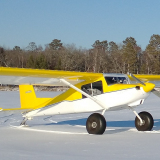
Just returned home to MN after flying with my son in a RANS S7 from my strip here in northern MN, to his location in Oregon. This has been my second 'plane delivery' with my son on this route.
First time was with the 172 I had owned for several decades. This time, we were flying with what I would call a more 'bush' capable airplane, RANS S-7. We took a more adventurous route this time around. Basically hitting up some of the strips/places I had never been before. We spent more the time in Idaho than the other states were traversed. So many things were learned/relearned by flying this 100HP kite in mountainous terrain. We flew off the beaten path per se, sort of an, "hey, lets go check out that place' adventure.
Rambling, suppose I need to say something to add to this thread. I'm thinking the thing that seemed to be the most important factor was dealing with density altitude. Granted, other things that we used were, flying in some areas with flaps deployed to be hold/gain altitude. Having the learn to 'ride the waves without trying to overcontrol the plane. For a relatively flat lander pilot, it was all very useful. I'm glad my son flies in the mountains all the time, because he was definitely my mentor at times.
Back to DA, in my experience, it is one of the key factors in deciding how the plane with fly, especially if doing STOL type flying at altitude along with heat. DA applies more so when an airplane is being flown, when you are at or near gross. On a cross country such as the one my son and I just took, is how most people depart. We weighed everything and fuel was always a few gallons shy of full.
As for just all around getting the best performance with the plane, practice! I'm sure you have heard it many times before, but nothing beats it.
First time was with the 172 I had owned for several decades. This time, we were flying with what I would call a more 'bush' capable airplane, RANS S-7. We took a more adventurous route this time around. Basically hitting up some of the strips/places I had never been before. We spent more the time in Idaho than the other states were traversed. So many things were learned/relearned by flying this 100HP kite in mountainous terrain. We flew off the beaten path per se, sort of an, "hey, lets go check out that place' adventure.
Rambling, suppose I need to say something to add to this thread. I'm thinking the thing that seemed to be the most important factor was dealing with density altitude. Granted, other things that we used were, flying in some areas with flaps deployed to be hold/gain altitude. Having the learn to 'ride the waves without trying to overcontrol the plane. For a relatively flat lander pilot, it was all very useful. I'm glad my son flies in the mountains all the time, because he was definitely my mentor at times.
Back to DA, in my experience, it is one of the key factors in deciding how the plane with fly, especially if doing STOL type flying at altitude along with heat. DA applies more so when an airplane is being flown, when you are at or near gross. On a cross country such as the one my son and I just took, is how most people depart. We weighed everything and fuel was always a few gallons shy of full.
As for just all around getting the best performance with the plane, practice! I'm sure you have heard it many times before, but nothing beats it.
Thu Jun 26, 2025 6:34 pm
Re: What’s one STOL technique you wish you knew earlier?
Routine practice with true slow flight. Horn, Buffet, and Break and with varying flap and power configurations. It's all about energy management and knowing how your airplane feels flying it slow at altitude is the best way to learn. This is probably the what I wish I would have practiced first.
I also struggled with flying behind the power curve and not understanding that power is often needed in the flare. Knowing the right amount of throttle to add was difficult to figure out. Also varied with load/DA. After a lot of practice - it all comes down to feel. When I was learning - I either added too much power and ballooned or not enough and bounced. It was super frustrating.
We do tend to focus on making short landings but as others have posted - takeoff distance is usually the limiting factor. I found accelerating in ground effect and building energy to be superior to Vx takeoffs. Also far safer. Just my 2 cents.
Josh
I also struggled with flying behind the power curve and not understanding that power is often needed in the flare. Knowing the right amount of throttle to add was difficult to figure out. Also varied with load/DA. After a lot of practice - it all comes down to feel. When I was learning - I either added too much power and ballooned or not enough and bounced. It was super frustrating.
We do tend to focus on making short landings but as others have posted - takeoff distance is usually the limiting factor. I found accelerating in ground effect and building energy to be superior to Vx takeoffs. Also far safer. Just my 2 cents.
Josh
- Dog is my Copilot offline
- Posts: 433
- Joined: Thu Apr 12, 2018 11:38 am
- Location: Portland
- Aircraft: 1958 Cessna 180A
Fri Jun 27, 2025 8:34 am
Re: What’s one STOL technique you wish you knew earlier?
Dog is my Copilot wrote: Routine practice with true slow flight. Horn, Buffet, and Break and with varying flap and power configurations. It's all about energy management and knowing how your airplane feels flying it slow at altitude is the best way to learn. This is probably the what I wish I would have practiced first. ....
Josh, I'm curious just how much you utilize "true slow flight" (at minimum controllable airspeed) in the backcountry?
IMHO slow-ish flight is very useful, for example maneuvering in tight conditions at 70-80 mph with a notch or two of flaps,
but I'm not too big on flying around down low on the edge of a stall when a gust or wind shear might turn that into the real thing.
Cessna Skywagon -- accept no substitute!
Fri Jun 27, 2025 10:36 am
Re: What’s one STOL technique you wish you knew earlier?
Not really a technique but the best thing I ever did for improving my STOL technique was to do 5 hours of spin/stall/aerobatic training. It gave me the confidence and knowledge to safely fly close to the edge.
DENNY
DENNY
DENNY
Fri Jun 27, 2025 9:07 pm
Re: What’s one STOL technique you wish you knew earlier?
hotrod180 wrote:Dog is my Copilot wrote: Routine practice with true slow flight. Horn, Buffet, and Break and with varying flap and power configurations. It's all about energy management and knowing how your airplane feels flying it slow at altitude is the best way to learn. This is probably the what I wish I would have practiced first. ....
Josh, I'm curious just how much you utilize "true slow flight" (at minimum controllable airspeed) in the backcountry?
IMHO slow-ish flight is very useful, for example maneuvering in tight conditions at 70-80 mph with a notch or two of flaps,
but I'm not too big on flying around down low on the edge of a stall when a gust or wind shear might turn that into the real thing.
I don't recommend practicing STOL flying in a lot of wind. Gusty winds is where you throw the STOL high angle of attack approaches in the trash and carry more energy in the approach. I am not going into short strips with wind being a factor.
Learning how the airplane performs through the entire envelope of flight is the only way to learn the landing characteristics of the wing. Some of the tougher strips require very slow high angle of attack approaches. In no wind this is a safe practice - even in in the mountains. 70-80 mph is too fast. My 180 can be safely flown at 50 mph -when light even down to 40 mph Remember the ASI is meaningless at the low end due to indicated to calibrated error. AOAs can be helpful but personally I just like knowing how the wing feels. This is where the practice at altitude comes into play. It also took me a long time to feel comfortable flying it this slow.
Josh
- Dog is my Copilot offline
- Posts: 433
- Joined: Thu Apr 12, 2018 11:38 am
- Location: Portland
- Aircraft: 1958 Cessna 180A
Sun Jun 29, 2025 11:15 am
Re: What’s one STOL technique you wish you knew earlier?
hotrod180 wrote:
Josh, I'm curious just how much you utilize "true slow flight" (at minimum controllable airspeed) in the backcountry?
IMHO slow-ish flight is very useful, for example maneuvering in tight conditions at 70-80 mph with a notch or two of flaps,
but I'm not too big on flying around down low on the edge of a stall when a gust or wind shear might turn that into the real thing.
I realize this was for Josh, and that the answer should have been incredibly simple, but it hasn't been brought up... so I'll stick my nose out there....
hotrod180 wrote:
Josh, I'm curious just how much you utilize "true slow flight" (at minimum controllable airspeed) in the backcountry?
what he (Josh) should have wrote:
Every single time I land (see thread title)
Take care, Rob
DISPLAY OPTIONS
Who is online
Users browsing this forum: No registered users and 3 guests
Latest Features
-
-
Featured Bush Planes
As one of the undisputed legends of bush flying, the Cessna 180 hauls a…Read More -
Aircraft Ownership and Maintenance
9 modification mistakes aircraft owners make when trying to "bush out" their birds—why some…Read More -
Live to Tell
A Minnesota pilot is surprised to learn that the sudden asymmetric drag of an…Read More


Latest Knowledge Base
-
Destinations
Canada offers some of the most spectacular backcountry flying on the continent. Here's what you need to know before you go.Read More -
Safety and Survival
Hope that you never have to use your survival vest but knowing you have it and knowing how to use…Read More -
Destinations
A regional guide with ideas for winter camping destinations in California, Nevada, New Mexico, and Arizona.Read More -
Aircraft
Finding an affordable aircraft that can handle the backcountry for $80K or less? A challenge for sure, but with the…Read More