I'm not sure how you saying you never wanted to fly in one again warranted such a reaction Whee. Theres planes that I dont want to fly in, but that's not crapping on the owners of the airplanes, it's just my opinion of what I like. My wife will never again ride in a Supercub, but that's not crapping on the type, it's just her personal preference that shes not comfortable in one. Sharing opinions is what this is all about, if we can't say why we dislike a certain type then what's the point of asking questions? I'll agree with you all day that flying around at 75 mph in a J3 is painful and not my idea of a good time. For those of you that like it, great!whee wrote:AKJurnee wrote:whee wrote:
I only have 1 hour of experience in a Cub, a J3. After about 5 minutes I was bored from flying so slow I could see the grass grow and in enough pain from being crammed into the front seat that I have no desire to fly in one again...ever.
Nice! That’s a great way to make friends out in the Back Country Aviation world, you know, the same guys who rooted you on and gave you tips on your homebuild Aircraft. Great way to crap on all the Cub owner guys with your opinion. Thank you, and have a great day with your new Homebuild.
Your right, I should have simply suggested he try on any type he is considering and more tastefully expressed that not everyone likes the same things. I sincerely apologize.
What to get when you can’t afford a Bearhawk
Sat May 11, 2019 4:39 pm
Re: What to get when you can’t afford a Bearhawk

Sat May 11, 2019 8:20 pm
Re: What to get when you can’t afford a Bearhawk
whee wrote:AKJurnee wrote:whee wrote:
I only have 1 hour of experience in a Cub, a J3. After about 5 minutes I was bored from flying so slow I could see the grass grow and in enough pain from being crammed into the front seat that I have no desire to fly in one again...ever.
Nice! That’s a great way to make friends out in the Back Country Aviation world, you know, the same guys who rooted you on and gave you tips on your homebuild Aircraft. Great way to crap on all the Cub owner guys with your opinion. Thank you, and have a great day with your new Homebuild.
Your right, I should have simply suggested he try on any type he is considering and more tastefully expressed that not everyone likes the same things. I sincerely apologize.
Your inner Z is showing Whee...
Expressing ones opinions based on personally garnered experience is what makes this site so valuable, I'm sure he meant no offense. Lighten up man..
- IncipientSpin offline
- Posts: 120
- Joined: Mon Feb 23, 2015 5:47 pm
- Location: Boise, ID
Sat May 11, 2019 8:23 pm
Re: What to get when you can’t afford a Bearhawk
Reminds me of the story I saw somewhere.
Kid training in a cub looking up at the airliner flying over. "Now that's real flying!"
Airliner captain looking up at the shuttle leaving earth "Wow, now that would be flying!"
Shuttle captain looking back down to earth and noticing a yellow spec. Zooms in with their telescope and see's a piper cub flying along, calls over one of his fellow astronauts and says "Now that's what it's all about!"
Wish I could find the actual story. But honestly if your a pilot, you wouldn't turn down flying anything given a chance. Something airworthy of course...lol
Kid training in a cub looking up at the airliner flying over. "Now that's real flying!"
Airliner captain looking up at the shuttle leaving earth "Wow, now that would be flying!"
Shuttle captain looking back down to earth and noticing a yellow spec. Zooms in with their telescope and see's a piper cub flying along, calls over one of his fellow astronauts and says "Now that's what it's all about!"
Wish I could find the actual story. But honestly if your a pilot, you wouldn't turn down flying anything given a chance. Something airworthy of course...lol
Sun May 12, 2019 6:07 am
Re: What to get when you can’t afford a Bearhawk
My opinion, yoke or stick is only something you think about during your first hours of flying. I go back and forth all the time, and it is a non event. I remember being concerned about it during training, and my instructor dismissing my concerns. He was right, left is still left, and up is still up.
I wouldn't bother buying anything until after you get a license, Focus on the training, not keeping a lower value aircraft airworthy, stored, insured, finding it a new IA, etc.
Thanks for your service.
I wouldn't bother buying anything until after you get a license, Focus on the training, not keeping a lower value aircraft airworthy, stored, insured, finding it a new IA, etc.
Thanks for your service.
Sun May 12, 2019 7:11 am
Re: What to get when you can’t afford a Bearhawk
Deleted, off topic. Sorry.
Last edited by tcj on Sun May 12, 2019 3:02 pm, edited 3 times in total.

tcj
Sun May 12, 2019 7:56 am
Re: What to get when you can’t afford a Bearhawk
Is it OK to run MoGas in a Yellow Cub?
Just curious how far off topic this thread can get.
Just curious how far off topic this thread can get.
Sun May 12, 2019 9:29 pm
Re: What to get when you can’t afford a Bearhawk
.
Last edited by Flying Dave on Mon May 13, 2019 12:59 pm, edited 1 time in total.
- Flying Dave offline

- Posts: 210
- Joined: Sat Feb 24, 2018 6:00 pm
- Location: Mooresville NC
- Aircraft: Aviat Husky
Mon May 13, 2019 6:09 am
Re: What to get when you can’t afford a Bearhawk
From a greenhorn to a greenhorn. I had a nice 150-150 Cessna and sold it for a tailwheel which I am not really proficient in as I don’t fly as much as I would like ( work ). When I do have time to fly it’s usually Gusty winds and frequent direction changes so I don’t go up with my tw if I had my old 150 I would have. Location as well as proficiency in my opinion are bearing factors on what type of plane and landing gear dictates how much you fly.
Mon May 13, 2019 1:18 pm
Re: What to get when you can’t afford a Bearhawk
Stick vs. yoke really doesn't matter. The stick is entirely intuitive if you've used a yoke before. As Whee pointed out, it could be a bit more challenging (for the first hour or so) going from stick to yoke. But it's really more about the rudder pedals. If you learn in a tricycle geared airplane, try to find an instructor with tailwheel time, and have him/her ride you about keeping in trim at all times. Let them know you'll be flying a tailwheel airplane someday, and don't want to pick up bad habits early on. Learn to lead your turns with the rudder, and to stay directly on the runway centerline at all times, and you'll be halfway to your tailwheel transition before you even start that process.
As for the airplane - it only matters that you buy something you can afford to fly, then fly the wheels off it... Piper Tripacers and Colts (108 hp Tripacer with 2 seats) are tricycle planes that are usually cheap to purchase, and usually cheap to fly. (I say usually, because any airplane can be a money-pit, if you don't do your due diligence, have a good pre-purchase inspection, buy a high-time engine/prop that needs replacement right away, or just get unlucky.) That said, buying a plane you want, with the avionics you want, but with a run-out engine that can be an excellent strategy if the airplane is otherwise exactly what you want/need, and you hold back the cost of the overhaul and plan to do it immediately...
To me, many of the early fabric-covered airplanes (Cub, Champ, Taylorcraft, early Citabrias) would seem to fit the bill, assuming the fabric is OK.. Some of the cheapest fabric-covered airplanes have fabric that is fine, but the paint is chalky and faded. As long as the fabric is good, those can be a tremendous bargain -- great-flying planes don't always have to be show-planes.
The thing to remember is that this isn't your "forever" plane. It's your "learning" plane. And just like with your kids, it's a lot more fun if you can afford to fly it, and maybe even fix something without having to take out a second mortgage on the house... My current plane (a 1965 Citabria 7ECA with O-200) looks ratty, but flies great. The fabric is original 1965 vintage, but still passes the tests every annual. It certainly doesn't draw a lot of admiring glances (nickname is "Rags"), but it is a safe, good-flying plane. I bought it super-cheap to earn my tailwheel endorsement, to have something to fly while I built a Bearhawk Patrol (2-place tandem) in my garage, and to build up some tailwheel time to help reduce insurance cost for when the Patrol is flying. It satisfies that mission with flying colors!
As for the airplane - it only matters that you buy something you can afford to fly, then fly the wheels off it... Piper Tripacers and Colts (108 hp Tripacer with 2 seats) are tricycle planes that are usually cheap to purchase, and usually cheap to fly. (I say usually, because any airplane can be a money-pit, if you don't do your due diligence, have a good pre-purchase inspection, buy a high-time engine/prop that needs replacement right away, or just get unlucky.) That said, buying a plane you want, with the avionics you want, but with a run-out engine that can be an excellent strategy if the airplane is otherwise exactly what you want/need, and you hold back the cost of the overhaul and plan to do it immediately...
To me, many of the early fabric-covered airplanes (Cub, Champ, Taylorcraft, early Citabrias) would seem to fit the bill, assuming the fabric is OK.. Some of the cheapest fabric-covered airplanes have fabric that is fine, but the paint is chalky and faded. As long as the fabric is good, those can be a tremendous bargain -- great-flying planes don't always have to be show-planes.
The thing to remember is that this isn't your "forever" plane. It's your "learning" plane. And just like with your kids, it's a lot more fun if you can afford to fly it, and maybe even fix something without having to take out a second mortgage on the house... My current plane (a 1965 Citabria 7ECA with O-200) looks ratty, but flies great. The fabric is original 1965 vintage, but still passes the tests every annual. It certainly doesn't draw a lot of admiring glances (nickname is "Rags"), but it is a safe, good-flying plane. I bought it super-cheap to earn my tailwheel endorsement, to have something to fly while I built a Bearhawk Patrol (2-place tandem) in my garage, and to build up some tailwheel time to help reduce insurance cost for when the Patrol is flying. It satisfies that mission with flying colors!

Mon May 13, 2019 5:02 pm
Re: What to get when you can’t afford a Bearhawk
Hmmm..... what to get when you can't yet afford a Bearhawk....
A second job??
A second job??

Tue May 14, 2019 1:02 am
Re: What to get when you can’t afford a Bearhawk
Might just be me, but I wouldn't consider 54 year old fabric over a wooden spar particularly safe. What test exactly ensures fabric that old won't suddenly peel off your ribs? Only test I heard of is the so called punch test.
Wed May 15, 2019 2:24 pm
Re: What to get when you can’t afford a Bearhawk
Yep, punch test plus looking at the inside of the structure for any light shining through the fabric - especially in areas where "ringworm" is evident.
This particular plane is unusual in that it has been stored in hangars for its entire lifetime. The only times it was outdoors was when it was flying, or when it was tied down overnight on a cross-country.
This particular plane is unusual in that it has been stored in hangars for its entire lifetime. The only times it was outdoors was when it was flying, or when it was tied down overnight on a cross-country.
Thu May 16, 2019 10:41 am
Re: What to get when you can’t afford a Bearhawk
Mark Y. wrote:Might just be me, but I wouldn't consider 54 year old fabric over a wooden spar particularly safe. What test exactly ensures fabric that old won't suddenly peel off your ribs? Only test I heard of is the so called punch test.
A friend of mine had an old Luscombe which still had "irish linen" on the wings.
It was in fine shape, passed a punch test no problem.
The real problem was the rib stitching, done in cotton thread, was starting to fail.
Not sure if there's any required test for that.
A big hunk of fabric peeling off in flight seemed like a real possibility.
He ended up recovering the wings in stits.
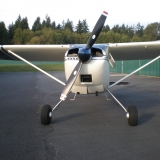
Cessna Skywagon -- accept no substitute!
Thu May 16, 2019 3:40 pm
Re: What to get when you can’t afford a Bearhawk
FYI - Champion didn't use rib stitching, they used rivets. I'm pretty sure American Champion Aircraft does the same.
Thu May 16, 2019 5:24 pm
Re: What to get when you can’t afford a Bearhawk
So a little update...
I have been looking for a tailwheel instructor in the Virginia Beach area, but not having much luck. One guy I found stopped training in his cub because insurance costs got too steep.
So, first off, does anybody know anyone in the virginia beach/Hampton roads area that is a tailwheel CFI?
If I can't find a tailwheel CFI, is it a THAT difficult transitioning to tailwheel after learning in a nose wheel? I have read quite a bit trying to make a decision and understand about picking up bad habits and such. And how tailwheel pilots can transition to a nose wheel MUCH easier than the other way around. So I am VERY hesitant to train in a nose wheel. I just don't want to have to learn twice. I'd rather have my entire learning experience being in the type of aircraft I am going to fly.
Let me know if I am crazy or if I should keep searching. Or...maybe buy my starter plane and use this guy to train me in it. I am meeting with him Tuesday, so I will talk to him about all these things as well.
Thanks for your input!
I have been looking for a tailwheel instructor in the Virginia Beach area, but not having much luck. One guy I found stopped training in his cub because insurance costs got too steep.
So, first off, does anybody know anyone in the virginia beach/Hampton roads area that is a tailwheel CFI?
If I can't find a tailwheel CFI, is it a THAT difficult transitioning to tailwheel after learning in a nose wheel? I have read quite a bit trying to make a decision and understand about picking up bad habits and such. And how tailwheel pilots can transition to a nose wheel MUCH easier than the other way around. So I am VERY hesitant to train in a nose wheel. I just don't want to have to learn twice. I'd rather have my entire learning experience being in the type of aircraft I am going to fly.
Let me know if I am crazy or if I should keep searching. Or...maybe buy my starter plane and use this guy to train me in it. I am meeting with him Tuesday, so I will talk to him about all these things as well.
Thanks for your input!
Thu May 16, 2019 5:45 pm
Re: What to get when you can’t afford a Bearhawk
AP2Pilot wrote:So a little update...
I have been looking for a tailwheel instructor in the Virginia Beach area, but not having much luck. One guy I found stopped training in his cub because insurance costs got too steep.
So, first off, does anybody know anyone in the virginia beach/Hampton roads area that is a tailwheel CFI?
If I can't find a tailwheel CFI, is it a THAT difficult transitioning to tailwheel after learning in a nose wheel? I have read quite a bit trying to make a decision and understand about picking up bad habits and such. And how tailwheel pilots can transition to a nose wheel MUCH easier than the other way around. So I am VERY hesitant to train in a nose wheel. I just don't want to have to learn twice. I'd rather have my entire learning experience being in the type of aircraft I am going to fly.
Let me know if I am crazy or if I should keep searching. Or...maybe buy my starter plane and use this guy to train me in it. I am meeting with him Tuesday, so I will talk to him about all these things as well.
Thanks for your input!
Transition isn't a big deal. Specially for a no time pilot. I got my PPL and 1st 100 hours in a 172 and transitioned to a 170 with 10 hours instruction an without issue. Ignore the internet and don't read too much into it. It's 90% muscle memory. Watching youtube videos or reading books about ground loops is of no value.
It's like trying to ride a bicycle by reading a book about the gyroscopic stability. No value.
Find a flight school with friendly instructors and enough aircraft that you don't have a schedule flights a month in advance.
Make sure you have enough money to fly every weekend. Budget 100 hours and you wont be disappointed.
Taking a week off while learning can set you back a month.
Get your PPL in whatever they are renting and worry about what airplane you want to fly later.
In the grand scheme, it won't matter what you get your license in.
Thu May 16, 2019 8:15 pm
Re: What to get when you can’t afford a Bearhawk
Bagarre wrote:AP2Pilot wrote:So a little update...
I have been looking for a tailwheel instructor in the Virginia Beach area, but not having much luck. One guy I found stopped training in his cub because insurance costs got too steep.
So, first off, does anybody know anyone in the virginia beach/Hampton roads area that is a tailwheel CFI?
If I can't find a tailwheel CFI, is it a THAT difficult transitioning to tailwheel after learning in a nose wheel? I have read quite a bit trying to make a decision and understand about picking up bad habits and such. And how tailwheel pilots can transition to a nose wheel MUCH easier than the other way around. So I am VERY hesitant to train in a nose wheel. I just don't want to have to learn twice. I'd rather have my entire learning experience being in the type of aircraft I am going to fly.
Let me know if I am crazy or if I should keep searching. Or...maybe buy my starter plane and use this guy to train me in it. I am meeting with him Tuesday, so I will talk to him about all these things as well.
Thanks for your input!
Transition isn't a big deal. Specially for a no time pilot. I got my PPL and 1st 100 hours in a 172 and transitioned to a 170 with 10 hours instruction an without issue. Ignore the internet and don't read too much into it. It's 90% muscle memory. Watching youtube videos or reading books about ground loops is of no value.
It's like trying to ride a bicycle by reading a book about the gyroscopic stability. No value.
Find a flight school with friendly instructors and enough aircraft that you don't have a schedule flights a month in advance.
Make sure you have enough money to fly every weekend. Budget 100 hours and you wont be disappointed.
Taking a week off while learning can set you back a month.
Get your PPL in whatever they are renting and worry about what airplane you want to fly later.
In the grand scheme, it won't matter what you get your license in.
If you don’t abide by that advice you’re a fool.
- Sierra Victor offline
- Posts: 338
- Joined: Sat Aug 24, 2013 3:10 pm
- Location: Denton
- Aircraft: Cessna T206H
Thu May 16, 2019 9:48 pm
Re: What to get when you can’t afford a Bearhawk
I agree that transition is not that big of a deal. I had about 70 hours in Cessna 150/152/172 when I bought my 170. I found a good instructor and after about 5 hours of dual, the instructor turned me loose (long before FAA made tailwheel endorsement mandatory). Our training sessions focused on takeoff, landing and taxi with some short field gravel runways thrown in. His last bit of advice was to fly early in the morning before things got turbulent and to fly in low wind conditions until I had more time in the 170. Best advice I ever got.
- mytailsdraggin offline
- Posts: 12
- Joined: Fri Apr 19, 2019 4:54 pm
- Location: Palmer
Former Cessna Driver
Sat May 18, 2019 8:11 am
Re: What to get when you can’t afford a Bearhawk
OP, You've gotten some great advise here. I'll throw in my 2 cents.
The Tri-Pacer (like the 172) is a great general purpose machine. It's not fast, but it's fast enough. It's not STOL, but it will get you into 3/4 of the fabled Idaho back country. Been there, done that. It's cheap to buy and maintain often costing 1/2 of what a 172 goes for. It hauls a good load. It has rugged landing gear with 600X6 tires all around. It has no bad flying characteristics and will bail you out of some bad airmenship. It makes a good training aircraft. It's build using the same tube and fabric as the Bearhawk you will eventually build. It has a great online community and documentation for support. If you are a little mechanical, you will find an IA that will supervise your work on the plane. Owner maintenance is the only way I can imagine affording to own a plane.
I put in 500 hours in a Tri-Pacer and still love flying one. I now fly a Pacer and also love that. The transition was a fun challenge and flying tailwheel has really stepped up my flying skills. I probably should have done it sooner. Having said that, the nose wheel will put you unceremoniously back on the ground in one piece after a long day battling headwinds when the weather has unexpectedly gone to hell at your destination airport. The Pacer may not. No mater how tired you are you still have to be 100% on your game or you will end up in the weeds on the side of the runway. I suppose the Pacer will get me into a few more places than the Tri-Pacer but only a few. I would be unlikely to take the Tri-Pacer into a spot that had a very soft surface like sand or loose gravel. But it will be a lot of hour and practice before you are considering those kind of places.
I now fly with a group of shortwing Piper owners (that's what the PA-15, 16, 17, 20, and 22 are called) We have 8 Pacer and Tri-Pacers in our hangar block and several more in the area. We do lots of hamburger runs and campouts all over the PNW. Perhaps that makes me a bit biased. But, the reason most of these guys are flying the shortwings is, it's great low cost flying with a lot of utility.
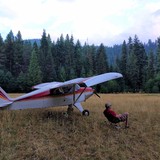
Red's Horse Ranch in the Eagle Cap wilderness area.

The Tri-Pacer (like the 172) is a great general purpose machine. It's not fast, but it's fast enough. It's not STOL, but it will get you into 3/4 of the fabled Idaho back country. Been there, done that. It's cheap to buy and maintain often costing 1/2 of what a 172 goes for. It hauls a good load. It has rugged landing gear with 600X6 tires all around. It has no bad flying characteristics and will bail you out of some bad airmenship. It makes a good training aircraft. It's build using the same tube and fabric as the Bearhawk you will eventually build. It has a great online community and documentation for support. If you are a little mechanical, you will find an IA that will supervise your work on the plane. Owner maintenance is the only way I can imagine affording to own a plane.
I put in 500 hours in a Tri-Pacer and still love flying one. I now fly a Pacer and also love that. The transition was a fun challenge and flying tailwheel has really stepped up my flying skills. I probably should have done it sooner. Having said that, the nose wheel will put you unceremoniously back on the ground in one piece after a long day battling headwinds when the weather has unexpectedly gone to hell at your destination airport. The Pacer may not. No mater how tired you are you still have to be 100% on your game or you will end up in the weeds on the side of the runway. I suppose the Pacer will get me into a few more places than the Tri-Pacer but only a few. I would be unlikely to take the Tri-Pacer into a spot that had a very soft surface like sand or loose gravel. But it will be a lot of hour and practice before you are considering those kind of places.
I now fly with a group of shortwing Piper owners (that's what the PA-15, 16, 17, 20, and 22 are called) We have 8 Pacer and Tri-Pacers in our hangar block and several more in the area. We do lots of hamburger runs and campouts all over the PNW. Perhaps that makes me a bit biased. But, the reason most of these guys are flying the shortwings is, it's great low cost flying with a lot of utility.
Red's Horse Ranch in the Eagle Cap wilderness area.
- TriPacerPilot offline
- Posts: 41
- Joined: Thu Jun 03, 2010 9:36 am
- Location: Hillsboro, Oregon
- Aircraft: PA-22/20-150, PA-24-250 Turbo
Sun May 19, 2019 1:41 pm
Re: What to get when you can’t afford a Bearhawk
So I have my first flight lesson scheduled for Tuesday. I am beyond stoked. They guy I am going with is an independent CFI and we will either be using his Cessna 150 or 172, depends on how I fit in the 150 (i'm 6'5"). He actually only charges for the aircraft rental and not an hourly charge for instruction, and then donates any leftover profits (after fuel, etc) to a local charity. Kind of a cool deal all around. That tells me he isn't instructing because he needs the money, but because he wants to teach and most likely loves it.
I appreciate all your input and advice!
I appreciate all your input and advice!
DISPLAY OPTIONS
Who is online
Users browsing this forum: No registered users and 9 guests
Latest Features
-
Live to Tell
A Minnesota pilot is surprised to learn that the sudden asymmetric drag of an out-of-rig ski can…Read More -
Creators
Working in some of the Yukon's most beautiful and remote environments, photographer Simon Blakesley captures aircraft in…Read More -
Aircraft Ownership and Maintenance
Upgrading to big tires can make a huge difference in backcountry performance, but with those gains come…Read More -
Tales from Yesteryear
In this tale from bush flying yesteryear, Don Cogger signs up to help Atlee Dodge Jr recovery…Read More


Latest Knowledge Base
-
Destinations
A regional guide with ideas for winter camping destinations in California, Nevada, New Mexico, and Arizona.Read More -
Aircraft
Finding an affordable aircraft that can handle the backcountry for $80K or less? A challenge for sure, but with the…Read More -
Aircraft
01.29.2018 - Zane - Updated tire diameter graphic to add 8.50x10 Guide to tires for use in the backcountry and off-airport landing…Read More -
Pilots
12.22.2013 - Initial article format Operating aircraft on skis and negotiating a snow-covered landscape is an entirely unique skillset and environment.…Read More


