Stop training with the first instructor and start up with the one who actually has a 180 and trains out of it. If he is willing to risk his own plane (especially a wagon) good chance he is a competent instructor.
You don't indicate you already have a tailwheel endorsement, and since you've yet to be taught wheel landings I'm guessing you are "in the process". When I got my endorsement the training started with 3-point landings and once I was comfortable with those we moved to wheel landings- and that's fine. If you do have your endorsement and were never taught wheel landings that instructor should have his ticket pulled.
3-5 foot drop-ins I can relate to. I did my initial tail wheel training from the back seat of a Super D and for three days in a row most of my landings nearly pegged the G meter. At the end of the third day my instructor asked "I suppose you do know where the ground is?". Pretty sure I left green skid marks on the bottom (of the plane).

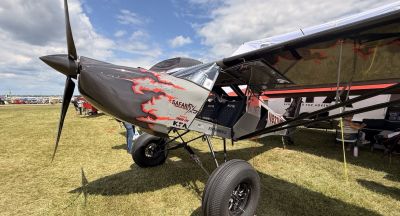
Dropping the plane in and bouncing back into the air more than a couple of inches means the airplane still has flying speed, nothing more. For your purposes at this point it has nothing to do with tire size.
Here is a video that illustrates this point:
And although you do want to get to where you can do tail low wheel landings I wouldn't worry about that right now, get three points and wheel landings down first.
If you are having a problem "knowing where the ground is" start by just going out and sitting in your plane- a lot- and not near any structures. Try a simulate the runway. Look to the sides and get a good picture in your mind as to how the outside looks in relation to you sitting in the plane. Try looking straight ahead and concentrating on what you see in your peripheral vision. If you are short, or put your 180 on 29's or 31's, that is quite likely nearly the only vision you'll have when in a 3-point attitude. (And yes you can safely and successfully land an airplane without being able to see straight ahead.) Then look straight ahead from close to far, get used to the perspective- especially far- that perspective will tell you when you are just inches from the ground.
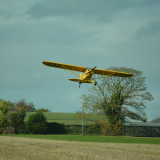
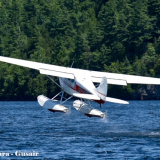
Go out with your instructor and do wheel landings (on a nice long runway) but without dropping the tail (so you aren't actually landing). Get the feel for both the sight picture and what it feels like to just touchdown and then back in the air a couple of inches and touchdown and back in the air a couple of inches- doing this primarily with the throttle. If you find yourself forcing it down with the yoke guess what- you are at flying speed in ground effect- in other words you are too fast. It should look something like this. (Okay I couldn't resist putting in a photo of me on the flight that signed me off as a dragger pilot. Who can tell where I was for that training?)

And don't fixate on the landing, that's easy to want to do in a tail dragger. Keep your eyeballs alive (moving around) looking close, far, side to side, looking for deer, taking it all in. Keep your throttle hand alive, adjusting power as needed to achieve the decent rate you want, to hold off when you want. Keep your feet alive on the rudder pedals.
And don't get hung up on this speed or that speed or this fpm or that fpm or this or that anything. Those are just crutches. Just fly the plane and pay attention to what she is telling you and adjust. Otherwise you become just a one or two trick pony.
And most importantly remember, this is supposed to be fun. So relax and enjoy the ride.