A couple of weeks ago I flew over to Kidwell Nevada to take CC Pocock's intro to Mountain and Backcountry Flying Level 1 course. I was hoping to do some off airports landings but that comes at Level 2 . However, I did learn a lot and got to practice Precision Landings in some brutal winds.
I watched the weather report the day before and saw a wind waring coming into place across the Mojave Desert and southern California, Arizona and Nevada. I kinda figured it would be a bust due to that and the mountain obscuration forecast on the morning I was planning to leave.
Reluctantly I woke at 3: 55 am for another work day , dreams shattered . However, as I stumbled outside in the dark I noticed a clear sky to the east and stars in the sky. That meant I could get out and climb up over the Laguna Mountains just to poke around. If wind was a factor I would know within 30 minutes of takeoff. I had the plane packed already and the time off rom work. I was going to go for it.
The two hour flight to Kidwell went smooth as glass. Until I got to the valley that I was headed for. About 10 minutes out things started rocking and rolling. I lined up for the runway ( 15 , with wind at 220. ) No weather was available for Kidwell but Laughlin was reporting 18g22 .
I landed and taxied up to CC's place . Got the plane tied down and watched the wind unfold
We did a couple hours ground school that afternoon with CC explaining what we would be doing each day. We first determined the best ballast for our aircraft to allow for Aft CG. We also guessed at what our slowest safe landing speeds were and was told we were off by quite a bit, but not to worry. In the next two days we would know all the solid numbers for stalls , take offs and landings.
Thursday we started the precision approaches to precision landings. CC has a white spot of Gypsum on the dirt runway and we were given 50 feet +/- to hit our spot.
After that practice we went up and put our aircraft in stalls in all configurations. Instaed of the normal recovery we kept the aircraft at the stall envelope and learned that the aircraft would still fly. This was taught because of the lack of room to recover during a landing at slow speed and low altitude.
The following day, more precision landing practice. After that we learned the Canyon turn. We flew into a 900 foot wide canyon and were taught how to do a 180 turn without loosing or gaining altitude and we could only use half of the canyon for the turn. We did this in two different canyons. Three turns in each canyon. That was a real eye opener and really fun
After the third morning of precision landings CC was satisfied and we " graduated " and we were given an intro into STOL technique and also how to return to the airport with partial power ( 100 foot agl continuous turn back to the runway )
It was a great class , CC is a great cook , and on the last night His buddy Dave from Wasilla came down . Great to hear Dave's tales about flying Alsaka.
I give the course a thumbs up.
Here's a few videos. Funny, their were two of us in the course. The other guy was a member of the flying club I used to belong to and we fly out of the same field
STOL practice
Adam was using CC's 170 B
Ok, whats up with the videos ?
Bush-air
Wed Feb 17, 2021 6:57 am
- sierrasplitter offline
- Posts: 203
- Joined: Fri Dec 01, 2017 11:55 am
- Location: Lakeside
- Aircraft: 56 PA 22/20
Wed Feb 17, 2021 7:22 am
Re: Bush-air
sierrasplitter wrote:A couple of weeks ago I flew over to Kidwell Nevada to take CC Pocock's intro to Mountain and Backcountry Flying Level 1 course. I was hoping to do some off airports landings but that comes at Level 2 . However, I did learn a lot and got to practice Precision Landings in some brutal winds.
I watched the weather report the day before and saw a wind waring coming into place across the Mojave Desert and southern California, Arizona and Nevada. I kinda figured it would be a bust due to that and the mountain obscuration forecast on the morning I was planning to leave.
Reluctantly I woke at 3: 55 am for another work day , dreams shattered . However, as I stumbled outside in the dark I noticed a clear sky to the east and stars in the sky. That meant I could get out and climb up over the Laguna Mountains just to poke around. If wind was a factor I would know within 30 minutes of takeoff. I had the plane packed already and the time off rom work. I was going to go for it.
The two hour flight to Kidwell went smooth as glass. Until I got to the valley that I was headed for. About 10 minutes out things started rocking and rolling. I lined up for the runway ( 15 , with wind at 220. ) No weather was available for Kidwell but Laughlin was reporting 18g22 .
I landed and taxied up to CC's place . Got the plane tied down and watched the wind unfold
We did a couple hours ground school that afternoon with CC explaining what we would be doing each day. We first determined the best ballast for our aircraft to allow for Aft CG. We also guessed at what our slowest safe landing speeds were and was told we were off by quite a bit, but not to worry. In the next two days we would know all the solid numbers for stalls , take offs and landings.
Thursday we started the precision approaches to precision landings. CC has a white spot of Gypsum on the dirt runway and we were given 50 feet +/- to hit our spot.
After that practice we went up and put our aircraft in stalls in all configurations. Instaed of the normal recovery we kept the aircraft at the stall envelope and learned that the aircraft would still fly. This was taught because of the lack of room to recover during a landing at slow speed and low altitude.
The following day, more precision landing practice. After that we learned the Canyon turn. We flew into a 900 foot wide canyon and were taught how to do a 180 turn without loosing or gaining altitude and we could only use half of the canyon for the turn. We did this in two different canyons. Three turns in each canyon. That was a real eye opener and really fun
After the third morning of precision landings CC was satisfied and we " graduated " and we were given an intro into STOL technique and also how to return to the airport with partial power ( 100 foot agl continuous turn back to the runway )
It was a great class , CC is a great cook , and on the last night His buddy Dave from Wasilla came down . Great to hear Dave's tales about flying Alsaka.
I give the course a thumbs up.
Here's a few videos. Funny, their were two of us in the course. The other guy was a member of the flying club I used to belong to and we fly out of the same field
STOL practice
Adam was using CC's 170 B
Ok, whats up with the videos ?

CFII, MEI, CFISES, ATPME, IA/AP, RPPL, Ski&Amphib ops, RHC mechanic cert, RHC SC— 3000TT
Wed Feb 17, 2021 7:58 am
Re: Bush-air
Sierraspliter,
In a video a couple years back, CC did an energy management canyon turn. By not gaining or losing altitude you are talking the law of the roller coaster right, rather than a high g level turn?
contact
In a video a couple years back, CC did an energy management canyon turn. By not gaining or losing altitude you are talking the law of the roller coaster right, rather than a high g level turn?
contact
- contactflying offline
- Posts: 4972
- Joined: Wed Apr 03, 2013 7:36 pm
- Location: Aurora, Missouri 2H2
Download my free "https://tinyurl.com/Safe-Maneuvering" e-book.
Wed Feb 17, 2021 9:25 am
Re: Bush-air
Yes. bank angle was kept around 45 degrees
- sierrasplitter offline
- Posts: 203
- Joined: Fri Dec 01, 2017 11:55 am
- Location: Lakeside
- Aircraft: 56 PA 22/20
Wed Feb 17, 2021 10:29 am
Re: Bush-air
Very effective use of zoom energy to take and then give altitude to slow to decrease diameter of the turn while allowing the nose to go down rather than load the wing in the 45 degree bank. Net zero altitude change.
- contactflying offline
- Posts: 4972
- Joined: Wed Apr 03, 2013 7:36 pm
- Location: Aurora, Missouri 2H2
Download my free "https://tinyurl.com/Safe-Maneuvering" e-book.
Wed Feb 17, 2021 11:42 am
Re: Bush-air
It was explained- Fly ahead until you are no longer comfortable . Apply Full Flaps and Full Power at the same time, bank ( no more than 45 degrees) roll out level on a 180 degree heading. Now look out the window--- only used 1/2 of the canyon to stay on the updraft side at all times
- sierrasplitter offline
- Posts: 203
- Joined: Fri Dec 01, 2017 11:55 am
- Location: Lakeside
- Aircraft: 56 PA 22/20
Wed Feb 17, 2021 12:09 pm
Re: Bush-air
Yes, into crosswind rather than downwind turn reduces diameter of turn. Flaps reduces airspeed without reducing lift. Climbing a bit can reduce airspeed as well. Bank can be as much as necessary, even 90 degrees, if the nose is not held up with lots of back pressure.
- contactflying offline
- Posts: 4972
- Joined: Wed Apr 03, 2013 7:36 pm
- Location: Aurora, Missouri 2H2
Download my free "https://tinyurl.com/Safe-Maneuvering" e-book.
Wed Feb 17, 2021 12:13 pm
Re: Bush-air
If you hover over the youtube BBcode button in the post editor, you see this hint text:
So you just copy only that portion of the Youtube video URL and paste it between the Youtube BBcode tags.
Some Youtube share URLs follow a different format though, e.g.
In that above case, copy and paste the "ABCDE12345" portion into the BBcode tags.
- Code: Select all
Insert the unique identifier code of the YouTube video that appears after the "v=" part of the URL: [youtube]abc123[/youtube]
So you just copy only that portion of the Youtube video URL and paste it between the Youtube BBcode tags.
Some Youtube share URLs follow a different format though, e.g.
- Code: Select all
https://youtu.be/ABCDE12345
In that above case, copy and paste the "ABCDE12345" portion into the BBcode tags.
- Zzz offline

- Posts: 2854
- Joined: Fri Oct 08, 2004 11:09 pm
- Location: northern
- Aircraft: Swiveling desk chair
Half a century spent proving “it is better to be thought a fool than to open your mouth and remove all doubt.”
Wed Feb 17, 2021 12:39 pm
Re: Bush-air
sierrasplitter wrote:It was explained- Fly ahead until you are no longer comfortable . Apply Full Flaps and Full Power at the same time, bank ( no more than 45 degrees) roll out level on a 180 degree heading. Now look out the window--- only used 1/2 of the canyon to stay on the updraft side at all times
Frankly, you've skipped a few in your description.....first, you need to be at or below flap speed PRIOR to deploying flaps, which means you need to have slowed down well before the turn is to begin.....some folks call this "Canyon speed", If you're not below Vf when you decide to turn, you're going too fast. And, in this context, speed can kill, because the radius of the turn increases dramatically with more speed. And, of course, you can damage your airframe by deploying flaps, particularly full flaps, above Vf.
And, the canyon speed differs, depending on the airplane. You need to KNOW the canyon speed for YOUR airplane.
Finally, use of full flaps in a canyon turn may or may not be appropriate. You were training in a Pacer, which has rather small, simple flaps, so full flaps may indeed be appropriate. I used full flaps in Huskys also. In Cubs and most Cessnas, I use half flaps (20 Degrees), unless the airplane is RSTOL equipped, in which case I MAY use 30 degrees.
Then, it's critical to maintain speed through the turn.
And, some airplanes aren't really happy with this kind of stuff. The 7GCBC Citabria will fall out from under you if you attempt this as described here. A lesser bank angle works in that airplane.
Point is, the procedure by necessity differs depending on the airplane. You need to go to altitude, preferably with a good instructor, and practice canyon turns, in YOUR airplane. Try different flap settings, slightly different speeds....not too slow, but not too fast either.....and figure out what works for you and your airplane..
And, I'm sure CC emphasizes that.
When I started my checkout in the DHC-2 Beaver, there was lots of talk in the Alaska pilot community about how dangerous the Beaver could be in turns. My check airman was a high time deHavilland pilot, with lots of time working Beavers, Otters, and Twin Otters. He was the one who introduced me to the notion of canyon turns. And, the Beaver will turn tighter than you can believe in a canyon, IF you slow it down first, and get some flaps out. Try to turn tight with the flaps up, and it will likely not end well. So, we turned, and turned and turned in that check out. I really was comfortable flying that airplane in weather, because "Canyon speed" and "Weather speed", meaning the speed I wanted to be at if poking at the belly of the beast in poor visibility, are the same...preparation for a turn.
MTV


Wed Feb 17, 2021 12:45 pm
Re: Bush-air
contactflying wrote:Very effective use of zoom energy to take and then give altitude to slow to decrease diameter of the turn while allowing the nose to go down rather than load the wing in the 45 degree bank. Net zero altitude change.
I don't think that's what CC is teaching, Jim, and that's not what I teach. That technique MAY work for a very experienced pilot in SOME circumstances, but......
So, for example, are you turning around in that canyon because the canyon's getting too tight, or because the overcast is lowering? If it's the latter, the last thing you want to do is "zoom up" into the overcast. And, I want to be right at the base of the overcast, because that's also where the canyon is widest.
Also, in the maneuver you're describing, there are a LOT of "moving parts" so to speak. There's a lot going on, aerodynamically. I prefer to roll to the appropriate bank angle, whatever it has been determined to be for that airplane, fix that angle, and draw an arc that would be level with the horizon, if we could see one. Yes, that increases load factor on the wing, but if we enter at an appropriate speed, with the right flap setting, we should remain well above the stall speed of the plane.
Again, experimentation with YOUR aircraft is essential in this process to see what works best in your airplane, and for you.
MTV
Wed Feb 17, 2021 1:29 pm
Re: Bush-air
Yes, Mike, ceiling would be a problem with the zoom up. Just slowing is fine as well. And flaps. I learned to appreciate your slow down for weather and tightness of canyons in BC bathtubs. Also Butch Washtock teaches that.
My experience with the greater advantage and tighter turn possible energy management turn was flying 65-150 hp airplanes across high passes in the high desert and Rocky Mountains. As you have said, there is no need to push it up to the tightness of nearly to the pass unless things are going well. The most serious trouble I encountered, and the greatest need for energy management and wind management, was in the high desert where the upper portion of a valley to pass might be winder but have less vertical space available. And I was flying in the heat of summer day with high time engines.
It started shooting rockets with the Cobra. The target engagement from a slow circling of the loach was just too simple, too easy, and too effective. So who needs that much in every day flying? Then crop dusting. And finally pipeline patrol. I had moved from spraying to pipeline because of a ruptured disk. There I found default energy management turns, even shallow turns, to be so 1 g comfortable and effective for visual reconnaissance. How you gonna keep them down on the farm after they've seen Paree? It is just too comfortable, too effective, and too easy. So what is wrong with never having an inadvertent stall? No, don't climb into the clouds. Just slow down if under a low ceiling or flying in a long crooked bathtub. We don't have too many long crooked bathtubs down here, luckily.
The only difficulty is in timing. Until the turn becomes somewhat default, we just don't plan ahead enough to climb or slow before turning and pulling. It requires a reset of priorities. It requires destruction before creation.
My experience with the greater advantage and tighter turn possible energy management turn was flying 65-150 hp airplanes across high passes in the high desert and Rocky Mountains. As you have said, there is no need to push it up to the tightness of nearly to the pass unless things are going well. The most serious trouble I encountered, and the greatest need for energy management and wind management, was in the high desert where the upper portion of a valley to pass might be winder but have less vertical space available. And I was flying in the heat of summer day with high time engines.
It started shooting rockets with the Cobra. The target engagement from a slow circling of the loach was just too simple, too easy, and too effective. So who needs that much in every day flying? Then crop dusting. And finally pipeline patrol. I had moved from spraying to pipeline because of a ruptured disk. There I found default energy management turns, even shallow turns, to be so 1 g comfortable and effective for visual reconnaissance. How you gonna keep them down on the farm after they've seen Paree? It is just too comfortable, too effective, and too easy. So what is wrong with never having an inadvertent stall? No, don't climb into the clouds. Just slow down if under a low ceiling or flying in a long crooked bathtub. We don't have too many long crooked bathtubs down here, luckily.
The only difficulty is in timing. Until the turn becomes somewhat default, we just don't plan ahead enough to climb or slow before turning and pulling. It requires a reset of priorities. It requires destruction before creation.
- contactflying offline
- Posts: 4972
- Joined: Wed Apr 03, 2013 7:36 pm
- Location: Aurora, Missouri 2H2
Download my free "https://tinyurl.com/Safe-Maneuvering" e-book.
Wed Feb 17, 2021 1:58 pm
Re: Bush-air
Also, energy management doesn't care what aircraft you are in from 1200 pound Champ to 9600 pound Cobra. It has the very same feel to it and is accomplished the very same way. It feel good. It feels like what the airplane wants to do. Just turn loose in any turn and the airplane will do it.
- contactflying offline
- Posts: 4972
- Joined: Wed Apr 03, 2013 7:36 pm
- Location: Aurora, Missouri 2H2
Download my free "https://tinyurl.com/Safe-Maneuvering" e-book.
Wed Feb 17, 2021 3:03 pm
Re: Bush-air
Frankly, you've skipped a few in your description.....first, you need to be at or below flap speed PRIOR to deploying flaps, which means you need to have slowed down well before the turn is to begin.....some folks call this "Canyon speed", If you're not below Vf when you decide to turn, you're going too fast. And, in this context, speed can kill, because the radius of the turn increases dramatically with more speed. And, of course, you can damage your airframe by deploying flaps, particularly full flaps, above Vf.
And, the canyon speed differs, depending on the airplane. You need to KNOW the canyon speed for YOUR airplane.
Yes. I spoke about My aircraft . I was flying the Pacer and we went in at 60-65 mph indicated
- sierrasplitter offline
- Posts: 203
- Joined: Fri Dec 01, 2017 11:55 am
- Location: Lakeside
- Aircraft: 56 PA 22/20
Wed Feb 17, 2021 6:33 pm
Re: Bush-air
sierrasplitter wrote:Frankly, you've skipped a few in your description.....first, you need to be at or below flap speed PRIOR to deploying flaps, which means you need to have slowed down well before the turn is to begin.....some folks call this "Canyon speed", If you're not below Vf when you decide to turn, you're going too fast. And, in this context, speed can kill, because the radius of the turn increases dramatically with more speed. And, of course, you can damage your airframe by deploying flaps, particularly full flaps, above Vf.
And, the canyon speed differs, depending on the airplane. You need to KNOW the canyon speed for YOUR airplane.
Yes. I spoke about My aircraft . I was flying the Pacer and we went in at 60-65 mph indicated
Thanks for clarifying. As I said, I’m sure CC is adapting procedures for different airplanes, but when we’re posting on the internet we are usually recounting our unique experience.
Good topic.
MTV
Fri Feb 19, 2021 10:36 pm
Re: Bush-air
Don't fly upstream into a canyon or valley with a ceiling.....no need for a dramatic turn if you don't do silly. I speak from experience, I followed a sucker hole up a drainage and it disappeared, inadvertant IMC flying up stream and then the turbulence came. I was sure I was gonna die. Poked out over a lake.
Don't do dumb!!! I did dumb!!?
Don't do dumb!!! I did dumb!!?
- Headoutdaplane offline
- Posts: 526
- Joined: Thu May 29, 2008 5:21 pm
- Location: Homer, AK
The winner is the person with the most stories when he dies, not the most gold.
www.belugaair.com
www.belugaair.com
Sat Feb 20, 2021 7:57 am
Re: Bush-air
Headoutdaplane wrote:Don't fly upstream into a canyon or valley with a ceiling.....no need for a dramatic turn if you don't do silly. I speak from experience, I followed a sucker hole up a drainage and it disappeared, inadvertant IMC flying up stream and then the turbulence came. I was sure I was gonna die. Poked out over a lake.
Don't do dumb!!! I did dumb!!?
Great advice! I too have done dumb in this regard and managed to survive.
Unfortunately, however, most of us are quite capable of dumb at one time or another.
MTV
Sat Feb 20, 2021 8:21 am
Re: Bush-air
The nasty thing about low ceiling in the Midwest and the desert is that the Midwest and the desert are flat. There is limited vertical space available. A hole to allow the nose to go down into to prevent stall in a turn back can be life saving.
- contactflying offline
- Posts: 4972
- Joined: Wed Apr 03, 2013 7:36 pm
- Location: Aurora, Missouri 2H2
Download my free "https://tinyurl.com/Safe-Maneuvering" e-book.
Sun Feb 21, 2021 9:50 am
Re: Bush-air
I've never understood how this whole need for a Canyon turn plays out, and never have been able to wrap my mind around the thought process of mandating a flat high G turn to get you out of that pickle? Seems like throwing gas on an already raging inferno 
Does this really happen?
I mean I can understand inadvertently turning in to a box canyon. who hasn't took a wrong turn?
I can also understand inadvertently flying in to IMC, the fuzzy stuff comes up surprisingly fast sometimes.
And of corse if you're on a forum such as this surely you can understand flying low... perhaps some would say, too low.
But I'm going to go out on a limb and say it probably takes a special kind of dumb to try and dodge all of these bullets while in mountainous terrain. And then what the heck, let's try and throw a bushwheel equipped potential snap roll into the mix while we're at it.
Does this really happen?
I mean I can understand inadvertently turning in to a box canyon. who hasn't took a wrong turn?
I can also understand inadvertently flying in to IMC, the fuzzy stuff comes up surprisingly fast sometimes.
And of corse if you're on a forum such as this surely you can understand flying low... perhaps some would say, too low.
But I'm going to go out on a limb and say it probably takes a special kind of dumb to try and dodge all of these bullets while in mountainous terrain. And then what the heck, let's try and throw a bushwheel equipped potential snap roll into the mix while we're at it.

Sun Feb 21, 2021 9:53 am
Re: Bush-air
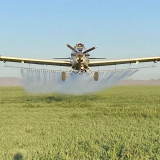
Since Contact introduced an ag minded turn (what ever that is) in to the mix, I'm going to point out that the average Med - Lg Ag aircraft covers the ground at a buck fifty or so, weighing in at 10K lbs. +/-, and still only trades off 300' - 500' of altitude to get slowed down enough to execute a precision course reversal. Heavy emphasis on precision, because there is a world of difference between just getting it bent back around, and getting it to an exact spot on an exact track.
Furthermore, the Ag guy pulls up to slow down because he is working at 8' - 20' AGL. Down is simply not an option. I'm going to go out on a limb here and suggest if you are flying upstream, in IMC, in a box canyon, at this altitude.... turns are not your problem, decision making is.
Furthermore, the Ag guy pulls up to slow down because he is working at 8' - 20' AGL. Down is simply not an option. I'm going to go out on a limb here and suggest if you are flying upstream, in IMC, in a box canyon, at this altitude.... turns are not your problem, decision making is.
Sun Feb 21, 2021 9:57 am
Re: Bush-air
poking your nose in a drainage for a look see?
1) Don't do it at tree top level...
2) Slow it down some...
3) Don't like what you see? slow it down more and roll it around while letting it have it's head. Yes you'll be descending, but you were going uphill, now you’ll be going downhill and you're gaining energy enough to come back in with power and climb on the way home (down stream).
Want to add flaps to the mix? Go for it, I do, but use them as needed to keep it trimmed, not as a tool to try and remove the wings.
1) Don't do it at tree top level...
2) Slow it down some...
3) Don't like what you see? slow it down more and roll it around while letting it have it's head. Yes you'll be descending, but you were going uphill, now you’ll be going downhill and you're gaining energy enough to come back in with power and climb on the way home (down stream).
Want to add flaps to the mix? Go for it, I do, but use them as needed to keep it trimmed, not as a tool to try and remove the wings.
DISPLAY OPTIONS
Who is online
Users browsing this forum: No registered users and 7 guests
Latest Features
-
Live to Tell
A Minnesota pilot is surprised to learn that the sudden asymmetric drag of an out-of-rig ski can…Read More -
Creators
Working in some of the Yukon's most beautiful and remote environments, photographer Simon Blakesley captures aircraft in…Read More -
Aircraft Ownership and Maintenance
Upgrading to big tires can make a huge difference in backcountry performance, but with those gains come…Read More -
Tales from Yesteryear
In this tale from bush flying yesteryear, Don Cogger signs up to help Atlee Dodge Jr recovery…Read More


Latest Knowledge Base
-
Destinations
A regional guide with ideas for winter camping destinations in California, Nevada, New Mexico, and Arizona.Read More -
Aircraft
Finding an affordable aircraft that can handle the backcountry for $80K or less? A challenge for sure, but with the…Read More -
Aircraft
01.29.2018 - Zane - Updated tire diameter graphic to add 8.50x10 Guide to tires for use in the backcountry and off-airport landing…Read More -
Pilots
12.22.2013 - Initial article format Operating aircraft on skis and negotiating a snow-covered landscape is an entirely unique skillset and environment.…Read More


