Bush-air
Sun Feb 21, 2021 12:33 pm
Re: Bush-air
Good afternoon Rob. It drives me crazy knowing that good instructors who actually know that high g turns are not necessary are forced to teach them as the gospel. No, I don't, but I am certainly not considered a good instructor.
- contactflying offline
- Posts: 4972
- Joined: Wed Apr 03, 2013 7:36 pm
- Location: Aurora, Missouri 2H2
Download my free "https://tinyurl.com/Safe-Maneuvering" e-book.
Sun Feb 21, 2021 3:11 pm
Re: Bush-air
Rob wrote:poking your nose in a drainage for a look see?
1) Don't do it at tree top level...
2) Slow it down some...
3) Don't like what you see? slow it down more and roll it around while letting it have it's head. Yes you'll be descending, but you were going uphill, now you’ll be going downhill and you're gaining energy enough to come back in with power and climb on the way home (down stream).
Want to add flaps to the mix? Go for it, I do, but use them as needed to keep it trimmed, not as a tool to try and remove the wings.
All good advice, Rob. That said, I guarantee you there’s a lot of pilots and their passengers in Alaska and other mountainous country who got dead because they went up, down or around a canyon a wee bit too far, and either didn’t have the skills or knowledge necessary to get turned around in minimum radius.
A LOT of them.
Bad judgement involved? Absolutely. Now show me a pilot who hasn’t exhibited that at some point.
Second, there seems to be the notion that a canyon turn is by definition (yours, apparently, but certainly not mine) a “high G maneuver”. I guess that depends on your definition of “high G”.
Finally, this is a procedure which has to be practiced to precision. It’s not something that someone should be reading about on the internet, then hauling butt into a steep canyon to check it out.
My flying background is flying low level, often in mountainous terrain. Dall sheep, moose and mountain goats are among the species I’ve spent a lot of time counting in some very steep terrain from little airplanes. “High G” doesn’t work real well in a six or seven hour day of that kind of flying, cause the guy in back will be offering up the technicolor yawn pretty quick if the pilot pulls a lot.
But you learn to turn....smoothly, precisely and minimum radius for the conditions. Sometimes the easiest and tightest radius will be a descending turn, IF you have the room.
Flying that Beaver in Kodiak taught me the importance of knowing precisely where you are, and precisely what’s around the next turn, and that minimum radius turning is an essential skill set in mountainous country.
There are things besides weather in terrain that can suggest a retreat as well.
Turning around in weather over flat country? That has nothing to do with what I’m discussing here, though precision is absolutely essential in that case as well. A gentle, level course reversal is the goal there....an instrument turn around. An equally important but very different task.
Go fly with some “average pilots” (whatever those are). And ask them to fly some 180 degree turns. Many, maybe not most, but....have very little understanding of the forces they are dealing with. I’ve flow with quite a few folks who can’t manage a turn around without getting uncoordinated, lose and/or gain altitude, come out on a totally wrong heading, etc.
But if you believe pilots don’t kill themselves by flying in canyons, take a look at the accident statistics. Judgement at fault? Hell yes, no question. But in many of those cases a skillful turn around MIGHT have saved the day.
Besides, learning to turn skillfully is a good excuse to go flying.

MTV


Sun Feb 21, 2021 3:58 pm
Re: Bush-air
I really appreciate all these discussions. There is a lot of great information here.
I never saw it, but my instructor said that the box-canyon u-turn that he taught was to, from low speed, deploy full flaps and then give a ninety degree bank, exchanging altitude for a very quick and high speed direction change. I can only see that working and being necessary if you have an extremely tight canyon with very steep sides, or if you have a few extra hundred feet of altitude, which one should always have, anyway, but doesn't. I always wanted to try it, but my instructor moved away before I got the chance. I suppose it is best to have as many different tools as possible for different situations, and to practice then frequently, hoping and working to never need them.
I never saw it, but my instructor said that the box-canyon u-turn that he taught was to, from low speed, deploy full flaps and then give a ninety degree bank, exchanging altitude for a very quick and high speed direction change. I can only see that working and being necessary if you have an extremely tight canyon with very steep sides, or if you have a few extra hundred feet of altitude, which one should always have, anyway, but doesn't. I always wanted to try it, but my instructor moved away before I got the chance. I suppose it is best to have as many different tools as possible for different situations, and to practice then frequently, hoping and working to never need them.
“Give a man a fire and he's warm for a day, but set fire to him and he's warm for the rest of his life.”
-Pratchett
-Pratchett
Tue Feb 23, 2021 7:00 am
Re: Bush-air
Don't think of energy management, airspeed is altitude altitude is airspeed, the law of the roller coaster, and dynamic neutral stability as extreme, acrobatic, difficult, or desperate. At cruise trim, if we slow down the nose goes down unless we pull back on the stick. When we turn at any bank angle, the nose goes down unless we pull back on the stick.
The airplane designers understood aerodynamics and safety and acted appropriately.
When we changed from teaching contact flying or instrument flying and made instrument integration and maintenance of instrument indications like V speeds prevent stall, we messed that up. We need to quit teaching pulling back on the stick to disable this designed safety feature of tractor airplanes. We are default disabling a safety feature that could be saving more lives.
The airplane designers understood aerodynamics and safety and acted appropriately.
When we changed from teaching contact flying or instrument flying and made instrument integration and maintenance of instrument indications like V speeds prevent stall, we messed that up. We need to quit teaching pulling back on the stick to disable this designed safety feature of tractor airplanes. We are default disabling a safety feature that could be saving more lives.
- contactflying offline
- Posts: 4972
- Joined: Wed Apr 03, 2013 7:36 pm
- Location: Aurora, Missouri 2H2
Download my free "https://tinyurl.com/Safe-Maneuvering" e-book.
Wed Feb 24, 2021 3:56 pm
Re: Bush-air
I've noticed from the NTSB and FS accident reports that it's not always 'bad decisions' that crumple aircraft and kill people. Nor does Alaska have a lock on box canyon crashes. In the lower 48 several states in the NE, NW, central mountain states, and SW have a history of pilots who mistook (box)canyon X for the gateway to a pass.
I think this discussion is great. Lotsa takeaways!
So far the problem of a consequential wrong turn seems to be overlooked. For me, besides flying in canyons with a little spare altitude , S.A. has to include a good 'google earth recon' of any in-canyon route I might fly. In addition, like many pilots, my cockpit has a moving map (i.e. Foreflight) to keep me honest and continuously oriented. The canyons look really different at 2000', 1000', and 500’. Personally, 1000’ is my floor unless I'm landing, departing, or have to descend to get a closer look at something worth the risk.
I think this discussion is great. Lotsa takeaways!
So far the problem of a consequential wrong turn seems to be overlooked. For me, besides flying in canyons with a little spare altitude , S.A. has to include a good 'google earth recon' of any in-canyon route I might fly. In addition, like many pilots, my cockpit has a moving map (i.e. Foreflight) to keep me honest and continuously oriented. The canyons look really different at 2000', 1000', and 500’. Personally, 1000’ is my floor unless I'm landing, departing, or have to descend to get a closer look at something worth the risk.
- PapernScissors offline
- Posts: 419
- Joined: Sun Mar 06, 2016 8:49 pm
- Location: Spokane
- Aircraft: Cessna 172
Wed Feb 24, 2021 5:46 pm
Re: Bush-air
PapernScissors,
I agree that fatalities are not always bad decisions. 1,000' is safer than the 200' I lived at on the pipeline ten years. But if you look at the AOPA Air Safety Institute Stall and Spin Accidents: KEEP THE WINGS FLYING article 1,000' in the pattern along with the takeoff to turning downwind stage is the most fatal. As always the solutions are bank less and don't be distracted. No mention at all of the 100% safety of the design feature that causes the nose to go down naturally in all turns preventing stall. Anyway, 1000' is a good idea coupled with allowing the nose to go down in the turn. Lots of vertical space available with that altitude. I found 200' to be plenty adequate so long as I kept a good eye on terrain and which way was down drainage. Anyway, at 1000,' SA and wrong canyon should be less of a problem if corrected in time.
In the mountains, I found 1:24,000 topographical mops to be much better than Google Earth, but that is probably because I have used them so many years. I find depth to be deceptive with Google Earth. I probably don't use it properly.
Good points,
contact
I agree that fatalities are not always bad decisions. 1,000' is safer than the 200' I lived at on the pipeline ten years. But if you look at the AOPA Air Safety Institute Stall and Spin Accidents: KEEP THE WINGS FLYING article 1,000' in the pattern along with the takeoff to turning downwind stage is the most fatal. As always the solutions are bank less and don't be distracted. No mention at all of the 100% safety of the design feature that causes the nose to go down naturally in all turns preventing stall. Anyway, 1000' is a good idea coupled with allowing the nose to go down in the turn. Lots of vertical space available with that altitude. I found 200' to be plenty adequate so long as I kept a good eye on terrain and which way was down drainage. Anyway, at 1000,' SA and wrong canyon should be less of a problem if corrected in time.
In the mountains, I found 1:24,000 topographical mops to be much better than Google Earth, but that is probably because I have used them so many years. I find depth to be deceptive with Google Earth. I probably don't use it properly.
Good points,
contact
- contactflying offline
- Posts: 4972
- Joined: Wed Apr 03, 2013 7:36 pm
- Location: Aurora, Missouri 2H2
Download my free "https://tinyurl.com/Safe-Maneuvering" e-book.
Thu Feb 25, 2021 10:10 am
Re: Bush-air
Delete
- sierrasplitter offline
- Posts: 203
- Joined: Fri Dec 01, 2017 11:55 am
- Location: Lakeside
- Aircraft: 56 PA 22/20
Thu Feb 25, 2021 1:21 pm
Re: Bush-air
PapernScissors wrote:I've noticed from the NTSB and FS accident reports that it's not always 'bad decisions' that crumple aircraft and kill people. Nor does Alaska have a lock on box canyon crashes. In the lower 48 several states in the NE, NW, central mountain states, and SW have a history of pilots who mistook (box)canyon X for the gateway to a pass.
I think this discussion is great. Lotsa takeaways!
So far the problem of a consequential wrong turn seems to be overlooked. For me, besides flying in canyons with a little spare altitude , S.A. has to include a good 'google earth recon' of any in-canyon route I might fly. In addition, like many pilots, my cockpit has a moving map (i.e. Foreflight) to keep me honest and continuously oriented. The canyons look really different at 2000', 1000', and 500’. Personally, 1000’ is my floor unless I'm landing, departing, or have to descend to get a closer look at something worth the risk.
Oh, bad decisions aren't necessarily the only way to get hurt in canyons, and Alaska certainly has no exclusive on pilots ending their careers in canyons. Turning into the "wrong canyon" has ended a number of flights with unfortunate results.....but that is a very special type of bad decision.
Google Earth and ForeFlight are both great tools. Google earth only works if you know precisely what canyon you're going to fly in. Oftentimes, weather and wind will force or at least suggest a change of plans. Now, you're "pioneering".
Good training, good skills and good judgement combine to make canyon flying a very safe endeavor. Without all three of those, however, you may find yourself in a place you'd rather not be.
MTV
Thu Feb 25, 2021 4:55 pm
Re: Bush-air
I can see where the FAA statistics on 1000' fatalities could be skewed.
All student pilots are force fed the 1000' pattern altitude as the gospel. As a new pilot that has not built a lot of confidence in his airplane being designed to fly, it is hard to let the nose go down naturally. Their instructor has told them over and over that the 1000' altitude has to be maintained, so it easy to see how this fatality statistic would be high. Misjudged downwind turn, overshot runway, tighten turn to get back to target, pull back to hold 1000'. I have seen me do it! These same mistakes would be compounded in a tight canyon, running out of room, decision making times are shortened, fear for your passengers, a plethora of bad thoughts running through a persons head, it is hard to make the correct decision if it hasn't previously been successfully accomplished.
It was only after many hours of practice that I gained the confidence to let the nose fall, and it was truly surprising how such a small amount of altitude would be lost. I'm thinking that his could be where a lot of heartburn comes from when Contact tells us to let the nose fall through the turn. He is not advocating to point the nose at the ground, just letting it trend down through the turn.
As MTV said, go practice, it's a good excuse to fly.
All student pilots are force fed the 1000' pattern altitude as the gospel. As a new pilot that has not built a lot of confidence in his airplane being designed to fly, it is hard to let the nose go down naturally. Their instructor has told them over and over that the 1000' altitude has to be maintained, so it easy to see how this fatality statistic would be high. Misjudged downwind turn, overshot runway, tighten turn to get back to target, pull back to hold 1000'. I have seen me do it! These same mistakes would be compounded in a tight canyon, running out of room, decision making times are shortened, fear for your passengers, a plethora of bad thoughts running through a persons head, it is hard to make the correct decision if it hasn't previously been successfully accomplished.
It was only after many hours of practice that I gained the confidence to let the nose fall, and it was truly surprising how such a small amount of altitude would be lost. I'm thinking that his could be where a lot of heartburn comes from when Contact tells us to let the nose fall through the turn. He is not advocating to point the nose at the ground, just letting it trend down through the turn.
As MTV said, go practice, it's a good excuse to fly.
- wtxdragger offline

- Posts: 368
- Joined: Tue Sep 13, 2011 8:20 pm
- Location: Iraan
- Aircraft: 1989 Maule M7-235
1948 Cessna 170
Thu Feb 25, 2021 7:19 pm
Re: Bush-air
I know that there were a lot of other things that should have been done to avoid the bad situation and that any answer is complete speculation, but in that famous videoed 1984 L19 crash near Tabernash, do you think that if the pilot had let the nose sink in his turn instead of pulling back, could he have completed the turn safely?
“Give a man a fire and he's warm for a day, but set fire to him and he's warm for the rest of his life.”
-Pratchett
-Pratchett
Thu Feb 25, 2021 7:40 pm
Re: Bush-air
It looked like he turned into the hill. If he had turned left looks like he had a few hundred feet AGL to let the nose drop.
DENNY
DENNY
DENNY
Thu Feb 25, 2021 8:04 pm
Re: Bush-air
Denny,
I agree, there was plenty of vertical space available to turn at plenty of bank allowing the nose to go down naturally and the ridge across the valley was far enough away. I think he turned right thinking he had engine power to cross the ridge he turned into. Had there been sufficient vertical space available further to the right he didn't bank enough, while allowing the nose to go down to prevent stall, to get there. Or he didn't use enough rudder in the direction of the turn, but the bank was too shallow. I really think he just assumed he could climb over that ridge. Why not stay with the ridge he was using before the turn to the right, I don't know.
Regardless, allowing the nose to go down rather than stall would have allowed him to fly to the crash rather than fall to the crash. Generally somewhat better that way.
I agree, there was plenty of vertical space available to turn at plenty of bank allowing the nose to go down naturally and the ridge across the valley was far enough away. I think he turned right thinking he had engine power to cross the ridge he turned into. Had there been sufficient vertical space available further to the right he didn't bank enough, while allowing the nose to go down to prevent stall, to get there. Or he didn't use enough rudder in the direction of the turn, but the bank was too shallow. I really think he just assumed he could climb over that ridge. Why not stay with the ridge he was using before the turn to the right, I don't know.
Regardless, allowing the nose to go down rather than stall would have allowed him to fly to the crash rather than fall to the crash. Generally somewhat better that way.
- contactflying offline
- Posts: 4972
- Joined: Wed Apr 03, 2013 7:36 pm
- Location: Aurora, Missouri 2H2
Download my free "https://tinyurl.com/Safe-Maneuvering" e-book.
Thu Feb 25, 2021 8:12 pm
Re: Bush-air
I'm still wondering if he couldn't have made it. If you look straight ahead instead of at the impending trees below, you can see that he was still above the highest point of ground ahead of him. If you turn at the most efficient speed(would that be Vx with flaps?), won't you be able to maintain the most altitude, even if the nose drops? If one is flying at a particular speed and turns, if the nose is allowed to drop, will the speed stay the same? I've never tried it, but I would think the trim would search for that same speed.
“Give a man a fire and he's warm for a day, but set fire to him and he's warm for the rest of his life.”
-Pratchett
-Pratchett
Thu Feb 25, 2021 8:38 pm
Re: Bush-air
Allowing the nose to go down as designed for safety increases the airspeed preventing the stall. Yes, the airplane wants to return to the trimmed airspeed. The problem, in steeper than 45 degree turns is that the nose goes well down because the airplane wants to return to trimmed airspeed quickly. Once the nose is below the horizon, we can move the stick back a bit to prevent this extreme tuck. Move the stick back, not pull a lot of pressure. Feel the g load. If we have cruise airspeed before the turn, we can pitch up to zoom up to slow down to increase the rate of turn. The slower we turn the faster we turn because the radius is so much less. Also turning into a crosswind helps. But, we have to release this back pressure in the turn. We have to allow the nose to drop below the horizon. Very uncomfortable at first, but very safe. Once we have banked greater than 45 degrees, the rudder is helping push the nose down. This is good, but no we don't want to diver at a very steep angle toward the ground for a long time. Of course, when the airplane automatically drops the nose and automatically returns to cruise airspeed with the nose down, it will now automatically pitch up to stay at cruise airspeed.
In a situation like this, we just don't have that much vertical space available. No problem with zooming up wings level to near stall, banking at whatever bank is necessary to miss the ridge across the valley (hopefully upwind), and allowing the nose to drop automatically. If we have banked to 60 degrees, say, after slowing to near stall, the nose is going to go way, way down. Once the nose is below the horizon, we can safely take some of the tuck, the way down pitch, out. The stick force will not be high taking part of this tuck, this pitch down, out. Because we are initially slow, it will be light. The trick is to take that extra tuck out before we accelerate so much that the stick force is strong to bring the nose back up. And we want the wing to again be level when we pull out of the dive to prevent graveyard spiral.
This airplane in the video had used up all extra airspeed. He had no zoom reserve. He really needed to start the zoom up with cruise airspeed and start the turn with vertical space available to allow the nose to go down naturally into and he needed to get on the rudder a lot (with the nose below the horizon) to get the turn done quickly. Use as much zoom reserve as is available, bank as much as necessary, allow the nose to go down naturally once the rudder is led and the bank initiated, if steep bank was necessary take some nose tuck out after the nose is well below the horizon, level the wing before pull up out of the dive.
Sounds like a lot, but is all very natural. Same as the lazy eight except happens quicker. Very smooth, all 1 g except pull up wings level from cruise to start and wings level followed by pull up to finish flying over the target. Target is the lowest part of the valley going down drainage.
In a situation like this, we just don't have that much vertical space available. No problem with zooming up wings level to near stall, banking at whatever bank is necessary to miss the ridge across the valley (hopefully upwind), and allowing the nose to drop automatically. If we have banked to 60 degrees, say, after slowing to near stall, the nose is going to go way, way down. Once the nose is below the horizon, we can safely take some of the tuck, the way down pitch, out. The stick force will not be high taking part of this tuck, this pitch down, out. Because we are initially slow, it will be light. The trick is to take that extra tuck out before we accelerate so much that the stick force is strong to bring the nose back up. And we want the wing to again be level when we pull out of the dive to prevent graveyard spiral.
This airplane in the video had used up all extra airspeed. He had no zoom reserve. He really needed to start the zoom up with cruise airspeed and start the turn with vertical space available to allow the nose to go down naturally into and he needed to get on the rudder a lot (with the nose below the horizon) to get the turn done quickly. Use as much zoom reserve as is available, bank as much as necessary, allow the nose to go down naturally once the rudder is led and the bank initiated, if steep bank was necessary take some nose tuck out after the nose is well below the horizon, level the wing before pull up out of the dive.
Sounds like a lot, but is all very natural. Same as the lazy eight except happens quicker. Very smooth, all 1 g except pull up wings level from cruise to start and wings level followed by pull up to finish flying over the target. Target is the lowest part of the valley going down drainage.
- contactflying offline
- Posts: 4972
- Joined: Wed Apr 03, 2013 7:36 pm
- Location: Aurora, Missouri 2H2
Download my free "https://tinyurl.com/Safe-Maneuvering" e-book.
Thu Feb 25, 2021 8:58 pm
Re: Bush-air
Thanks for that detailed response. It is very interesting to think about. I was always taught to add throttle in the turns to maintain speed. Now that I think of it, I was always taught to maintain speed in the turns at all times. The problem in the video or in a similar situation to the video is that you are already at full throttle. If he was already at Vx, also, there is no way for him to climb above his horizon, and the only way he can maintain his airspeed is to lower the nose. I really appreciate this discussion as it helps me to think through all these things. Hopefully I'll never need them.contactflying wrote:Allowing the nose to go down as designed for safety increases the airspeed preventing the stall. Yes, the airplane wants to return to the trimmed airspeed. The problem, in steeper than 45 degree turns is that the nose goes well down because the airplane wants to return to trimmed airspeed quickly. Once the nose is below the horizon, we can move the stick back a bit to prevent this extreme tuck. Move the stick back, not pull a lot of pressure. Feel the g load. If we have cruise airspeed before the turn, we can pitch up to zoom up to slow down to increase the rate of turn. The slower we turn the faster we turn because the radius is so much less. Also turning into a crosswind helps. But, we have to release this back pressure in the turn. We have to allow the nose to drop below the horizon. Very uncomfortable at first, but very safe. Once we have banked greater than 45 degrees, the rudder is helping push the nose down. This is good, but no we don't want to diver at a very steep angle toward the ground for a long time. Of course, when the airplane automatically drops the nose and automatically returns to cruise airspeed with the nose down, it will now automatically pitch up to stay at cruise airspeed.
In a situation like this, we just don't have that much vertical space available. No problem with zooming up wings level to near stall, banking at whatever bank is necessary to miss the ridge across the valley (hopefully upwind), and allowing the nose to drop automatically. If we have banked to 60 degrees, say, after slowing to near stall, the nose is going to go way, way down. Once the nose is below the horizon, we can safely take some of the tuck, the way down pitch, out. The stick force will not be high taking part of this tuck, this pitch down, out. Because we are initially slow, it will be light. The trick is to take that extra tuck out before we accelerate so much that the stick force is strong to bring the nose back up. And we want the wing to again be level when we pull out of the dive to prevent graveyard spiral.
This airplane in the video had used up all extra airspeed. He had no zoom reserve. He really needed to start the zoom up with cruise airspeed and start the turn with vertical space available to allow the nose to go down naturally into and he needed to get on the rudder a lot (with the nose below the horizon) to get the turn done quickly. Use as much zoom reserve as is available, bank as much as necessary, allow the nose to go down naturally once the rudder is led and the bank initiated, if steep bank was necessary take some nose tuck out after the nose is well below the horizon, level the wing before pull up out of the dive.
Sounds like a lot, but is all very natural. Same as the lazy eight except happens quicker. Very smooth, all 1 g except pull up wings level from cruise to start and wings level followed by pull up to finish flying over the target. Target is the lowest part of the valley going down drainage.
“Give a man a fire and he's warm for a day, but set fire to him and he's warm for the rest of his life.”
-Pratchett
-Pratchett
Thu Feb 25, 2021 9:36 pm
Re: Bush-air
First don't fly up the center of a canyon, fly along the side (with the updraft if there is one), this allows you to turn down canyon without turning into rising terrain.
Second don't turn into rising terrain (towards the mountain), turn down canyon into descending terrain.
Third remember that every foot of altitude you climb your horsepower becomes less (unless turbo'd or supercharged yea I know).
And letting the nose sink is about unloading the wings to prevent a stall/spin. A wing that isn't creating lift can't stall. It usually doesn't take much of a nose over, it's a seat of the pants maneuver. Go practice.
As has been stated previously by my esteemed colleagues, there are lots of potential variables and they can't all be covered here. If you don't know what the variables are don't fly into a canyon- take some training instead.
And before you enter the canyon (or drainage or whatever), plan your escape- in other words know all the variables and how you will react to them- before you head in. And already have practiced all of them somewhere safe first.
Second don't turn into rising terrain (towards the mountain), turn down canyon into descending terrain.
Third remember that every foot of altitude you climb your horsepower becomes less (unless turbo'd or supercharged yea I know).
And letting the nose sink is about unloading the wings to prevent a stall/spin. A wing that isn't creating lift can't stall. It usually doesn't take much of a nose over, it's a seat of the pants maneuver. Go practice.
As has been stated previously by my esteemed colleagues, there are lots of potential variables and they can't all be covered here. If you don't know what the variables are don't fly into a canyon- take some training instead.
And before you enter the canyon (or drainage or whatever), plan your escape- in other words know all the variables and how you will react to them- before you head in. And already have practiced all of them somewhere safe first.
- Barnstormer offline
- Posts: 2700
- Joined: Sun Oct 14, 2012 7:42 am
- Location: Alaska
- Aircraft: C185
Thu Feb 25, 2021 10:00 pm
Re: Bush-air
What happened here is far more likely to happen in the pattern with 1,000' of vertical space available to allow the nose to go down into. I didn't train students for the test, but rather trained them to fly. Yes, I had to send them to another instructor with instructions to do what he said until the test was passed. I simply could not, in good faith, teach them to kill themselves when distracted by teaching them to pull back on the stick in every turn in the pattern. I taught energy management turns in the pattern as well, soloed them in TW in six hours, and didn't look back.
When the same turn as this pilot made is made in the turn to crosswind (400' of vertical space available) and in the turn to downwind (1,000' of vertical space available) the result is too often the same. There is absolutely no need, other than ACS requirement, to make any turn in the pattern level or climbing. We can turn in the way the airplane is safely designed to turn (absolutely no stall or spin possible with the nose going down) and then climb. This would completely eliminate fatal stall and spin in the turns to crosswind and downwind. The turn to base and to final used to be descending back when the pattern was 600' up and a quarter mile from the runway. Descending turns are safer, except guess what, pilots are still taught to pull back on the stick.
What causes stall? A pilot pulling back on the stick. Period! that is it. Nothing in the design of a tractor airplane will cause stall. And it is not the pilot's fault. He was taught that way. And it is not the instructor's fault. He was intimidated into teaching that way. The FAA has done a good job and generally looks good. In this respect, since introduction of integrated instruments and ACS V speed obsession, it does not look good.
This poor Bird Dog pilot didn't have time to look at the airspeed indicator and it wouldn't have helped anyway. Only putting the nose into the nearest hole and flying down drainage would have prevented the stall caused by his pulling back on the stick.
When the same turn as this pilot made is made in the turn to crosswind (400' of vertical space available) and in the turn to downwind (1,000' of vertical space available) the result is too often the same. There is absolutely no need, other than ACS requirement, to make any turn in the pattern level or climbing. We can turn in the way the airplane is safely designed to turn (absolutely no stall or spin possible with the nose going down) and then climb. This would completely eliminate fatal stall and spin in the turns to crosswind and downwind. The turn to base and to final used to be descending back when the pattern was 600' up and a quarter mile from the runway. Descending turns are safer, except guess what, pilots are still taught to pull back on the stick.
What causes stall? A pilot pulling back on the stick. Period! that is it. Nothing in the design of a tractor airplane will cause stall. And it is not the pilot's fault. He was taught that way. And it is not the instructor's fault. He was intimidated into teaching that way. The FAA has done a good job and generally looks good. In this respect, since introduction of integrated instruments and ACS V speed obsession, it does not look good.
This poor Bird Dog pilot didn't have time to look at the airspeed indicator and it wouldn't have helped anyway. Only putting the nose into the nearest hole and flying down drainage would have prevented the stall caused by his pulling back on the stick.
- contactflying offline
- Posts: 4972
- Joined: Wed Apr 03, 2013 7:36 pm
- Location: Aurora, Missouri 2H2
Download my free "https://tinyurl.com/Safe-Maneuvering" e-book.
Sat Mar 06, 2021 9:05 pm
Re: Bush-air
The size of the engine in the Bird Dog may have contributed to the accident. It is hard to imagine the decision to turn right into the higher ridge. No help with orographic lift crossing ridges if there was favorable wind. Ridge riding means staying parallel to the ridge all the way up to the pass. Really hard to understand, except maybe he thought he had enough engine energy.
The more common mountain fatality in a turn back generally involves across ridge turns like the Bird Dog attempted and lower engine energy. High pass crossing with 65-150 hp in the summer means near ceiling engine performance. The airplane will already have used up all zoom reserve in the form of airspeed. It will already be sufficiently slow for a small diameter turn back given enough bank. Enough bank will require allowing the nose to go down to use that potential energy of altitude, that gravity, to keep the wing flying in a steep banked turn. Extensive training, as MTV say, is not in learning how to stay 1 g in the turn. Extensive training is in learning, many iterations of safety turns of various banks, to not pull back on the stick in turns. It is not a special technique training issue. It is a wrong orientation, wrong training issue.
MTV and Butch Washtock's slow down in the canyon, the BC type bathturb, is appropriate and special training. Teaching pilots to allow the nose to go down naturally as designed to do for safety needs no special training unless to extinguish bad contact training.
We are training pilots to fly by reference to instruments IFR, IMC, VFR, VMC, always. This requires default level turns. That used to be taught as a specialty. It has been too many years. Now we have to teach contact, VFR, flying as a specialty.
The more common mountain fatality in a turn back generally involves across ridge turns like the Bird Dog attempted and lower engine energy. High pass crossing with 65-150 hp in the summer means near ceiling engine performance. The airplane will already have used up all zoom reserve in the form of airspeed. It will already be sufficiently slow for a small diameter turn back given enough bank. Enough bank will require allowing the nose to go down to use that potential energy of altitude, that gravity, to keep the wing flying in a steep banked turn. Extensive training, as MTV say, is not in learning how to stay 1 g in the turn. Extensive training is in learning, many iterations of safety turns of various banks, to not pull back on the stick in turns. It is not a special technique training issue. It is a wrong orientation, wrong training issue.
MTV and Butch Washtock's slow down in the canyon, the BC type bathturb, is appropriate and special training. Teaching pilots to allow the nose to go down naturally as designed to do for safety needs no special training unless to extinguish bad contact training.
We are training pilots to fly by reference to instruments IFR, IMC, VFR, VMC, always. This requires default level turns. That used to be taught as a specialty. It has been too many years. Now we have to teach contact, VFR, flying as a specialty.
- contactflying offline
- Posts: 4972
- Joined: Wed Apr 03, 2013 7:36 pm
- Location: Aurora, Missouri 2H2
Download my free "https://tinyurl.com/Safe-Maneuvering" e-book.
Sun Mar 07, 2021 1:26 am
Re: Bush-air
Quis wrote:I know that there were a lot of other things that should have been done to avoid the bad situation and that any answer is complete speculation, but in that famous videoed 1984 L19 crash near Tabernash, do you think that if the pilot had let the nose sink in his turn instead of pulling back, could he have completed the turn safely?
Absolutely.
First, you only have to miss terra firma to be flying, you do not need to clear it (or the trees) by 1000'. I can't tell you how many times I (Or any other aggie I know) has descended into a field a little more robustly than intended, and maybe rounded out a tad later than we had hoped, and actually wondered if this pass might end in a landing
 , but no... ground effect played right, and we just 'squatted' a bit and flew on...
And secondly, when we talk about energy management, what we mean is retaining energy until you need to trade it for something else. The dog driver flew till he had no energy, and then wanted to trade something he didn't have for... pulling the wings around the corner till she quit... the video may as well have been titled 'Canyon turn done bad'
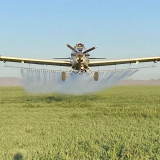
Mike, sorry, 'high G' was a poor description, because I gave no relative comparison. Suffice it to say, my preference is to first slow it down, and then turn, while simultaneously regaining the energy I traded slowing it down. Of course, slowing it down 'a little' and then ratcheting in flaps while laying it on it's side will certainly bring the nose around smartly as well. Maybe I'm too lazy to work that hard?
 There are many ways to skin this cat, mine works out ok for me about 17,000 times a year
 Oh, and while this is not legitimate IMC, it may as well be, because rarely do I get the luxury of working up close to town. On this occasion I did, and it allowed the video to have a 'horizon', and yet it works out peachy... Let her have her head....
Pardon the grainy vid, this was several years ago's hardware
Take care, Rob
Sun Mar 07, 2021 8:46 am
Re: Bush-air
Rob, you got the eyes of a cat my friend.
- Barnstormer offline
- Posts: 2700
- Joined: Sun Oct 14, 2012 7:42 am
- Location: Alaska
- Aircraft: C185
DISPLAY OPTIONS
Who is online
Users browsing this forum: No registered users and 3 guests
Latest Features
-
Live to Tell
A Minnesota pilot is surprised to learn that the sudden asymmetric drag of an out-of-rig ski can…Read More -
Creators
Working in some of the Yukon's most beautiful and remote environments, photographer Simon Blakesley captures aircraft in…Read More -
Aircraft Ownership and Maintenance
Upgrading to big tires can make a huge difference in backcountry performance, but with those gains come…Read More -
Tales from Yesteryear
In this tale from bush flying yesteryear, Don Cogger signs up to help Atlee Dodge Jr recovery…Read More


Latest Knowledge Base
-
Destinations
A regional guide with ideas for winter camping destinations in California, Nevada, New Mexico, and Arizona.Read More -
Aircraft
Finding an affordable aircraft that can handle the backcountry for $80K or less? A challenge for sure, but with the…Read More -
Aircraft
01.29.2018 - Zane - Updated tire diameter graphic to add 8.50x10 Guide to tires for use in the backcountry and off-airport landing…Read More -
Pilots
12.22.2013 - Initial article format Operating aircraft on skis and negotiating a snow-covered landscape is an entirely unique skillset and environment.…Read More


