contactflying wrote:I am not a Beaver driver, MTV, so I am deferring to you. Would any of those Beaver drivers have lived by allowing the nose to go down in the turn rather than stall? Did any of them have vertical space available that simply was not used? The airplane looks solid; would any of them have survived the crash allowing the nose to go down even when vertical space was not available rather than stall?
Again, I understand that you and many other pilots would have been out ahead of the airplane and have gotten the flaps down before the constriction in horizontal space. I fussed with you about that until BC and Butch Washtock made me realize that slower airspeed and lots of adequate rudder to pull down aileron around was best in places with slopes too steep for ridge lift and too tight for standoff from the upwind ridge.
Jim,
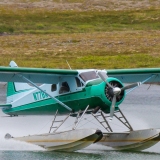
The Beaver is a special case....it really doesn’t like turning much without flaps. So much so that a VERY extensive mod was created called the Barron Wing. Changes angle of incidence and adds a bunch of “devices” to the wings.
Yet, a stock Beaver will turn with the best of them with flaps deployed. This was beat into me during my three day checkout in the plane by a guy with tens of thousands of hours in de Havilland aircraft.
Obviously, I wasn’t in any of those planes that crashed turning, so I can’t answer your question.
That said, one feature of the Beaver is a round cowl. So, trying to use the cowling reference the horizon is harder than something with a flat cowl. And, most of these were in terrain, which doesn’t help.
The simple solution is to simply stay out of situations where you need to turn around tight. That’s easy to say, but a lot harder to accomplish when working.
I always felt really good in the beaver in terrain. I knew how to turn safely, and always configured ahead of time if things seemed to be getting sketchy. I’d be happy flying one today if someone else paid the gas bill. And, no way I’d install a Barron wing.
MTV