Backcountry Pilot • Bush-air

Bush-air

A general forum for anything related to flying the backcountry. Please check first if your new topic fits better into a more specific forum before posting.
82 postsPage 3 of 51, 2, 3, 4, 5

Re: Bush-air

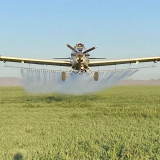
Rob wrote:Oh, and while this is not legitimate IMC, it may as well be, because rarely do I get the luxury of working up close to town. On this occasion I did, and it allowed the video to have a 'horizon', and yet it works out peachy... Let her have her head....

Rob, you've definitely got bigger ones than I do! Whew! That video gave me cold sweats, just watching it! I'll never look at lettuce again without thinking of some guy spraying it in the dark... You guys do amazing work!
JP256 offline
Supporter
User avatar
Posts: 629
Joined: Mon Aug 31, 2015 1:52 pm
Location: Cedar Park
Aircraft: Rans S-6ES

Re: Bush-air

It's actually easier if you completely forgo the use of your landing lights altogether.
Aryana offline
Supporter
User avatar
Posts: 936
Joined: Mon Apr 14, 2014 9:06 am
Location: SoCal
Aircraft: 1955 Cessna 170

Re: Bush-air

The original point of this thread was associated with mountain flying, which sometimes involves turning around in confined areas.

Turning our airplanes involves some interesting and pretty sophisticated aerodynamics, though most of us don't think of turning an airplane as anything but pretty routine.

BUT, the fact is, there are a LOT of pilots out there who not only don't understand the aerodynamics of turning flight, they don't even know which control surface is the one that actually turns the airplane.

For clarity, that'd be the elevator. Not the ailerons, which only create bank, and not the rudder, whose sole responsibility is to keep the turn coordinated.

Now, out in the flats somewhere, at a nice safe altitude, yes, you can initiate a turn and allow the nose to fall through the horizon if you like, and again assuming you don't care about losing altitude.

But, frankly, any pilot who cannot consistently and precisely turn their airplane around in a reasonably minimum radius, while maintaining bank angle AND altitude, should NOT be flying in the mountains.

Notice I did not suggest a particular bank angle, nor did I suggest a particular load factor. If you're comfortable with a 45 degree bank angle, can fly a smooth, consistent 180 degree turn, maintaining altitude, that's fine.....that becomes YOUR base line, and should determine the width of a valley/canyon you should be willing to enter.

But, realistically, a bit steeper and tighter turn is going to be best.

Why do I not train to lower the nose in a turn? Because in the mountains, most canyons are kinda V shaped. And, if I'm in a fairly tight canyon, and I need to turn around, I'm going to need all the canyon I can get. If I lower the nose in the turn, I'm effectively reducing the width of that canyon. That may not be a big deal, if the canyon is really pretty big......but we train for the opposite: What happens if I make the mistake of sticking my nose into a canyon that's really pretty narrow? I'd best be on the top of my game, and allowing the nose to lower during the turn is likely to help me meet my maker.

So, how do I accomplish that? First, you slow to "Canyon Speed" if you're in a somewhat confined piece of geography. I generally use something around Vfe as my Canyon speed for a particular airplane. This is like hitting the "pause button", it slows things down, and gives me more time to think and react if I come around a corner and find something I don't like.

And, in that case (meeting something I don't like), I'm already at flap speed, so I can then lower flaps in preparation for a "Canyon Turn".
Again, I'm slowing things down and I'm also configuring the airplane to effect the smallest radius 180 degree turn, but lowering the stall speed and increasing the lift coefficient of the wing.

At that point, I smoothly roll into a bank angle appropriate for me and my aircraft, apply up elevator to initiate the turn (remember, elevator turns the plane) and add full power. This is a LEVEL turn. No pull up, no loss of altitude.

Why? Because this turn may be the result of getting in a bit too deep in an overcast, and realizing the overcast is lowering ahead. Can't go up, because we're already running our vertical fin in the goo, to give us the maximum canyon width....Remember the V shape?

Why use flaps and why use full power? Flaps create lift. So, on most Cessnas, I use 20 degrees of flap in this gig. At greater flap settings, you're getting too much drag for me, but 20 degrees offers lots of lift, but not so much drag as 30 or 40 flaps. In a Husky, I use full flaps, because even at full flaps we're making lots of lift, and not so much drag. Point is, every airplane is a bit different. You need to practice at altitude and decide for yourself what works best.

Why full power? Because the thrust "blows" the inboard sections of your wings, as well as the horizontal tail and.....the elevators. So, we're using that thrust to keep the airflow energized over the inboard section of the wings, where the stall propagates on most modern wing designs, and we're also energizing the tail surfaces, horizontal and vertical stabilizers and that all important elevator.

That's what I call a "Canyon Turn". Properly executed, in most airplanes, it's pretty amazing how tight you can turn with this technique.

So, is this like an Ag turn? Actually, it's a different procedure, because the task is very different. Look at Rob's video again. Note that at the end of the swath, he starts a pull up, and a turn to the right. The pull up is to offer some maneuvering height......with your wheels just off the crop, rolling into a bank is likely to drag a wing tip....generally not a good thing. Why begin the turn in the opposite direction? To get back onto a swath right beside the last swath. Then, there's a nice smooth turn, allowing the nose to drop as he realigns with the field.....nose needs to drop to burn off height that was gained to keep the wingtip out of the dirt.

Let's put that turn into a confined area, like a canyon: If I'm right up against the right hand canyon wall, as Phil accurately noted we SHOULD be in a tight canyon, we sure can't turn to the right to initiate an ag turn. We may be able to pitch up, but again, if weather is a factor, that's not going to work either. And, as I noted above, if you have lots of room in a canyon, or the walls are totally sheer, maybe allowing the nose to drop during the turn can work. Are you willing to bet your life on that being the case when you NEED this turn?

Again, I can't stress enough that you need to go practice in YOUR airplane at a safe altitude, and practice the procedure frequently. IF you ever get to the point where you really need this procedure, you need to perform it very well.

Now, the Bird Dog video. That airplane and it's crew was lost long before the pilot lost control. Note that it wasn't in a steep canyon at all. A "Canyon Turn" here wouldn't have worked. In fact, the pilot had allowed himself to work his way right up to the absolute limit of that airplane's capability. I practice at minimum controllable airspeed with pilots all the time. When I say MCA, I mean operating at such a high angle of attack (so slow if you prefer), that ANY increase in bank angle or pitch or decrease in power will precipitate a stall. THAT is precisely where that pilot was operating for some time before he lost control of the plane. In the meantime, he was going towards rising terrain in a bowl. He had already used up all the performance that plane had....it simply had no more to give. RIP.

Again, the procedure I'm discussing here is for use in a very specific set of circumstances. That said, a very high percentage of pilots really, seriously do not know how to turn their aircraft. Again, if you can't perform a level banked turn, and maintain altitude all the way through that turn, please stay out of the mountains.

If you still think the ailerons turn the airplane, please search for a short video by Rich Stowell called "Learn to Turn". A google search for Rich Stowell Learn to Turn should find it. The site won't allow me to post the URL.


MTV
mtv offline
Knowledge Base Author
User avatar
Posts: 10515
Joined: Sat Feb 25, 2006 1:47 am
Location: Bozeman

Re: Bush-air

MTV, I would fly with you and feel safer than if I were again medically qualified and flying myself. You are a very organized and safe pilot and an excellent instructor. You make the FAA honestly look good.

A couple of things in reference to what you said about the difference in crop dusting and canyon turn and your excellent recommendation to add full power in canyon turns. If we are using good wind management and staying quite close to the ridge downwind of the valley, we have no horizontal space for the downwind portion of the P turn used in the back and forth spray pattern. If we are in 65-150 hp airplanes in the mountains in the summer, we are probably at full power just to maintain altitude without the added energy of thermal or orographic lift.

However, you are correct that well thought out and planned ingress and egress will preclude getting into dangerous situations.

Concerning aerodynamics and control usage, the former is clean on paper but there are lots of variables out there. The rudder is not the step child of aileron, only used to coordinate the favored aileron. Adverse yaw makes the ailerons work exactly opposite as intended initially and this is confusing students when we bark at them about coordination. Turn is not coordinated initially, but rudder is led to prevent (not just dampen) adverse yaw. You know this from Dutch rolls. Yes, the elevator increases the angle of attack, even in the bank, and thus causes faster rate of turn. It also is the control that causes stall. And it is certainly not the only control that can increase the rate of turn. Yaw in a barber chair is pretty dammed fast and rudder can do that in an airplane. Just like elevator, this can be overdone. With the nose well down, however, rudder can keep us from ramming the nose into something that we could not have avoided by not allowing the nose to go down and just pulling back until we stalled. Wait we might just spin short of the obstruction. Rudder, because of its inefficiency in turning the airplane, is the best control to level the wing cross country or on short final. And it certainly can best handle longitudinal alignment, but those are small yaws (not turns.) Not turns is beneficial on short final and if we keep the centerline between our toes, we automatically keep the wing level.

So in the high mountain pass that cannot be made so we turn back within the horizontal limitations of the two ridges forming the valley, the canyon or any hole to turn to allowing the nose to go down and thus absolutely prevent stall is a good thing.

You teach the fine art of holding the nose up on the horizon in all turns and I teach the sloppy and easy just let the nose go down in all turns. Like the round out and hold off landing technique, you are teaching the far more technical and difficult technique. Energy management, the law of the roller coaster, is a bit more involved and takes planning for the pull up. My question, not for you but for the many of us not as organized and careful as you, which is the safer technique?

By the way, rudder in the direction of the turn pushes the nose down. Again that awful no no.

contact
contactflying offline
Posts: 4972
Joined: Wed Apr 03, 2013 7:36 pm
Location: Aurora, Missouri 2H2
Download my free "https://tinyurl.com/Safe-Maneuvering" e-book.

Re: Bush-air

Based on pure habit, and the definitions in this thread, I am not sure I can any longer safely fly in the mountains.... no really :lol: :lol: :lol:

But also based on my data log of the nights work, I am certain I can tell you how far I need to turn downwind, if at all (that's the little turn to the right) to return to a target +/- 3' on a track that will retain the desired heading +/- 0°. That means confined or not, I know what I need to get it bent around, and consequently will strive not to find myself in a predicament where it will simply no longer be possible. And that is what gets people dead... riding it out way longer than they need to be....

And the best part of this message, is that I do not consider myself a natural (whatever that means) or even much more than an average stick.... In other words, pretty much anyone can learn this stuff...

FWIW, I *Know* your turn works Mike! :D I also know that there are ways to lessen the work load on your body (the same load the airplane feels) and get the precisely same thing done.

Also FWIW, 'the turn to the right' or downwind portion of an ag turn is to gain room to return to a target +/- 65' away after a complete course reversal. Exact numbers vary by deposition, but you get the idea... what I'm saying is, 65' away is NOT a canyon, it's a slit.

If you want real world numbers, I can easily pony up..... The aircraft in that old vid is a 510 Thrush. It reverses freely in 1200', needs a pull or downwind turn to do 900', and will easily come around in 600' if you care to pull the nose up some to slow it up while rolling a little downwind. These numbers are loaded and working speeds... So to extrapolate this into 'mountain flying' in a quarter mile wide canyon (maybe we're killing dandelions? :lol: ), an all up weighted down Thrush going 130 +/- MPH and hugging the downwind side (you are flying the correct side of the canyon I assume?), would need NO downwind turn, just pitch it up to bleed the speed, roll it over, and let it fall back to the exact same altitude it was +/- 3'....

But wait, more numbers.... don't want to pitch it up? maybe there's badd juju clouds? the same thing can be done by slowing it up with the go-go lever, and letting the nose drop... yes you will lose altitude. How much? the same 300' it would take to slow it down pulling it up to turn. The physics don't lie :wink: Now 300' lower but completely about faced you have energy (you just dropped 300') and have more coal to lay back on it.... no really...

Take care, Rob
Rob offline
Supporter
User avatar
Posts: 1569
Joined: Sat Mar 11, 2006 10:34 am

Re: Bush-air

Cut all those numbers in half and you have the Pawnee. Or just about any light training airplane out there. It's not the airplane guys. It's not the pilot. It is the technique and the very safe design of all certified light general avaition airplanes.

The design of the airplane is to fly. Only with a pilot on board, pulling on the elevator, can it be made to quit flying and fall.
contactflying offline
Posts: 4972
Joined: Wed Apr 03, 2013 7:36 pm
Location: Aurora, Missouri 2H2
Download my free "https://tinyurl.com/Safe-Maneuvering" e-book.

Re: Bush-air

Back to the OP, I have seen CCs videos and he understands and uses the design feature of the nose going down naturally in the normal mountain canyon turn. That is, and was in the video, flying up the downwind ridge of a valley ridge system to higher terrain. Using the vertical space available in the valley in the turn to down drainage is sort of a no brainer. This is VFR, artistic, contact with the earth reference flying that both CC and MTV are skilled at.

If CC had to write a training manual for the school: artistic, contact, common sense reference is not applicable. They want numbers, V speeds, altitude, and such.

They have a high altitude instrument orientation that will not even allow the a downwind turn into the canyon would be disastrous. They prefer IFR or integrated instrument VFR. They do not understand that we who fly near the earth, say like in the pattern or mountains, cannot live with the incredibly small and slow pitch, yaw, and bank movements necessary to keep everything in the basket. You can actually hold a heading, although poorly, using coordinated turns as long as the necessary aileron, rudder, and elevator pressures are light. No movement, never control movement, and certainly not the rudder yaw only that best handles longitudinal alignment whether with the target or offset angle that moves the butt in a crab toward the target.

So my hat is off to CC or anybody who can satisfy the FAA with a contact flying syllabus that actually gets into a valley ridge up to pass or grand canyon type system. I don't think they allow less than a thousand or two above the highest peak. Go CC.
contactflying offline
Posts: 4972
Joined: Wed Apr 03, 2013 7:36 pm
Location: Aurora, Missouri 2H2
Download my free "https://tinyurl.com/Safe-Maneuvering" e-book.

Re: Bush-air

Okay, let me take one more shot at this: Some data, which illustrates the "Problem" we face as instructors:

"Inflight loss of control is the leading cause of fatalities in aviation. It dominates among homebuilts, in general aviation as a whole, and in the commercial jet fleet worldwide.For the period 2001–2010, the GA JSC found that more fatal general aviation accidents resulted from LOC-I than from the next five occurrence categories combined. One-in-four fatal LOC-I accidents occurred during the maneuvering phase of flight—more than during any other phase. (If separated into its own broad occurrence category, LOC-I while maneuvering would rank third overall, behind CFIT.)."

Here's a chart:

Image

And, here's a breakdown of that statistic:

Image"

"During safety programs over the last couple of years, nearly 900 pilots were asked, “What is the primary control surface you use when turning an airplane?”

The answers: Elevator, 14 percent
Rudder, 23 percent
Ailerons, 63 percent
Eighty-six percent did not recognize “elevator” as the correct answer. Nearly 1-in-4 believed the rudder turned the airplane despite multiple warnings to the contrary in the FAA’s Airplane Flying Handbook. Even while in an established turn, trainees often fail to identify the elevator as the control being used at that moment to curve the flight path. Hence Langewiesche’s conclusion,“pilots, as a group, simply don’t know how to turn.”

The above Quotes and charts are from Stowell and Winburn 2016, "LEARN TO TURN Reducing Loss of Control through an Improved Training Methodology" excerpted from S.A.F.E. Resource Center, SafePilots.org.

So, Rob, my point is simply that when starting the process of teaching flight in the mountains with a "Pilot", the CFI would be wise to understand what those charts represent.....a singularly poor job historically of our flight training programs of teaching pilots to turn SAFELY. The old flight instructor mantra "Begin Where the Student is At" applies here....big time.

First, we need to ensure that the "student" is actually competent to fly the airplane safely in maneuvering flight.....any CFI will verify that an occasional student will try to kill you, after all, and oftentimes, those are pretty "experienced" pilots. Or at least that's what their logbooks might suggest.

Now, getting into the mountains, I can tell you that one of the most difficult tasks for the CFI is to get a "student" to fly close to a canyon wall. This enables us to use the maximum width of the canyon, after all. Seriously, with some folks, you almost need a firearm to get them within 200 feet of dirt or rock--laterally, that is. Oh, they'll often be happy to fly along pretending they're an ag operator, flying at ten feet ABOVE dirt/rock. But, just try to get them to move to one side of a canyon.

Then, of course, there's actually understanding and predicting the direction, velocity and resultant EFFECT of any wind. That is a book unto itself, but needs to be well understood so as to decide a) What side of a canyon to fly, and, more importantly b) Whether we even want to be IN that canyon today.

Once turning is mastered (and believe me, I've run into a number of experienced pilots who weren't very competent at that basic skill), we understand the effects of winds in terrain, the notion of density altitude, etc, etc.....we MAY be ready to operate safely in mountainous terrain. Maybe.

Rob has noted that you have to be pretty HUA (Head Up A...) to actually paint yourself into a canyon that you can't turn around in.....and I certainly wouldn't argue that. Nevertheless, it happens, unfortunately it happens somewhat regularly.

So, really, what I've been talking about in this thread is that the pilot really needs to know how to fly his/her airplane, and turning is obviously, based on the charts above, something many pilots don't do well.

And then, of course, that pilot also needs to know a good bit about mountain weather, effects of wind, etc. to safely operate in mountainous terrain. But, that's beyond the scope of this discussion.

Most of all, learn to turn....safely.

MTV
mtv offline
Knowledge Base Author
User avatar
Posts: 10515
Joined: Sat Feb 25, 2006 1:47 am
Location: Bozeman

Re: Bush-air

The wing in a bank lifts the airplane in a horizontal direction, a turn, as well as in a vertical direction, 1 g when level. Compare the high g accelerated stall at 60 degree bank starting at cruise airspeed with the starting just above stall airspeed energy management 1 g (or maybe 1.2 g max if we take some of the natural nose tuck out) turn also at 60 degree bank. Rob, other aggies, pipeline pilots, and gunship pilots turn faster with just the wing incidence and maybe a bit of elevator or back pressure on the cyclic. Doing the full P turn, more than 180 degree reversal, can safely be done in sixteen seconds in a near empty Pawnee. No, absolutely not in a level turn. To illustrate the pure energy management turn with pilots, I start them out allowing no back pressure on the elevator and they get around quite quickly, enough that they are amazed. And when slow at the top of the roller coaster, the top of the pitch up, I have them lead rudder and put in lots of rudder with the 60 degrees of bank to get the turn mostly done while slow and more efficient in rate of turn. I say something crazy like "push the nose around, don't let the nose push you around" because most pilots are not familiar with the incredibly fast rate of turn necessary (at 60 degree bank) to center the ball. Don't look. We need to learn to "let her have her head" as Rob said.

In the aerodynamics book, elevator is the control that causes turn. In the limited vertical and horizontal space of "maneuvering flight," "what's what" may be a bit different.
contactflying offline
Posts: 4972
Joined: Wed Apr 03, 2013 7:36 pm
Location: Aurora, Missouri 2H2
Download my free "https://tinyurl.com/Safe-Maneuvering" e-book.

Re: Bush-air

So, really, what I've been talking about in this thread is that the pilot really needs to know how to fly his/her airplane, and turning is obviously, based on the charts above, something many pilots don't do well.

And then, of course, that pilot also needs to know a good bit about mountain weather, effects of wind, etc. to safely operate in mountainous terrain. But, that's beyond the scope of this discussion.

Most of all, learn to turn....safely.

MTV


^^^THIS^^^
offroute offline
User avatar
Posts: 78
Joined: Tue Apr 15, 2014 2:52 pm
Location: Reno
Aircraft: Kitfox Super Sport Turbo SLSA

Re: Bush-air

CC began this lesson with the exact same message as MTV posted. Stats proving that CFIT and LOC is why pilots doing this type of flying perish. And did beat us up about how a string of wrong decisions would land us in the situation.
Good conversation going on here.
Here are the "practice canyons" and paths.


Image


Image


Image
sierrasplitter offline
User avatar
Posts: 203
Joined: Fri Dec 01, 2017 11:55 am
Location: Lakeside
Aircraft: 56 PA 22/20

Re: Bush-air

As MTV and Rob have pointed out, we don't need to poke our nose into a desert canyon where down drainage is not obvious. Good practice, however, for the real thing in the mountains where DA will be much higher.
contactflying offline
Posts: 4972
Joined: Wed Apr 03, 2013 7:36 pm
Location: Aurora, Missouri 2H2
Download my free "https://tinyurl.com/Safe-Maneuvering" e-book.

Re: Bush-air

Excellent and informative information with lots of good points. First a point that a canyon turn is not just for canyon use. Second I would like to add a time when flying close to the valley/mountain side may not be the best plan. If your turn direction will make you loose site of the ground and risk spatial disorientation( not all of us have Rob's skills) it may be best to offset from the valley/mountain side the needed distance of the turn and turn into the mountain to maintain site of ground. You can find this situation with crappy weather over a Coast line, or sometimes next to a mountain range. The crap weather/smoke from fires will hold off the side the the mountain/valley with enough room to stay VFR for the entire flight. You will have vertical space next to the mountain but very little horizontal room. However, several factors can cause this space to close off so you always need the bail out. Know your aircraft and the space required for a tight 180 degree turn or this method is useless and dangerous. Holding off the side enough to make the turn means you will not be turning into a IMC condition. You will also notice the scud/smoke moving into you quicker. This is just something to think about if you ever get in this situation. As the others have said best avoid it to start with if possible.
DENNY
DENNY offline
Posts: 773
Joined: Tue Aug 27, 2013 7:16 pm
Location: CHUGIAK
DENNY

Re: Bush-air

Good point Denny. As with any marginal visual conditions, staying in contact with the earth is critical. It is the transition to flight by reference to instruments that generally kills pilots. This was what happened to a good IMC capable pilot flying the helicopter with Kobe Bryant in marginal conditions with a go up rather than go down emergency orientation. Whatever keeps visual contact is generally safer than blasting up into the clouds from low altitude scud running. Most pipeline patrol pilots I knew occasionally pitched up into IMC in marginal weather when conditions worsened rapidly. I always chose to get lower and turn back down the pipeline going the way I had come with full knowledge of what terrain and obstructions were back there. And I have just landed, especially with a helicopter. More than once in the NMARNG, we landed in formation rather than continue into snow storms. 100' is life saving vertical space available to reverse course with airplane or helicopter. As with your fire fighting situation, a turn toward the ridge you are riding is safer than a turn into IMC.
contactflying offline
Posts: 4972
Joined: Wed Apr 03, 2013 7:36 pm
Location: Aurora, Missouri 2H2
Download my free "https://tinyurl.com/Safe-Maneuvering" e-book.

Re: Bush-air

Well, that should teach Sierrasplitter to post any future trip reports!
Zzz offline
Janitorial Staff
User avatar
Posts: 2855
Joined: Fri Oct 08, 2004 11:09 pm
Location: northern
Aircraft: Swiveling desk chair
Half a century spent proving “it is better to be thought a fool than to open your mouth and remove all doubt.”

Re: Bush-air

Sierrasplitter,

How is CC doing? Is he still colorful? What is involved in his full course?

contact
contactflying offline
Posts: 4972
Joined: Wed Apr 03, 2013 7:36 pm
Location: Aurora, Missouri 2H2
Download my free "https://tinyurl.com/Safe-Maneuvering" e-book.

Re: Bush-air

Well, that should teach Sierrasplitter to post any future trip reports!


Nahh, good lively discussion. I used to post on Teton Gravity Research Forums so I have tough skin ( Here, nobody calls you JONG or asks for Naked pics of your wife or girlfriend ) So, actually the crowd is rather tame over here.

How is CC doing? Is he still colorful? What is involved in his full course?


He was a typical guy my age (59) with the pressure of the pandemic . Restaurant/Bar was closed so He cooked every meal. ( Great Food) . After the afternoon ground sessions the beverages and conversation were very enjoyable.

I did learn a lot , and would go again.

BTW- got the Books Jim. Thanks Been Studying them
sierrasplitter offline
User avatar
Posts: 203
Joined: Fri Dec 01, 2017 11:55 am
Location: Lakeside
Aircraft: 56 PA 22/20

Re: Bush-air

I am loving this thread, got me thinking a lot.....oh shit.

New scenario, the "impossible turn" we all know that there is a moving altitude that you cannot make it back to the runway. But let's delve a bit deeper using the conversation so far.

Would you want to (depending on the plane per MTV) dump in full flaps ala canyon turn to make the turn as small a radius as possible, and setting you up for the downwind landing at lowest speed. Unloaded of course.

What say you?
Headoutdaplane offline
User avatar
Posts: 526
Joined: Thu May 29, 2008 5:21 pm
Location: Homer, AK
The winner is the person with the most stories when he dies, not the most gold.
www.belugaair.com

Re: Bush-air

I think you meant to say moving attitude rather than moving altitude, but the latter is actually accurate. It has been a six second deal in all but a couple of my low level forced landings. Cessna's flaps are so good, I usually found the switch. Pawnee didn't bother. CallAir, A9 didn't have flaps. Quail already had one knoch flaperons when working.

I worked in airplanes that warranted failure mode, so I never had the three second delay to accept the engine failure. I allow that those who say there is generally a three second average delay to accept failure have NTSB evidence that the flaps were not deployed in most six second forced landings.

Flaps are a good thing, the more the better, on any forced landing but especially downwind. Also in those six seconds, even after an energy management turn (zoom reserve from airspeed not engine,) I was generally high and fast to the landing zone requiring rudder to the stop forward slip coming out of the turn. From low altitude, acceptable LZ may not be the runway but generally is not straight ahead. If runway it will likely be at an angle to the runway. What we can see in the near hemisphere, however, is limited enough that the choice is obvious.
contactflying offline
Posts: 4972
Joined: Wed Apr 03, 2013 7:36 pm
Location: Aurora, Missouri 2H2
Download my free "https://tinyurl.com/Safe-Maneuvering" e-book.

Re: Bush-air

"zoom reserve from airspeed not engine" I just realized most airplanes are at Vy rather than at cruise airspeed when this happens. This makes a huge, huge difference. At that airspeed and with the average six second delay, I can see the level wings straight ahead thinking. The impossible turn requires either failure mode thinking or pre-planning or basic low ground effect on takeoff until zoom reserve in airspeed is developed. At Vy, options are really limited for low altitude stuff. No real altitude and no airspeed is no zoom reserve, either in the form of airspeed or altitude. No zoom reserve means no ability to safely maneuver. No zoom reserve really sucks at low altitude.
contactflying offline
Posts: 4972
Joined: Wed Apr 03, 2013 7:36 pm
Location: Aurora, Missouri 2H2
Download my free "https://tinyurl.com/Safe-Maneuvering" e-book.

DISPLAY OPTIONS

PreviousNext
82 postsPage 3 of 51, 2, 3, 4, 5

Who is online

Users browsing this forum: No registered users and 1 guest

Latest Features

Latest Knowledge Base