There are wing extensions, which in Canada, but not the US, increase the gross weight by 200 pounds….I think.
Longer wings help performance, particularly in high density altitude.
I believe that kit is approved in the US, but without the GW bump. You might look into what Argentina says.
Me, I’d keep the wing just the way you have it.
MTV
My Super 170
Wed May 18, 2022 8:52 pm


Thu May 19, 2022 8:49 am
Re: My Super 170
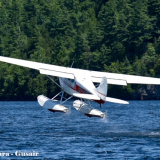
I'm planning WingX extensions ths Fall but more for the increased lift over load. I'm 80-90% of the time either on floats or wheelskis, lift is gold for that kind of flying.
Thu May 26, 2022 3:45 pm
Re: My Super 170
It seems that all newbie 170 owners, perhaps all airplane owners follow the same trajectory. Dream about the bird, search for the bird, find the bird, buy the bird, modify the bird…
A few google clicks and you can find a litany of keyboard experts who can regurgitate a must-have list in under nine seconds. Extended baggage, 180 gear, V-brace, 180 horse… the list goes on and on.
For me, my bird was fortunate to have a great start being kitted out with tons of mods. The previous owner had already invested in a cuff, ADSB, GNS430, new interior, lady legs, dbl puck breaks, etc etc etc…
That said, one of the few things it was missing was VGs.
It’s hard for a new owner to parse what is good and what is bad. Certainly everyone seemed to tout their necessity, but were they really needed?
Now I come from the glider world, and it was there where I met VGs for the first time. Soaring for me was racing gliders. To win these races we fiddled with everything to make our birds aerodynamically as clean and efficient as possible. And for some of us one of those tricks was to glue a few VGs in well chosen places to reduce drag.
Reduce drag with additional bits sticking out in the breeze?
Well, VGs prevent the airflow from lifting off, or separating, from any (wing, tail, fuselage,…) surface and thereby creating huge pockets of turbulence, ie drag.
A typical region where separation frequently occurs is where the wing meets the fuselage. On some gliders a few carefully placed VGs create swirls big enough so that the flow stays attached.
The little bit of drag added by the VGs is more than compensated by avoiding a big bubble of turbulence.
On all other aircraft VGs are not so much about reducing drag. They’re about improving (aileron) control (mostly) and adding lift (a little) at high angle of attack.
The swirling air behind them remains attached further along the wing chord and so more of it hits the aileron.
More control!
The higher the angle of attack, the more this effect is noticeable.
As I mentioned, my 170 came with the Sportsman. I was already impressed by its slow flight performance… the stall behavior was insane…what stall? More like a mush.
Since most of my glider instructors were WWII pilots hardly any flight passed by without a little excitement. A few turns of a spin, a hammerhead, … so stalls don’t bother me. My past is all about coordination and energy management. In fact I really like the stall. I want to KNOW where the limits are, so I can work the wing to maximize performance.
In my short time flying the 170, I found that with the yoke way back, I could use the rudder to counter wing drop and turning tendencies and keep it mushing all the way down.
With some playful experimentation, I found that with rather pronounced aileron inputs in that mush, I could provoke a gentle wing drop. Ease up on the yoke a bit and the wing would fly again.
I had really started to fall in love with that 100 series NACA 2412 wing… but could it perform better?
Given my aerodynamic curiosity - and the many favorable reports - I decided to add VGs.

The install was pretty painless. Unlike it’s bigger brother the 180, the C170 install is a bit simpler as there are no VGs on the sides of the vertical stab. Measure out the landmarks, stick on the template, prep and paint the VGs, then glue em on with the provided locktite epoxy. Easy peasy.
Did anything change? Yes.
With the VGs installed, I was able to get “beyond” the mush. At a higher angle of attack I could induce a benign break, meaning that the nose would drop. With only the slightest easing up on the elevator she would fly again very quickly.
Some folks talk about VGs and “stall speed,” but it’s important to understand that VGs are not a “STOL” device per se… They don’t lower the stall speed. What VGs do is keep the controls “crisp” down low, which in short, give you more confidence and authority at slow speeds.
Another interesting observation I had was that with aileron input, just before the break the wing would drop faster than without VGs, however, as long as I kept the angle of attack in the mushy region I had full aileron authority, no wing drop. Pretty cool!
So was it worth it? I say yes. The VG’s on the elevator made for more pitch control a low airspeed, enabling higher angle of attack - and more control at slow touchdown speeds.
On the wing, they kept the stall behavior benign and gave more aileron authority.
Something gained and very little lost: I’m quite happy with my decision to go with VGs.
At the end of the day, I’d call them a win. Curious as to the experience of others?
A few google clicks and you can find a litany of keyboard experts who can regurgitate a must-have list in under nine seconds. Extended baggage, 180 gear, V-brace, 180 horse… the list goes on and on.
For me, my bird was fortunate to have a great start being kitted out with tons of mods. The previous owner had already invested in a cuff, ADSB, GNS430, new interior, lady legs, dbl puck breaks, etc etc etc…
That said, one of the few things it was missing was VGs.
It’s hard for a new owner to parse what is good and what is bad. Certainly everyone seemed to tout their necessity, but were they really needed?
Now I come from the glider world, and it was there where I met VGs for the first time. Soaring for me was racing gliders. To win these races we fiddled with everything to make our birds aerodynamically as clean and efficient as possible. And for some of us one of those tricks was to glue a few VGs in well chosen places to reduce drag.
Reduce drag with additional bits sticking out in the breeze?
Well, VGs prevent the airflow from lifting off, or separating, from any (wing, tail, fuselage,…) surface and thereby creating huge pockets of turbulence, ie drag.
A typical region where separation frequently occurs is where the wing meets the fuselage. On some gliders a few carefully placed VGs create swirls big enough so that the flow stays attached.
The little bit of drag added by the VGs is more than compensated by avoiding a big bubble of turbulence.
On all other aircraft VGs are not so much about reducing drag. They’re about improving (aileron) control (mostly) and adding lift (a little) at high angle of attack.
The swirling air behind them remains attached further along the wing chord and so more of it hits the aileron.
More control!
The higher the angle of attack, the more this effect is noticeable.
As I mentioned, my 170 came with the Sportsman. I was already impressed by its slow flight performance… the stall behavior was insane…what stall? More like a mush.
Since most of my glider instructors were WWII pilots hardly any flight passed by without a little excitement. A few turns of a spin, a hammerhead, … so stalls don’t bother me. My past is all about coordination and energy management. In fact I really like the stall. I want to KNOW where the limits are, so I can work the wing to maximize performance.
In my short time flying the 170, I found that with the yoke way back, I could use the rudder to counter wing drop and turning tendencies and keep it mushing all the way down.
With some playful experimentation, I found that with rather pronounced aileron inputs in that mush, I could provoke a gentle wing drop. Ease up on the yoke a bit and the wing would fly again.
I had really started to fall in love with that 100 series NACA 2412 wing… but could it perform better?
Given my aerodynamic curiosity - and the many favorable reports - I decided to add VGs.
The install was pretty painless. Unlike it’s bigger brother the 180, the C170 install is a bit simpler as there are no VGs on the sides of the vertical stab. Measure out the landmarks, stick on the template, prep and paint the VGs, then glue em on with the provided locktite epoxy. Easy peasy.
Did anything change? Yes.
With the VGs installed, I was able to get “beyond” the mush. At a higher angle of attack I could induce a benign break, meaning that the nose would drop. With only the slightest easing up on the elevator she would fly again very quickly.
Some folks talk about VGs and “stall speed,” but it’s important to understand that VGs are not a “STOL” device per se… They don’t lower the stall speed. What VGs do is keep the controls “crisp” down low, which in short, give you more confidence and authority at slow speeds.
Another interesting observation I had was that with aileron input, just before the break the wing would drop faster than without VGs, however, as long as I kept the angle of attack in the mushy region I had full aileron authority, no wing drop. Pretty cool!
So was it worth it? I say yes. The VG’s on the elevator made for more pitch control a low airspeed, enabling higher angle of attack - and more control at slow touchdown speeds.
On the wing, they kept the stall behavior benign and gave more aileron authority.
Something gained and very little lost: I’m quite happy with my decision to go with VGs.
At the end of the day, I’d call them a win. Curious as to the experience of others?

Thu May 26, 2022 8:30 pm
Re: My Super 170
140eagles wrote:It seems that all newbie 170 owners, perhaps all airplane owners follow the same trajectory. Dream about the bird, search for the bird, find the bird, buy the bird, modify the bird…
A few google clicks and you can find a litany of keyboard experts who can regurgitate a must-have list in under nine seconds. Extended baggage, 180 gear, V-brace, 180 horse… the list goes on and on.
For me, my bird was fortunate to have a great start being kitted out with tons of mods. The previous owner had already invested in a cuff, ADSB, GNS430, new interior, lady legs, dbl puck breaks, etc etc etc…
That said, one of the few things it was missing was VGs.
It’s hard for a new owner to parse what is good and what is bad. Certainly everyone seemed to tout their necessity, but were they really needed?
Now I come from the glider world, and it was there where I met VGs for the first time. Soaring for me was racing gliders. To win these races we fiddled with everything to make our birds aerodynamically as clean and efficient as possible. And for some of us one of those tricks was to glue a few VGs in well chosen places to reduce drag.
Reduce drag with additional bits sticking out in the breeze?
Well, VGs prevent the airflow from lifting off, or separating, from any (wing, tail, fuselage,…) surface and thereby creating huge pockets of turbulence, ie drag.
A typical region where separation frequently occurs is where the wing meets the fuselage. On some gliders a few carefully placed VGs create swirls big enough so that the flow stays attached.
The little bit of drag added by the VGs is more than compensated by avoiding a big bubble of turbulence.
On all other aircraft VGs are not so much about reducing drag. They’re about improving (aileron) control (mostly) and adding lift (a little) at high angle of attack.
The swirling air behind them remains attached further along the wing chord and so more of it hits the aileron.
More control!
The higher the angle of attack, the more this effect is noticeable.
As I mentioned, my 170 came with the Sportsman. I was already impressed by its slow flight performance… the stall behavior was insane…what stall? More like a mush.
Since most of my glider instructors were WWII pilots hardly any flight passed by without a little excitement. A few turns of a spin, a hammerhead, … so stalls don’t bother me. My past is all about coordination and energy management. In fact I really like the stall. I want to KNOW where the limits are, so I can work the wing to maximize performance.
In my short time flying the 170, I found that with the yoke way back, I could use the rudder to counter wing drop and turning tendencies and keep it mushing all the way down.
With some playful experimentation, I found that with rather pronounced aileron inputs in that mush, I could provoke a gentle wing drop. Ease up on the yoke a bit and the wing would fly again.
I had really started to fall in love with that 100 series NACA 2412 wing… but could it perform better?
Given my aerodynamic curiosity - and the many favorable reports - I decided to add VGs.
The install was pretty painless. Unlike it’s bigger brother the 180, the C170 install is a bit simpler as there are no VGs on the sides of the vertical stab. Measure out the landmarks, stick on the template, prep and paint the VGs, then glue em on with the provided locktite epoxy. Easy peasy.
Did anything change? Yes.
With the VGs installed, I was able to get “beyond” the mush. At a higher angle of attack I could induce a benign break, meaning that the nose would drop. With only the slightest easing up on the elevator she would fly again very quickly.
Some folks talk about VGs and “stall speed,” but it’s important to understand that VGs are not a “STOL” device per se… They don’t lower the stall speed. What VGs do is keep the controls “crisp” down low, which in short, give you more confidence and authority at slow speeds.
Another interesting observation I had was that with aileron input, just before the break the wing would drop faster than without VGs, however, as long as I kept the angle of attack in the mushy region I had full aileron authority, no wing drop. Pretty cool!
So was it worth it? I say yes. The VG’s on the elevator made for more pitch control a low airspeed, enabling higher angle of attack - and more control at slow touchdown speeds.
On the wing, they kept the stall behavior benign and gave more aileron authority.
Something gained and very little lost: I’m quite happy with my decision to go with VGs.
At the end of the day, I’d call them a win. Curious as to the experience of others?
My experience with VGs on a stock 170 wing was similar to yours. A little gain, but nothing I would consider very significant.
The difference? My 170 spent a lot of time on floats. Fueling an airplane on floats necessitates climbing up high enough to reach the fuel fillers, while hanging on to the lift ring with one hand and hose or five gallon can in the other. There were a couple times I very nearly ripped a big hole in my wrist on a VG.
Then there were wing covers, you see, my airplane lived outdoors all year. Messing with wing covers on a VG equipped plane can be frustrating, until you get the hang of it….then the wind comes up.
So, for me, the very minimal improvements that the VGs impart on a Cessna wing aren’t worth the hassle. Now, VGs on a Super Cub? Well worth the investment.
And BTW, my current 175 has both Sportsman and VGs. Both installed before I bought the plane. And, this plane never goes on floats and lives in a hangar.
But, thanks for your very honest assessment of the modest benefits of VGs on a Cessna wing. When most pilots spend that much money on a mod, it is reported to be the best thing since sliced bread.
MTV
Fri Jun 10, 2022 2:54 pm
Re: My Super 170
Well, I really came to like the mods ON my 170, but I never gave much thought to the accessories to bring IN the bird to best take care of it during my dreamed of adventure trips to fields away from home base.
That topic never came up while exploring nice and challenging places for a couple of hours because I always came back to the hangar and its rather complete infrastructure.
Before I finally took off for a weekend to camp under the wing Bigrenna helped me to put together a basic kit (and supplies).
Everything went well, there was nothing to fix or replace and so I didn’t have to use anything I brought except the tie-down kit. It was one of its parts which didn’t entirely convince me.

To secure the rudder against banging around in gusts the previous owner had left a flat nylon cord with two plastic hooks in the extended baggage. There was a small loop in the middle of the rope to wrap it around the taillight and hold the rudder in its centered position.
It did prevent major movement of the rudder but would it stand up to frequent jolts?
It certainly wasn’t keeping the elevator from flapping.
Whenever I left the plane alone I installed the “lock”, more out of a sense of duty than conviction.
Perhaps I’m too concerned, but as a steward of that wonderful machine I’d like to make sure that nothing bad happens to it - and I doubt that stringing bungee cords between yokes across the cockpit and hooking up that nylon cord is the best solution.
So what do you do to secure not only the rudder, but the other control surfaces, as well ?
That topic never came up while exploring nice and challenging places for a couple of hours because I always came back to the hangar and its rather complete infrastructure.
Before I finally took off for a weekend to camp under the wing Bigrenna helped me to put together a basic kit (and supplies).
Everything went well, there was nothing to fix or replace and so I didn’t have to use anything I brought except the tie-down kit. It was one of its parts which didn’t entirely convince me.
To secure the rudder against banging around in gusts the previous owner had left a flat nylon cord with two plastic hooks in the extended baggage. There was a small loop in the middle of the rope to wrap it around the taillight and hold the rudder in its centered position.
It did prevent major movement of the rudder but would it stand up to frequent jolts?
It certainly wasn’t keeping the elevator from flapping.
Whenever I left the plane alone I installed the “lock”, more out of a sense of duty than conviction.
Perhaps I’m too concerned, but as a steward of that wonderful machine I’d like to make sure that nothing bad happens to it - and I doubt that stringing bungee cords between yokes across the cockpit and hooking up that nylon cord is the best solution.
So what do you do to secure not only the rudder, but the other control surfaces, as well ?
Fri Jun 10, 2022 3:15 pm
Re: My Super 170
My 170 came with a similar device to capture the rudder. The elevator was locked with the standard Cessna gust lock, which consists of a long piece of bent steel, the end of which goes through a hole in the panel gusset which the control column goes through. Once you line up the control column so that the holes match, you insert the control lock. If it's a Cessna original, it'll then block the throttle with a "RBF" flag on the opposite end.
It's pretty easy to fabricate something like that if you don't have what came with the plane. They are for sale around as well.
This is also what I use on the 175. It locks both the elevators and the ailerons. The rudder lock you show works pretty well on the rudder, or if you don't have something similar, move the tailwheel around till it engages with the rudder. That'll keep the rudder from banging in MOST winds.
Some folks don't like the internal control locks, arguing that the wind then puts stresses on the control cables and circuit. That's true, but first, you SHOULD be parked facing into the wind, in which case, the control lock holds the controls neutral, so no harm no foul. If the winds from behind (sometimes shit happens), then yes, this lock does put some stresses on the control circuits.
I've operated Cessnas for a long time, and worked them in some pretty windy country, and never had any concerns about using the internal control lock.
Just remember to remove prior to flight.....
MTV
It's pretty easy to fabricate something like that if you don't have what came with the plane. They are for sale around as well.
This is also what I use on the 175. It locks both the elevators and the ailerons. The rudder lock you show works pretty well on the rudder, or if you don't have something similar, move the tailwheel around till it engages with the rudder. That'll keep the rudder from banging in MOST winds.
Some folks don't like the internal control locks, arguing that the wind then puts stresses on the control cables and circuit. That's true, but first, you SHOULD be parked facing into the wind, in which case, the control lock holds the controls neutral, so no harm no foul. If the winds from behind (sometimes shit happens), then yes, this lock does put some stresses on the control circuits.
I've operated Cessnas for a long time, and worked them in some pretty windy country, and never had any concerns about using the internal control lock.
Just remember to remove prior to flight.....
MTV
Sun Jun 19, 2022 6:15 pm
Re: My Super 170
I don't have much experience with my 170 yet.... but I purchased F. Atlee Dodge PN ADCS-GL "Cessna Gust Locks" for the ailerons. They seem to do the job fine. I made a nylon bridle like yours for the rudder. If its going to be windy and its tied out I bungie the yoke forward by running a bungie cord behind the rudders and around the yoke. I'm not super pleased about the bungie arrangement but it prevents the elevator from being able to pinch the hooks at the end of the nylon bridle.
People seem to be getting along just fine by doing nothing other than running the seatbelt through the yoke so I think we may be overthinking this to a certain extent.
People seem to be getting along just fine by doing nothing other than running the seatbelt through the yoke so I think we may be overthinking this to a certain extent.
- SmokeyTheBear offline

- Posts: 136
- Joined: Fri Jul 10, 2020 6:55 am
- Location: Charlestown
- Aircraft: Cessna 170B
Sun Jun 19, 2022 6:33 pm
Re: My Super 170
SmokeyTheBear wrote:I don't have much experience with my 170 yet.... but I purchased F. Atlee Dodge PN ADCS-GL "Cessna Gust Locks" for the ailerons. They seem to do the job fine. I made a nylon bridle like yours for the rudder. If its going to be windy and its tied out I bungie the yoke forward by running a bungie cord behind the rudders and around the yoke. I'm not super pleased about the bungie arrangement but it prevents the elevator from being able to pinch the hooks at the end of the nylon bridle.
People seem to be getting along just fine by doing nothing other than running the seatbelt through the yoke so I think we may be overthinking this to a certain extent.
Problem with running the seat belt through the yoke is two fold: Ailerons can still move…some.
But the big one: you now have full nose up elevator input.
Wind on nose wants to flip plane over.
I prefer the control lock that Cessna provided, which locks elevator and ailerons neutral.
If you have a BIG wind on the tail, you have a lot of problems, but at least the controls won’t be banging at the stops.
Don’t park tail into wind.
MTV
Mon Jun 20, 2022 4:44 am
Re: My Super 170
Is there a Cessna control lock for a 170 ?
Mon Jun 20, 2022 6:22 am
Re: My Super 170
Mapleflt wrote:Is there a Cessna control lock for a 170 ?
Yes, there is (or was) - see the 170B Parts Catalog:

Mon Jun 20, 2022 6:32 am
Re: My Super 170
140eagles wrote:Mapleflt wrote:Is there a Cessna control lock for a 170 ?
Yes, there is (or was) - see the 170B Parts Catalog:
The standard type Cessna control lock (https://www.ebay.com/itm/283460286358?c ... LYQAvD_BwE
Worked fine on my 170B. Should have a hole through the collar attached to the instrument panel and a matching hole through the control column.
MTV
Mon Jun 20, 2022 6:37 am
Re: My Super 170
The early 180, 182, and 170s don't have the collar. I've actually not seen a 170 that had it. Was yours added by someone? Wouldn't be hard to do.mtv wrote:140eagles wrote:Mapleflt wrote:Is there a Cessna control lock for a 170 ?
Yes, there is (or was) - see the 170B Parts Catalog:
The standard type Cessna control lock (https://www.ebay.com/itm/283460286358?c ... LYQAvD_BwE
Worked fine on my 170B. Should have a hole through the collar attached to the instrument panel and a matching hole through the control column.
MTV

Mon Jun 20, 2022 7:45 am
Re: My Super 170
My 1952 model doesn't have a collar that would allow the use of the standard Cessna control lock.
Mon Jun 20, 2022 7:58 am
Re: My Super 170
Interesting. My 170 B had the collar, and was stock. I recall flying a couple of 170As without the collar.
Never really thought about it……maybe a post certain serial number thing?
MTV
Never really thought about it……maybe a post certain serial number thing?
MTV
Mon Jun 20, 2022 8:14 am
Re: My Super 170
My 56 has no collars
- daedaluscan offline

- Posts: 1269
- Joined: Sat Jan 12, 2013 1:06 pm
- Location: Texada BC
Mon Jun 20, 2022 9:08 am
Re: My Super 170
mtv wrote:My 170 B had the collar, and was stock...
Cessna 170s never had any control column shaft and they were not stock... in fact, they didn't even have the same interface with the panel... they had the little balls which the control shaft slid thru.
Lots of years for ham fisted mechanics to change things... just because it is there now doesn't mean its "stock."
- Bigrenna offline


- Posts: 2339
- Joined: Sun Sep 25, 2011 4:02 pm
- Location: New England
- Aircraft: C180H / C170B
www.bushwagoneast.com
www.avthreads.com
Mon Jun 20, 2022 9:42 am
Re: My Super 170
mtv wrote:Interesting. My 170 B had the collar, and was stock. I recall flying a couple of 170As without the collar.
Never really thought about it……maybe a post certain serial number thing?
MTV
Did you have the Avion panel STC? If so, the control shaft bushings may have been replaced with collars. Though I'm not sure how that's possible without changing the entire yoke.
Those ball bushings were a necessity to accommodate the arc of travel the shaft made. If you tightened the clamp on the bushing too much it would get stiff.
- Zzz offline


- Posts: 2855
- Joined: Fri Oct 08, 2004 11:09 pm
- Location: northern
- Aircraft: Swiveling desk chair
Half a century spent proving “it is better to be thought a fool than to open your mouth and remove all doubt.”
Mon Jun 20, 2022 10:52 am
Re: My Super 170
Zzz wrote:mtv wrote:Interesting. My 170 B had the collar, and was stock. I recall flying a couple of 170As without the collar.
Never really thought about it……maybe a post certain serial number thing?
MTV
Did you have the Avion panel STC? If so, the control shaft bushings may have been replaced with collars. Though I'm not sure how that's possible without changing the entire yoke.
Those ball bushings were a necessity to accommodate the arc of travel the shaft made. If you tightened the clamp on the bushing too much it would get stiff.
Nope, stock panel. I'll have to look at some photos....it's been a while, so maybe I ate too many mushrooms this morning with my breakfast burrito....
MTV
Mon Jun 20, 2022 3:18 pm
Re: My Super 170
mtv wrote:maybe I ate too many mushrooms this morning with my breakfast burrito....
MTV
Nothing wrong with that, as long as you warn people when you post.

- Zzz offline
- Posts: 2855
- Joined: Fri Oct 08, 2004 11:09 pm
- Location: northern
- Aircraft: Swiveling desk chair
Half a century spent proving “it is better to be thought a fool than to open your mouth and remove all doubt.”
Mon Jun 20, 2022 6:51 pm
Re: My Super 170
Mapleflt wrote:I'm planning WingX extensions ths Fall but more for the increased lift over load. I'm 80-90% of the time either on floats or wheelskis, lift is gold for that kind of flying.
Does anyone have any current info on USA approval for the Wing X extensions for 170b?
Here is the email response I received from them today:
"No not yet.
very soon"
Are they actually close? Seems like they have been close for many many years judging by forum searches.
- Verticaltransit offline
- Posts: 10
- Joined: Wed Aug 28, 2013 10:13 pm
- Location: In the Mountains
DISPLAY OPTIONS
Who is online
Users browsing this forum: No registered users and 3 guests
Latest Features
-
Live to Tell
A Minnesota pilot is surprised to learn that the sudden asymmetric drag of an out-of-rig ski can…Read More -
Creators
Working in some of the Yukon's most beautiful and remote environments, photographer Simon Blakesley captures aircraft in…Read More -
Aircraft Ownership and Maintenance
Upgrading to big tires can make a huge difference in backcountry performance, but with those gains come…Read More -
Tales from Yesteryear
In this tale from bush flying yesteryear, Don Cogger signs up to help Atlee Dodge Jr recovery…Read More


Latest Knowledge Base
-
Destinations
A regional guide with ideas for winter camping destinations in California, Nevada, New Mexico, and Arizona.Read More -
Aircraft
Finding an affordable aircraft that can handle the backcountry for $80K or less? A challenge for sure, but with the…Read More -
Aircraft
01.29.2018 - Zane - Updated tire diameter graphic to add 8.50x10 Guide to tires for use in the backcountry and off-airport landing…Read More -
Pilots
12.22.2013 - Initial article format Operating aircraft on skis and negotiating a snow-covered landscape is an entirely unique skillset and environment.…Read More


