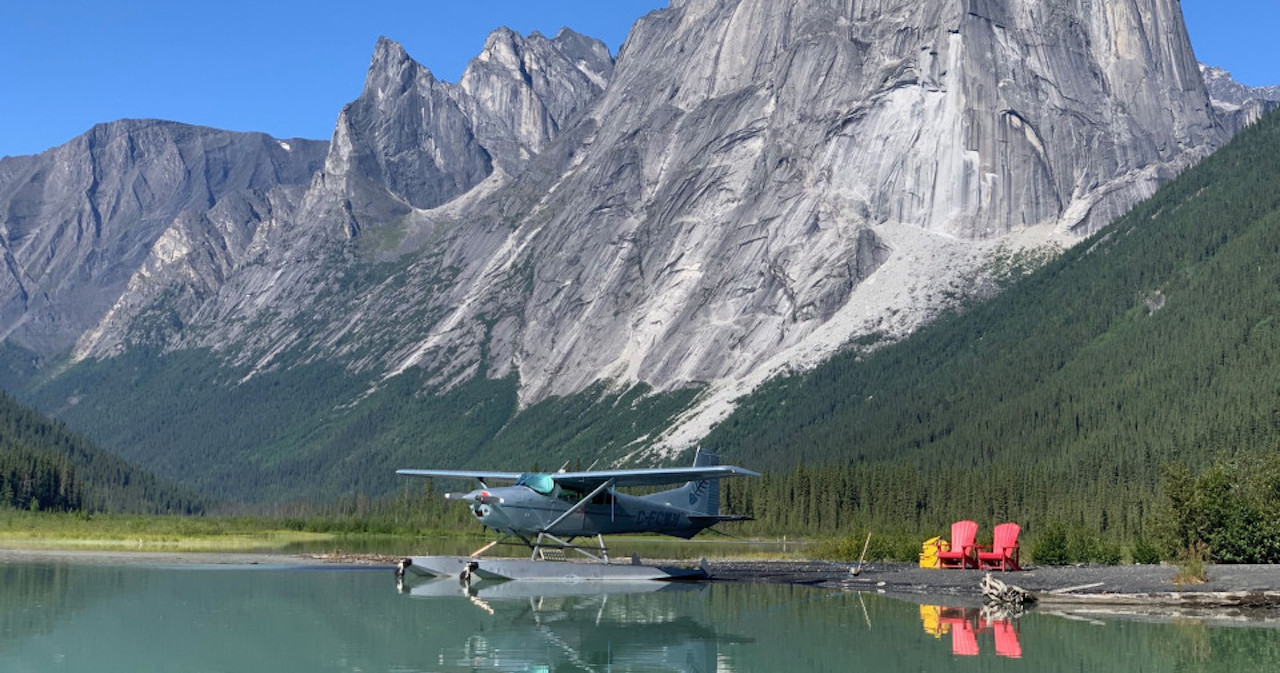
Now this is a truly great thread. Lot's of good stuff here. Skywagon/Cessna for a high-wing, piper for a low wing (or a Bonanza), everyone is colorblind at a mile, 8.5 is for distance, 8500 is for altitude... let's not get carried away with the airliner talk... I'm trying to get away from that!
For me Brevity is key... and for speed.... slow is smooth and smooth is fast... say it too fast and you're likely to have to say it again. Of course I ain't talking southern speed here;)
gunny
Radio Etiquette - Idaho Backcountry
Sat Feb 11, 2017 7:11 am
Sat Feb 11, 2017 7:37 am
Radio Etiquette - Idaho Backcountry
My technique (which is worth what you paid for it):
"Huntsville traffic, Nxxxxx is a red and white high wing 5 miles to the northeast at 2,000 ft. Inbound for left base one eight."
The decimal places for distances never made sense to me. My eyeballs looking out for traffic aren't calibrated enough to tell 8.5 from 8 or 9 miles. Just round to the closest whole mile and report it.
/opinion.
Sent from my iPhone using Tapatalk
"Huntsville traffic, Nxxxxx is a red and white high wing 5 miles to the northeast at 2,000 ft. Inbound for left base one eight."
The decimal places for distances never made sense to me. My eyeballs looking out for traffic aren't calibrated enough to tell 8.5 from 8 or 9 miles. Just round to the closest whole mile and report it.
/opinion.
Sent from my iPhone using Tapatalk
Last edited by CamTom12 on Tue Feb 18, 2020 9:19 am, edited 1 time in total.
- CamTom12 offline

- Posts: 3705
- Joined: Sun Jul 08, 2012 1:08 pm
- Location: Huntsville
- FindMeSpot URL: https://share.delorme.com/camtom12
- Aircraft: Ruppe Racer
Experimental Pacer
home hand jam "wizard"
Sat Feb 11, 2017 7:53 am
Re: Radio Etiquette - Idaho Backcountry
CamTom12 wrote:GumpAir wrote:it's ZERO, NOT OH! Following that, is someone calling out " right-hand downwind for one." Zero one is how to say it, right!?
Correct on the ZERO instead of OH, but the correct number for the runway would be ONE. Not ZERO ONE.
Runways ONE thru NINE, then ONE ZERO, ONE ONE, thru THREE SIX...
In the US at least. ICAO, and I believe some US military airports, will use the leading zero on a single digit runway, but not US civilian airports.
Gump
I learned to fly in the military, but single digit runways are always "zero X" (not "oh," that's not proper phonetics) for me. It's such a habit now I'd have to try hard to break it.
It makes sense to me because it sounds complete. When I hear someone just say "X," unless I was paying very close attention to the call I wonder if I missed part of it. We run up to 5 radios simultaneously, so it's important to be explicit, even if that means adding a pair of syllables. Brevity always loses to explicitness.
I feel the same way when I fly in an unfamiliar area and pilots are using local "shorthand" on the radio.
Interesting, since I too am in the habit of putting a zero in front of the single digit, I'll probably keep doing it. But I will quit thinking others are wrong or being sloppy when they don't do the same!
In a couple hours I'll be lifting a guy in the crane's man basket to about 140', and then lowering him down through a maze of grain spouts until he's lined up to do a repair. Hand signals don't cut it, we'll be using radios, and the first thing I'll tell him is "key the mike, wait a moment, THEN speak." Clipping the first part of the transmission is my other favorite bitch, they start talking the same moment they key the mike, some also clip the end of the transmission. Just a half second or so is all, just not at the same moment, it also gives the hearer a headups a message is coming.
- courierguy offline

- Posts: 4197
- Joined: Thu Mar 31, 2005 6:52 pm
- Location: Idaho
"Its easier to apologize then ask permission"
Tex McClatchy
Tex McClatchy
Sat Feb 11, 2017 8:55 am
Re: Radio Etiquette - Idaho Backcountry
courierguy wrote: Zero one is how to say it, right!?
In the USA there is no leading zero for a single digit runway. They don't paint "04" on the runway just "4". You'll also never hear a controller say that in normal comm.
- Bonanza Man offline
- Posts: 912
- Joined: Fri Jul 07, 2006 3:42 pm
- Location: Seeley Lake
Sat Feb 11, 2017 2:55 pm
Re: Radio Etiquette - Idaho Backcountry
Okay, okay, I'll knock off saying it! If not saying it is good enough for the controller's, it's good enough for me!. Now I'm ( non military) wondering how and why I was so positive it was the proper way. Maybe Hollywood is to blame.
- courierguy offline
- Posts: 4197
- Joined: Thu Mar 31, 2005 6:52 pm
- Location: Idaho
"Its easier to apologize then ask permission"
Tex McClatchy
Tex McClatchy
Sat Feb 11, 2017 7:58 pm
Re: Radio Etiquette - Idaho Backcountry
You guys radios work?
Sun Feb 12, 2017 3:06 am
Re: Radio Etiquette - Idaho Backcountry
I have to admit I didn't know I was supposed to say (for example) "runway two" instead of "runway zero two". Either works in my opinion. If you look in the AFD runways 1-9 will be listed as runways 01-09, the runways are always painted without the zero though.... who cares. Either call gets the point across.
Sun Feb 12, 2017 6:41 am
Re: Radio Etiquette - Idaho Backcountry
Cabin fever must be going around or second hand smoke from Contact Is effecting everyone.
On that note, is it improper to say Cessna 2-Oh-6, I should I say Cessna 2-zero-6?
Back to my lurking hole for a bit...
On that note, is it improper to say Cessna 2-Oh-6, I should I say Cessna 2-zero-6?
Back to my lurking hole for a bit...
Sun Feb 12, 2017 8:31 am
Re: Radio Etiquette - Idaho Backcountry
AKJurnee wrote:Cabin fever must be going around or second hand smoke from Contact Is effecting everyone.
On that note, is it improper to say Cessna 2-Oh-6, I should I say Cessna 2-zero-6?
Back to my lurking hole for a bit...
Just Cessna is fine....keep em guessing....

MTV


Sun Feb 12, 2017 10:06 am
Re: Radio Etiquette - Idaho Backcountry
mtv wrote:AKJurnee wrote:Cabin fever must be going around or second hand smoke from Contact Is effecting everyone.
On that note, is it improper to say Cessna 2-Oh-6, I should I say Cessna 2-zero-6?
Back to my lurking hole for a bit...
Just Cessna is fine....keep em guessing....
MTV
How about "airplane"--that'll really keep 'em guessing.

Cary
"I have slipped the surly bonds of earth..., put out my hand and touched the face of God." J.G. Magee
Sun Feb 12, 2017 11:01 am
Re: Radio Etiquette - Idaho Backcountry
This is one of the most entertaining threads I’ve read in a while. Thanks!
Sticking with the OP’s actual thread title “Radio Etiquette - Idaho Backcountry”, or at least attempting to.
First reread all of MTV’s posts, he is right on.
Now my turn to have some fun, nothing personal meant, just having fun, so….
I don’t care what you N number is, I can’t see it and I can’t remember it and it doesn’t tell me anything about your plane.
So “23N Landmark for Johnson Creek 8.5”, the only thing I get of value from that is your landing Johnson Creek.
23N. Is that 23 miles north? Is that an N number? If it is an N number it doesn’t tell me a thing about the aircraft. Is 23N a MU2 going 300mph, or a J-3 Cub going 75mph? Kinda makes a difference.
Blackrock is correct, landmarks are how pilots who know the area report where they are, and if you plan on flying into the Idaho backcountry on a regular basis you’ll want to learn them too. But your first time in I’d prefer your eyes be scanning the skies looking for me then staring at mountain tops trying to figure out which one has the fire lookout on it. And quite frankly I’d prefer to know how many miles and what direction you are from Johnson Creek then what Landmark you are passing.
8.5. Decimals? Really? I can’t tell the difference between 5 and 6 miles, I damn sure can’t distinguish half mile increments. Oh wait, this is altitude, that’s right. Eightyfive Hundred is what I’d like to hear. You see I know what Eightyfive Hundred refers to. It’s not miles. It’s not miles per hour. It’s not minutes. It’s altitude.
Color of your airplane? Don’t really care about that either. I mean it’s not like if you call “White Skywagon downwind” and I see a red Skywagon downwind that I’m going to ignore the red Skywagon because its red instead of white.
Cessna or Skywagon? I’ll side with MTV here. Cessna doesn’t really tell me much about the plane. How about we stay with what most of us know. Like Supercub, Skywagon, Bearhawk (okay that’s like Cessna but for now most of us don’t know the differences between Bearhawk models, and Bearhawk hasn’t sold a Turboprop or a Jet yet), MU2, Beaver, etc.
The best radio communication whether in the Idaho backcountry, Alaska or Southern California leaves no ambiguity and is consistent and the same everywhere.
So I’d prefer to hear “Johnson Creek [traffic] Skywagon ten miles northeast eightyfive hundred inbound” instead of “23N Landmark for Johnson Creek 8.5”.
P.S.
Although technically when I’m flying the SQ-2 and talking to ATC I’m supposed to call “Experimental SQ2”, I apply common sense knowing ATC has no idea what a SQ-2 is and call Experimental Super Cub. ATC understands that and knows what to look for and how fast I’ll be flying. When flying into a non-towered airport that has traffic I’ll call “Super Cub”, again no ambiguity.
P.P.S. I’ve always wondered why I have to tell ATC I’m experimental. I mean, I’ve never seen neighborhoods being evacuated when I’m landing. Or children being gathered up and rushed away.
Thanks for letting me have some fun.
Sticking with the OP’s actual thread title “Radio Etiquette - Idaho Backcountry”, or at least attempting to.
First reread all of MTV’s posts, he is right on.
Now my turn to have some fun, nothing personal meant, just having fun, so….
I don’t care what you N number is, I can’t see it and I can’t remember it and it doesn’t tell me anything about your plane.
So “23N Landmark for Johnson Creek 8.5”, the only thing I get of value from that is your landing Johnson Creek.
23N. Is that 23 miles north? Is that an N number? If it is an N number it doesn’t tell me a thing about the aircraft. Is 23N a MU2 going 300mph, or a J-3 Cub going 75mph? Kinda makes a difference.
Blackrock is correct, landmarks are how pilots who know the area report where they are, and if you plan on flying into the Idaho backcountry on a regular basis you’ll want to learn them too. But your first time in I’d prefer your eyes be scanning the skies looking for me then staring at mountain tops trying to figure out which one has the fire lookout on it. And quite frankly I’d prefer to know how many miles and what direction you are from Johnson Creek then what Landmark you are passing.
8.5. Decimals? Really? I can’t tell the difference between 5 and 6 miles, I damn sure can’t distinguish half mile increments. Oh wait, this is altitude, that’s right. Eightyfive Hundred is what I’d like to hear. You see I know what Eightyfive Hundred refers to. It’s not miles. It’s not miles per hour. It’s not minutes. It’s altitude.
Color of your airplane? Don’t really care about that either. I mean it’s not like if you call “White Skywagon downwind” and I see a red Skywagon downwind that I’m going to ignore the red Skywagon because its red instead of white.
Cessna or Skywagon? I’ll side with MTV here. Cessna doesn’t really tell me much about the plane. How about we stay with what most of us know. Like Supercub, Skywagon, Bearhawk (okay that’s like Cessna but for now most of us don’t know the differences between Bearhawk models, and Bearhawk hasn’t sold a Turboprop or a Jet yet), MU2, Beaver, etc.
The best radio communication whether in the Idaho backcountry, Alaska or Southern California leaves no ambiguity and is consistent and the same everywhere.
So I’d prefer to hear “Johnson Creek [traffic] Skywagon ten miles northeast eightyfive hundred inbound” instead of “23N Landmark for Johnson Creek 8.5”.
P.S.
Although technically when I’m flying the SQ-2 and talking to ATC I’m supposed to call “Experimental SQ2”, I apply common sense knowing ATC has no idea what a SQ-2 is and call Experimental Super Cub. ATC understands that and knows what to look for and how fast I’ll be flying. When flying into a non-towered airport that has traffic I’ll call “Super Cub”, again no ambiguity.
P.P.S. I’ve always wondered why I have to tell ATC I’m experimental. I mean, I’ve never seen neighborhoods being evacuated when I’m landing. Or children being gathered up and rushed away.
Thanks for letting me have some fun.
- Barnstormer offline
- Posts: 2700
- Joined: Sun Oct 14, 2012 7:42 am
- Location: Alaska
- Aircraft: C185
Sun Feb 12, 2017 11:44 am
Re: Radio Etiquette - Idaho Backcountry
Not many guys do it anymore, but I really appreciate it when other pilots give an ETE for arrival at their destination.
"Johnson Creek traffic. Red and white Cub five miles south at six thousand five hundred. I'll be left downwind for landing one seven in four minutes"
For me, the ETE is more useful for self-deconflicting traffic at a busy backcountry strip than almost anything else. It lets other traffic get out safely if needed, raises awareness for other traffic that will be arriving in the pattern at the same time you will be, takes the guesswork out of who is slow and who is fast, and lets other pilots speed up or slow down to deconflict their own arrivals.
To me a good radio is less about the exact words used than incorporating the following four elements:
WHO are you talking to?
WHERE are you at?
WHAT are you going to do?
WHEN are you going to do it?
"Johnson Creek traffic. Red and white Cub five miles south at six thousand five hundred. I'll be left downwind for landing one seven in four minutes"
For me, the ETE is more useful for self-deconflicting traffic at a busy backcountry strip than almost anything else. It lets other traffic get out safely if needed, raises awareness for other traffic that will be arriving in the pattern at the same time you will be, takes the guesswork out of who is slow and who is fast, and lets other pilots speed up or slow down to deconflict their own arrivals.
To me a good radio is less about the exact words used than incorporating the following four elements:
WHO are you talking to?
WHERE are you at?
WHAT are you going to do?
WHEN are you going to do it?

Sun Feb 12, 2017 11:58 am
Radio Etiquette - Idaho Backcountry
Barnstormer wrote:This is one of the most entertaining threads I’ve read in a while. Thanks!
Sticking with the OP’s actual thread title “Radio Etiquette - Idaho Backcountry”, or at least attempting to.
First reread all of MTV’s posts, he is right on.
Now my turn to have some fun, nothing personal meant, just having fun, so….
I don’t care what you N number is, I can’t see it and I can’t remember it and it doesn’t tell me anything about your plane.
So “23N Landmark for Johnson Creek 8.5”, the only thing I get of value from that is your landing Johnson Creek.
23N. Is that 23 miles north? Is that an N number? If it is an N number it doesn’t tell me a thing about the aircraft. Is 23N a MU2 going 300mph, or a J-3 Cub going 75mph? Kinda makes a difference.
Blackrock is correct, landmarks are how pilots who know the area report where they are, and if you plan on flying into the Idaho backcountry on a regular basis you’ll want to learn them too. But your first time in I’d prefer your eyes be scanning the skies looking for me then staring at mountain tops trying to figure out which one has the fire lookout on it. And quite frankly I’d prefer to know how many miles and what direction you are from Johnson Creek then what Landmark you are passing.
8.5. Decimals? Really? I can’t tell the difference between 5 and 6 miles, I damn sure can’t distinguish half mile increments. Oh wait, this is altitude, that’s right. Eightyfive Hundred is what I’d like to hear. You see I know what Eightyfive Hundred refers to. It’s not miles. It’s not miles per hour. It’s not minutes. It’s altitude.
Color of your airplane? Don’t really care about that either. I mean it’s not like if you call “White Skywagon downwind” and I see a red Skywagon downwind that I’m going to ignore the red Skywagon because its red instead of white.
Cessna or Skywagon? I’ll side with MTV here. Cessna doesn’t really tell me much about the plane. How about we stay with what most of us know. Like Supercub, Skywagon, Bearhawk (okay that’s like Cessna but for now most of us don’t know the differences between Bearhawk models, and Bearhawk hasn’t sold a Turboprop or a Jet yet), MU2, Beaver, etc.
The best radio communication whether in the Idaho backcountry, Alaska or Southern California leaves no ambiguity and is consistent and the same everywhere.
So I’d prefer to hear “Johnson Creek [traffic] Skywagon ten miles northeast eightyfive hundred inbound” instead of “23N Landmark for Johnson Creek 8.5”.
P.S.
Although technically when I’m flying the SQ-2 and talking to ATC I’m supposed to call “Experimental SQ2”, I apply common sense knowing ATC has no idea what a SQ-2 is and call Experimental Super Cub. ATC understands that and knows what to look for and how fast I’ll be flying. When flying into a non-towered airport that has traffic I’ll call “Super Cub”, again no ambiguity.
P.P.S. I’ve always wondered why I have to tell ATC I’m experimental. I mean, I’ve never seen neighborhoods being evacuated when I’m landing. Or children being gathered up and rushed away.
Thanks for letting me have some fun.
Hear hear to all of your post. Good point on N#, I'll stop calling that at non-towered airports.
I haven't told ATC I'm experimental in a long time - it was confusing to controllers to deal with experimental pacer. Please let me know if I missed that part in the FAR or AIM somewhere (not being facetious!). I just tell them I'm a PA-22 because that's the closest performing, commonly known airplane to mine.
- CamTom12 offline
- Posts: 3705
- Joined: Sun Jul 08, 2012 1:08 pm
- Location: Huntsville
- FindMeSpot URL: https://share.delorme.com/camtom12
- Aircraft: Ruppe Racer
Experimental Pacer
home hand jam "wizard"
Sun Feb 12, 2017 12:26 pm
Re: Radio Etiquette - Idaho Backcountry
Check your EAB operating limitations. Typically there will be a provision that says:
"The pilot in command of this aircraft must notify air traffic control of the experimental nature of this aircraft when operating into or out of airports with an operational control tower. When filing instrument flight rules (IFR), the experimental nature of this aircraft must be listed in the remarks section of the flight plan."
"The pilot in command of this aircraft must notify air traffic control of the experimental nature of this aircraft when operating into or out of airports with an operational control tower. When filing instrument flight rules (IFR), the experimental nature of this aircraft must be listed in the remarks section of the flight plan."
Sun Feb 12, 2017 2:04 pm
Re: Radio Etiquette - Idaho Backcountry
Cub271 wrote:Not many guys do it anymore, but I really appreciate it when other pilots give an ETE for arrival at their destination…
In Texas the fast movers do that all the time going into non-towered airports. I always assumed it was so the FBO could get the Suburban started and the air conditioning going, and so Bubbles had time to refresh her looks.
§91.319 Aircraft having experimental certificates: Operating limitations.
(3) Notify the control tower of the experimental nature of the aircraft when operating the aircraft into or out of airports with operating control towers.
FYI if you ever see the letter “X” right after the N that denotes an Experimental aircraft and just supplying the N number “NX1234” is sufficient notification although there are probably very few controllers that know what the “X” means as the FAA no longer issues “NX…” numbers, but there are some older aircraft still with that number system.
- Barnstormer offline
- Posts: 2700
- Joined: Sun Oct 14, 2012 7:42 am
- Location: Alaska
- Aircraft: C185
Sun Feb 12, 2017 6:25 pm
Re: Radio Etiquette - Idaho Backcountry
I was out flying today around this here towered airport. Apparently a trainee on the freq. He calls a TBM, and says: "TBM 000, after takeoff, turn right heading 250, climb and maintain 16, sixteen thousand feet, cleared for takeoff, runway 12."
The TBM pilot responds: "TBM 000, cleared for takeoff, turn right heading 160."
My ears perk up, and the controller says nothing. I'm thinking: Trainee is getting an ass ripping about now.....
Next plane up is a jet. Same request, but ATC now says, VERY slowly: JET 000, after takeoff, turn right heading 245, climb and maintain 16? Sixteen thousand feet, read back now." This was all said VERY slowly.......I laughed for five minutes as he cleared five other jets with the same sloooow clearance and "read back".
Communication can be precise or sloppy, and it can make a difference.
MTV
The TBM pilot responds: "TBM 000, cleared for takeoff, turn right heading 160."
My ears perk up, and the controller says nothing. I'm thinking: Trainee is getting an ass ripping about now.....
Next plane up is a jet. Same request, but ATC now says, VERY slowly: JET 000, after takeoff, turn right heading 245, climb and maintain 16? Sixteen thousand feet, read back now." This was all said VERY slowly.......I laughed for five minutes as he cleared five other jets with the same sloooow clearance and "read back".
Communication can be precise or sloppy, and it can make a difference.
MTV
Sun Feb 12, 2017 7:08 pm
Re: Radio Etiquette - Idaho Backcountry
Barnstormer wrote:Cub271 wrote:Not many guys do it anymore, but I really appreciate it when other pilots give an ETE for arrival at their destination…
In Texas the fast movers do that all the time going into non-towered airports. I always assumed it was so the FBO could get the Suburban started and the air conditioning going, and so Bubbles had time to refresh her looks.
§91.319 Aircraft having experimental certificates: Operating limitations.
(3) Notify the control tower of the experimental nature of the aircraft when operating the aircraft into or out of airports with operating control towers.
FYI if you ever see the letter “X” right after the N that denotes an Experimental aircraft and just supplying the N number “NX1234” is sufficient notification although there are probably very few controllers that know what the “X” means as the FAA no longer issues “NX…” numbers, but there are some older aircraft still with that number system.
Tracking now, thanks!
- CamTom12 offline
- Posts: 3705
- Joined: Sun Jul 08, 2012 1:08 pm
- Location: Huntsville
- FindMeSpot URL: https://share.delorme.com/camtom12
- Aircraft: Ruppe Racer
Experimental Pacer
home hand jam "wizard"
Sun Feb 12, 2017 8:16 pm
Re: Radio Etiquette - Idaho Backcountry
CamTom12 wrote:Barnstormer wrote:Cub271 wrote:Not many guys do it anymore, but I really appreciate it when other pilots give an ETE for arrival at their destination…
In Texas the fast movers do that all the time going into non-towered airports. I always assumed it was so the FBO could get the Suburban started and the air conditioning going, and so Bubbles had time to refresh her looks.
§91.319 Aircraft having experimental certificates: Operating limitations.
(3) Notify the control tower of the experimental nature of the aircraft when operating the aircraft into or out of airports with operating control towers.
FYI if you ever see the letter “X” right after the N that denotes an Experimental aircraft and just supplying the N number “NX1234” is sufficient notification although there are probably very few controllers that know what the “X” means as the FAA no longer issues “NX…” numbers, but there are some older aircraft still with that number system.
Tracking now, thanks!
Same applies to Restricted category aircraft. Used to be a PITA with external loads....can't accept any clearance that takes you over congested areas.
MTV
Sun Feb 12, 2017 9:03 pm
Re: Radio Etiquette - Idaho Backcountry
mtv wrote:Tail numbers have no place in communications at non towered airports, whether in the Idaho back country or in the middle of Minnesota. A brief descriptor of your airplane is all that's needed. "Green and white high wing", Blue and white Cherokee", white and red cub, etc is all that's needed at non controlled airports. If you're close enough for me to read your tail number, thus knowing that it's you talking, we have more serious problems than position reporting.
Fundamentally disagree with this.
Maybe if you had said remote airstrip. When you're the only two planes in the circuit / area / valley, yeah that'll work fine.
When it's a busy uncontrolled airport, and there are a fleet of commercial / training / same type of aircraft nearby and all have similar paint, and there's about 20 planes in the valley area (summer in our backcountry, much like ID, is a busy place). No way in that scenario. Confusion is almost as dangerous as no radio call at all. You need to know who's who, from one call to the next, to form a mental picture of their movements.
Further, almost all traffic crossing my flight path is too far away to see clearly. "White & Red stripe 185" is no more useful than a rego at that distance, and it takes more time to verbalize and assimilate. Most planes are mostly white, and all look white overall from a distance. Forget the n-number, if it's close enough to see the distinguishing features and you need the radio to know about it - you're too close for comfort.
In our case, I know who's who by their rego (you can recognise them if you're a local too). You know to worry about the out-of-towner's and you know what the local Pt135 guys are doing - but they might be using the same aircraft type / colour.
Mon Feb 13, 2017 9:51 am
Re: Radio Etiquette - Idaho Backcountry
Hey, make yourself happy, but as I said before, we trained students at an uncontrolled airport, a few actually, just thirty miles from UNDs base....over 100 based training aircraft. And a LOT of those green and white 172 used the same fields we did. UND doesn't use tail numbers...they use company call.
But color, type and most important POSITION worked just fine.
If you're ever in the US near Southern California, visit Santa Paula (SZP), preferably on a first Sunday, when the locals display their planes. It is a zoo, and part of the reason is that all the locals use type, color and position, but most visitors use tail number. In my experience, it's a heck of a lot easier to keep an eye on the locals in that case.
If you're so far away from a plane that you can't see colors, it's not likely an imminent collision risk.....log it in your noggin that there's someone out there in that POSITION that MAY become a risk, depending on your relative vectors.
But if I'm three miles out and I hear someone on downwind, I just want to look at that position (downwind) and find an airplane. I can't read a tail number, and maybe can't see the color, but that makes no difference. That plane is not a threat. Unless, of course, they're flying a three mile wide downwind, in which case, I won't find them on downwind.
The system I'm describing works, even in busy uncontrolled fields. SZP is a very busy field at times and it's worked there for decades.
MTV
But color, type and most important POSITION worked just fine.
If you're ever in the US near Southern California, visit Santa Paula (SZP), preferably on a first Sunday, when the locals display their planes. It is a zoo, and part of the reason is that all the locals use type, color and position, but most visitors use tail number. In my experience, it's a heck of a lot easier to keep an eye on the locals in that case.
If you're so far away from a plane that you can't see colors, it's not likely an imminent collision risk.....log it in your noggin that there's someone out there in that POSITION that MAY become a risk, depending on your relative vectors.
But if I'm three miles out and I hear someone on downwind, I just want to look at that position (downwind) and find an airplane. I can't read a tail number, and maybe can't see the color, but that makes no difference. That plane is not a threat. Unless, of course, they're flying a three mile wide downwind, in which case, I won't find them on downwind.
The system I'm describing works, even in busy uncontrolled fields. SZP is a very busy field at times and it's worked there for decades.
MTV
DISPLAY OPTIONS
Who is online
Users browsing this forum: Google [Bot] and 1 guest
Latest Features
-
-
Featured Bush Planes
As one of the undisputed legends of bush flying, the Cessna 180 hauls a…Read More -
Aircraft Ownership and Maintenance
9 modification mistakes aircraft owners make when trying to "bush out" their birds—why some…Read More -
Live to Tell
A Minnesota pilot is surprised to learn that the sudden asymmetric drag of an…Read More


Latest Knowledge Base
-
Destinations
Canada offers some of the most spectacular backcountry flying on the continent. Here's what you need to know before you go.Read More -
Safety and Survival
Hope that you never have to use your survival vest but knowing you have it and knowing how to use…Read More -
Destinations
A regional guide with ideas for winter camping destinations in California, Nevada, New Mexico, and Arizona.Read More -
Aircraft
Finding an affordable aircraft that can handle the backcountry for $80K or less? A challenge for sure, but with the…Read More