So after reading all the replies it becomes evident that the clear undisputed answer is... (wait for it....)......."It depends".
Certainly depends on the aircraft. A lot on the landing speed. Often on the terrain. Nose wheel or taildragger.
Pilot skill certainly comes into play as does 3 point or wheel landing. Tire size and brake efficiency have to be a factor. Smooth tires or treaded.
Just like Courierguy, my S-7 is usually going so slow at wheels down that it doesn't make any difference.
One sized doesn't fit all.
Raising the flaps after landing
Sun Feb 09, 2014 8:15 am
Re: Raising the flaps after landing
Last edited by S-12Flyer on Sun Feb 09, 2014 9:20 pm, edited 1 time in total.
"In a world full of people, only a few want to fly"
Sun Feb 09, 2014 9:01 am
Re: Raising the flaps after landing
Morning S-12,
If there was ever a 'definitive' answer to this topic, you have most certainly nailed it
One other thought that maules.com touched on, aside from a few high performance and complex aircraft that I no longer fly, I rarely have a clue where my flaps are. Well.... I mean where as in what angle has been selected. Yes, most (but not everything) I fly has detents, but I don't go to a 'book' setting for anything, I just roll on what makes it 'right'. Many times in something that has detents, this means keeping a hand on the lever and the push button lock pressed to unlock. IMHO this is one advantage most electric flap set ups have over manual.
Most modern ag aircraft have electric flaps. I have flown these wired every way imaginable, and with the switch in every conceivable location . For my preference I prefer a switch that has a momentary 'down' position and a dedicated up position if it is on the throttle quadrant, and a momentary 'chinamans hat' if it's on the stick. Set up like this I have infinite range selection in the 'add flap mode' and minimal need for 'searching' for the flaps. The dedicated up on the quadrant is just because after the apex of the turn my need for flaps is over, so being able to just slap the switch up and free up my hand for the throttle / GPS/ etc is golden. On the stick it's a moot point, because at that point in the game my hand isn't leaving the stick. Here it takes some getting used to, because occasionally the stick and your flap switch are going opposite ways.
In most of the aircraft pertinent to this thread I prefer a johnson bar, because these aircraft are light enough that instantaneous flap manipulation can be better used. Overhead ones are very handy to use, but I suspect that the vast majority of wrecks in 'bush beaters' occur with the flaps down. My personal preference is to have the cockpit as clear as possible on landing and T/O, and I currently don't wear a helmet while flying GA, consequently, I won't be installing my flap handle overhead.
Take care, Rob
If there was ever a 'definitive' answer to this topic, you have most certainly nailed it
One other thought that maules.com touched on, aside from a few high performance and complex aircraft that I no longer fly, I rarely have a clue where my flaps are. Well.... I mean where as in what angle has been selected. Yes, most (but not everything) I fly has detents, but I don't go to a 'book' setting for anything, I just roll on what makes it 'right'. Many times in something that has detents, this means keeping a hand on the lever and the push button lock pressed to unlock. IMHO this is one advantage most electric flap set ups have over manual.
Most modern ag aircraft have electric flaps. I have flown these wired every way imaginable, and with the switch in every conceivable location . For my preference I prefer a switch that has a momentary 'down' position and a dedicated up position if it is on the throttle quadrant, and a momentary 'chinamans hat' if it's on the stick. Set up like this I have infinite range selection in the 'add flap mode' and minimal need for 'searching' for the flaps. The dedicated up on the quadrant is just because after the apex of the turn my need for flaps is over, so being able to just slap the switch up and free up my hand for the throttle / GPS/ etc is golden. On the stick it's a moot point, because at that point in the game my hand isn't leaving the stick. Here it takes some getting used to, because occasionally the stick and your flap switch are going opposite ways.
In most of the aircraft pertinent to this thread I prefer a johnson bar, because these aircraft are light enough that instantaneous flap manipulation can be better used. Overhead ones are very handy to use, but I suspect that the vast majority of wrecks in 'bush beaters' occur with the flaps down. My personal preference is to have the cockpit as clear as possible on landing and T/O, and I currently don't wear a helmet while flying GA, consequently, I won't be installing my flap handle overhead.
Take care, Rob
Last edited by Rob on Mon Feb 10, 2014 8:19 am, edited 1 time in total.

Sun Feb 09, 2014 9:32 am
Re: Raising the flaps after landing
when I had my tripacer years ago for so many years I landed and dumped flaps as soon as my mains touched.. unless soft or rough runway or strip... holding the nose off in a tri was easier with full flaps...but the tripacer nose gear was incredibly tough and the model, so I am told , for the Maule nose gear... (they look almost identical.) and I once saw an old video of a tripacer taking off out of a farmers field across plowed rows... but my M4 flies slower on landing and with full flaps I'm creaping along at about 45 MPH with the light blinking.... so after I got my Maule I found I"m pretty busy tap dancing to keep it straight on touchdown to reach down and dump flaps.. so I let it roll while braking, if I need brakes, to just above taxi speed where I'm sure of control before I dump flaps...rolling out at less than 45 MPH it doesn't seem to matter flaps up or down... control is more important to me... and I"m sure my 29's and Bush wheel tail wheel help.. I know I can stand on the brakes with my 29's on where I couldn't with 800's...
Sun Feb 09, 2014 9:29 pm
Re: Raising the flaps after landing
Like you, I am too busy trying to keep it straight while I ride out the bumps under braking on tight bush airstrips, going for the flaps at landing is one too many things to do; and it's all over so quickly anyway!
Maybe that will change with experience. I can use a flap-jump at take-off to good effect, but directional control under power is much easier.
Maybe that will change with experience. I can use a flap-jump at take-off to good effect, but directional control under power is much easier.

Sun Feb 09, 2014 11:14 pm
Re: Raising the flaps after landing
Moving the flap handle becomes as automatic as moving the yoke or the feet on rudder and brake pedals after a while. It becomes an extension of your flying feel, bypassing a thought process which is too slow.
- maules.com offline
- Posts: 561
- Joined: Mon Jan 09, 2006 9:35 pm
- Location: west coast
Mon Feb 10, 2014 6:57 am
Re: Raising the flaps after landing
EZflap. You got me thinking with your reply. (Good points about nose down force)
The main takeaway though is the picture I have in my head of your new product.
A 4130 powder coated bright red extension for the electric flap switch.
You can send me royalties after this takes off.
The main takeaway though is the picture I have in my head of your new product.
A 4130 powder coated bright red extension for the electric flap switch.
You can send me royalties after this takes off.
- flightlogic offline
- Posts: 616
- Joined: Wed Dec 24, 2008 2:51 pm
- Location: Prescott
Flying is dangerous. If you think otherwise, you are new at this sport. Mind the gravity not the gap.
Mon Feb 10, 2014 7:50 am
Re: Raising the flaps after landing
maules.com wrote:Moving the flap handle becomes as automatic as moving the yoke or the feet on rudder and brake pedals after a while. It becomes an extension of your flying feel, bypassing a thought process which is too slow.
Amen...
Mon Feb 10, 2014 9:30 am
Re: Raising the flaps after landing
In my 170 I always raise the flaps right after touchdown. It's automatic and only takes a second or two. If you can't do that and keep it straight then don't do it. I feel it helps keep me planted on uneven ground especially with my early soft gear. Raising the flaps makes the tail heavier and allows for harder braking without nosing over. That's just my opinion and I'll keep flying that way because it works for me.
Mon Feb 10, 2014 2:05 pm
Re: Raising the flaps after landing
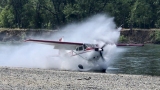
On my C180 float plane I dump the flaps right after touch down if its gusty. If I plan to taxi on the step after splash down the flaps stay at two notches until I pull back the power.
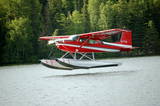
Rick's Cessna 180 float plane video http://www.youtube.com/watch?v=g6my0FM9F_Q
Tue Feb 11, 2014 8:16 pm
Re: Raising the flaps after landing
robw56 wrote:
I always raise the flaps right after touchdown. It's automatic and only takes a second or two.
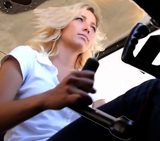
It takes him less than one second now

.
.
Tue Feb 11, 2014 9:27 pm
Re: Raising the flaps after landing
robw56 wrote:In my 170 I always raise the flaps right after touchdown. It's automatic and only takes a second or two. If you can't do that and keep it straight then don't do it. I feel it helps keep me planted on uneven ground especially with my early soft gear. Raising the flaps makes the tail heavier and allows for harder braking without nosing over. That's just my opinion and I'll keep flying that way because it works for me.
I thought we were trying to keep it on the ground.

- Terry offline
- Posts: 1365
- Joined: Sat Nov 10, 2007 9:11 pm
- Location: Willamette Valley
- FindMeSpot URL: http://share.findmespot.com/shared/face ... 4GzPHI6t1d
Thu Feb 13, 2014 6:12 am
Re: Raising the flaps after landing
S-12Flyer wrote:...Certainly depends on the aircraft. A lot on the landing speed. Often on the terrain. Nose wheel or taildragger.
Pilot skill certainly comes into play as does 3 point or wheel landing. Tire size and brake efficiency have to be a factor. Smooth tires or treaded...
Wow, I had no idea this flying stuff was so complex...... I need a beer.
- Barnstormer offline
- Posts: 2700
- Joined: Sun Oct 14, 2012 7:42 am
- Location: Alaska
- Aircraft: C185
Thu Feb 13, 2014 5:06 pm
Re: Raising the flaps after landing
It is not complicated if you land slow with full flaps and/or pitch power (to slow down before you get there) and there will be no need for brakes.
- contactflying offline
- Posts: 4972
- Joined: Wed Apr 03, 2013 7:36 pm
- Location: Aurora, Missouri 2H2
Download my free "https://tinyurl.com/Safe-Maneuvering" e-book.
Fri Feb 14, 2014 1:01 pm
Re: Raising the flaps after landing
contactflying wrote:It is not complicated if you land slow with full flaps and/or pitch power (to slow down before you get there) and there will be no need for brakes.
At any regular airport I guess you're right. Shorter strips and off airport is a different story.
Fri Feb 14, 2014 6:00 pm
Re: Raising the flaps after landing
I've always landed the same way everywhere. For me as slow as possible has been as short as possible. If I need brakes, I'm going too fast. Big airplanes or abnormal small planes with little wings have to land fast.
- contactflying offline
- Posts: 4972
- Joined: Wed Apr 03, 2013 7:36 pm
- Location: Aurora, Missouri 2H2
Download my free "https://tinyurl.com/Safe-Maneuvering" e-book.
Fri Feb 14, 2014 6:27 pm
Re: Raising the flaps after landing
contactflying wrote:I've always landed the same way everywhere. For me as slow as possible has been as short as possible. If I need brakes, I'm going too fast. Big airplanes or abnormal small planes with little wings have to land fast.
You start flying with some of the guys around here, you will need your brakes!
BTW I read your SAFE MANEUVERING FLIGHT TECHNIQUES article, it was a hard read but some good info there, thanks.
- Terry offline
- Posts: 1365
- Joined: Sat Nov 10, 2007 9:11 pm
- Location: Willamette Valley
- FindMeSpot URL: http://share.findmespot.com/shared/face ... 4GzPHI6t1d
Fri Feb 14, 2014 6:29 pm
Re: Raising the flaps after landing
That's a pretty bold statement there contact. How does that work for you in a good stiff x-wind? Hell, I can't even taxi without brakes.
Fri Feb 14, 2014 8:05 pm
Re: Raising the flaps after landing
gbflyer- In strong crosswinds I use the same apparent rate of closure approach and angle across the landing zone or runway to take some of the crosswind out. On the ground with a tailwheel ac I may need help after stopping, but everybody has to stop sometime. Slow, full flaps if you have them, reduces damage to airplanes in any condition. Gust spread is mitigated with as much throttle control as necessary to maintain glide angle. Where there are no approach obstructions, slow to shake at the lowest ground effect possible and then hover taxi to the landing site works best. Gradually slowing using the brisk walk rate of closure makes it possible to take some of the strong crosswind component out safely because you will come stop very quickly in a strong headwind/crosswind. Brakes are a ground operation tool. With the free slowing of a strong crosswind/headwind, the airplane is flying at near zero groundspeed. If we fully use the wing (and full flaps if available,) we take advantage of the best characteristics of our airplane. They fly much better than they race along the ground. It is critical, during this approach, that all directional (longitudinal axis) control is all dynamic, proactive rudder and independently all drift control is wing only. On a steep approach over obstructions, the wing needs either be kept level with aileron or banked as necessary into the crosswind. In the hover taxi approach, the wing must be kept level to keep it out of rocks and stuff. With the hover taxi approach, we have to change to the side slip to put the upwind main wheel down first in the appropriate bank. This is over smooth ground or the first part of the runway.
- contactflying offline
- Posts: 4972
- Joined: Wed Apr 03, 2013 7:36 pm
- Location: Aurora, Missouri 2H2
Download my free "https://tinyurl.com/Safe-Maneuvering" e-book.
Fri Feb 14, 2014 8:50 pm
Re: Raising the flaps after landing
So what's your method for landing 500ft gravel bars without brakes?
Fri Feb 14, 2014 9:29 pm
Re: Raising the flaps after landing
Rob56- Are you related to the Rob who is a cropduster in Yuma? Most of my rough flying was spraying. The only 500 footers in a Pawnee was on steep hillsides. Lots of big rocks though. That was seeding, so not so heavy. I flew straight parathion in five gallon buckets to my Pawnee in my TriPacer quite a bit. Lots of forty acre fields used for spray strips. Lots of off field precautionary landings on the pipeline in bad weather. I would lay up and wait.
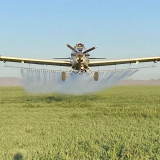
In the picture it looks like you were pretty slow, full flaps, and I expect the water slowed you a bit. I think you were hover taxiing a bit over the water. I hope so. I bet you didn't try that Vx stuff on takeoff. Ground effect is good stuff, and free. Slow is best on landing and fast on takeoff, however you do it. The apparent rate of closure approach just makes it so easy you can do it in your sleep. In the videos, I see guys putting the wing down quite a bit to make corners in rivers. That is dangerous. In ground (or water) effect, we don't want to put the wing down into something. Kids come back with crop in the booms doing that, if they are lucky. The airplane will make fifteen degree turns easy in ground effect. Just keep the wing level with aileron and drive around with rudder. Remember, ground effect is much more effective at three feet than at twenty, especially in a high wing. Six inches is best spraying and on takeoff.
In the picture it looks like you were pretty slow, full flaps, and I expect the water slowed you a bit. I think you were hover taxiing a bit over the water. I hope so. I bet you didn't try that Vx stuff on takeoff. Ground effect is good stuff, and free. Slow is best on landing and fast on takeoff, however you do it. The apparent rate of closure approach just makes it so easy you can do it in your sleep. In the videos, I see guys putting the wing down quite a bit to make corners in rivers. That is dangerous. In ground (or water) effect, we don't want to put the wing down into something. Kids come back with crop in the booms doing that, if they are lucky. The airplane will make fifteen degree turns easy in ground effect. Just keep the wing level with aileron and drive around with rudder. Remember, ground effect is much more effective at three feet than at twenty, especially in a high wing. Six inches is best spraying and on takeoff.
- contactflying offline
- Posts: 4972
- Joined: Wed Apr 03, 2013 7:36 pm
- Location: Aurora, Missouri 2H2
Download my free "https://tinyurl.com/Safe-Maneuvering" e-book.
DISPLAY OPTIONS
Who is online
Users browsing this forum: No registered users and 8 guests
Latest Features
-
-
Featured Bush Planes
As one of the undisputed legends of bush flying, the Cessna 180 hauls a…Read More -
Aircraft Ownership and Maintenance
9 modification mistakes aircraft owners make when trying to "bush out" their birds—why some…Read More -
Live to Tell
A Minnesota pilot is surprised to learn that the sudden asymmetric drag of an…Read More




Latest Knowledge Base
-
Destinations
Canada offers some of the most spectacular backcountry flying on the continent. Here's what you need to know before you go.Read More -
Safety and Survival
Hope that you never have to use your survival vest but knowing you have it and knowing how to use…Read More -
Destinations
A regional guide with ideas for winter camping destinations in California, Nevada, New Mexico, and Arizona.Read More -
Aircraft
Finding an affordable aircraft that can handle the backcountry for $80K or less? A challenge for sure, but with the…Read More



