Revised Nose Fork STC
Fri Feb 20, 2015 9:21 pm
Revised Nose Fork STC
Hey all, looks there is some good news regarding the Airglas heavy duty nose fork STC. They have revised the STC to allow us to finally run a smaller tire on the nose wheel, without the hassle of getting a field approval. Thank you to all the folks involved in making this change happen.
Fri Feb 20, 2015 10:00 pm
Re: Revised Nose Fork STC
Thats cool! I like my 8.50s but dropping to an 8.00 on the nose, would shed 4 lbs off the nose!
- Jeredp offline

- Posts: 625
- Joined: Fri Apr 20, 2012 10:31 am
- Location: WA
- FindMeSpot URL: http://share.findmespot.com/shared/face ... 7NYN40QT2I
- Aircraft: Cessna 172
Fri Feb 20, 2015 10:02 pm
Re: Revised Nose Fork STC
That is good news. Shouldn't have to cut the strut down either.
- Nosedragger offline
- Posts: 975
- Joined: Fri Dec 31, 2010 6:40 am
- Location: SE Idaho
- FindMeSpot URL: http://share.findmespot.com/shared/face ... ACzcbTgqlT
Fri Feb 20, 2015 11:30 pm
Re: Revised Nose Fork STC
I wished they would make a bigger fork to run 26" Goodyears.
Sat Feb 21, 2015 8:02 am
Re: Revised Nose Fork STC
That's great news! I've run 8.00 x 10s on the mains and a 8.50 nose tire and on one, 29x 10 on the mains on 206. But being able to use a slightly smaller tire on the nose is important to help keep the nose strut from getting beat up.
Good job!
MTV
Good job!
MTV


Sat Feb 21, 2015 8:05 am
Re: Revised Nose Fork STC
mtv wrote:...... being able to use a slightly smaller tire on the nose is important to help keep the nose strut from getting beat up. .....
I guess I don't get it. How does a smaller tire keep the strut from getting beat up?


Cessna Skywagon -- accept no substitute!
Sat Feb 21, 2015 8:18 am
Re: Revised Nose Fork STC
hotrod180 wrote:mtv wrote:...... being able to use a slightly smaller tire on the nose is important to help keep the nose strut from getting beat up. .....
I guess I don't get it. How does a smaller tire keep the strut from getting beat up?
With the longer length of the fork and a big tire, its easy to hit nosewheel first, it can also hit in the rough stuff when youre holding it off on roll out with the yoke in your lap. Just a little more clearance with a reduced tire size.
- Jeredp offline
- Posts: 625
- Joined: Fri Apr 20, 2012 10:31 am
- Location: WA
- FindMeSpot URL: http://share.findmespot.com/shared/face ... 7NYN40QT2I
- Aircraft: Cessna 172
Sat Feb 21, 2015 10:06 am
Re: Revised Nose Fork STC
This is good news, especially with field approvals running dry. Interesting that the new FMS has specific CG limits for every size combination.
Brett
Brett

Sat Feb 21, 2015 10:34 am
Re: Revised Nose Fork STC
The smaller tire will touch at a lower angle of attack but there is actually less stress on the nose gear with a bigger tire!
The increased diameter will roll over bumps and rocks easier while taxiing, and if the nose is higher while in a 3 point attitude the CG shifts rearward, decreasing the weight on the nose gear.
With the 8.50 you need to learn to land a little more nose high.
Once you are used to it it's not a big deal.
The increased diameter will roll over bumps and rocks easier while taxiing, and if the nose is higher while in a 3 point attitude the CG shifts rearward, decreasing the weight on the nose gear.
With the 8.50 you need to learn to land a little more nose high.
Once you are used to it it's not a big deal.
Keep the Greasy side down!
Sat Feb 21, 2015 11:38 am
Re: Revised Nose Fork STC
right on, I was dreading going the feild approval route so I could run a different size tire up front vs the mains. Was thinking about runnin 8's on the mains and 7 on the nosegear.
Sat Feb 21, 2015 1:24 pm
Re: Revised Nose Fork STC
TangoFox wrote:The smaller tire will touch at a lower angle of attack but there is actually less stress on the nose gear with a bigger tire!
The increased diameter will roll over bumps and rocks easier while taxiing, and if the nose is higher while in a 3 point attitude the CG shifts rearward, decreasing the weight on the nose gear.
With the 8.50 you need to learn to land a little more nose high.
Once you are used to it it's not a big deal.
But, with 8.50 on all three, the plane hits critical AOA right about the time all three are touching. That is, when empty. Loaded, it's not an issue, and as you say, with some practice, you can land on th mains but when empty, that nose is going to touch right away.
With the smaller nose tire, it's easy to hold the nose off as the plane slows some.
That significantly reduces stresses on the nose. In a 206, that makes life easier for your engine mount. In a 182/172, it makes life easier on your firewall.
That means less $$$$ down the road unless you are REALLY careful....and maybe lucky as well.
MTV
Sat Feb 21, 2015 2:11 pm
Re: Revised Nose Fork STC
mtv wrote:
But, with 8.50 on all three, the plane hits critical AOA right about the time all three are touching. That is, when empty. Loaded, it's not an issue, and as you say, with some practice, you can land on th mains but when empty, that nose is going to touch right away.
With the smaller nose tire, it's easy to hold the nose off as the plane slows some.
That significantly reduces stresses on the nose. In a 206, that makes life easier for your engine mount. In a 182/172, it makes life easier on your firewall.
That means less $$$$ down the road unless you are REALLY careful....and maybe lucky as well.
MTV
Way overstated!

There is a small but measurable difference (look at the photo below, 850 mains/800 nose-Airglas fork) between an 800 and 8.50 though I'm sure you can feel it..
What do you mean by empty? I'm sure most Cessna drivers have ballast or tools or water or some form of weight in the baggage and a pilot up front. With a 205 (small tail) my 7 gallon water jug in the baggage makes all the difference and its easy to hold the nose off with a small amount of skill (the amount I possess
 ) when "empty". An 8.50 will touch slightly sooner but not this "damaging" amount methinks. I'm sure Tango Fox is correct that a larger tire rolling over objects and thru divots will actually create less stress on the mount over time (with increased prop clearance too).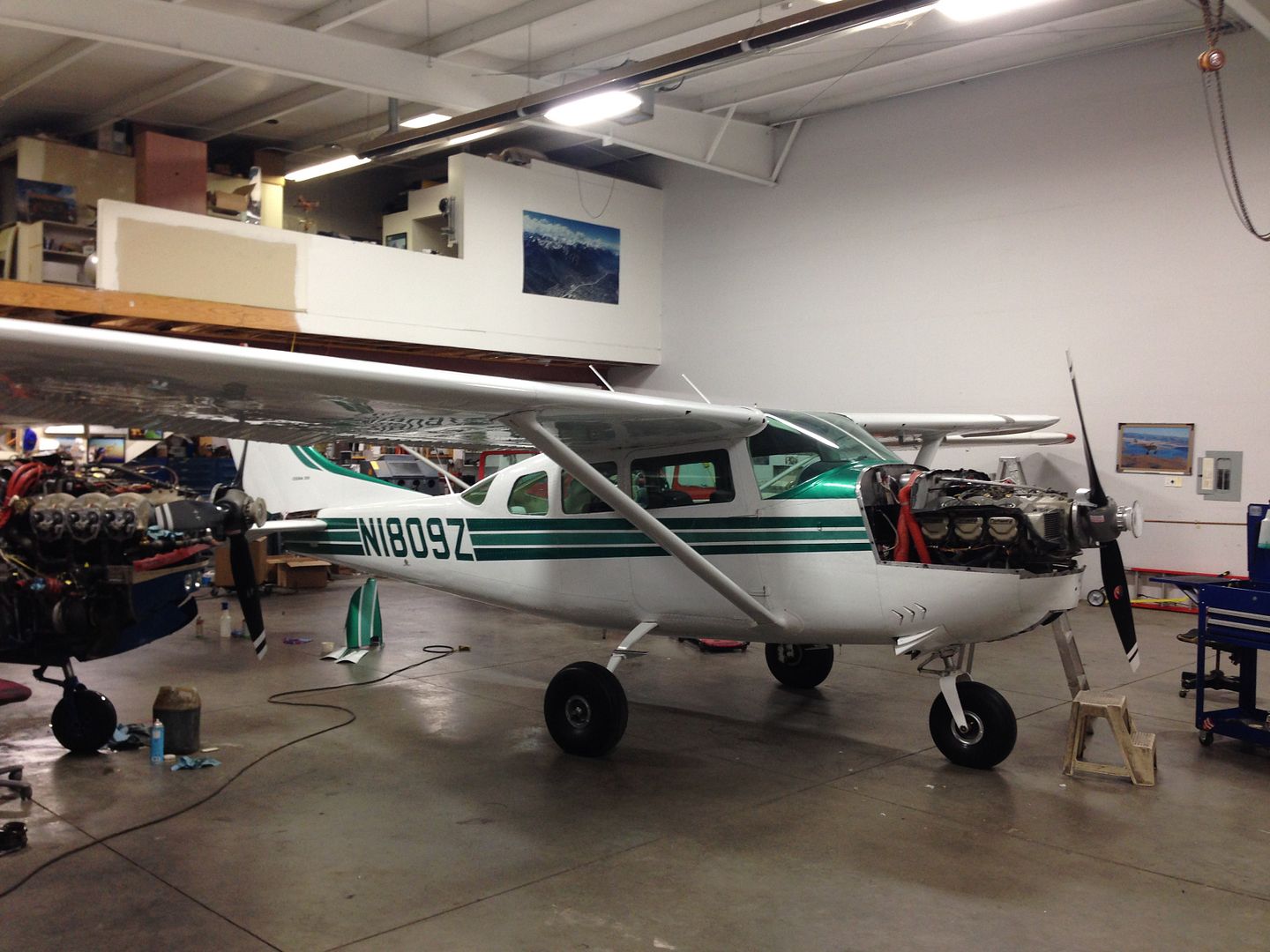
- SixTwoLeemer offline

- Posts: 1285
- Joined: Thu Feb 07, 2008 10:53 am
- Location: Wasatch Front
Altitude is Time…. Airspeed is Life!
Sat Feb 21, 2015 2:15 pm
Re: Revised Nose Fork STC
This sounds great. Sounds like I can get the fork, put a set of 26" GY's on the mains and an 8.50 on the nose? Have a set of each that have been taking up space in my hangar. Sure would increase to versatility of the old 172. 
Sat Feb 21, 2015 6:15 pm
Re: Revised Nose Fork STC
Is this amendment just for the 206?
I can find no mention of it on the Airglas website, in fact the nose fork page still says all tires must be the same size..
Very curious about the applicability to 182, anyone?
I can find no mention of it on the Airglas website, in fact the nose fork page still says all tires must be the same size..
Very curious about the applicability to 182, anyone?
Sat Feb 21, 2015 6:24 pm
Re: Revised Nose Fork STC
The revision is in the form of a flight manual supplement. It applies to all aircraft listed in the STC. It takes some digging on their website to find it. Click on their nose fork link, then scroll down to the bottom of the page, select the model, then select the latest FM supplement. Here's a link to the document : http://www.airglas.com/Portals/6/NWDS_StcFiles/3/AE00-1FM%20Rev%20C%20FMS%20150-205.pdf
- Jeredp offline
- Posts: 625
- Joined: Fri Apr 20, 2012 10:31 am
- Location: WA
- FindMeSpot URL: http://share.findmespot.com/shared/face ... 7NYN40QT2I
- Aircraft: Cessna 172
Sat Feb 21, 2015 7:47 pm
Re: Revised Nose Fork STC
Leemer
What I mean by empty is empty....pilot, min fuel and survival gear. That typically puts you at or forward of the forward limit.
Seven gallons of water? That's fifty pounds of useless weight, in AK at least, where water is never scarce. And that's fifty pounds of cargo you could be hauling for your clientele.
And when you're at or close to the forward limit, the slightly smaller nose tire does make a noticeable difference.
By the way, you may or may not have noticed that Cessna put a smaller diameter nose tire than the mains on every Tri gear airplane they built.
I don't disagree that a larger diameter tire MAY roll over things better, but in this context, you're touching down at the highest speed that you ever experience on the ground (again assuming fwd CG) and hitting any thing with that nose tire imparts an aft force. That tends to bend the strut aft. While rolling over stuff compresses the strut, once the tire actually starts to roll over the object. It's that first hit and the aft force that can damage your engine mount or firewall.
MTV
What I mean by empty is empty....pilot, min fuel and survival gear. That typically puts you at or forward of the forward limit.
Seven gallons of water? That's fifty pounds of useless weight, in AK at least, where water is never scarce. And that's fifty pounds of cargo you could be hauling for your clientele.
And when you're at or close to the forward limit, the slightly smaller nose tire does make a noticeable difference.
By the way, you may or may not have noticed that Cessna put a smaller diameter nose tire than the mains on every Tri gear airplane they built.
I don't disagree that a larger diameter tire MAY roll over things better, but in this context, you're touching down at the highest speed that you ever experience on the ground (again assuming fwd CG) and hitting any thing with that nose tire imparts an aft force. That tends to bend the strut aft. While rolling over stuff compresses the strut, once the tire actually starts to roll over the object. It's that first hit and the aft force that can damage your engine mount or firewall.
MTV
Sat Feb 21, 2015 7:59 pm
Re: Revised Nose Fork STC
Not to mention, longer strut, fork, tire combo equals more leverage. I personally have not had an issue touching nose first, however, I am very aware of it when loaded forward. I try to make it a habit to throw a couple 50 lb hellions in the back seat with a box of goldfish crackers to help move my cg aft. 
So what is everyones favorite 8.00x6 tire for the nose?
So what is everyones favorite 8.00x6 tire for the nose?
- Jeredp offline
- Posts: 625
- Joined: Fri Apr 20, 2012 10:31 am
- Location: WA
- FindMeSpot URL: http://share.findmespot.com/shared/face ... 7NYN40QT2I
- Aircraft: Cessna 172
Sat Feb 21, 2015 8:11 pm
Re: Revised Nose Fork STC
The revision is in the form of a flight manual supplement. It applies to all aircraft listed in the STC. It takes some digging on their website to find it. Click on their nose fork link, then scroll down to the bottom of the page, select the model, then select the latest FM supplement. Here's a link to the document : http://www.airglas.com/Portals/6/NWDS_S ... 50-205.pdf
Sweet! Thanks!
Sat Feb 21, 2015 10:21 pm
Re: Revised Nose Fork STC
Alaska? How did we get in Alaska? I see TangoFox is in Alaska and fly's 3 large, big-tire, Cessna recips for hire but I think he was dismissed alreadymtv wrote:Seven gallons of water? That's fifty pounds of useless weight, in AK at least, where water is never scarce. And that's fifty pounds of cargo you could be hauling for your clientele.

Oh I've noticed, really noticed as in taken notes.mtv wrote:By the way, you may or may not have noticed that Cessna put a smaller diameter nose tire than the mains on every Tri gear airplane they built.
 Also noticed that Piper put 3 larger than the "norm" tires (6x6.00) on their ubiquitous Cherokees which are universally forward CG prone and don't seem to be shearing off nose wheels or mounts at an alarming rate in the "critical AOA…" Comanches often land flat as a pancake and a lot faster too..
 Again, overstated. Completely disagree but agree to disagree.mtv wrote:I don't disagree that a larger diameter tire MAY roll over things better, but in this context, you're touching down at the highest speed that you ever experience on the ground (again assuming fwd CG) and hitting any thing with that nose tire imparts an aft force. That tends to bend the strut aft. While rolling over stuff compresses the strut, once the tire actually starts to roll over the object. It's that first hit and the aft force that can damage your engine mount or firewall.
MTV
The minute the tire won't roll thru the divot, rock, ditch, drainage, whatever - with the aircrafts forward momentum, you have a far greater problem than an 850 touching the Earth a millisecond before a 800 would.YMMV
- SixTwoLeemer offline
- Posts: 1285
- Joined: Thu Feb 07, 2008 10:53 am
- Location: Wasatch Front
Altitude is Time…. Airspeed is Life!
Sun Feb 22, 2015 9:00 am
Re: Revised Nose Fork STC
Yeah, Cherokees.....that's a GREAT comparison.
I once watched a fellow in a Warrior get pure D sideways as he veered off the runway at about fifty knots. Into the grass sideways and I'm thinking that nose gear is coming right off......grass flying off all three tires.
Then one main hit a culvert. Ripped it right off and slew the plane around in a circle, as he nose gear played crack the whip.
Wing was bent, main gear torn off, nose gear was just fine.
Try THAT with your average Cessna nose gear.
When that school switched to Cessnas from Warriors, they killed a 172 nose gear a week.

MTV
I once watched a fellow in a Warrior get pure D sideways as he veered off the runway at about fifty knots. Into the grass sideways and I'm thinking that nose gear is coming right off......grass flying off all three tires.
Then one main hit a culvert. Ripped it right off and slew the plane around in a circle, as he nose gear played crack the whip.
Wing was bent, main gear torn off, nose gear was just fine.
Try THAT with your average Cessna nose gear.
When that school switched to Cessnas from Warriors, they killed a 172 nose gear a week.
MTV
DISPLAY OPTIONS
Who is online
Users browsing this forum: No registered users and 0 guests
Latest Features
-
Live to Tell
A Minnesota pilot is surprised to learn that the sudden asymmetric drag of an out-of-rig ski can…Read More -
Creators
Working in some of the Yukon's most beautiful and remote environments, photographer Simon Blakesley captures aircraft in…Read More -
Aircraft Ownership and Maintenance
Upgrading to big tires can make a huge difference in backcountry performance, but with those gains come…Read More -
Tales from Yesteryear
In this tale from bush flying yesteryear, Don Cogger signs up to help Atlee Dodge Jr recovery…Read More


Latest Knowledge Base
-
Destinations
A regional guide with ideas for winter camping destinations in California, Nevada, New Mexico, and Arizona.Read More -
Aircraft
Finding an affordable aircraft that can handle the backcountry for $80K or less? A challenge for sure, but with the…Read More -
Aircraft
01.29.2018 - Zane - Updated tire diameter graphic to add 8.50x10 Guide to tires for use in the backcountry and off-airport landing…Read More -
Pilots
12.22.2013 - Initial article format Operating aircraft on skis and negotiating a snow-covered landscape is an entirely unique skillset and environment.…Read More


