Safety equipment
Thu Jul 15, 2021 6:52 pm
Re: Safety equipment
Thank you for taking the time to write this and sorry about your friends
Thu Jul 15, 2021 7:11 pm
Re: Safety equipment
Great post Phil. Thanks for that.
Sent from my iPhone using Tapatalk
Sent from my iPhone using Tapatalk
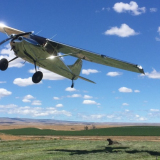
'49 170A. (his)
'56 172. (hers)
'56 172. (hers)
Thu Jul 15, 2021 7:25 pm
Re: Safety equipment
Great post Phil.

Thu Jul 15, 2021 8:50 pm
Re: Safety equipment
Real good post!
Fri Jul 16, 2021 3:59 am
Re: Safety equipment
Barnstormer, I very much like your safety thoughts on backcountry type flying. Your list of lost friends includes wires. My addition to your thoughts would be some thoughts on 200' AGL from Pennsylvania to the Pacific. Wires connect everything man made. Most cells towers are at 400' and go up in a week. Ground clutter is such that we only see well what is higher than us, on the near horizon. That means that 400' to 500' is more dangerous place to fly than 200' or above 500.' It is much safer to go around obstacles using the energy management turn to insure enough bank angle to miss without load factor and potential stall. That also means that in the most common (cruise around 100-140) airplanes we fly, we need cruise or near cruise for zoom reserve in the form of airspeed for zoom climb or maneuvering. The pitch up wings level will use some of that kinetic airspeed for altitude and speed reduction for quicker and tighter turn. Finally, we know when we are going to hit a wire. We didn't see it but now we do. Under is safer now than over. Your friend did right, just bad luck not beating vegetation. Any turns to miss vegetation or terrain must now be wings level rudder turn. At least we are pitching down. Attack, attack, attack. We want to dive on it if possible and if under is not possible, we want to cut it with the prop. This decision must be made immediately. Getting down into ground effect is the comfortable way to go under a wire we plan for but we may have already blown that.
- contactflying offline
- Posts: 4972
- Joined: Wed Apr 03, 2013 7:36 pm
- Location: Aurora, Missouri 2H2
Download my free "https://tinyurl.com/Safe-Maneuvering" e-book.
Sat Jul 17, 2021 1:57 pm
Re: Safety equipment
Barnstormer,
Sorry about your lost friends. I agree with almost everything you have said.
A few points. As with any difficult endeavor in which persons who practice it see themselves as a small and highly talented group, there springs forth a bit of subtle elitism here from time to time. This is to be expected. Furthermore, it is appreciated that there is a genuine concern for safety. Perhaps reference to this study would be helpful. https://www.faa.gov/data_research/resea ... 201503.pdf
I appreciate the thought that at 250 hours I am very dangerous (just passed 300). However, interestingly, very experienced pilots make up a large percentage of stall and spin accidents. The accident rate, see the summary graph, seems to increase with increased hours, then levels off, then declines somewhat. I believe this likely represents two issues. One is that inexperienced pilots tend to be more careful and fly well within their limitations, and that as you fly more, it is statistically more likely that something will happen.
I have gone by one rule; don't stall the airplane, ever. I do practice stalls, but more importantly, I constantly practice not stalling. At takeoff and in the pattern, I am alert to the bank, pitch, speed (DMMS), at all times, and will not stall. This, I think, makes me safe. In the backcountry, I will not land at a strip that I am not sure about. I will also not land at any strip in the backcountry until I have landed there with another experienced backcountry pilot. Strips like Johnson Creek simply do not require landing within the length of the airplane from the aiming point at Vso. The short field landing I did on my PPL checkride required 200 feet, I did it in 100. If I am able to do that, at 60mph on a 3,000 foot runway, I think I'll be OK.
Of course, there are other issues besides landing and taking off. Maneuvering in canyons in the backcountry is dangerous. There are trees, rocks, cliffs, rivers with rocks, etc. I use 20 deg flaps and 80 MPH (about 70 KTS) for all maneuvering. In the event of an engine failure, I will head for the best possible landing site and you can bet your mags that I will slow that plane to less than 45-50 MPH in ground effect and stall just before the hit. It is not that I can't do that with every landing, I just don't see the point of scaring the crap out of myself each time I land, riding the stall horn from short final, when it's not needed. I will perfect my approaches and landings at Johnson Creek and similar strips before I venture to any of the more difficult strips, and I may never do that.
Whether a subset of pilots are statistically more dangerous can be ascertained by scientific study. Whether a particular pilot is dangerous can only be ascertained by knowing that particular pilot; his or her temperament, judgement, skill set, personal limits, etc.
I agree with practice, practice, practice. Thanks for everyone's input.
Sorry about your lost friends. I agree with almost everything you have said.
A few points. As with any difficult endeavor in which persons who practice it see themselves as a small and highly talented group, there springs forth a bit of subtle elitism here from time to time. This is to be expected. Furthermore, it is appreciated that there is a genuine concern for safety. Perhaps reference to this study would be helpful. https://www.faa.gov/data_research/resea ... 201503.pdf
I appreciate the thought that at 250 hours I am very dangerous (just passed 300). However, interestingly, very experienced pilots make up a large percentage of stall and spin accidents. The accident rate, see the summary graph, seems to increase with increased hours, then levels off, then declines somewhat. I believe this likely represents two issues. One is that inexperienced pilots tend to be more careful and fly well within their limitations, and that as you fly more, it is statistically more likely that something will happen.
I have gone by one rule; don't stall the airplane, ever. I do practice stalls, but more importantly, I constantly practice not stalling. At takeoff and in the pattern, I am alert to the bank, pitch, speed (DMMS), at all times, and will not stall. This, I think, makes me safe. In the backcountry, I will not land at a strip that I am not sure about. I will also not land at any strip in the backcountry until I have landed there with another experienced backcountry pilot. Strips like Johnson Creek simply do not require landing within the length of the airplane from the aiming point at Vso. The short field landing I did on my PPL checkride required 200 feet, I did it in 100. If I am able to do that, at 60mph on a 3,000 foot runway, I think I'll be OK.
Of course, there are other issues besides landing and taking off. Maneuvering in canyons in the backcountry is dangerous. There are trees, rocks, cliffs, rivers with rocks, etc. I use 20 deg flaps and 80 MPH (about 70 KTS) for all maneuvering. In the event of an engine failure, I will head for the best possible landing site and you can bet your mags that I will slow that plane to less than 45-50 MPH in ground effect and stall just before the hit. It is not that I can't do that with every landing, I just don't see the point of scaring the crap out of myself each time I land, riding the stall horn from short final, when it's not needed. I will perfect my approaches and landings at Johnson Creek and similar strips before I venture to any of the more difficult strips, and I may never do that.
Whether a subset of pilots are statistically more dangerous can be ascertained by scientific study. Whether a particular pilot is dangerous can only be ascertained by knowing that particular pilot; his or her temperament, judgement, skill set, personal limits, etc.
I agree with practice, practice, practice. Thanks for everyone's input.
- Frankenflaps offline
- Posts: 37
- Joined: Sun Jul 01, 2018 9:48 pm
- Location: Greer
- FindMeSpot URL: share.garmin.com/Frankenflaps
- Aircraft: 1973 Cessna 182 P
Sat Jul 17, 2021 2:14 pm
Re: Safety equipment
To illustrate my points above:
https://www.flyingmag.com/news/mountain ... ies-crash/
https://lmtribune.com/northwest/back-co ... 95058.html
"A superior pilot uses his superior judgment to avoid situations which require the use of his superior skill." Frank Borman
I will modify that a bit: "A less than superior pilot can (and should) use superior judgement to avoid situations which would require superior skill that he or she does not possess." Me.
https://www.flyingmag.com/news/mountain ... ies-crash/
https://lmtribune.com/northwest/back-co ... 95058.html
"A superior pilot uses his superior judgment to avoid situations which require the use of his superior skill." Frank Borman
I will modify that a bit: "A less than superior pilot can (and should) use superior judgement to avoid situations which would require superior skill that he or she does not possess." Me.
- Frankenflaps offline
- Posts: 37
- Joined: Sun Jul 01, 2018 9:48 pm
- Location: Greer
- FindMeSpot URL: share.garmin.com/Frankenflaps
- Aircraft: 1973 Cessna 182 P
Sat Jul 17, 2021 2:20 pm
Re: Safety equipment
Frankenflaps wrote:Barnstormer,
Sorry about your lost friends. I agree with almost everything you have said.
A few points. As with any difficult endeavor in which persons who practice it see themselves as a small and highly talented group, there springs forth a bit of subtle elitism here from time to time. This is to be expected. Furthermore, it is appreciated that there is a genuine concern for safety. Perhaps reference to this study would be helpful. https://www.faa.gov/data_research/resea ... 201503.pdf
I appreciate the thought that at 250 hours I am very dangerous (just passed 300). However, interestingly, very experienced pilots make up a large percentage of stall and spin accidents. The accident rate, see the summary graph, seems to increase with increased hours, then levels off, then declines somewhat. I believe this likely represents two issues. One is that inexperienced pilots tend to be more careful and fly well within their limitations, and that as you fly more, it is statistically more likely that something will happen.
I have gone by one rule; don't stall the airplane, ever. I do practice stalls, but more importantly, I constantly practice not stalling. At takeoff and in the pattern, I am alert to the bank, pitch, speed (DMMS), at all times, and will not stall. This, I think, makes me safe. In the backcountry, I will not land at a strip that I am not sure about. I will also not land at any strip in the backcountry until I have landed there with another experienced backcountry pilot. Strips like Johnson Creek simply do not require landing within the length of the airplane from the aiming point at Vso. The short field landing I did on my PPL checkride required 200 feet, I did it in 100. If I am able to do that, at 60mph on a 3,000 foot runway, I think I'll be OK.
Of course, there are other issues besides landing and taking off. Maneuvering in canyons in the backcountry is dangerous. There are trees, rocks, cliffs, rivers with rocks, etc. I use 20 deg flaps and 80 MPH (about 70 KTS) for all maneuvering. In the event of an engine failure, I will head for the best possible landing site and you can bet your mags that I will slow that plane to less than 45-50 MPH in ground effect and stall just before the hit. It is not that I can't do that with every landing, I just don't see the point of scaring the crap out of myself each time I land, riding the stall horn from short final, when it's not needed. I will perfect my approaches and landings at Johnson Creek and similar strips before I venture to any of the more difficult strips, and I may never do that.
Whether a subset of pilots are statistically more dangerous can be ascertained by scientific study. Whether a particular pilot is dangerous can only be ascertained by knowing that particular pilot; his or her temperament, judgement, skill set, personal limits, etc.
I agree with practice, practice, practice. Thanks for everyone's input.
Having your stall horn blaring at every landing should not scare the crap out of you. If it does, then you are not likely to do it in an actual emergency when other things are scaring the crap out of you. If you do every landing that way, whether needed or not, it just becomes second nature and you don't think twice about it. That way, in an emergency you don't think twice about getting slow when needed. Bit if the stall horn genuinely scares you as you suggest, then adding that in an emergency will make it hard to slow down. That's why I am as slow as possible on every landing. I'll just land long on a big runway to limit taxiing, bit ill still land as slow as I can. Doing your best to have the superior skill needed in every situation should be all of our intentions.
Sat Jul 17, 2021 3:30 pm
Re: Safety equipment
Of course, working toward having superior skill is what everyone should do, whether it is in their profession, flying, or whatever. More so in critical pursuits. I have no objection to this. The point I was trying to make is that there is no point in my opinion in making every landing as close to a stall as possible, and to say if that cannot be accomplished a pilot has no business in the backcountry is a bit elitist and ignores other factors. No-one is arguing that this should not be practiced, but I am not going to make every landing the shortest possible, even on a 5,000 foot concrete runway. A blaring stall horn in ground effect is fine, but a blaring stall horn when still 200 feet from the threshold every time is not what I want to do. The links to the above tragic stories point to what can happen when pilots with superior skills depend on those superior skills all the time. I'm not trying to ruffle feathers here, just offering an opinion that everything in life requires balance. Backcountry flying requires skill and judgement. Some will have the best of both. Some will have more skill than judgement, and some more judgement than skill. To say that until all landings can be accomplished within a plane length of the aiming point on 3,000 foot strips or the pilot should not be in the backcountry is a bit disingenuous. By the same token, a pilot should not fly over the mountains 5000 ft AGL unless they have this skill, since they may have to put down in the mountains. Similarly, flying over cities should be prohibited if the pilot can't land on a golf course. Rather, it should be promoted that unless a pilot has gained sufficient experience and skills to navigate the backcountry and land safely at the strips he wishes to fly into, he should not be in the backcountry. I will agree with that.
- Frankenflaps offline
- Posts: 37
- Joined: Sun Jul 01, 2018 9:48 pm
- Location: Greer
- FindMeSpot URL: share.garmin.com/Frankenflaps
- Aircraft: 1973 Cessna 182 P
Sat Jul 17, 2021 4:53 pm
Re: Safety equipment
PS, all of this said, I agree with the goals stated by all of you very experienced BC pilots. Thanks so much for your responses.
- Frankenflaps offline
- Posts: 37
- Joined: Sun Jul 01, 2018 9:48 pm
- Location: Greer
- FindMeSpot URL: share.garmin.com/Frankenflaps
- Aircraft: 1973 Cessna 182 P
Sat Jul 17, 2021 6:49 pm
Re: Safety equipment
Frank,
I think Phil's post is only meant to serve as a template for safety. By learning the correct habits and practicing short field technique we develop the proper proficiency needed to consistently land at the intended spot. It also improves our confidence. Every year there are people who fly to Johnson Creek and think it looks easy. They land long and bang up their airplanes. The approach can appear easy to some due to the wide long runway but the turn from downwind - base - to final is tricky for the inexperienced. Often there is a tailwind on landing and there are DA considerations. This can all translate into high approach speeds and altitudes on final resulting in longer than anticipated landings. Now there is a go around option at 3U2 but it needs to be executed early not late. Eventually you'll want to explore tougher strips without the go around potential. The most beautiful strips in Idaho have these setups.
By practicing stabilized approaches with the intention of landing as short as possible we set ourselves up for performing the procedure correctly every time. It is also rewarding and challenging. Practicing this technique while pavement pounding 5K sea level strips also teaches one the required performance needed for a variety of differing conditions that can then be extrapolated into higher DA shorter strips in the mountains. Consistently making the first taxiway at our home airport can then give one the confidence and skill to know where the performance bar is set for our own airplane and abilities. This is how I practice in my C180 and I love it. Landing with proper STOL technique is also super fun.
Power off 180s is the only other way to practice landings. Different goal than landing short. Energy management and judgement are key. This is a skill that is often only practiced during training but is equally important. I also like to practice this technique at altitude while spiraling over my airport planning to be at the key position 1000 AGL. I divide the power off landing into two phases - gliding to the key position and making the landing from the key position.
The original post was to discuss safety equipment which is very important in making the correct risk assessment flying but there is no substitute for setting a high bar on training.
Josh
I think Phil's post is only meant to serve as a template for safety. By learning the correct habits and practicing short field technique we develop the proper proficiency needed to consistently land at the intended spot. It also improves our confidence. Every year there are people who fly to Johnson Creek and think it looks easy. They land long and bang up their airplanes. The approach can appear easy to some due to the wide long runway but the turn from downwind - base - to final is tricky for the inexperienced. Often there is a tailwind on landing and there are DA considerations. This can all translate into high approach speeds and altitudes on final resulting in longer than anticipated landings. Now there is a go around option at 3U2 but it needs to be executed early not late. Eventually you'll want to explore tougher strips without the go around potential. The most beautiful strips in Idaho have these setups.
By practicing stabilized approaches with the intention of landing as short as possible we set ourselves up for performing the procedure correctly every time. It is also rewarding and challenging. Practicing this technique while pavement pounding 5K sea level strips also teaches one the required performance needed for a variety of differing conditions that can then be extrapolated into higher DA shorter strips in the mountains. Consistently making the first taxiway at our home airport can then give one the confidence and skill to know where the performance bar is set for our own airplane and abilities. This is how I practice in my C180 and I love it. Landing with proper STOL technique is also super fun.
Power off 180s is the only other way to practice landings. Different goal than landing short. Energy management and judgement are key. This is a skill that is often only practiced during training but is equally important. I also like to practice this technique at altitude while spiraling over my airport planning to be at the key position 1000 AGL. I divide the power off landing into two phases - gliding to the key position and making the landing from the key position.
The original post was to discuss safety equipment which is very important in making the correct risk assessment flying but there is no substitute for setting a high bar on training.
Josh
- Dog is my Copilot offline
- Posts: 433
- Joined: Thu Apr 12, 2018 11:38 am
- Location: Portland
- Aircraft: 1958 Cessna 180A
Sat Jul 17, 2021 6:58 pm
Re: Safety equipment
Much more eloquently stated them my post Josh. Great post.
Sat Jul 17, 2021 8:49 pm
Re: Safety equipment
Well said Josh and David. And thanks everyone for the kind words.
Frank, you should not fear the stall horn. When it's making noise you still can go a lot slower before the plane stalls. Your goal should be to learn to feel the airplane, not rely on stall horns or airspeed indicators, especially in the mountains where all your attention should be out the window setting up for landing and avoiding everything that wants to slap you out of the air or bring you to an abrupt stop.
One time at the Flying B Ranch (Idaho) unknown to me one of those big black ants crawled into the pitot tube. I left to go explore some of the other strips and noticed my airspeed indicator wasn't registering. Had I not learned how to fly without an airspeed indicator, if I could not fly by feel alone, I would have been in danger trying to land back at the ranch.
When unexpected things happen we immediately fall back to whatever level at which we consistently practice. And if the best we practice for is landing somewhere within a hundred feet, and with an airspeed indicator, and without the stall horn blaring at us- we won't get anywhere near that accurate or slow when the airspeed indicator quits working, or the stall horn quits working, or we are flying a plane without a stall horn, and we have mountains on both sides of us, in high DA, traffic in the pattern, horses, moose, elk, deer on the runway, an eagle drops in front of us, a tricky departure path, gusty winds, etc. All this and more can and will happen in the backcountry, and frequently.
To think otherwise is naive and exactly why I said the most dangerous pilots are 250 hour pilots- cause they think they know stuff now (I certainly did)- and they don't. Everyone of us was or will be a 250 hour pilot. We did or will feel the same thing. Recognizing that will help get us through that stage to the realization that we actually know very little about flying and we will strive to get better, to learn more- or maybe we don't care so we won't and that's as good as we will ever be.
Based on what you've said I think it would go a very long way keeping you and your family safe, in the backcountry especially, if you:
1. Make every landing a precision landing, yes, even on 10,000 foot runways.
2. Get with an instructor, cover up the airspeed indicator, go to a safe altitude, slow the plane up to where the horn is really blaring, set power to hold your altitude, and go fly somewhere. Make turns, climb, descend but keep that horn going. When the plane stalls out from under you, make a quick recovery, and do it again.
Do this as often and as many times as it takes to where you no longer need a stall horn because you can feel an imminent stall in the seat of your pants and not stall. And until you no longer need an airspeed indicator because all your senses, especially the seat of your pants, are telling you its time to pull the yoke back or push it forward, you are going too fast you are going too slow.
Or don't.
But it is a lot of fun and you'll learn so much about flying.
Frank, you should not fear the stall horn. When it's making noise you still can go a lot slower before the plane stalls. Your goal should be to learn to feel the airplane, not rely on stall horns or airspeed indicators, especially in the mountains where all your attention should be out the window setting up for landing and avoiding everything that wants to slap you out of the air or bring you to an abrupt stop.
One time at the Flying B Ranch (Idaho) unknown to me one of those big black ants crawled into the pitot tube. I left to go explore some of the other strips and noticed my airspeed indicator wasn't registering. Had I not learned how to fly without an airspeed indicator, if I could not fly by feel alone, I would have been in danger trying to land back at the ranch.
When unexpected things happen we immediately fall back to whatever level at which we consistently practice. And if the best we practice for is landing somewhere within a hundred feet, and with an airspeed indicator, and without the stall horn blaring at us- we won't get anywhere near that accurate or slow when the airspeed indicator quits working, or the stall horn quits working, or we are flying a plane without a stall horn, and we have mountains on both sides of us, in high DA, traffic in the pattern, horses, moose, elk, deer on the runway, an eagle drops in front of us, a tricky departure path, gusty winds, etc. All this and more can and will happen in the backcountry, and frequently.
To think otherwise is naive and exactly why I said the most dangerous pilots are 250 hour pilots- cause they think they know stuff now (I certainly did)- and they don't. Everyone of us was or will be a 250 hour pilot. We did or will feel the same thing. Recognizing that will help get us through that stage to the realization that we actually know very little about flying and we will strive to get better, to learn more- or maybe we don't care so we won't and that's as good as we will ever be.
Based on what you've said I think it would go a very long way keeping you and your family safe, in the backcountry especially, if you:
1. Make every landing a precision landing, yes, even on 10,000 foot runways.
2. Get with an instructor, cover up the airspeed indicator, go to a safe altitude, slow the plane up to where the horn is really blaring, set power to hold your altitude, and go fly somewhere. Make turns, climb, descend but keep that horn going. When the plane stalls out from under you, make a quick recovery, and do it again.
Do this as often and as many times as it takes to where you no longer need a stall horn because you can feel an imminent stall in the seat of your pants and not stall. And until you no longer need an airspeed indicator because all your senses, especially the seat of your pants, are telling you its time to pull the yoke back or push it forward, you are going too fast you are going too slow.
Or don't.
But it is a lot of fun and you'll learn so much about flying.
- Barnstormer offline
- Posts: 2700
- Joined: Sun Oct 14, 2012 7:42 am
- Location: Alaska
- Aircraft: C185
Sat Jul 17, 2021 9:02 pm
Re: Safety equipment
A couple thoughts from things that have been brought up at different points:
1. The original question on the wearable airbag. Those airbags look more like they are intended to protect from road abrasion, the size of the inflated pillow is pretty low profile, which seems like it would do relatively little in the circumstance of needing to be cushioned in place in the cockpit. Possibly more important, is that the device is a flotation device, whether you want it to be or not, so if for any reason you went down in the water it might make it hard to exit the aircraft. That is why aircraft emergency vests don't inflate automatically, so you can get out of the airplane before you choose to be buoyant.
2. The question of what sort of helmet will work. For backcountry flying, it really is the case that most events are relatively low speed and even the bike helmets that were pooh-poohed earlier are something. However, the more violent the crash, the more important a higher quality helmet will become to the event. Unlike Phil, I do have a dead friend that would have been alive if he had been wearing a helmet. Stall spin into snow covered tundra, but the welded cage of the Husky protected a survivable space. The side window caved in and hit him in the side of the head, killing him.
3. Only wear a helmet if everybody wears a helmet. At work we are required to wear helmets for most of the wheel plane missions we fly because they are either low level or off airport in nature. As a result, my helmet lives in the plane for extended periods. When I have one of the fewer than 10 flights a year that involve airport to airport transportation, I don't go find a headset for myself just because my passengers are going to get headsets, so I guess in some of your minds that makes me 'that guy'. But seriously, we are just trying to be efficient, the people I am picking up are pretty familiar with our operation, so hopefully they are not as offended as people on this thread think they would be.
FWIW, I haven't bought a helmet for myself personally, so I am not flying around with one in my personal airplane. I think I may get one of those Praetor helmets though, I like the fact that they allow you to use an existing headset but they look overall like a decent quality helmet. I do wish they came down a little further in the back though.
Carry on.
1. The original question on the wearable airbag. Those airbags look more like they are intended to protect from road abrasion, the size of the inflated pillow is pretty low profile, which seems like it would do relatively little in the circumstance of needing to be cushioned in place in the cockpit. Possibly more important, is that the device is a flotation device, whether you want it to be or not, so if for any reason you went down in the water it might make it hard to exit the aircraft. That is why aircraft emergency vests don't inflate automatically, so you can get out of the airplane before you choose to be buoyant.
2. The question of what sort of helmet will work. For backcountry flying, it really is the case that most events are relatively low speed and even the bike helmets that were pooh-poohed earlier are something. However, the more violent the crash, the more important a higher quality helmet will become to the event. Unlike Phil, I do have a dead friend that would have been alive if he had been wearing a helmet. Stall spin into snow covered tundra, but the welded cage of the Husky protected a survivable space. The side window caved in and hit him in the side of the head, killing him.
3. Only wear a helmet if everybody wears a helmet. At work we are required to wear helmets for most of the wheel plane missions we fly because they are either low level or off airport in nature. As a result, my helmet lives in the plane for extended periods. When I have one of the fewer than 10 flights a year that involve airport to airport transportation, I don't go find a headset for myself just because my passengers are going to get headsets, so I guess in some of your minds that makes me 'that guy'. But seriously, we are just trying to be efficient, the people I am picking up are pretty familiar with our operation, so hopefully they are not as offended as people on this thread think they would be.
FWIW, I haven't bought a helmet for myself personally, so I am not flying around with one in my personal airplane. I think I may get one of those Praetor helmets though, I like the fact that they allow you to use an existing headset but they look overall like a decent quality helmet. I do wish they came down a little further in the back though.
Carry on.
- Troy Hamon offline
- Posts: 913
- Joined: Tue Apr 06, 2010 8:27 am
- Location: King Salmon
- FindMeSpot URL: http://share.findmespot.com/shared/face ... 04iX0FXjV2
- Aircraft: Piper PA-22
DISPLAY OPTIONS
Who is online
Users browsing this forum: No registered users and 0 guests
Latest Features
-
Live to Tell
A Minnesota pilot is surprised to learn that the sudden asymmetric drag of an out-of-rig ski can…Read More -
Creators
Working in some of the Yukon's most beautiful and remote environments, photographer Simon Blakesley captures aircraft in…Read More -
Aircraft Ownership and Maintenance
Upgrading to big tires can make a huge difference in backcountry performance, but with those gains come…Read More -
Tales from Yesteryear
In this tale from bush flying yesteryear, Don Cogger signs up to help Atlee Dodge Jr recovery…Read More


Latest Knowledge Base
-
Destinations
A regional guide with ideas for winter camping destinations in California, Nevada, New Mexico, and Arizona.Read More -
Aircraft
Finding an affordable aircraft that can handle the backcountry for $80K or less? A challenge for sure, but with the…Read More -
Aircraft
01.29.2018 - Zane - Updated tire diameter graphic to add 8.50x10 Guide to tires for use in the backcountry and off-airport landing…Read More -
Pilots
12.22.2013 - Initial article format Operating aircraft on skis and negotiating a snow-covered landscape is an entirely unique skillset and environment.…Read More


