That is cool. Super nice to see a someone demo an aircraft in real conditions. Yes, the 30' takeoff is cool to see, until you notice the 40 mph headwind in the background......
A very cool wing. Hats off to the engineering dept for sure.
Tom
Savage Norden
Wed Jun 17, 2020 6:04 pm
- flynbeekeeper offline
- Posts: 372
- Joined: Fri Oct 19, 2007 8:01 pm
- Location: southern colorado
Tom
Wed Jun 17, 2020 7:31 pm
Re: Savage Norden
One of my (many) pet peeves, is a YouTube video purporting to illustrate the STOL capabilities of an aircraft, and they don't clearly state, beside the wind of course: the field elevation, the temperature, whether the aircraft is at gross or totally empty with 3 gallons of fuel onboard, and the slope of the runway, if any. This video is typical of the exclusion of that info, sea level, 5,000'? Hot, cold? Who the hell knows?! I'm not knocking Zlin in particular, (I'm sure it's a great STOL craft) you see it all the damn time on YouTube, we pilot watchers are left to guesstimate, while the gen pub gets wowed, not realizing the difference in any aircraft's performance with current field conditions.
On the other hand when I post a pic of some landing I've made, and state the ASL, it's sounds, or at least I feel, like I'm bragging, but I do it in the interest of full disclosure. PLUS, I'm bragging . Heck, I could post a video of a 30' takeoff (at most) and leave out the pertinent information that it was on a 16 % downhill grade with a 18 MPH direct headwind, and 50 degrees temps. As a pilot community, let's all demand, or at least request, that this info be included before we go, "wow." Nice plane, I'm not picking on it.
On the other hand when I post a pic of some landing I've made, and state the ASL, it's sounds, or at least I feel, like I'm bragging, but I do it in the interest of full disclosure. PLUS, I'm bragging
. Heck, I could post a video of a 30' takeoff (at most) and leave out the pertinent information that it was on a 16 % downhill grade with a 18 MPH direct headwind, and 50 degrees temps. As a pilot community, let's all demand, or at least request, that this info be included before we go, "wow." Nice plane, I'm not picking on it.- courierguy offline

- Posts: 4197
- Joined: Thu Mar 31, 2005 6:52 pm
- Location: Idaho
"Its easier to apologize then ask permission"
Tex McClatchy
Tex McClatchy
Thu Jun 18, 2020 7:38 am
Re: Savage Norden
Amen, brother!
Best,
Tommy
Best,
Tommy
Thu Jun 18, 2020 11:40 am
Re: Savage Norden
I agree courierguy. I didn’t think the online STOL competition on Facebook was very cool because of this variability. Some guys had a 40 mph headwind which could make almost any lighter weight airplane look good!
Zlin’s field elevation is about 2,000 ft MSL and the temp was around 75 degrees here I believe. I’m guessing the weight of the aircraft was around 1,220 pounds in this video but don’t know exactly.
But I am excited to see this baby try some takeoffs with a little bit of headwind! That could be really impressive, especially with the 400 hp EPeX engine that will be installed late this year.
Zlin’s field elevation is about 2,000 ft MSL and the temp was around 75 degrees here I believe. I’m guessing the weight of the aircraft was around 1,220 pounds in this video but don’t know exactly.
But I am excited to see this baby try some takeoffs with a little bit of headwind! That could be really impressive, especially with the 400 hp EPeX engine that will be installed late this year.

Thu Jun 18, 2020 8:30 pm
Re: Savage Norden
Last Friday, I landed my Rans S-6ES in a truly “stout” headwind at KBRG... I was literally hovering stationary over the runway indicating 65 mph... My landing roll was 0 ft, and I had to Throttle up to about 65-70% power to taxi off the runway. I could not turn the plane crosswind, so I just “skittered” sideways in the wind to the parking area, where I got some help from a wing-walker (escort) to a tie down spot. I had to wait for a lull between gusts to jump out and grab the other wing.
Scariest experience of my flying life, but would have made a great YouTube post for the uninitiated, but any pilot viewing it would have said what I said: “What an idiot!” Problem was, there were unforecast high winds throughout the Albuquerque area. BRG was the best choice based on runway alignment...
Scariest experience of my flying life, but would have made a great YouTube post for the uninitiated, but any pilot viewing it would have said what I said: “What an idiot!” Problem was, there were unforecast high winds throughout the Albuquerque area. BRG was the best choice based on runway alignment...


Mon May 03, 2021 8:58 pm
Re: Savage Norden
Here’s an update from Zlin.
800 lbs (363 kg) Savage Norden with Rotax 915?
As we anticipated last February, the prototype has been reworked, to get this empty weight. And we did it.
The target was to offer to the market a lighter version of our plane to improve the STOL performances and with these main characteristics: full metal wing, retractable slats, double slotted flaps, carbon wing tips, 140 lt fuel tanks, "Rotax 915”, carbon cowling and 4 blade propeller, extended landing gear, 22” tires (in these pics we show the 29” ), soft baggage, carbon seats covered with Alcantara, carbon floorboards.
To get these results, we worked on every single detail, using as much as possible, carbon parts and also covering the fuselage with Oratex 6000. In the meantime, and with performances in mind, we have even asked to one our supplier, the propeller manufacturer Propellers E-Props, to build a larger propeller to explore better the STOL performances.
As you can see, we tried to design even a new paint scheme. The Oratex in black, is really nice, but we didn’t want to have and offer a total black plane. We tried to make something different, keeping in mind the final weight increase and painting the plane as less as possible…
800 lbs (363 kg) Savage Norden with Rotax 915?
As we anticipated last February, the prototype has been reworked, to get this empty weight. And we did it.
The target was to offer to the market a lighter version of our plane to improve the STOL performances and with these main characteristics: full metal wing, retractable slats, double slotted flaps, carbon wing tips, 140 lt fuel tanks, "Rotax 915”, carbon cowling and 4 blade propeller, extended landing gear, 22” tires (in these pics we show the 29” ), soft baggage, carbon seats covered with Alcantara, carbon floorboards.
To get these results, we worked on every single detail, using as much as possible, carbon parts and also covering the fuselage with Oratex 6000. In the meantime, and with performances in mind, we have even asked to one our supplier, the propeller manufacturer Propellers E-Props, to build a larger propeller to explore better the STOL performances.
As you can see, we tried to design even a new paint scheme. The Oratex in black, is really nice, but we didn’t want to have and offer a total black plane. We tried to make something different, keeping in mind the final weight increase and painting the plane as less as possible…
Sun Jun 06, 2021 4:23 am
Sun Jun 06, 2021 12:15 pm
Re: Savage Norden
That video is amazing
Sun Jun 06, 2021 9:17 pm
Re: Savage Norden
Unusually high power to weight ratio can induce some really bad habits. Even at that altitude there was plenty of vertical space available to let the nose go down naturally into. He is gaining a lot of pull back on the stick in the pattern muscle memory.
- contactflying offline
- Posts: 4972
- Joined: Wed Apr 03, 2013 7:36 pm
- Location: Aurora, Missouri 2H2
Download my free "https://tinyurl.com/Safe-Maneuvering" e-book.
Mon Jun 07, 2021 6:38 am
Re: Savage Norden
contactflying wrote:Unusually high power to weight ratio can induce some really bad habits. Even at that altitude there was plenty of vertical space available to let the nose go down naturally into. He is gaining a lot of pull back on the stick in the pattern muscle memory.
Like Jim (Contact), I cringe every time I watch one of those "cowboy" takeoffs where they pull the nose to an extremely high AoA immediately after the wheels leave the ground. Many times, it continues WAY beyond the height of any obstacles nearby. To me, it seems totally unnecessary, and exposes the operator (and anyone else unlucky enough to be a passenger) to much higher-than-necessary risk.
At that point, only the engine is keeping you flying. If the engine even hiccups during the initial climbout, the results are NOT going to be pretty. Not even the Norden's advanced "shape-shifting" wing is going to salvage an engine failure with the wing at an AoA well above the power-off stall...
There's a guy at my home airport who does this type of "max perfomance" takeoff / climbout (which really isn't!) on every departure, even though he's got 7002 feet of runway ahead of him...
And we wonder why insurance rates keep going higher and higher – especially for backcountry capable airplanes...
Mon Jun 07, 2021 7:30 am
Re: Savage Norden
JP256 wrote:contactflying wrote:Unusually high power to weight ratio can induce some really bad habits. Even at that altitude there was plenty of vertical space available to let the nose go down naturally into. He is gaining a lot of pull back on the stick in the pattern muscle memory.
Like Jim (Contact), I cringe every time I watch one of those "cowboy" takeoffs where they pull the nose to an extremely high AoA immediately after the wheels leave the ground. Many times, it continues WAY beyond the height of any obstacles nearby. To me, it seems totally unnecessary, and exposes the operator (and anyone else unlucky enough to be a passenger) to much higher-than-necessary risk.
At that point, only the engine is keeping you flying. If the engine even hiccups during the initial climbout, the results are NOT going to be pretty. Not even the Norden's advanced "shape-shifting" wing is going to salvage an engine failure with the wing at an AoA well above the power-off stall...
There's a guy at my home airport who does this type of "max perfomance" takeoff / climbout (which really isn't!) on every departure, even though he's got 7002 feet of runway ahead of him...
And we wonder why insurance rates keep going higher and higher – especially for backcountry capable airplanes...
A BIG mash of the like button for this post.
Mon Jun 07, 2021 9:40 am
Re: Savage Norden
Talk about stating the obvious.....of course those kinds of high AOA ops are depentant on the engine continuing to operate, some pilots are prepared to KNOWINGLY take that risk, their risk tolerance has nothing to do with your insurance rates, get off it.
- courierguy offline
- Posts: 4197
- Joined: Thu Mar 31, 2005 6:52 pm
- Location: Idaho
"Its easier to apologize then ask permission"
Tex McClatchy
Tex McClatchy
Mon Jun 07, 2021 10:56 am
Re: Savage Norden
Guys keep in mind it is a "marketing video" and I'm trusting the operator has "risk over reward". While I agree none of that will matter if the fan stops but clearly its a choice that's been made. Without risk there's no reward, or NASCAR, F1, RENO Air Races, STOL competitions, River running video, sand bar landings etc, etc, etc.
Mon Jun 07, 2021 11:04 am
Re: Savage Norden
Crop dusting is just as impressive and safe and reinforces good energy management technique.
- contactflying offline
- Posts: 4972
- Joined: Wed Apr 03, 2013 7:36 pm
- Location: Aurora, Missouri 2H2
Download my free "https://tinyurl.com/Safe-Maneuvering" e-book.
Mon Jun 07, 2021 11:05 am
Re: Savage Norden
X2. Well said.Mapleflt wrote:Guys keep in mind it is a "marketing video" and I'm trusting the operator has "risk over reward". While I agree none of that will matter if the fan stops but clearly its a choice that's been made. Without risk there's no reward, or NASCAR, F1, RENO Air Races, STOL competitions, River running video, sand bar landings etc, etc, etc.
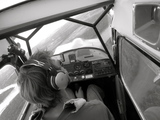
Mon Jun 07, 2021 1:25 pm
Re: Savage Norden
David, you have kids. If the goal is showing off the airplane, that can be done more effectively and safely using ground effect and the energy management turn. If the goal is Russian roulette, that can be done more effectively with a revolver. He can't quite hover out of ground effect, so the forward slip down the runway is not useful. And he cannot save himself with a hovering auto-rotation so the R-44 you flew is much more effective for that mission. Air to ground gunnery can be learned pretty quickly, energy management turns in a couple hours, and crop duster technique in twenty or so. All safely and very impressive. Using a low ground effect takeoff until cruise airspeed will quickly give the 65 hp Champ 7AC the same capability of very steep bank in the turn to crosswind, if we allow the nose to go down naturally. Any airplane can use a ninety degree bank base to final turn safely, if the nose is allowed to go down naturally.
If the company is trying to sell engines and props, I can see the value of the demonstration. That is poor use of an airplane, however, when energy management can achieve the same thing safely.
If the company is trying to sell engines and props, I can see the value of the demonstration. That is poor use of an airplane, however, when energy management can achieve the same thing safely.
- contactflying offline
- Posts: 4972
- Joined: Wed Apr 03, 2013 7:36 pm
- Location: Aurora, Missouri 2H2
Download my free "https://tinyurl.com/Safe-Maneuvering" e-book.
Mon Jun 07, 2021 1:30 pm
Re: Savage Norden
I agree that it's not the safest, or the best use of energy management Jim. But to go on about insurance rates and safety is pointless. Flying over the mountains isn't necessarily safe either, or over trees, or he'll, flying at all. I like to paid on sand bars that's are deep into the valley of a river with no outs. I fly in the dark over trees. I fly over the mountains, and you know how jagged those are where I live. Hence why I agree with Bryce. If everything comes down to risk mitigation we should just stay on the ground.contactflying wrote:David, you have kids. If the goal is showing off the airplane, that can be done more effectively and safely using ground effect and the energy management turn. If the goal is Russian roulette, that can be done more effectively with a revolver. He can't quite hover out of ground effect, so the forward slip down the runway is not useful. And he cannot save himself with a hovering auto-rotation so the R-44 you flew is much more effective for that mission. Air to ground gunnery can be learned pretty quickly, energy management turns in a couple hours, and crop duster technique in twenty or so. All safely and very impressive. Using a low ground effect takeoff until cruise airspeed will quickly give the 65 hp Champ 7AC the same capability of very steep bank in the turn to crosswind, if we allow the nose to go down naturally. Any airplane can use a ninety degree bank base to final turn safely, if the nose is allowed to go down naturally.
If the company is trying to sell engines and props, I can see the value of the demonstration. That is poor use of an airplane, however, when energy management can achieve the same thing safely.
Mon Jun 07, 2021 1:38 pm
Re: Savage Norden
My first thought was this:


Mon Jun 07, 2021 1:51 pm
Re: Savage Norden
I know David. I was there when young. I'm just getting old and mean.
- contactflying offline
- Posts: 4972
- Joined: Wed Apr 03, 2013 7:36 pm
- Location: Aurora, Missouri 2H2
Download my free "https://tinyurl.com/Safe-Maneuvering" e-book.
Mon Jun 07, 2021 2:05 pm
Re: Savage Norden
Its with deep concern and an abundance of caution for the steadily rising insurance rates that henceforth all form of air display will be terminated. Please secure your airborne steeds in their respective stalls and promptly mail the keys to your insurance provider. In the future all forms of aerial shenanigans will require prior approval from your insurance at which point the keys will be "released" for the approved event or series of events as authorized.
Please understand this is for the good of all, as insurers we only have your best interest in mind and the health and safety of all winged daredevil's alike.
Please understand this is for the good of all, as insurers we only have your best interest in mind and the health and safety of all winged daredevil's alike.
DISPLAY OPTIONS
Who is online
Users browsing this forum: No registered users and 0 guests
Latest Features
-
Live to Tell
A Minnesota pilot is surprised to learn that the sudden asymmetric drag of an out-of-rig ski can…Read More -
Creators
Working in some of the Yukon's most beautiful and remote environments, photographer Simon Blakesley captures aircraft in…Read More -
Aircraft Ownership and Maintenance
Upgrading to big tires can make a huge difference in backcountry performance, but with those gains come…Read More -
Tales from Yesteryear
In this tale from bush flying yesteryear, Don Cogger signs up to help Atlee Dodge Jr recovery…Read More


Latest Knowledge Base
-
Destinations
A regional guide with ideas for winter camping destinations in California, Nevada, New Mexico, and Arizona.Read More -
Aircraft
Finding an affordable aircraft that can handle the backcountry for $80K or less? A challenge for sure, but with the…Read More -
Aircraft
01.29.2018 - Zane - Updated tire diameter graphic to add 8.50x10 Guide to tires for use in the backcountry and off-airport landing…Read More -
Pilots
12.22.2013 - Initial article format Operating aircraft on skis and negotiating a snow-covered landscape is an entirely unique skillset and environment.…Read More


