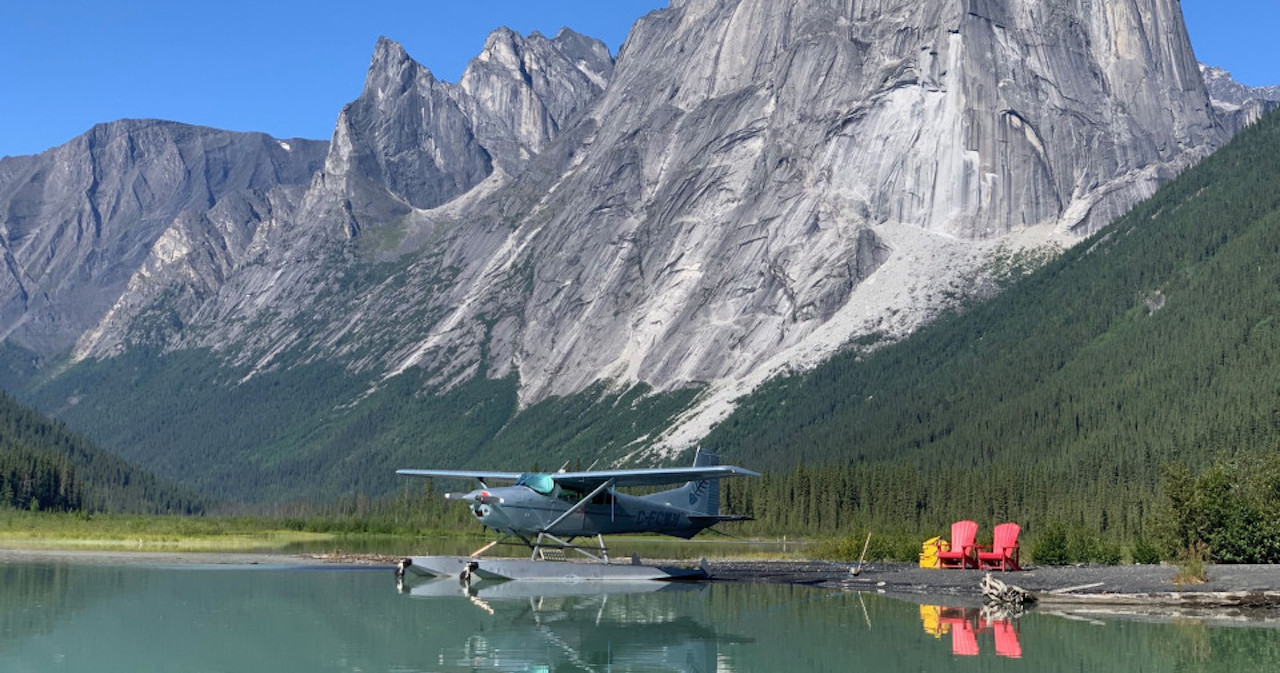
For many years, I have been working on the concept of the ultimate modern backcountry airplane.
I have been designing and building with composite materials for primary airframe structure for 15 years, and am 100% sold on the advantages of using carbon fiber and fiberglass prepregs over aluminum or rag and tube to build airframe structure. Yes, even for bush operations... the field repairablilty and damage tolerance of this stuff is impossible to believe until you have seen it.
Anyway, I hope to be in a position soon where I will be able to finish the development of my dream BC plane in the next couple of years.
Here are a few of the specifics that I am committed to:
High Wing
Conventional Configuration (One wing, normal tail, tractor motor, etc...)
Four Seats
Composite Airframe
Turbo-Diesel Power
Conventional (tailwheel gear) Gear
Modern Glass Instruments
High Volume Cabin
Great forward, downward. upward and side visibility
Preliminary sizing and performance targets are identified on this airplane, but for this purpose, I will refrain from sharing.
I am curious to hear what everyone's thoughts are on must have features and desirable characteristics that would result in this machine being the very best that it can possibly be?
Ultimate Backcountry Airplane
Fri Oct 03, 2014 12:09 pm
- Scolopax offline

- Posts: 1718
- Joined: Tue Sep 27, 2005 5:02 pm
- Location: Nottingham
- FindMeSpot URL: http://share.findmespot.com/shared/face ... 4aYqSexnZC
Fri Oct 03, 2014 1:02 pm
Re: Ultimate Backcountry Airplane
OK, I'll take the bait 
One company named Comp-Air has already been building big, square, composite high wing bushplane-type airplanes for a few years. I have no idea how good or bad their airplane actually is, but for this discussion let's say that it represents a reasonable demonstration of a composite version of the traditional conventional layout.
You said that you wanted somewhat conventional layout, so a larger version of Barnaby's Facetmobile (which reportedly had surprisingly good STOL ability) is not relevant to this exercise. Same goes for giant flying wings, jump-capable gyrocopters, Burnelli lifting bodies, and tandem-wing Rutan Grizzly thingies.
A plastic version of the Porter or Gippsland Airvan is pretty close to what the Comp-Air is trying to do. A plastic copy of the PA-14 or stretched PA-22/Bushmaster is probably too obvious,and both the Glastar and the smallest Comp-Air gets into that range already.
Out of what's left, I'd suggest looking at a scaled down Fairchild C-123 or Short Skyvan layout, executed in composites. The reasons for this are fairy obvious:
- Best prop clearance, making use of high wing
- Best visibility in all directions
- Best cabin volume vs. overall aircraft size footprint
- Better span loading / spar bending moment
- Fuselage able to be built using flat or nearly flat sandwich panels
- Stand-up and walk-through cabin
- Possibility of rear loading ramp instead of doors
- Can retract wheels into fuselage blisters (C-123/C-130 style) resulting in DRAG and RANGE improvements
- Tailwheel config. is optional, but not mandatory (already have big prop clearance)
Of course the big price to be paid for this is that is needs two smaller engines instead of one big one. But, even this disadvantage is offset by additional advantages:
- Twin engines provide flight-continuation capability over desolate terrain
- More speed vs. economy choices to suit different missions
- Better propeller/thrust efficiency (no bulky fuselage affecting outflow)
- Possible use of augmented lift from propellers if designed right
Using the successes of Wittman's Tailwind and perhaps a few others (Taylorcraft), it can be shown that flat sides and square corners can go reasonably fast. If you can build the fuselage with flat sides, then you can do without enormous, complex molds for the fuselage, saving you a tremendous amount of money. You might be able to laminate and bag your sandwich skins on a flat, or single curvature table. Michel Colomban has achieved exceptional performance with the MC-30 ultralight, building the fuselage as single-curvatures using simple mold/support tables. In this application, your benefit is not so much the faster speed, but that the drag reduction will allow greater fuel range, which is important in remote operations. This is also the justification for building out the blisters on the lower fuselage to retract the wheels into... not the speed but the efficiency to to have big tires when you need them but keeping them faired in when you don't.
Also, this airplane might be a starting point, if you happen to have a large tubular mold available... http://en.wikipedia.org/wiki/IAI_Arava
One company named Comp-Air has already been building big, square, composite high wing bushplane-type airplanes for a few years. I have no idea how good or bad their airplane actually is, but for this discussion let's say that it represents a reasonable demonstration of a composite version of the traditional conventional layout.
You said that you wanted somewhat conventional layout, so a larger version of Barnaby's Facetmobile (which reportedly had surprisingly good STOL ability) is not relevant to this exercise. Same goes for giant flying wings, jump-capable gyrocopters, Burnelli lifting bodies, and tandem-wing Rutan Grizzly thingies.
A plastic version of the Porter or Gippsland Airvan is pretty close to what the Comp-Air is trying to do. A plastic copy of the PA-14 or stretched PA-22/Bushmaster is probably too obvious,and both the Glastar and the smallest Comp-Air gets into that range already.
Out of what's left, I'd suggest looking at a scaled down Fairchild C-123 or Short Skyvan layout, executed in composites. The reasons for this are fairy obvious:
- Best prop clearance, making use of high wing
- Best visibility in all directions
- Best cabin volume vs. overall aircraft size footprint
- Better span loading / spar bending moment
- Fuselage able to be built using flat or nearly flat sandwich panels
- Stand-up and walk-through cabin
- Possibility of rear loading ramp instead of doors
- Can retract wheels into fuselage blisters (C-123/C-130 style) resulting in DRAG and RANGE improvements
- Tailwheel config. is optional, but not mandatory (already have big prop clearance)
Of course the big price to be paid for this is that is needs two smaller engines instead of one big one. But, even this disadvantage is offset by additional advantages:
- Twin engines provide flight-continuation capability over desolate terrain
- More speed vs. economy choices to suit different missions
- Better propeller/thrust efficiency (no bulky fuselage affecting outflow)
- Possible use of augmented lift from propellers if designed right
Using the successes of Wittman's Tailwind and perhaps a few others (Taylorcraft), it can be shown that flat sides and square corners can go reasonably fast. If you can build the fuselage with flat sides, then you can do without enormous, complex molds for the fuselage, saving you a tremendous amount of money. You might be able to laminate and bag your sandwich skins on a flat, or single curvature table. Michel Colomban has achieved exceptional performance with the MC-30 ultralight, building the fuselage as single-curvatures using simple mold/support tables. In this application, your benefit is not so much the faster speed, but that the drag reduction will allow greater fuel range, which is important in remote operations. This is also the justification for building out the blisters on the lower fuselage to retract the wheels into... not the speed but the efficiency to to have big tires when you need them but keeping them faired in when you don't.
Also, this airplane might be a starting point, if you happen to have a large tubular mold available... http://en.wikipedia.org/wiki/IAI_Arava

.
Fri Oct 03, 2014 1:28 pm
Re: Ultimate Backcountry Airplane
Nice, Jake!
My personal wish list would include some sort of large cargo door, maybe trailing link main gear and cargo space for dense items that's reasonably aligned with the CG. Perhaps some sort of built-in cargo pod under the cabin floor.
My personal wish list would include some sort of large cargo door, maybe trailing link main gear and cargo space for dense items that's reasonably aligned with the CG. Perhaps some sort of built-in cargo pod under the cabin floor.

Fri Oct 03, 2014 2:04 pm
Re: Ultimate Backcountry Airplane
Sounds like you're making some progress there Jake. I second the consideration of ease of ingress/egress and cargo door options. Also the ability to maximize the interior space by going from a passenger configuration to stricly cargo or even set up to sleep in etc. I would imagine you're already planning on it's ability to carry four bikes without removing the front tire, right?  No doubt it will be pretty cool! Can't wait to see it!
CW
Oh, and any external load hauling options might be cool.
No doubt it will be pretty cool! Can't wait to see it!CW
Oh, and any external load hauling options might be cool.
- clippwagon offline
- Posts: 737
- Joined: Sun Nov 13, 2011 9:49 pm
- Location: Oregon
Fri Oct 03, 2014 4:54 pm
Re: Ultimate Backcountry Airplane
Cockpit doors on both sides to facilitate seaplane operations! Because it will never be a truly iconic bush plane if it never flies off the water... 
- CapnMike offline

- Posts: 842
- Joined: Wed Mar 05, 2014 11:25 am
- Location: Kamas, Utah and Sandpoint, Idaho
"If my wings should fail me Lord, please meet me with another pair" - Led Zeppelin
"It's all going in my report..." - CapnMike
"It's all going in my report..." - CapnMike
Fri Oct 03, 2014 7:02 pm
Re: Ultimate Backcountry Airplane
You got my first must with the turbo diesel. Next I would say it needs to be stick control, seats low enough that a 6' guy is not looking directly into the wing root when he looks left or right, a better mousetrap for the tail-spring(not a stiff leaf setup). Beyond that, simple, light, and a shit ton of power!
- Jeredp offline

- Posts: 625
- Joined: Fri Apr 20, 2012 10:31 am
- Location: WA
- FindMeSpot URL: http://share.findmespot.com/shared/face ... 7NYN40QT2I
- Aircraft: Cessna 172
Fri Oct 03, 2014 8:42 pm
Re: Ultimate Backcountry Airplane
Large cargo door and cockpit doors on both sides, think Maule for door ideas... Stinger type tail wheel with cub type main gear, easy to work on... Make everything easy to maintain. Hinge the dash, big access panels for all the control linkages, etc... For me, at least 5 seats or the option for a 5th seat... Flat floors with Cessna type seat rails... If you look at a Fiesler Storch or Bird dog you will notice the fuselage sides are canted out on the top (narrow at the bottom and wider at the top) makes for good down visibility out of the side windows. Would make full glass front doors real easy to see out of...
I started my own design for a big bush aircraft with some of these ideas incorporated... Never finished it though... I'm a tube and fabric guy so I was going that route.
Brian.
I started my own design for a big bush aircraft with some of these ideas incorporated... Never finished it though... I'm a tube and fabric guy so I was going that route.
Brian.
- Brian-StevesAircraft offline
- Posts: 761
- Joined: Tue Dec 13, 2005 1:13 pm
- Location: Beagle (White City) Oregon
Fri Oct 03, 2014 9:48 pm
Ultimate Backcountry Airplane
Good comments above.
I love flying airplanes that have sticks, but there's is a reason so many airplanes have yokes. Getting in and out of an airplane with sticks is more challenging, keeping a flight bag under you knees etc. Regardless, co pilots controls need to be easily removable/stowable (sp?), including rudder pedals.
This is going to be an expensive airplane regardless.......what about turbine power? I just don't see how you are going to get the performance needed to set this airplane apart with current piston technology. The extra fuel burn is a concern, but may not be as much of a factor when you consider the class of airplane this is going to be? The found bush hawk is an example of this. Big cabin, awesome doors with great visibility and much more. But, I don't think the power/weight works out for true stol performance?
The horizontal stab needs to be made out of rubber, lol. I'm tired of replacing tail feathers from bolder damage. I'm not sure what can withstand a 10Ib object at 40mph, but that would be a game changer.
Decent cruise performance with Bushwheels is a must. Half wheel pants, semi retractable gear.....a big challenge, but if we are dreaming.......
Looking forward to hearing more about this.
I love flying airplanes that have sticks, but there's is a reason so many airplanes have yokes. Getting in and out of an airplane with sticks is more challenging, keeping a flight bag under you knees etc. Regardless, co pilots controls need to be easily removable/stowable (sp?), including rudder pedals.
This is going to be an expensive airplane regardless.......what about turbine power? I just don't see how you are going to get the performance needed to set this airplane apart with current piston technology. The extra fuel burn is a concern, but may not be as much of a factor when you consider the class of airplane this is going to be? The found bush hawk is an example of this. Big cabin, awesome doors with great visibility and much more. But, I don't think the power/weight works out for true stol performance?
The horizontal stab needs to be made out of rubber, lol. I'm tired of replacing tail feathers from bolder damage. I'm not sure what can withstand a 10Ib object at 40mph, but that would be a game changer.
Decent cruise performance with Bushwheels is a must. Half wheel pants, semi retractable gear.....a big challenge, but if we are dreaming.......
Looking forward to hearing more about this.
- highroad offline

- Posts: 785
- Joined: Wed Feb 20, 2008 10:28 am
- Location: Southern Oregon Coast
- FindMeSpot URL: http://share.findmespot.com/shared/face ... SBWeUVDhQd
- Aircraft: A Maule we call X-ray
Fri Oct 03, 2014 10:03 pm
Re: Ultimate Backcountry Airplane
One of the other things I forgot to mention - if it has rear cargo door(s), make sure they can be opened with the flaps in the farthest down position. The Bush Hawk doors open 180 degrees to lay flat against the cabin (all four of them!) and the flaps do not interfere with the door operation when they are all the way down. The C206 "Emergency Egress Through the Cargo Door With Flaps Down" brief is pretty important for passengers if they want to make it out in an upset. In the Bush Hawk, we just show them how the handle works...
Additionally, the rear doors should be sized to take a 55 gallon drum upright or on its side (easier to roll a heavy drum in). Something to think about for an airplane that works for a living!
+1 on the flat floors.
Heck - just take a few minutes looking over a Bush Hawk. It's one of the best-thought-out heavy singles I've seen. It's also the easiest to get into, front or back.
Additionally, the rear doors should be sized to take a 55 gallon drum upright or on its side (easier to roll a heavy drum in). Something to think about for an airplane that works for a living!
+1 on the flat floors.
Heck - just take a few minutes looking over a Bush Hawk. It's one of the best-thought-out heavy singles I've seen. It's also the easiest to get into, front or back.
- CapnMike offline
- Posts: 842
- Joined: Wed Mar 05, 2014 11:25 am
- Location: Kamas, Utah and Sandpoint, Idaho
"If my wings should fail me Lord, please meet me with another pair" - Led Zeppelin
"It's all going in my report..." - CapnMike
"It's all going in my report..." - CapnMike
Sat Oct 04, 2014 5:05 am
Re: Ultimate Backcountry Airplane
What Brian said about the hinged panels for control linkages. I had the chance to fly in an N3N recently. It's worth taking a look at that set up. A tube and fabric airplane with large aluminum panels the length of one side. Unbelievable access the full length of the plane. A brilliant set up from 1941 or so. Not to mention that big 450 HP radial up front. What an incredible airplane. Got some time flying it too. Laughed like a teenager and that takes some doing.
Sat Oct 04, 2014 1:50 pm
Re: Ultimate Backcountry Airplane
There are a lot of good ideas here. Thanks for the feedback. I hope to and plan for building this thing, and all of this input is very valuable at this phase before too many details are frozen.
What I am working towards is a single engine plane with a gross weight between that of a C170 and early C180 with 230 hi-torque turbo diesel ponies spinning a large diameter propeller.
The empty weight target will hopefully result in a plane that can land very short on the roughest of surfaces alongside Cubs, Maules and Huskies when loaded lightly. Carbon fiber can do amazing things if the design is optimized to capitalize on the material's strengths. That said, I will be building molds that will result in compound curvature all over the entire structure, so the only flat panels will be the cabin floor, ribs, spar webs and bulkheads. If it ever goes in to production, it will likely use a lot of fiberglass in place of carbon to make it more affordable.
I have been flying a Helio Courier quite a bit, which has opened my eyes to what is possible in the realm of low speed control. I can always land the courier in less than 250 feet, usually in 150 feet, and confidently bank it to 45+ degrees indicating 35 knot ground speeds on a calm day. Airspeed indications are unreliable down there, so I use GPS GS as the most accurate measure of actual low speed performance when there is little to no wind.
This plane must clean up nicely and dirty up effectively in slow flight configuration to generate lots of lift and drag. Exceptional high altitude cruise performance (for a BC plane) is attainable with good aero design and lots of induction boost at higher altitudes. I am hopeful for 150 knots at 10 gph at 17500 feet. Oxygen system with cannulas will allow for this with no mask required at this altitude. With 75 gallons on board, this will yield a 1000 nm + range with what i hope will still be 600 lbs of useful load left over. These are aggressive targets, but not completely uneducated.
Accessibility and visibility are the primary human factors that I am considering when designing the fuselage and configuring the cabin. A center stick and standard rudder pedals will be used for primary controls. Is anyone familiar with a successful removable stick installation in an airplane? I know that a "break off" control stick is a potential point of catastrophic failure but it doesn't seem too difficult to design a fool proof easy to remove and reinstall stick for pilot and copilot seat accessibility. It would be nice to remove the right seat control stick for many operations.
I am thinking 206 type door configuration - left forward door with wide right side split doors for the rear. The ability to load, carry and unload a 55 gallon drum is definitely a consideration, but the thought occurred to me to design a transfer valve out of the 75 gallon wet wings, so that some of the heavy fuel carried can be drained in to a drum at the destination. Again, something that operators will need to be very careful using. What do the bush operators out there think of this concept?
I am thinking bush plane FIRST on this aircraft, so It will definitely be designed with Bushwheel, ski and float installations in mind. I believe that it can have other competencies though by balancing compromises at this phase of design.
It will have a tailwheel installation that will be designed to withstand the most demanding surface conditions. The horizontal will be attached approximately 25% up the vertical span up to get it away from projectiles. A T-tail would offer better clearance, but You need to make the vertical spar way beefier for strength and flutter with this arrangement.
Another feature of composites is that with a damaging rock or wood impact (Like Kevin's Horizontal), fibers may tear and resin may fracture in the structure, but it springs back to original contour in all but the most extreme events. You can successfully field repair a heavily damaged leading edge with gorilla tape. One really must see it to believe it, but I have seen it...
It will be designed as a working plane, though I have no intention of certifying it. I have been through several Part 23 cert programs and have decided that life is too short to accept that kind of resistance when trying to achieve goals and accomplish dreams. Who knows, maybe the LSA weight limits, speed limits, power limits, occupant limits, etc... will be raised someday, and I can actually deliver a RTF airplane rather than just a kit.
What I am working towards is a single engine plane with a gross weight between that of a C170 and early C180 with 230 hi-torque turbo diesel ponies spinning a large diameter propeller.
The empty weight target will hopefully result in a plane that can land very short on the roughest of surfaces alongside Cubs, Maules and Huskies when loaded lightly. Carbon fiber can do amazing things if the design is optimized to capitalize on the material's strengths. That said, I will be building molds that will result in compound curvature all over the entire structure, so the only flat panels will be the cabin floor, ribs, spar webs and bulkheads. If it ever goes in to production, it will likely use a lot of fiberglass in place of carbon to make it more affordable.
I have been flying a Helio Courier quite a bit, which has opened my eyes to what is possible in the realm of low speed control. I can always land the courier in less than 250 feet, usually in 150 feet, and confidently bank it to 45+ degrees indicating 35 knot ground speeds on a calm day. Airspeed indications are unreliable down there, so I use GPS GS as the most accurate measure of actual low speed performance when there is little to no wind.
This plane must clean up nicely and dirty up effectively in slow flight configuration to generate lots of lift and drag. Exceptional high altitude cruise performance (for a BC plane) is attainable with good aero design and lots of induction boost at higher altitudes. I am hopeful for 150 knots at 10 gph at 17500 feet. Oxygen system with cannulas will allow for this with no mask required at this altitude. With 75 gallons on board, this will yield a 1000 nm + range with what i hope will still be 600 lbs of useful load left over. These are aggressive targets, but not completely uneducated.
Accessibility and visibility are the primary human factors that I am considering when designing the fuselage and configuring the cabin. A center stick and standard rudder pedals will be used for primary controls. Is anyone familiar with a successful removable stick installation in an airplane? I know that a "break off" control stick is a potential point of catastrophic failure but it doesn't seem too difficult to design a fool proof easy to remove and reinstall stick for pilot and copilot seat accessibility. It would be nice to remove the right seat control stick for many operations.
I am thinking 206 type door configuration - left forward door with wide right side split doors for the rear. The ability to load, carry and unload a 55 gallon drum is definitely a consideration, but the thought occurred to me to design a transfer valve out of the 75 gallon wet wings, so that some of the heavy fuel carried can be drained in to a drum at the destination. Again, something that operators will need to be very careful using. What do the bush operators out there think of this concept?
I am thinking bush plane FIRST on this aircraft, so It will definitely be designed with Bushwheel, ski and float installations in mind. I believe that it can have other competencies though by balancing compromises at this phase of design.
It will have a tailwheel installation that will be designed to withstand the most demanding surface conditions. The horizontal will be attached approximately 25% up the vertical span up to get it away from projectiles. A T-tail would offer better clearance, but You need to make the vertical spar way beefier for strength and flutter with this arrangement.
Another feature of composites is that with a damaging rock or wood impact (Like Kevin's Horizontal), fibers may tear and resin may fracture in the structure, but it springs back to original contour in all but the most extreme events. You can successfully field repair a heavily damaged leading edge with gorilla tape. One really must see it to believe it, but I have seen it...
It will be designed as a working plane, though I have no intention of certifying it. I have been through several Part 23 cert programs and have decided that life is too short to accept that kind of resistance when trying to achieve goals and accomplish dreams. Who knows, maybe the LSA weight limits, speed limits, power limits, occupant limits, etc... will be raised someday, and I can actually deliver a RTF airplane rather than just a kit.
- Scolopax offline
- Posts: 1718
- Joined: Tue Sep 27, 2005 5:02 pm
- Location: Nottingham
- FindMeSpot URL: http://share.findmespot.com/shared/face ... 4aYqSexnZC
Sat Oct 04, 2014 5:05 pm



Sat Oct 04, 2014 5:48 pm
Re: Ultimate Backcountry Airplane
Scolopax. The Citabria has a really nice system for removing the rear stick. Just pull out a bolt, unplug the PTT wire, and pull out the stick. Takes about a minute. I don't see why the same system wouldn't work on your design.

Sat Oct 04, 2014 8:00 pm
Re: Ultimate Backcountry Airplane
BRD wrote:at OSH
I saw that Oshkosh. It looks very interesting, and the cabin space is very useful. Not very easy to imagine on a gravel bar with grapefruit sized rocks. That's exactly what I was thinking on the control stick A1Skinner.
This is a nifty little device from the bicycle industry that could be adapted:
http://www.sandsmachine.com/spec_ssc.htm
- Scolopax offline
- Posts: 1718
- Joined: Tue Sep 27, 2005 5:02 pm
- Location: Nottingham
- FindMeSpot URL: http://share.findmespot.com/shared/face ... 4aYqSexnZC
Sun Oct 05, 2014 3:58 am
Re: Ultimate Backcountry Airplane
I can't believe it hasn't been said yet. Oh we'll some one has to, it may as well be me......
Just buy a Maule!
Just buy a Maule!
Sun Oct 05, 2014 9:49 am
Re: Ultimate Backcountry Airplane
51C170 wrote:I can't believe it hasn't been said yet. Oh we'll some one has to, it may as well be me......
Just buy a Maule!
BD Maule's buddies probably told him to just get a Stinson.
I did think about that, but then realized that I couldn't afford the insurance

- Scolopax offline
- Posts: 1718
- Joined: Tue Sep 27, 2005 5:02 pm
- Location: Nottingham
- FindMeSpot URL: http://share.findmespot.com/shared/face ... 4aYqSexnZC
Sun Oct 05, 2014 11:41 am
Re: Ultimate Backcountry Airplane
You've discussed fuselage, landing gear, doors, etc, but haven't mentioned the wing. For a good backcountry airplane, it really is all about the wing. Doors are convenience items, and important, but using the right airfoil and wing planform is essential to good performance.
Also, the design of control surfaces and wing devices are equally critical. Fowler type flaps are without doubt an important component, in my opinion. And, generally, the bigger the better. Aerodynamically balanced ailerons, with a selectable droop mechanism can provide additional lift at high AOA, while still minimizing stick forces.
Leading edge slats MAY be a good addition, though again the design of these devices may create substantial drag. The Helio slats are excellent, but complex and heavy. The Wayne Mackey slats are much simpler and lighter, but I suspect the drag coefficient on these at the speeds you're describing would be huge.
Do you go with a strut braced wing, or a cantilevered wing, like the Helio? Big differences in structures there as well. Are you considering a carbon fiber wing? That could reduce weight considerably, and offer virtually unlimited fuel tankage.
Speaking of which, I'd highly recommend incorporating larger tanks than you noted. 70 gallons will go a long ways with a diesel, no doubt, but I've never met an airplane that had too big a fuel capacity, particularly when you start exploring some of the remote parts of the world. You can always fly with partial fuel, but carrying extra fuel in cans or barrels, etc, is a huge pain in the arse, and isn't the safest way to haul fuel. Better to tanker it internally. This from a pilot who has moved a little over 1000 barrels of avgas, jet fuel, etc, as well as several hundred 100 pound propane cylinders in beavers, cessnas and a goose. Trust me, move barrels in airplanes just a little, and you'll never want to do so again.
Another notion, if you're planning on having to move fuel would be to build or have built, a separate tank that can be fitted into the cargo compartment of the airplane. I had a 110 gallon tank made for a 206 to tanker fuel to a remote fuel storage facility. It was limited to 110 gallons, since this was all done on floats, so the useful load was limiting. Nevertheless, this system was really slick, with a small electric pump and hose to transfer the fuel, etc. Of course, this requires that you have some sort of fuel storage capability in the remote area you're planning on storing fuel at, like a cabin, remote strip, lake, etc.
On the tail surfaces, you may want to consider building a horizontal tail surface that has an asymmetrical airfoil design. That and a trimmable horizontal stabilizer would help with both the slow flight and high speed capabilities of the plane. I'd adjust that horizontal stabilizer with a jackscrew....probably electrically activated.
I mostly agree with your choice of doors, etc.
As to control sticks, you might find a Cessna Skycatcher and look at the stick configuration in that little airplane. I really liked that. It has two control sticks, but instead of them being mounted to the floor, they are attached up behind the instrument panel, and extend under the bottom of the panel. The geometry almost exactly matches the action of floor mounted sticks, but the floor is flat and unencumbered by the controls. It also would be really easy to remove the right (or left) side stick to fly with single controls. I only flew the Skycatcher for an hour or so, but I was really impressed by that stick arrangement.
Good luck on your project.
MTV
Also, the design of control surfaces and wing devices are equally critical. Fowler type flaps are without doubt an important component, in my opinion. And, generally, the bigger the better. Aerodynamically balanced ailerons, with a selectable droop mechanism can provide additional lift at high AOA, while still minimizing stick forces.
Leading edge slats MAY be a good addition, though again the design of these devices may create substantial drag. The Helio slats are excellent, but complex and heavy. The Wayne Mackey slats are much simpler and lighter, but I suspect the drag coefficient on these at the speeds you're describing would be huge.
Do you go with a strut braced wing, or a cantilevered wing, like the Helio? Big differences in structures there as well. Are you considering a carbon fiber wing? That could reduce weight considerably, and offer virtually unlimited fuel tankage.
Speaking of which, I'd highly recommend incorporating larger tanks than you noted. 70 gallons will go a long ways with a diesel, no doubt, but I've never met an airplane that had too big a fuel capacity, particularly when you start exploring some of the remote parts of the world. You can always fly with partial fuel, but carrying extra fuel in cans or barrels, etc, is a huge pain in the arse, and isn't the safest way to haul fuel. Better to tanker it internally. This from a pilot who has moved a little over 1000 barrels of avgas, jet fuel, etc, as well as several hundred 100 pound propane cylinders in beavers, cessnas and a goose. Trust me, move barrels in airplanes just a little, and you'll never want to do so again.
Another notion, if you're planning on having to move fuel would be to build or have built, a separate tank that can be fitted into the cargo compartment of the airplane. I had a 110 gallon tank made for a 206 to tanker fuel to a remote fuel storage facility. It was limited to 110 gallons, since this was all done on floats, so the useful load was limiting. Nevertheless, this system was really slick, with a small electric pump and hose to transfer the fuel, etc. Of course, this requires that you have some sort of fuel storage capability in the remote area you're planning on storing fuel at, like a cabin, remote strip, lake, etc.
On the tail surfaces, you may want to consider building a horizontal tail surface that has an asymmetrical airfoil design. That and a trimmable horizontal stabilizer would help with both the slow flight and high speed capabilities of the plane. I'd adjust that horizontal stabilizer with a jackscrew....probably electrically activated.
I mostly agree with your choice of doors, etc.
As to control sticks, you might find a Cessna Skycatcher and look at the stick configuration in that little airplane. I really liked that. It has two control sticks, but instead of them being mounted to the floor, they are attached up behind the instrument panel, and extend under the bottom of the panel. The geometry almost exactly matches the action of floor mounted sticks, but the floor is flat and unencumbered by the controls. It also would be really easy to remove the right (or left) side stick to fly with single controls. I only flew the Skycatcher for an hour or so, but I was really impressed by that stick arrangement.
Good luck on your project.
MTV


Sun Oct 05, 2014 12:14 pm
Re: Ultimate Backcountry Airplane
For slats, what about the SuperSTOL type?
- ExperimentalAviator offline

- Posts: 677
- Joined: Tue Apr 15, 2014 8:02 am
- Location: Plains
Sun Oct 05, 2014 12:21 pm
Re: Ultimate Backcountry Airplane
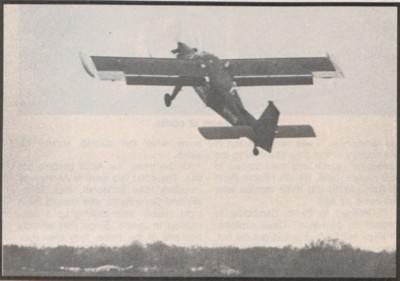 look no farther Helio Stallion
- cstolaircraft offline
- Posts: 523
- Joined: Wed Sep 29, 2010 12:50 pm
- Location: Blackwell, Mo
Mission Pilot in training. C-170B N8098A.
But they that wait upon the Lord shall renew their strength; they shall mount up on wings as eagles... Isaiah 40:31
But they that wait upon the Lord shall renew their strength; they shall mount up on wings as eagles... Isaiah 40:31
Sun Oct 05, 2014 12:55 pm
Re: Ultimate Backcountry Airplane
There is not much I can add to this as most here are more learned than I on bush planes . How ever I do have 1740 hours flying a plane with slats built like a those on the Helio, and I am sure if more planes had these type slats there would be more old pilots!
Doug
Doug
- brown bear offline
- Posts: 75
- Joined: Tue Dec 30, 2008 6:49 pm
- Location: kansas
DISPLAY OPTIONS
Who is online
Users browsing this forum: No registered users and 1 guest
Latest Features
-
-
Featured Bush Planes
As one of the undisputed legends of bush flying, the Cessna 180 hauls a…Read More -
Aircraft Ownership and Maintenance
9 modification mistakes aircraft owners make when trying to "bush out" their birds—why some…Read More -
Live to Tell
A Minnesota pilot is surprised to learn that the sudden asymmetric drag of an…Read More


Latest Knowledge Base
-
Destinations
Canada offers some of the most spectacular backcountry flying on the continent. Here's what you need to know before you go.Read More -
Safety and Survival
Hope that you never have to use your survival vest but knowing you have it and knowing how to use…Read More -
Destinations
A regional guide with ideas for winter camping destinations in California, Nevada, New Mexico, and Arizona.Read More -
Aircraft
Finding an affordable aircraft that can handle the backcountry for $80K or less? A challenge for sure, but with the…Read More