I fly a Cessna 152 with electric flaps, and on landing I retract the flaps on rollout (not directly after touchdown but shortly thereafter).
In my thinking this reduces lift therefor helping my braking by transferring the weight to the wheels and making the aircraft less likely to balloon if there was a gust, it also makes goarounds easier because the flaps is in/near takeoff position (0-10 deg.)
This is relatively easy to do as my hand barely has to come off the throttle to flick the flap switch up with my finger.
Recently I flew with someone else and he mentioned it was not good practice to retract the flaps.I would not normally let this bother me but I vagly remember reading the samething somewhere....can't remember where, but it was not a POH nor was it aircraft specific,something the FAA put out maybe?
Anyway I thought I'd ask what you guys do and what advice you might have.
I know that this may be different in aircraft with manual flaps,still interested in hearing what you do.
Note: I don't fly off anything short or unpaved (rental agreement stuff) so I don't realy need to retract the flaps.I do like to practice though.
Retracting flaps on landing
Tue Jan 26, 2016 2:51 pm
Retracting flaps on landing
Last edited by MountainFlyerN22 on Tue Jan 26, 2016 3:00 pm, edited 1 time in total.
- MountainFlyerN22 offline
- Posts: 80
- Joined: Fri Nov 20, 2015 12:23 am
- Location: Catskill
Tue Jan 26, 2016 2:59 pm
Retracting flaps on landing
Some good (and entertaining) reading here:
https://www.backcountrypilot.org/forum/ ... ding-14531
https://www.backcountrypilot.org/forum/ ... ding-15235
https://www.backcountrypilot.org/forum/ ... ding-14531
https://www.backcountrypilot.org/forum/ ... ding-15235

Tue Jan 26, 2016 3:01 pm
Re: Retracting flaps on landing
Thanks, I didn't see that when I seached.
- MountainFlyerN22 offline
- Posts: 80
- Joined: Fri Nov 20, 2015 12:23 am
- Location: Catskill
Tue Jan 26, 2016 3:17 pm
Re: Retracting flaps on landing
Its all about habit patterns. The main issue with raising flaps on roll out is it sets up the pilot to accidentally raise the gear. It happens all the time and CFI's like to teach that the best technique is to not touch thing until clearing the runway. The airlines do this by procedure.
That being said rising the flaps does put more weight on the main gear, thereby improving the braking capability of the airplane. That being said I doubt very seriously that most of your landings would require max braking. And unless you need that I would suggest the safer course is to... not touch thing until you clear the runway.
It's a pilot thing... technique not procedure... but we are creatures of our habits and bad ones are hard to break.
My two cents,
gunny
That being said rising the flaps does put more weight on the main gear, thereby improving the braking capability of the airplane. That being said I doubt very seriously that most of your landings would require max braking. And unless you need that I would suggest the safer course is to... not touch thing until you clear the runway.
It's a pilot thing... technique not procedure... but we are creatures of our habits and bad ones are hard to break.
My two cents,
gunny
Tue Jan 26, 2016 3:18 pm
Re: Retracting flaps on landing
when I flew a 170 all the time on touch down the flaps came up. Allowed me to brake harder have better rudder control and prevented any idea of a bounce do to a wind gust.
- cstolaircraft offline
- Posts: 523
- Joined: Wed Sep 29, 2010 12:50 pm
- Location: Blackwell, Mo
Mission Pilot in training. C-170B N8098A.
But they that wait upon the Lord shall renew their strength; they shall mount up on wings as eagles... Isaiah 40:31
But they that wait upon the Lord shall renew their strength; they shall mount up on wings as eagles... Isaiah 40:31
Tue Jan 26, 2016 3:50 pm
Re: Retracting flaps on landing
It is an individual pilot thing, like Gump said, but the go around, better braking, bounce, gust, and those kind of issues go away when we always land slow on the numbers. I never bothered raising the flaps until off the landing zone. But, I never needed to.
- contactflying offline
- Posts: 4972
- Joined: Wed Apr 03, 2013 7:36 pm
- Location: Aurora, Missouri 2H2
Download my free "https://tinyurl.com/Safe-Maneuvering" e-book.
Tue Jan 26, 2016 4:39 pm
Re: Retracting flaps on landing
Basic rules of primacy. If you're in the habit of raising flaps on roll out in a 152 and someday transition to a retract of any kind, you'll probably raise the flaps on roll out with that, too. But if you make the mistake and grab the gear handle instead of the flap handle, you won't be able to taxi off the runway.  You won't be the first nor the last to make that mistake.
Seriously, except for those few here who frequent very short strips and need all the braking their airplane can give them, it's a really poor habit and for most flying an unnecessary one. Yes, it's likely to result in more traction for the main gear, but how much more is a subject of debate, and certainly you don't need to develop that habit in the kind of flying you do. Other reasons not to do it:
>You're distracting yourself from the landing and roll out process. Granted with the 152, the flap switch is very near the throttle. Not so on every airplane, so that finding the flap switch by feel isn't as easy. Any distraction on the roll out is potentially dangerous.
>You've removed your hand from the throttle, so that if you do need to go around to dodge over something, it'll take you a little extra time to add power.
>If you start developing the habit of cleaning up the flaps, pretty soon in a more sophisticated airplane you'll be doing many more distracting things unnecessarily, such as opening cowl flaps, switching off lights, switching off fuel pumps, taking off carb heat, etc. None of those things need to be done during the roll out.
The single largest non-fatal segment of aviation accidents occur during the landing roll out, according to the NTSB reports. While the "why" of that isn't always clear from the reports, I suggest that much of it is due to the pilot trying to do other things rather than control the airplane until it's been safely taxied off the runway.
So my recommendation echoes that of many other instructors--don't raise the flaps until you've taxied off the runway to avoid creating a habit that will come back to bite you someday.
Cary
You won't be the first nor the last to make that mistake.Seriously, except for those few here who frequent very short strips and need all the braking their airplane can give them, it's a really poor habit and for most flying an unnecessary one. Yes, it's likely to result in more traction for the main gear, but how much more is a subject of debate, and certainly you don't need to develop that habit in the kind of flying you do. Other reasons not to do it:
>You're distracting yourself from the landing and roll out process. Granted with the 152, the flap switch is very near the throttle. Not so on every airplane, so that finding the flap switch by feel isn't as easy. Any distraction on the roll out is potentially dangerous.
>You've removed your hand from the throttle, so that if you do need to go around to dodge over something, it'll take you a little extra time to add power.
>If you start developing the habit of cleaning up the flaps, pretty soon in a more sophisticated airplane you'll be doing many more distracting things unnecessarily, such as opening cowl flaps, switching off lights, switching off fuel pumps, taking off carb heat, etc. None of those things need to be done during the roll out.
The single largest non-fatal segment of aviation accidents occur during the landing roll out, according to the NTSB reports. While the "why" of that isn't always clear from the reports, I suggest that much of it is due to the pilot trying to do other things rather than control the airplane until it's been safely taxied off the runway.
So my recommendation echoes that of many other instructors--don't raise the flaps until you've taxied off the runway to avoid creating a habit that will come back to bite you someday.
Cary
"I have slipped the surly bonds of earth..., put out my hand and touched the face of God." J.G. Magee
Tue Jan 26, 2016 5:36 pm
Re: Retracting flaps on landing
Thanks guys. You've given me some stuff to think about.
Cary,
I didn't think of one day grabbing the gear lever in a retractable.
contactflying,
I see what your saying about slow on the numbers.
Cary,
I didn't think of one day grabbing the gear lever in a retractable.
contactflying,
I see what your saying about slow on the numbers.
- MountainFlyerN22 offline
- Posts: 80
- Joined: Fri Nov 20, 2015 12:23 am
- Location: Catskill
Tue Jan 26, 2016 5:45 pm
Re: Retracting flaps on landing
with electric flaps raising them right at touchdown does not help, and indeed may hurt.
For example, a 206 does short field take offs at 20 of flaps, why? more lift/drag. If you put the flaps all the way down like they would be on a shortfield landing and move the lever up and count how many seconds it takes to get to 0. You will find that you are passing through the 20 range for about 2-3 seconds.
Now, if you put the flaps up right on touching down, your flaps are passing through the area of most lift for those 2-3 seconds, in other words taking weight off of your wheels instead of on them. Better to just leave in full flaps, keep your yoke in your lap, and if needed add brakes.
Not that it really matters cause for the most part cessnas with electric flaps need more take off length than landing.
Having said that, part of the fun of learning your particular aircraft is trying all the different techniques and finding out which one works the best for your airplane.
For example, a 206 does short field take offs at 20 of flaps, why? more lift/drag. If you put the flaps all the way down like they would be on a shortfield landing and move the lever up and count how many seconds it takes to get to 0. You will find that you are passing through the 20 range for about 2-3 seconds.
Now, if you put the flaps up right on touching down, your flaps are passing through the area of most lift for those 2-3 seconds, in other words taking weight off of your wheels instead of on them. Better to just leave in full flaps, keep your yoke in your lap, and if needed add brakes.
Not that it really matters cause for the most part cessnas with electric flaps need more take off length than landing.
Having said that, part of the fun of learning your particular aircraft is trying all the different techniques and finding out which one works the best for your airplane.
- Headoutdaplane offline
- Posts: 526
- Joined: Thu May 29, 2008 5:21 pm
- Location: Homer, AK
The winner is the person with the most stories when he dies, not the most gold.
www.belugaair.com
www.belugaair.com
Tue Jan 26, 2016 5:58 pm
Re: Retracting flaps on landing
Headoutdaplane wrote:with electric flaps raising them right at touchdown does not help, and indeed may hurt.
For example, a 206 does short field take offs at 20 of flaps, why? more lift/drag. If you put the flaps all the way down like they would be on a shortfield landing and move the lever up and count how many seconds it takes to get to 0. You will find that you are passing through the 20 range for about 2-3 seconds.
Now, if you put the flaps up right on touching down, your flaps are passing through the area of most lift for those 2-3 seconds, in other words taking weight off of your wheels instead of on them. Better to just leave in full flaps, keep your yoke in your lap, and if needed add brakes.
Not that it really matters cause for the most part cessnas with electric flaps need more take off length than landing.
Having said that, part of the fun of learning your particular aircraft is trying all the different techniques and finding out which one works the best for your airplane.
Yep, which is why I always hit the flap lever to the "up" position just at the flare, five feet off the ground....

Whatever works, and you're competent with.
MTV


Tue Jan 26, 2016 6:31 pm
Re: Retracting flaps on landing
Cary wrote:Basic rules of primacy. If you're in the habit of raising flaps on roll out in a 152 and someday transition to a retract of any kind, you'll probably raise the flaps on roll out with that, too. But if you make the mistake and grab the gear handle instead of the flap handle, you won't be able to taxi off the runway.
Seriously, except for those few here who frequent very short strips and need all the braking their airplane can give them, it's a really poor habit and for most flying an unnecessary one. Yes, it's likely to result in more traction for the main gear, but how much more is a subject of debate, and certainly you don't need to develop that habit in the kind of flying you do. Other reasons not to do it:
>You're distracting yourself from the landing and roll out process. Granted with the 152, the flap switch is very near the throttle. Not so on every airplane, so that finding the flap switch by feel isn't as easy. Any distraction on the roll out is potentially dangerous.
>You've removed your hand from the throttle, so that if you do need to go around to dodge over something, it'll take you a little extra time to add power.
>If you start developing the habit of cleaning up the flaps, pretty soon in a more sophisticated airplane you'll be doing many more distracting things unnecessarily, such as opening cowl flaps, switching off lights, switching off fuel pumps, taking off carb heat, etc. None of those things need to be done during the roll out.
The single largest non-fatal segment of aviation accidents occur during the landing roll out, according to the NTSB reports. While the "why" of that isn't always clear from the reports, I suggest that much of it is due to the pilot trying to do other things rather than control the airplane until it's been safely taxied off the runway.
So my recommendation echoes that of many other instructors--don't raise the flaps until you've taxied off the runway to avoid creating a habit that will come back to bite you someday.
Cary
^^^^^^^^^^^^^^^^^^^^^^^^^^^^^^^^^^^^^^^^
Sorry Cary,
This is training to the lowest common denominator, "cookie cutter" training plain and simple. I strongly disagree that it is creating a "bad habit". You raise the flaps on landing when necessary, sometimes you have to do this, sometimes not. As a proficient pilot you need to know when to raise em and when not to. You don't just raise em all the time or leave em down until clearing all the time, you adapt to what the situation and conditions warrant, that is not habit forming. If you can not raise the flaps without being distracted so much that it compromises maintaining control, even in a 185 or other tricky to fly airplanes or long reach flap handle airplanes then you should not be flying that airplane in situations that require raising the flaps after touch down. Like wheel landings and 3 point landings, you need to be proficient in both raising the flaps on touchdown and not.
Kurt

Tue Jan 26, 2016 7:13 pm
Re: Retracting flaps on landing
G44 wrote:Cary wrote:Basic rules of primacy. If you're in the habit of raising flaps on roll out in a 152 and someday transition to a retract of any kind, you'll probably raise the flaps on roll out with that, too. But if you make the mistake and grab the gear handle instead of the flap handle, you won't be able to taxi off the runway.
Seriously, except for those few here who frequent very short strips and need all the braking their airplane can give them, it's a really poor habit and for most flying an unnecessary one. Yes, it's likely to result in more traction for the main gear, but how much more is a subject of debate, and certainly you don't need to develop that habit in the kind of flying you do. Other reasons not to do it:
>You're distracting yourself from the landing and roll out process. Granted with the 152, the flap switch is very near the throttle. Not so on every airplane, so that finding the flap switch by feel isn't as easy. Any distraction on the roll out is potentially dangerous.
>You've removed your hand from the throttle, so that if you do need to go around to dodge over something, it'll take you a little extra time to add power.
>If you start developing the habit of cleaning up the flaps, pretty soon in a more sophisticated airplane you'll be doing many more distracting things unnecessarily, such as opening cowl flaps, switching off lights, switching off fuel pumps, taking off carb heat, etc. None of those things need to be done during the roll out.
The single largest non-fatal segment of aviation accidents occur during the landing roll out, according to the NTSB reports. While the "why" of that isn't always clear from the reports, I suggest that much of it is due to the pilot trying to do other things rather than control the airplane until it's been safely taxied off the runway.
So my recommendation echoes that of many other instructors--don't raise the flaps until you've taxied off the runway to avoid creating a habit that will come back to bite you someday.
Cary
^^^^^^^^^^^^^^^^^^^^^^^^^^^^^^^^^^^^^^^^
Sorry Cary,
This is training to the lowest common denominator, "cookie cutter" training plain and simple. I strongly disagree that it is creating a "bad habit". You raise the flaps on landing when necessary, sometimes you have to do this, sometimes not. As a proficient pilot you need to know when to raise em and when not to. You don't just raise em all the time or leave em down until clearing all the time, you adapt to what the situation and conditions warrant, that is not habit forming. If you can not raise the flaps without being distracted so much that it compromises maintaining control, even in a 185 or other tricky to fly airplanes or long reach flap handle airplanes then you should not be flying that airplane in situations that require raising the flaps after touch down. Like wheel landings and 3 point landings, you need to be proficient in both raising the flaps on touchdown and not.
Kurt
If you raise the flaps on roll out on a 135 checkride, I think you just flunked the ride!!!!!

- M6RV6 offline
- Posts: 2313
- Joined: Mon Feb 25, 2008 5:52 pm
- Location: Rice Wa. 82WN Magee Creek AERODROME
- FindMeSpot URL: http://share.findmespot.com/shared/face ... sWKXuhKlg2
Have as much Fun as is Safe, and Keep SMILIN! GT,
Tue Jan 26, 2016 7:25 pm
Re: Retracting flaps on landing
G44 wrote:Cary wrote:Basic rules of primacy. If you're in the habit of raising flaps on roll out in a 152 and someday transition to a retract of any kind, you'll probably raise the flaps on roll out with that, too. But if you make the mistake and grab the gear handle instead of the flap handle, you won't be able to taxi off the runway.
Seriously, except for those few here who frequent very short strips and need all the braking their airplane can give them, it's a really poor habit and for most flying an unnecessary one. Yes, it's likely to result in more traction for the main gear, but how much more is a subject of debate, and certainly you don't need to develop that habit in the kind of flying you do. Other reasons not to do it:
>You're distracting yourself from the landing and roll out process. Granted with the 152, the flap switch is very near the throttle. Not so on every airplane, so that finding the flap switch by feel isn't as easy. Any distraction on the roll out is potentially dangerous.
>You've removed your hand from the throttle, so that if you do need to go around to dodge over something, it'll take you a little extra time to add power.
>If you start developing the habit of cleaning up the flaps, pretty soon in a more sophisticated airplane you'll be doing many more distracting things unnecessarily, such as opening cowl flaps, switching off lights, switching off fuel pumps, taking off carb heat, etc. None of those things need to be done during the roll out.
The single largest non-fatal segment of aviation accidents occur during the landing roll out, according to the NTSB reports. While the "why" of that isn't always clear from the reports, I suggest that much of it is due to the pilot trying to do other things rather than control the airplane until it's been safely taxied off the runway.
So my recommendation echoes that of many other instructors--don't raise the flaps until you've taxied off the runway to avoid creating a habit that will come back to bite you someday.
Cary
^^^^^^^^^^^^^^^^^^^^^^^^^^^^^^^^^^^^^^^^
Sorry Cary,
This is training to the lowest common denominator, "cookie cutter" training plain and simple. I strongly disagree that it is creating a "bad habit". You raise the flaps on landing when necessary, sometimes you have to do this, sometimes not. As a proficient pilot you need to know when to raise em and when not to. You don't just raise em all the time or leave em down until clearing all the time, you adapt to what the situation and conditions warrant, that is not habit forming. If you can not raise the flaps without being distracted so much that it compromises maintaining control, even in a 185 or other tricky to fly airplanes or long reach flap handle airplanes then you should not be flying that airplane in situations that require raising the flaps after touch down. Like wheel landings and 3 point landings, you need to be proficient in both raising the flaps on touchdown and not.
Kurt
+1
Tue Jan 26, 2016 8:04 pm
Re: Retracting flaps on landing
I've done the retract the flaps thing quite a bit, frankly I have zero idea how you could grab the gear instead, but hey they got to put warnings on hair dryers to not use them WHILE taking a shower nowadays, so who knows.
- NineThreeKilo offline
- Retired
- Posts: 1678
- Joined: Thu Dec 31, 2009 8:16 pm
- Location: _
Tue Jan 26, 2016 8:09 pm
Re: Retracting flaps on landing
M6RV6 wrote:G44 wrote:Cary wrote:Basic rules of primacy. If you're in the habit of raising flaps on roll out in a 152 and someday transition to a retract of any kind, you'll probably raise the flaps on roll out with that, too. But if you make the mistake and grab the gear handle instead of the flap handle, you won't be able to taxi off the runway.
Seriously, except for those few here who frequent very short strips and need all the braking their airplane can give them, it's a really poor habit and for most flying an unnecessary one. Yes, it's likely to result in more traction for the main gear, but how much more is a subject of debate, and certainly you don't need to develop that habit in the kind of flying you do. Other reasons not to do it:
>You're distracting yourself from the landing and roll out process. Granted with the 152, the flap switch is very near the throttle. Not so on every airplane, so that finding the flap switch by feel isn't as easy. Any distraction on the roll out is potentially dangerous.
>You've removed your hand from the throttle, so that if you do need to go around to dodge over something, it'll take you a little extra time to add power.
>If you start developing the habit of cleaning up the flaps, pretty soon in a more sophisticated airplane you'll be doing many more distracting things unnecessarily, such as opening cowl flaps, switching off lights, switching off fuel pumps, taking off carb heat, etc. None of those things need to be done during the roll out.
The single largest non-fatal segment of aviation accidents occur during the landing roll out, according to the NTSB reports. While the "why" of that isn't always clear from the reports, I suggest that much of it is due to the pilot trying to do other things rather than control the airplane until it's been safely taxied off the runway.
So my recommendation echoes that of many other instructors--don't raise the flaps until you've taxied off the runway to avoid creating a habit that will come back to bite you someday.
Cary
^^^^^^^^^^^^^^^^^^^^^^^^^^^^^^^^^^^^^^^^
Sorry Cary,
This is training to the lowest common denominator, "cookie cutter" training plain and simple. I strongly disagree that it is creating a "bad habit". You raise the flaps on landing when necessary, sometimes you have to do this, sometimes not. As a proficient pilot you need to know when to raise em and when not to. You don't just raise em all the time or leave em down until clearing all the time, you adapt to what the situation and conditions warrant, that is not habit forming. If you can not raise the flaps without being distracted so much that it compromises maintaining control, even in a 185 or other tricky to fly airplanes or long reach flap handle airplanes then you should not be flying that airplane in situations that require raising the flaps after touch down. Like wheel landings and 3 point landings, you need to be proficient in both raising the flaps on touchdown and not.
Kurt
If you raise the flaps on roll out on a 135 checkride, I think you just flunked the ride!!!!!
Then I highly suggest you do not raise the flaps on your next 135 ride.
Tue Jan 26, 2016 8:12 pm
Re: Retracting flaps on landing
I know a fellow who retracted the gear TWICE in the same Beech A36. The company moved the flap handle after the second one. The funny part of it was hearing him describe how as the plane settled and the prop blades started folding back his initial thoughts were he had a defective prop.
Tue Jan 26, 2016 8:39 pm
Re: Retracting flaps on landing
M6RV6 wrote:G44 wrote:Cary wrote:Basic rules of primacy. If you're in the habit of raising flaps on roll out in a 152 and someday transition to a retract of any kind, you'll probably raise the flaps on roll out with that, too. But if you make the mistake and grab the gear handle instead of the flap handle, you won't be able to taxi off the runway.
Seriously, except for those few here who frequent very short strips and need all the braking their airplane can give them, it's a really poor habit and for most flying an unnecessary one. Yes, it's likely to result in more traction for the main gear, but how much more is a subject of debate, and certainly you don't need to develop that habit in the kind of flying you do. Other reasons not to do it:
>You're distracting yourself from the landing and roll out process. Granted with the 152, the flap switch is very near the throttle. Not so on every airplane, so that finding the flap switch by feel isn't as easy. Any distraction on the roll out is potentially dangerous.
>You've removed your hand from the throttle, so that if you do need to go around to dodge over something, it'll take you a little extra time to add power.
>If you start developing the habit of cleaning up the flaps, pretty soon in a more sophisticated airplane you'll be doing many more distracting things unnecessarily, such as opening cowl flaps, switching off lights, switching off fuel pumps, taking off carb heat, etc. None of those things need to be done during the roll out.
The single largest non-fatal segment of aviation accidents occur during the landing roll out, according to the NTSB reports. While the "why" of that isn't always clear from the reports, I suggest that much of it is due to the pilot trying to do other things rather than control the airplane until it's been safely taxied off the runway.
So my recommendation echoes that of many other instructors--don't raise the flaps until you've taxied off the runway to avoid creating a habit that will come back to bite you someday.
Cary
^^^^^^^^^^^^^^^^^^^^^^^^^^^^^^^^^^^^^^^^
Sorry Cary,
This is training to the lowest common denominator, "cookie cutter" training plain and simple. I strongly disagree that it is creating a "bad habit". You raise the flaps on landing when necessary, sometimes you have to do this, sometimes not. As a proficient pilot you need to know when to raise em and when not to. You don't just raise em all the time or leave em down until clearing all the time, you adapt to what the situation and conditions warrant, that is not habit forming. If you can not raise the flaps without being distracted so much that it compromises maintaining control, even in a 185 or other tricky to fly airplanes or long reach flap handle airplanes then you should not be flying that airplane in situations that require raising the flaps after touch down. Like wheel landings and 3 point landings, you need to be proficient in both raising the flaps on touchdown and not.
Kurt
If you raise the flaps on roll out on a 135 checkride, I think you just flunked the ride!!!!!
Do you have a reference?
Tue Jan 26, 2016 11:12 pm
Re: Retracting flaps on landing
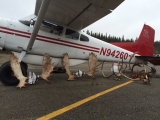
http://homernews.com/homer-news/local-n ... -ntsb-says
thought he was pulling up the flaps on roll out.
I don't pull up flaps to shorten my landing but I do pull them up as I roll out, I have done it on many a 135 checkride.
thought he was pulling up the flaps on roll out.
I don't pull up flaps to shorten my landing but I do pull them up as I roll out, I have done it on many a 135 checkride.
- Headoutdaplane offline
- Posts: 526
- Joined: Thu May 29, 2008 5:21 pm
- Location: Homer, AK
The winner is the person with the most stories when he dies, not the most gold.
www.belugaair.com
www.belugaair.com
Wed Jan 27, 2016 12:09 am
Re: Retracting flaps on landing
I guess it all comes down to..If you have to ask, maybe you shouldn't touch the flaps until after you are clear of the active runway. We could go round and round on this.
keep them flying!
Wed Jan 27, 2016 1:05 am
Re: Retracting flaps on landing
mtv wrote:Headoutdaplane wrote:with electric flaps raising them right at touchdown does not help, and indeed may hurt.
For example, a 206 does short field take offs at 20 of flaps, why? more lift/drag. If you put the flaps all the way down like they would be on a shortfield landing and move the lever up and count how many seconds it takes to get to 0. You will find that you are passing through the 20 range for about 2-3 seconds.
Now, if you put the flaps up right on touching down, your flaps are passing through the area of most lift for those 2-3 seconds, in other words taking weight off of your wheels instead of on them. Better to just leave in full flaps, keep your yoke in your lap, and if needed add brakes.
Not that it really matters cause for the most part cessnas with electric flaps need more take off length than landing.
Having said that, part of the fun of learning your particular aircraft is trying all the different techniques and finding out which one works the best for your airplane.
Yep, which is why I always hit the flap lever to the "up" position just at the flare, five feet off the ground....
Whatever works, and you're competent with.
MTV
Yup, works a treat for me. Depending what I'm flying and trying to achieve, I'll often dump flaps at roundout or flare. Really helps settle it on the ground especially in gusty conditions. Many years ago I was delivering an old 182 to a customer in outback Queensland, it was a typical 40'C day and I floated this 182 down his strip and stopped 20 meters short of the trees.. Needless to say the crusty old farmer was not all that impressed with my arrival and suggested in no uncertain terms I learn to dump flap and stop embarrassing myself... Well I think he was right and I'm still doing it 20 plus years later.
Last Monday I took an SR22 into 400 meters on a 32'C day, dumped flap at about 20 feet and stopped in 300 meters no probs. Trick is to anticipate the sink and flare hard, different aircraft respond different and much easier with electric pre-select flaps but I do it with manual flaps and ones you have to hold like a 172F for example. Good speed control probably helps too..
I've never considered it unsafe but I guess there's potential for trouble, most likely a hard landing if you retract before touchdown. I don't really know if there's much advantage retracting flaps immediately on the ground? I fly plenty of different retractable singles and twins, always call "flaps identified and up" when retracting late in the rollout, no gear ups yet!
DISPLAY OPTIONS
Who is online
Users browsing this forum: No registered users and 5 guests
Latest Features
-
-
Featured Bush Planes
As one of the undisputed legends of bush flying, the Cessna 180 hauls a…Read More -
Aircraft Ownership and Maintenance
9 modification mistakes aircraft owners make when trying to "bush out" their birds—why some…Read More -
Live to Tell
A Minnesota pilot is surprised to learn that the sudden asymmetric drag of an…Read More




Latest Knowledge Base
-
Destinations
Canada offers some of the most spectacular backcountry flying on the continent. Here's what you need to know before you go.Read More -
Safety and Survival
Hope that you never have to use your survival vest but knowing you have it and knowing how to use…Read More -
Destinations
A regional guide with ideas for winter camping destinations in California, Nevada, New Mexico, and Arizona.Read More -
Aircraft
Finding an affordable aircraft that can handle the backcountry for $80K or less? A challenge for sure, but with the…Read More



