I always thought passengers were Angle Of Attack Indicators - AAAAAAAHHHHHHHH!!!!!!!!!
Sorry Tom, I haven't been flying in over a week. Can you tell?
Angle Of Attack indicators
Mon Aug 03, 2020 6:48 pm
- Barnstormer offline
- Posts: 2700
- Joined: Sun Oct 14, 2012 7:42 am
- Location: Alaska
- Aircraft: C185
Mon Aug 03, 2020 9:40 pm
Re: Angle Of Attack indicators
I never thought to get a student or passenger to record indicated airspeed on full stall touchdown with the stick full back. I didn't use the airspeed indicator nor did I expect it to be accurate (old ones were pegged at bottom). Would not the angle of attack full stall with the stick all the way back be the same as a tailwheel airplane stopped on the ground?
Motoadve finds his angle of attack indicator helpful for short strips because he wants to touchdown as slowly as possible without stalling on final. I don't understand them, but the indicator in his videos has more than one line. I assume the squawking is the Cessna stall warning as is Jughead's 170.
I understand that Vs and AOA lines set based on that is for safety, but using apparent rate of closure rather than instrumentation, I teach deceleration to the actual sounds, sight, and feel of the airplane in low ground effect when it actually quits flying. Is this number not considered by those using instruments because of fear some would stall if the knew it or just not considered?
Motoadve finds his angle of attack indicator helpful for short strips because he wants to touchdown as slowly as possible without stalling on final. I don't understand them, but the indicator in his videos has more than one line. I assume the squawking is the Cessna stall warning as is Jughead's 170.
I understand that Vs and AOA lines set based on that is for safety, but using apparent rate of closure rather than instrumentation, I teach deceleration to the actual sounds, sight, and feel of the airplane in low ground effect when it actually quits flying. Is this number not considered by those using instruments because of fear some would stall if the knew it or just not considered?
- contactflying offline
- Posts: 4972
- Joined: Wed Apr 03, 2013 7:36 pm
- Location: Aurora, Missouri 2H2
Download my free "https://tinyurl.com/Safe-Maneuvering" e-book.
Tue Aug 04, 2020 10:37 pm
Re: Angle Of Attack indicators
Ive got one. Never look at it, or the ASI for that matter. I think it would be great for a new pilot until he gets the “sight, sound and feel“ thing. The other time it would be very useful I think (as it is accurate all the way to the ground, unlike the ASI) is if you were continuously swapping back and forth from sea level strips lightly loaded, to high Density altitude strips fully loaded.
Wed Aug 05, 2020 1:21 am
Re: Angle Of Attack indicators
Yes, DA and load change sight, sound, and feel. Does the AOA indicator take this into consideration? I just realized that while I have lots of iterations of high, hot, and heavy takeoff, I have far fewer iterations of high, hot, and heavy approach. Ag work. The main thing about high, hot, and heavy work is that anxiety and impatience about getting up can lead to mushing or stalling down. Groundspeed and apparent rate of closure of near objects must be faster, without more headwind component, to get the same control surface feedback. The quickness that this solid feel goes away when we pitch up without thermal or orographic lift is pronounced. Getting going, egress, down drainage becomes very important. The simplicity of the airspeed indicator aid in this is that it doesn't change. Does the AOA indicator balance angle of relative wind with a density altitude sensation? Either way, were are going to feel it in the control feedback, or lack thereof, long before we see instrument indications of it.
- contactflying offline
- Posts: 4972
- Joined: Wed Apr 03, 2013 7:36 pm
- Location: Aurora, Missouri 2H2
Download my free "https://tinyurl.com/Safe-Maneuvering" e-book.
Wed Aug 05, 2020 2:52 am
Re: Angle Of Attack indicators
contactflying wrote:Yes, DA and load change sight, sound, and feel. Does the AOA indicator take this into consideration? I just realized that while I have lots of iterations of high, hot, and heavy takeoff, I have far fewer iterations of high, hot, and heavy approach. Ag work. The main thing about high, hot, and heavy work is that anxiety and impatience about getting up can lead to mushing or stalling down. Groundspeed and apparent rate of closure of near objects must be faster, without more headwind component, to get the same control surface feedback. The quickness that this solid feel goes away when we pitch up without thermal or orographic lift is pronounced. Getting going, egress, down drainage becomes very important. The simplicity of the airspeed indicator aid in this is that it doesn't change. Does the AOA indicator balance angle of relative wind with a density altitude sensation? Either way, were are going to feel it in the control feedback, or lack thereof, long before we see instrument indications of it.
Yes the AOA will tell you where the wing is at in relation to the stall regardless of DA or load. And is accurate in doing so. You cant fault them from that point of view “they do what they say they do”
Wed Aug 05, 2020 4:38 am
Re: Angle Of Attack indicators
That is good to know. Has anybody done any calculation of stall in low ground effect as in landing with either an accurate airspeed indicator or AOA indicator. Would the AOA indicator be happy with that AOA at touchdown? In other words does it allow for the natural deceleration in the mush down or power pitch or apparent rate of closure approach coming into ground effect? Vso has little to do with landing as it is the out of ground effect stall airspeed. POH helpfully addresses a safer than Vx or Vy as appropriate climbout airspeed. It does not address the actual target airspeed for getting the airplane to stop flying on the surface, the full stall landing. Does the AOA indicator address a minimum safe angle of attack on climb and the target angle of attack, full stall, on landing?
- contactflying offline
- Posts: 4972
- Joined: Wed Apr 03, 2013 7:36 pm
- Location: Aurora, Missouri 2H2
Download my free "https://tinyurl.com/Safe-Maneuvering" e-book.
Wed Aug 05, 2020 4:38 am
Re: Angle Of Attack indicators
That is good to know. Has anybody done any calculation of stall in low ground effect as in landing with either an accurate airspeed indicator or AOA indicator. Would the AOA indicator be happy with that AOA at touchdown? In other words does it allow for the natural deceleration in the mush down or power pitch or apparent rate of closure approach coming into ground effect? Vso has little to do with landing as it is the out of ground effect stall airspeed. POH helpfully addresses a safer than Vx or Vy as appropriate climbout airspeed. It does not address the actual target airspeed for getting the airplane to stop flying on the surface, the full stall landing. Does the AOA indicator address a minimum safe angle of attack on climb and the target angle of attack, full stall, on landing?
- contactflying offline
- Posts: 4972
- Joined: Wed Apr 03, 2013 7:36 pm
- Location: Aurora, Missouri 2H2
Download my free "https://tinyurl.com/Safe-Maneuvering" e-book.
Thu Aug 06, 2020 11:54 am
Re: Angle Of Attack indicators
contactflying wrote:That is good to know. Has anybody done any calculation of stall in low ground effect as in landing with either an accurate airspeed indicator or AOA indicator. Would the AOA indicator be happy with that AOA at touchdown? In other words does it allow for the natural deceleration in the mush down or power pitch or apparent rate of closure approach coming into ground effect? Vso has little to do with landing as it is the out of ground effect stall airspeed. POH helpfully addresses a safer than Vx or Vy as appropriate climbout airspeed. It does not address the actual target airspeed for getting the airplane to stop flying on the surface, the full stall landing. Does the AOA indicator address a minimum safe angle of attack on climb and the target angle of attack, full stall, on landing?
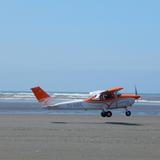
Done some flying at the lowest speed in low ground effect,
From the video airspeed indicator shows 40MPH or less and AoA about 4 red lights which is when the plane starts sinking , this is why more power is needed to stay on ground effect.(stall happens at 3 red lights)
Not looking at airspeed or any instrument at this stage, just feeling the plane , like a motorcycle when doing a wheelie

Thu Aug 06, 2020 1:54 pm
Re: Angle Of Attack indicators
Thanks for that video, motoadve's. I agree with the non instrument approach, at this point. But if bot is going to do STOL, he needs to know this stuff. So for safety on takeoff and departure, and perhaps turns at an altitude below where recovery from inadvertent stall is probable, one light might indicate danger? Again, how would bot gauge "just" over the obstacle.
- contactflying offline
- Posts: 4972
- Joined: Wed Apr 03, 2013 7:36 pm
- Location: Aurora, Missouri 2H2
Download my free "https://tinyurl.com/Safe-Maneuvering" e-book.
Thu Aug 06, 2020 2:29 pm
Re: Angle Of Attack indicators
contactflying wrote:Thanks for that video, motoadve's. I agree with the non instrument approach, at this point. But if bot is going to do STOL, he needs to know this stuff. So for safety on takeoff and departure, and perhaps turns at an altitude below where recovery from inadvertent stall is probable, one light might indicate danger? Again, how would bot gauge "just" over the obstacle.
I try to do most of my approaches to short fields with the blue light on, on the AoA HUD , and coming with power on, so as soon as I reduce power the plane stops flying.
Take offs one blue and one yellow.
Danger are the red lights , means no lift available.
Fri Aug 07, 2020 3:01 am
Re: Angle Of Attack indicators
@motoadve that is great feedback on testing your AoA indicator in ground effect.
Aerodynamic theory posits that effective angle of attack increases in ground effect, as the induced drag from vortices is reduced. In effect you get an energy boost as induced, or lift dependant, drag reduces in ground effect. The effect is more pronounced as you move away from the wing roots, and am guessing the AoA probe is situated around where the 182 wing commences the washout towards the outer wings.
Perhaps the need for more power, and a higher AoA indication (more red), is either you are achieving a higher AoA in ground effect before stall, or the probe senses a higher AoA because of its position nearer the outer portion of the wing, or both. The higher power will also energise both the tailplane and wing roots, helping achieve a higher AoA.
I wonder if you held a steady pitch angle approaching ground effect whether the indicator remains steady?
Aerodynamic theory posits that effective angle of attack increases in ground effect, as the induced drag from vortices is reduced. In effect you get an energy boost as induced, or lift dependant, drag reduces in ground effect. The effect is more pronounced as you move away from the wing roots, and am guessing the AoA probe is situated around where the 182 wing commences the washout towards the outer wings.
Perhaps the need for more power, and a higher AoA indication (more red), is either you are achieving a higher AoA in ground effect before stall, or the probe senses a higher AoA because of its position nearer the outer portion of the wing, or both. The higher power will also energise both the tailplane and wing roots, helping achieve a higher AoA.
I wonder if you held a steady pitch angle approaching ground effect whether the indicator remains steady?
Fri Aug 07, 2020 9:11 am
Re: Angle Of Attack indicators
L18C-95 wrote:@motoadve that is great feedback on testing your AoA indicator in ground effect.
Aerodynamic theory posits that effective angle of attack increases in ground effect, as the induced drag from vortices is reduced. In effect you get an energy boost as induced, or lift dependant, drag reduces in ground effect. The effect is more pronounced as you move away from the wing roots, and am guessing the AoA probe is situated around where the 182 wing commences the washout towards the outer wings.
Perhaps the need for more power, and a higher AoA indication (more red), is either you are achieving a higher AoA in ground effect before stall, or the probe senses a higher AoA because of its position nearer the outer portion of the wing, or both. The higher power will also energise both the tailplane and wing roots, helping achieve a higher AoA.
I wonder if you held a steady pitch angle approaching ground effect whether the indicator remains steady?
Difficult to stay too steady, its kind of a balancing act that low to the ground and that slow,(I can compare it to wheeling a motorbike for some reason) the AoA probe its on the outer side of the wing strut, so the propeller blast does hit it.
Fri Aug 07, 2020 12:03 pm
Re: Angle Of Attack indicators
motoadve wrote:L18C-95 wrote:@motoadve that is great feedback on testing your AoA indicator in ground effect.
Aerodynamic theory posits that effective angle of attack increases in ground effect, as the induced drag from vortices is reduced. In effect you get an energy boost as induced, or lift dependant, drag reduces in ground effect. The effect is more pronounced as you move away from the wing roots, and am guessing the AoA probe is situated around where the 182 wing commences the washout towards the outer wings.
Perhaps the need for more power, and a higher AoA indication (more red), is either you are achieving a higher AoA in ground effect before stall, or the probe senses a higher AoA because of its position nearer the outer portion of the wing, or both. The higher power will also energise both the tailplane and wing roots, helping achieve a higher AoA.
I wonder if you held a steady pitch angle approaching ground effect whether the indicator remains steady?
Difficult to stay too steady, its kind of a balancing act that low to the ground and that slow,(I can compare it to wheeling a motorbike for some reason) the AoA probe its on the outer side of the wing strut, so the propeller blast does hit it.
This is part of the problem with all these so called "Angle of attack" systems offered for light single engine aircraft. If you want a true AOA system, your sensors need to be located as optimally as possible, and that's difficult or impossible to do on one of these aircraft.
Locating the sensor on one wing essentially ignores what's going on with the other wing.....though I know we all fly perfectly straight all the time.....

I'm not a fan of these things. And, yes, I have one, and yes, I've tried to make use of it, including trying to adjust it so that it represents some sort of reality.
The wing tells me everything I need to fly this airplane, however.
MTV


Fri Aug 07, 2020 12:13 pm
Re: Angle Of Attack indicators
I sorta remember from my student pilot days, that the long hold off with the throttle closed was a creeping increase on up elevator until full stall. Hover taxi with enough throttle to maintain six inches or so, on the other hand, is different. Dynamic proactive elevator is necessary to maintain six inches without gaining altitude or touching down. Dynamic proactive rudder is necessary to maintain centerline. The main misunderstanding about dynamic proactive control movement is that it is slow. It is fast oscillation to minimize effect. Even when airspeed is slow and control movement gross, movement from furthest left is rapid to furthest right. Movement from furthest up to furthest down is rapid. Reactive control is fast in one direction, but slow or nonexistent in the other. Timing is where ground loop, porpoise, misdirection, and such takes over control. Dynamic proactive is continuous control. The objective is to get out ahead of the wrong movement by making a quick wrong movement one way followed by a quick wrong movement the other, repeated continuously. It's a twitch. It is happy feet or happy elevator.
As MTV says, it's art and not science or math. Going through an instrument indication is just to slow and out of timing with the twitch of dynamic proactive control. And no, I am not advising dynamic proactive elevator until coming into low ground effect. Dynamic proactive rudder, yes.
As MTV says, it's art and not science or math. Going through an instrument indication is just to slow and out of timing with the twitch of dynamic proactive control. And no, I am not advising dynamic proactive elevator until coming into low ground effect. Dynamic proactive rudder, yes.
- contactflying offline
- Posts: 4972
- Joined: Wed Apr 03, 2013 7:36 pm
- Location: Aurora, Missouri 2H2
Download my free "https://tinyurl.com/Safe-Maneuvering" e-book.
DISPLAY OPTIONS
Who is online
Users browsing this forum: No registered users and 0 guests
Latest Features
-
Live to Tell
A Minnesota pilot is surprised to learn that the sudden asymmetric drag of an out-of-rig ski can…Read More -
Creators
Working in some of the Yukon's most beautiful and remote environments, photographer Simon Blakesley captures aircraft in…Read More -
Aircraft Ownership and Maintenance
Upgrading to big tires can make a huge difference in backcountry performance, but with those gains come…Read More -
Tales from Yesteryear
In this tale from bush flying yesteryear, Don Cogger signs up to help Atlee Dodge Jr recovery…Read More


Latest Knowledge Base
-
Destinations
A regional guide with ideas for winter camping destinations in California, Nevada, New Mexico, and Arizona.Read More -
Aircraft
Finding an affordable aircraft that can handle the backcountry for $80K or less? A challenge for sure, but with the…Read More -
Aircraft
01.29.2018 - Zane - Updated tire diameter graphic to add 8.50x10 Guide to tires for use in the backcountry and off-airport landing…Read More -
Pilots
12.22.2013 - Initial article format Operating aircraft on skis and negotiating a snow-covered landscape is an entirely unique skillset and environment.…Read More


