C182A panel upgrade
Sat Jan 12, 2019 1:36 pm
Re: C182A panel upgrade
If your looking for "traditional or vintage" in a digital instrument check out this product from http://www.AeroVonics.com (I am not affiliated), they are seeking FAA certification for the V-30
Last edited by Mapleflt on Sat Jan 12, 2019 1:45 pm, edited 1 time in total.

Sat Jan 12, 2019 1:41 pm
Re: C182A panel upgrade
Ya I have all of those sitting here waiting to go on. I am a bit torn because while I agree that isolation is good, many planes have none. I dont think the newer ones have any isolation. I'll probably just do it and not worry about it anymore. I wont have much weight there anyways. Panel is going to be pretty bare...colopilot wrote:A1Skinner wrote:And why are we less worried about vibration now then they were in the 60s? I'm just asking because I need to decide how I'm going to do my 206...
As manufacturers have evolved the product lines, shock mounting seems to have increased. Some parts of the panel obviously don't need to be, but given how badly a piston plane can shake, I don't think I'd want it hung without at least some sort of isolation.
If you're going to do a stand-off, Spruce has some generic parts at the top of this page:
https://www.aircraftspruce.com/search/s ... TS&x=0&y=0
They also have the OEM shock mounts for the earlier Cessnas which, if you're keeping, should be replaced with new:
https://www.aircraftspruce.com/catalog/ ... kkey=16241
Note these say 5lb rating but so were the old ones, and the new set I bought seemed more rigid. I imagine they may take slightly more. The heavy-duty p/n is no longer made, but other provisions can be created if you're making a new panel anyway.
Sent from my SM-G960W using Tapatalk

Sat Jan 12, 2019 1:47 pm
Re: C182A panel upgrade
Most of the shock mounts I have seen are made from lousy rubber. They harden, sag and crack in a few years in my experience.
- Scolopax offline


- Posts: 1696
- Joined: Tue Sep 27, 2005 5:02 pm
- Location: Nottingham
- FindMeSpot URL: http://share.findmespot.com/shared/face ... 4aYqSexnZC
Sat Jan 12, 2019 5:47 pm
Re: C182A panel upgrade
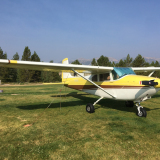
Here's my 182A, we bought it this way.
- Bonanza Man offline
- Posts: 909
- Joined: Fri Jul 07, 2006 3:42 pm
- Location: Seeley Lake
Sat Jan 12, 2019 7:48 pm
Re: C182A panel upgrade
asa wrote:
Hey Bart, I see you did multiple EI engine instruments rather than a single monitor, pretty similar to what was in mine. Did you find that this approach was cheaper than one unit such as the MVP50 or EDM900? Just curious as to your approach. The previous owner of my 180 took the same one generally.
-Asa
Most of the instrument were already in the plane. I was just moving things around a bit. I did add the OPT-1 and the FL202 fuel gauge to get rid of the long and clumsy cessna instrument cluster though. After a new Garmin com, baggage, seat belts, tunnel cover, carpet kit, ELT, etc. etc....I was fine with not spending another $3-$4K

- bart offline

- Posts: 545
- Joined: Fri Aug 21, 2009 7:54 pm
- Location: Fresno, CA
- FindMeSpot URL: http://share.findmespot.com/shared/face ... 1ZTy9zAEWv
- Aircraft: Cessna 180
Sat Jan 12, 2019 9:42 pm
Re: C182A panel upgrade
My guess on older instruments being shock mounted is to protect the mechanical gears and levers in old steam gauges. Modern glass doesn't need it, and in fact Garmin says not to for the G5 and G3X. The extra wiggle of the shock mount messes up the computer calculating aircraft attitude.

Sat Jan 12, 2019 9:45 pm
Re: C182A panel upgrade
Good to know. So I guess if you have a G5 and old steam guages you're damned if you do, damned if you dont...fredy wrote:My guess on older instruments being shock mounted is to protect the mechanical gears and levers in old steam gauges. Modern glass doesn't need it, and in fact Garmin says not to for the G5 and G3X. The extra wiggle of the shock mount messes up the computer calculating aircraft attitude.
Sent from my SM-G960W using Tapatalk
Sun Jan 13, 2019 9:17 am
Re: C182A panel upgrade
Hummmm....can anyone chime in on the G5 in a shock mounted panel concern. I was planning on doing just that.
Say, I’m struggling with what to do about my fuel gauges. The senders in the tanks seem fine as I had them out while doing the bladders in June. I don’t want to re- install the old fuel strip but it seems like there is almost nothing out there to replace them while keeping the old senders. The FL200 gauge is nice (and expensive) but the note on the Spruce site says they will not be available until after Jan 31. It seems to me Cessna used a double fuel gauge in their later singles that looks like the strip with the oil temp and pressure removed. I’ve checked online and the Ebay stuff looks like junk.
I’ll have a fuel flow gauge of some kind so I’m not too worried about the typical unreliability of the old gauges.
Say, I’m struggling with what to do about my fuel gauges. The senders in the tanks seem fine as I had them out while doing the bladders in June. I don’t want to re- install the old fuel strip but it seems like there is almost nothing out there to replace them while keeping the old senders. The FL200 gauge is nice (and expensive) but the note on the Spruce site says they will not be available until after Jan 31. It seems to me Cessna used a double fuel gauge in their later singles that looks like the strip with the oil temp and pressure removed. I’ve checked online and the Ebay stuff looks like junk.
I’ll have a fuel flow gauge of some kind so I’m not too worried about the typical unreliability of the old gauges.
- BirdyinBOI offline
- Posts: 166
- Joined: Tue Dec 25, 2012 10:53 pm
- Location: Boise
Sun Jan 13, 2019 9:33 am
Re: C182A panel upgrade
fredy wrote:My guess on older instruments being shock mounted is to protect the mechanical gears and levers in old steam gauges. Modern glass doesn't need it, and in fact Garmin says not to for the G5 and G3X. The extra wiggle of the shock mount messes up the computer calculating aircraft attitude.
The G5 still requires existing airspeed, altimeter, and VSI+turn coordinator if you're required to have those, and those round gauges would prefer to be shock mounted. G5 is also designed to install in existing 3-1/8" holes in legacy panels, most of which are going to have some shock mounting. This is the first I'm hearing of that requirement, so I pulled up the latest STC install manual to see if I missed something. In the revisions on page B, in Aug 2016 they removed the shock mounting limitation (I'm not sure what it said before that). Now all it says under 5.3.7.2 for run-up test is this: "The following are potential causes for failures of the engine run-up test...(d) Instrument panel shock mounts worn, broken, or permit excessive movement." I think G5's are ok with shock mounting, most likely they adjusted the computer calculations to accommodate it. I can't comment on G3X, but since those are meant for a total glass panel anyway I think that would certainly be fine with hard mounting.

Sun Jan 13, 2019 9:44 am
Re: C182A panel upgrade
If you are going with an engine monitor anyway, both the EI and JPI units can use the original senders.BirdyinBOI wrote:Hummmm....can anyone chime in on the G5 in a shock mounted panel concern. I was planning on doing just that.
Say, I’m struggling with what to do about my fuel gauges. The senders in the tanks seem fine as I had them out while doing the bladders in June. I don’t want to re- install the old fuel strip but it seems like there is almost nothing out there to replace them while keeping the old senders. The FL200 gauge is nice (and expensive) but the note on the Spruce site says they will not be available until after Jan 31. It seems to me Cessna used a double fuel gauge in their later singles that looks like the strip with the oil temp and pressure removed. I’ve checked online and the Ebay stuff looks like junk.
I’ll have a fuel flow gauge of some kind so I’m not too worried about the typical unreliability of the old gauges.
Sent from my SM-G960W using Tapatalk
Sun Jan 13, 2019 10:54 am
Re: C182A panel upgrade
A1skinner...I was under the impression that the JPI or EI or any other fuel flow display instrument was to be used in addition to original fuel gauges, not in lieu of. I want to use the CGP-30 but not if I also have to spend $700 for new resistor based guages.
Am I incorrect?
Am I incorrect?
- BirdyinBOI offline
- Posts: 166
- Joined: Tue Dec 25, 2012 10:53 pm
- Location: Boise
Sun Jan 13, 2019 11:34 am
Re: C182A panel upgrade
The JPI 900 and MVP50P for sure can be used as stand alone guages. For the CGR30 I think you need the combo, unless you can give up a different primary to use that spot for fuel. Either one can be used with the stick senders though.BirdyinBOI wrote:A1skinner...I was under the impression that the JPI or EI or any other fuel flow display instrument was to be used in addition to original fuel gauges, not in lieu of. I want to use the CGP-30 but not if I also have to spend $700 for new resistor based guages.
Am I incorrect?
Sent from my SM-G960W using Tapatalk
Sun Jan 13, 2019 2:37 pm
Re: C182A panel upgrade
A1Skinner wrote:The JPI 900 and MVP50P for sure can be used as stand alone guages. For the CGR30 I think you need the combo, unless you can give up a different primary to use that spot for fuel. Either one can be used with the stick senders though.
Sent from my SM-G960W using Tapatalk
I believe this to be true as well. The CGR30P has a certain amount of real estate on the first screen; most of this would normally be used for primary engine gauges. It can display fuel on a secondary screen, but then anything on a second+ page cannot be a primary instrument. The CGR30 combo lets you have two displays' worth of primary instrumentation, which is everything in a 182 and then some. This was a big driver for me getting the combo, as it allowed me to fully eliminate all of the stock analog gauges. With the single display I'd have had to keep at least a couple things separate.
Either way it's compatible with basically any fuel sender you want to use, they just supply you with the right kind of interface when you order the kit. You can even combine types - for example, I replaced my main tank senders with Cies magnetic sensors as I needed new ones anyway. However we included provisions to add Flint tip tanks later on, which use resistive-type senders. Both will work fine on the CGR, it's just a different interface for each set. For now my display will show aux fuel as zero until I eventually put those in, and I'll have a meaningfully-accurate mains level indication for once too (a rare commodity in a Cessna!).
Sun Jan 13, 2019 3:00 pm
Re: C182A panel upgrade
What made you go with Cies senders instead of the EI senders?colopilot wrote:A1Skinner wrote:The JPI 900 and MVP50P for sure can be used as stand alone guages. For the CGR30 I think you need the combo, unless you can give up a different primary to use that spot for fuel. Either one can be used with the stick senders though.
Sent from my SM-G960W using Tapatalk
I believe this to be true as well. The CGR30P has a certain amount of real estate on the first screen; most of this would normally be used for primary engine gauges. It can display fuel on a secondary screen, but then anything on a second+ page cannot be a primary instrument. The CGR30 combo lets you have two displays' worth of primary instrumentation, which is everything in a 182 and then some. This was a big driver for me getting the combo, as it allowed me to fully eliminate all of the stock analog gauges. With the single display I'd have had to keep at least a couple things separate.
Either way it's compatible with basically any fuel sender you want to use, they just supply you with the right kind of interface when you order the kit. You can even combine types - for example, I replaced my main tank senders with Cies magnetic sensors as I needed new ones anyway. However we included provisions to add Flint tip tanks later on, which use resistive-type senders. Both will work fine on the CGR, it's just a different interface for each set. For now my display will show aux fuel as zero until I eventually put those in, and I'll have a meaningfully-accurate mains level indication for once too (a rare commodity in a Cessna!).
I've been looking at the combo units, but theres not a lot of $$ difference efeom them to the MVP 50...
FWIW, one nice thing with EI is that if you happen to change to different senders later on, they can send you a USB stick to program the unit. With JPI you have to send the whole thing back to them to reprogram.
Sent from my SM-G960W using Tapatalk
Sun Jan 13, 2019 4:22 pm
Re: C182A panel upgrade
A1Skinner wrote:What made you go with Cies senders instead of the EI senders?
I've been looking at the combo units, but theres not a lot of $$ difference efeom them to the MVP 50...
FWIW, one nice thing with EI is that if you happen to change to different senders later on, they can send you a USB stick to program the unit. With JPI you have to send the whole thing back to them to reprogram.
I went with Cies just because they're awesome, and don't seem to suffer the same maladies as other designs. You are correct, the CGR combo is comparable to the MVP50 in cost. I think the MVP maybe has slightly more on the primary screen (immaterial to my world), but also requires a big square hole in the panel. The combo kit lets you orient things a little more flexibly, at the expense of having a second device to mount. This is pretty minor though as the wiring harness for the displays is not complicated. What I did find interesting was how some things wire to a distinct display (CO sensor, for example), but other wires tie both together. Pretty straightforward though.
I hadn't looked into future sender changes figuring Cies will last the rest of the airplane's life, but that makes sense. The only way that might not be 100% true is if the interface module is different, but if you design the panel for mounting the various modules correctly, that should be a quick swap.
Sun Jan 13, 2019 8:34 pm
Re: C182A panel upgrade
EI are a resistive type sensor. They rely on clean connections and no resistance changes in the wiring to stay accurate. They are also subject to wear of the wiper and the winding inside the tank.
Ceis gauges are digital. They use a magnetic pickup to transfer the float position to the circuit board. They produce a square wave signal that is not distorted by resistance variations. The signal either passes to the display or doesn’t. You can get them with a converter that talks to an analogue gauge, but with an EI, or JPI, or Aerologic gauge, the square wave is the best choice.
They are very accurate and trustworthy. It’s the system that allows new vehicles to quote miles to empty calculations precisely on your dash.
Ceis gauges are digital. They use a magnetic pickup to transfer the float position to the circuit board. They produce a square wave signal that is not distorted by resistance variations. The signal either passes to the display or doesn’t. You can get them with a converter that talks to an analogue gauge, but with an EI, or JPI, or Aerologic gauge, the square wave is the best choice.
They are very accurate and trustworthy. It’s the system that allows new vehicles to quote miles to empty calculations precisely on your dash.

Sun Jan 13, 2019 9:02 pm
Re: C182A panel upgrade
So the EI magnetic ones should be just as good as the Cies no? These are the ones I'm talking about, a fair bit cheaper them the Cies...Pinecone wrote:EI are a resistive type sensor. They rely on clean connections and no resistance changes in the wiring to stay accurate. They are also subject to wear of the wiper and the winding inside the tank.
Ceis gauges are digital. They use a magnetic pickup to transfer the float position to the circuit board. They produce a square wave signal that is not distorted by resistance variations. The signal either passes to the display or doesn’t. You can get them with a converter that talks to an analogue gauge, but with an EI, or JPI, or Aerologic gauge, the square wave is the best choice.
They are very accurate and trustworthy. It’s the system that allows new vehicles to quote miles to empty calculations precisely on your dash.
https://m.aircraftspruce.ca/catalog/inp ... p-300m.php
Sent from my SM-G960W using Tapatalk
Mon Jan 14, 2019 2:21 am
Re: C182A panel upgrade
Looks like you are correct David. I believe I was thinking about McFarlane floats and typed EI. So these output a digital signal also, and the gauge reads digital, no converting back and forth to analog? If so, they’re likely equal to Ceis.
Mon Jan 14, 2019 8:29 am
Re: C182A panel upgrade
Maybe I'm making a bad assumption, but it looks like EI is $488 and CIES is $435. Or is the EI price for a pair?

Mon Jan 14, 2019 8:36 am
Re: C182A panel upgrade
Cies is $1091 for the kit. EI is $468 each. So the EI is a bit cheaper, and if ordering from EI anyways theres no extra shipping to pay.
Edit: these are in Canadian dollars.
Sent from my SM-G960W using Tapatalk
Edit: these are in Canadian dollars.
Sent from my SM-G960W using Tapatalk
DISPLAY OPTIONS
Who is online
Users browsing this forum: No registered users and 0 guests
Latest Features
-
Live to Tell
A Minnesota pilot is surprised to learn that the sudden asymmetric drag of an out-of-rig ski can…Read More -
Creators
Working in some of the Yukon's most beautiful and remote environments, photographer Simon Blakesley captures aircraft in…Read More -
Aircraft Ownership and Maintenance
Upgrading to big tires can make a huge difference in backcountry performance, but with those gains come…Read More -
Tales from Yesteryear
In this tale from bush flying yesteryear, Don Cogger signs up to help Atlee Dodge Jr recovery…Read More


Latest Knowledge Base
-
Destinations
A regional guide with ideas for winter camping destinations in California, Nevada, New Mexico, and Arizona.Read More -
Aircraft
Finding an affordable aircraft that can handle the backcountry for $80K or less? A challenge for sure, but with the…Read More -
Aircraft
01.29.2018 - Zane - Updated tire diameter graphic to add 8.50x10 Guide to tires for use in the backcountry and off-airport landing…Read More -
Pilots
12.22.2013 - Initial article format Operating aircraft on skis and negotiating a snow-covered landscape is an entirely unique skillset and environment.…Read More


